


Dark Brown Baluch Carpet
A dark brown baluch carpet is a tribal textile woven with rich vegetable dyes and hand-spun wool across the borderlands of Persia and Afghanistan.
Dark Brown Baluch Carpet
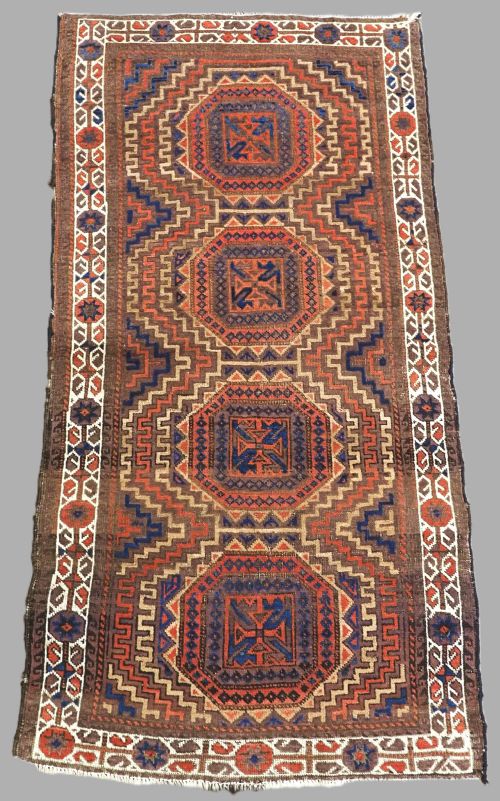
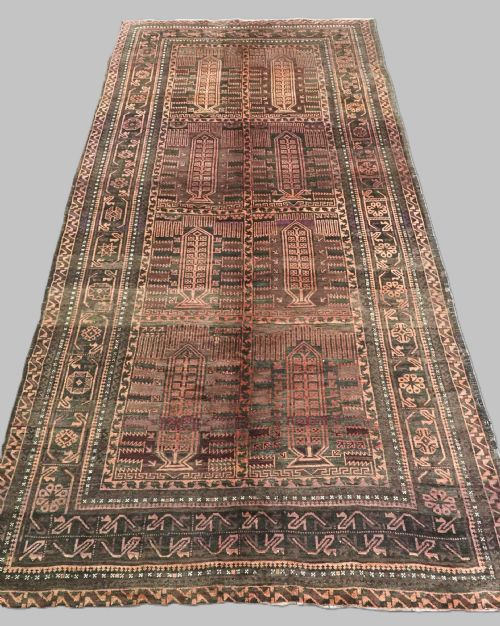
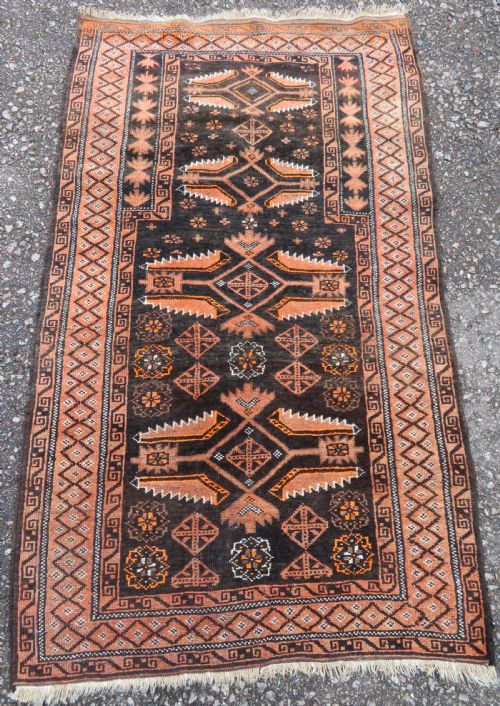
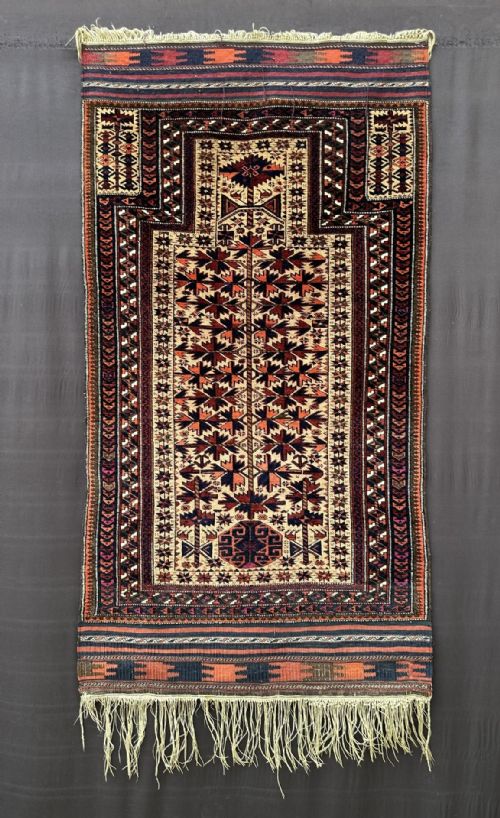
A dark brown baluch carpet represents nomadic and village weaving traditions from the borderlands of north-east Persia and north-west Afghanistan. These floor coverings and tribal textiles emerge from various groups including the Timuri, Mushwani, Taimani, and Mahdad Khani tribes. Buyers seeking a dark brown baluch carpet encounter formats ranging from small prayer rugs and runner rugs to larger main carpets.
The most common examples on this page date from the late nineteenth century to the early twentieth century, spanning decades such as 1870, 1880, 1890, 1900, 1910, and 1920. Woven structures incorporate traditional tribal motifs like large guls, pencil box patterns, lotus leaf designs, and calyx lattices. Tribal and nomadic aesthetics dominate these pieces, reflecting the heritage of their makers.
Makers utilised dark wool foundations and deep brown palettes characteristic of regional weaving centres from Khorasan to Herat. Individual pieces often carry distinctive sub-tribal designs such as the Dokhtar-e-Qazi or Seh Mihrab prayer formats. These textiles serve as both functional floor coverings and expressions of nomadic visual culture.
How these carpets were made
Weavers constructed these textiles primarily using hand-spun wool and cotton, occasionally incorporating goat hair for durability in the structural foundations. Natural dyes provided the deep brown ground colours and contrasting shades that define the palette. These materials were sourced locally and prepared by hand within tribal communities.
The weaving process relied on traditional upright or horizontal looms set up in nomadic camps and villages across the Afghan and Persian borderlands. Artisans knotted the pile by hand, securing the geometric and medallion designs tightly against the warp and weft threads. This dense knotting produced robust rugs capable of withstanding daily nomadic use.
Some weavers tucked small talismanic amulets directly into the wool pile to ward off the evil eye.
What varies in quality
Quality in these tribal textiles rests upon the fineness of the knotting and the handling of the hand-spun wool. Tighter, more uniform knots create a supple handle and a more defined rendering of geometric patterns like guls and lattices. The depth and saturation of the natural dyes also set finer examples apart from simpler village productions.
The integrity of the original selvedges and ends determines the structural preservation of an antique rug. Pieces retaining their complete outer cords and outer borders demonstrate superior survival from their period of origin. Furthermore, clarity in secondary design elements, such as ivory borders or finely drawn prayer arches, indicates greater weaver skill.
Timuri Tribes·Yaqoub Khani Tribe·Mushwani Baluch·Taimani Sistan·Mahdad Khani Tribe·Salar Khani Baluch·Bahluli Baluch·Adraskhan Baluch
The Dark Brown Baluch Carpet Glossary
- Gul
- A primary medallion or octagonal motif repeated across tribal carpets. These motifs often identify the specific weaving tribe or regional sub-group.
- Mihrab
- An arched design element on prayer rugs that represents the direction of Mecca. This architectural form is central to Islamic prayer rug layouts.
- Selvedge
- The reinforced side edges of a carpet formed by wrapping warp threads. Original selvedges protect the main weaving from fraying.
- Warp
- The vertical foundation threads stretched lengthwise on the loom. Wefts and knots are interwoven around these primary structural strands.
- Weft
- The horizontal threads passed across the warp strands to lock the knots in place. They alternate with rows of pile to secure the textile structure.
Dark Brown Baluch Carpet: Frequently Asked Questions
How do I identify a prayer rug?
Prayer rugs feature a distinctive architectural arch, known as a mihrab, at one end of the field. This design directed the user toward Mecca during daily devotions.
Such formats typically measure smaller than main carpets, making them portable for nomadic lifestyles.
Where were these carpets woven?
These pieces originate from the borderlands intersecting north-east Persia and western Afghanistan. Key production regions include Khorasan, Ferdows, and the Herat region.
Nomadic and village groups such as the Timuri and Mahdad Khani inhabited these territories.
What is a pencil box design?
The pencil box design refers to a specific compartmentalised geometric pattern seen in Timuri and Baluch main carpets. It arranges small stacked rectangular motifs across the field.
This layout creates a structured visual rhythm distinct from open medallion fields.
How should I care for an antique rug?
Protect the textile by placing it in a low-traffic area away from direct, continuous sunlight. Regular gentle vacuuming without a beater bar removes trapped dust effectively.
Professional specialist cleaning is recommended when deeper maintenance becomes necessary.