

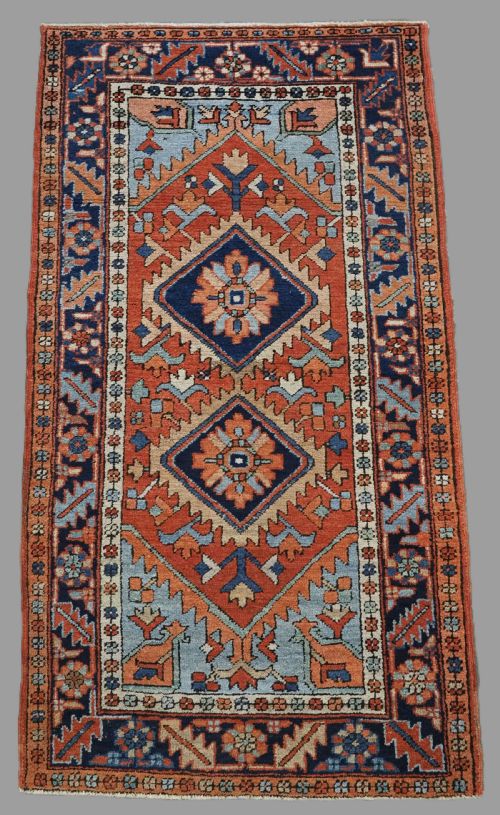
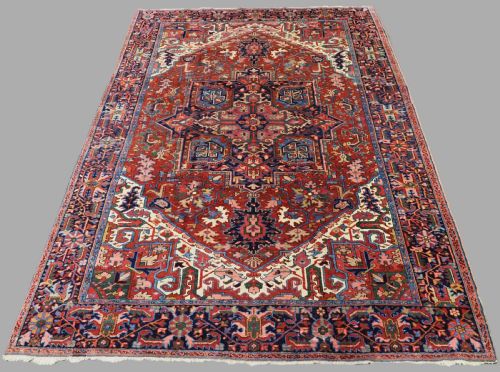


1900s Wool Area Carpet
When choosing a 1900s wool area carpet, you encounter heavy village and tribal weaving traditions designed to anchor a room with enduring material.
1900s Wool Area Carpet
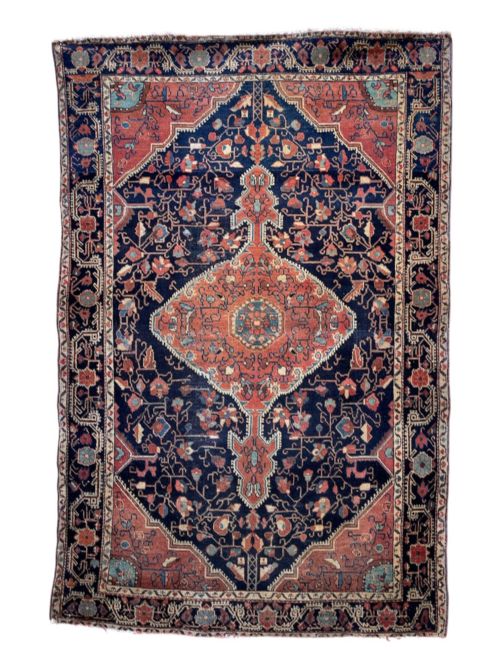
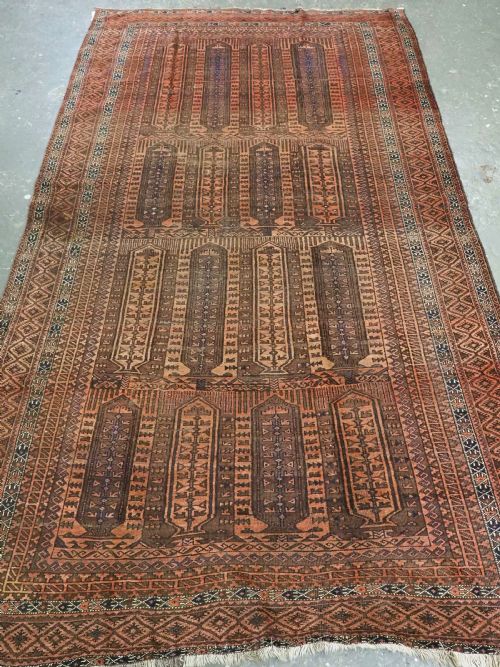
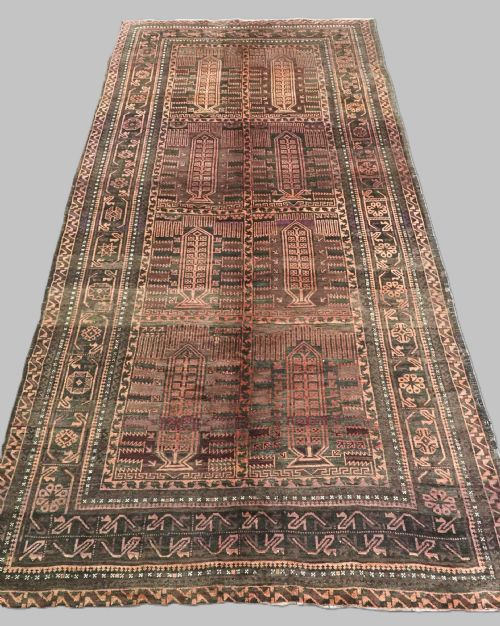
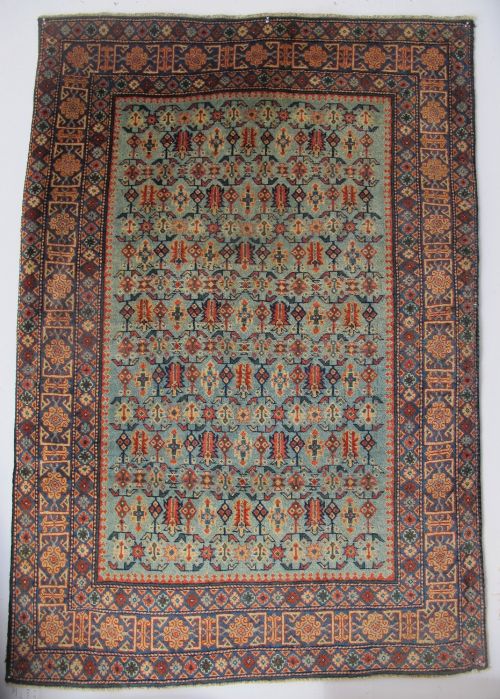
A 1900s wool area carpet covers a wide stylistic territory originating from Persian, Caucasian, Anatolian, and Turkmen regions. These pieces include smaller prayer rugs with mihrabs, medium room-sized carpets, and long runners woven by nomadic or village groups.
Tribal pieces often display geometric guls, boteh motifs, and repeating box medallions rather than elaborate court designs. Village weavers utilised traditional local patterns passed down through generations, resulting in strong symmetrical layouts.
The format ranges from compact Baluch prayer mats to substantial Heriz and Ersari room-sized main carpets. Each object reflects the specific weaving identity of its regional workshop or nomadic group.
Distinctions in Quality
Knot density and structural tightness set finer workshop carpets apart from coarser nomadic pieces. A tighter weave allows intricate designs like medallion outlines and delicate boteh motifs to render with sharper definition.
The integrity of the wool pile and the depth achieved through natural dyeing determine the visual impact of the piece. Carpets retaining rich, saturated warm reds and well-preserved structural edges command stronger presence within interiors.
Listings feature traditional materials including wool, cotton, silk, natural dyes, and camel hair across regional styles.
The 1900s Wool Area Carpet Glossary
- Mihrab
- A niche design element often found in prayer rugs, indicating the direction of prayer. This architectural motif is frequently rendered with stepped or multiple arches.
- Gul
- An octagonal or medallion-like repeating motif central to Turkmen and tribal carpet design. These tribal emblems distinguish specific weaving groups and clans.
- Boteh
- A swirling almond or pear-shaped motif representing a floral shoot or cypress tree. It appears across Persian and Caucasian regional weaving traditions.
- Kilim
- A flat-woven carpet or rug produced without a pile. These pieces rely on interlocking warp and weft threads to form geometric patterns.
1900s Wool Area Carpet: Frequently Asked Questions
Where were these carpets originally woven?
These carpets originate from traditional weaving centres across Persia, the Caucasus, Anatolia, and Central Asia. Nomadic tribes and village communities produced them for both practical domestic use and regional trade.
Specific styles trace back to regional groups such as the Baluch, Qashqai, Yomut, and Heriz communities. Each area utilised distinct local symbols and structural methods.
How do I care for a wool carpet?
Vacuum the carpet gently without using a rotating brush roll to protect the wool pile from unnecessary friction. Keep the piece out of direct, harsh sunlight to prevent natural dye fading over time.
Rotate the carpet periodically to ensure even wear patterns across high-traffic areas. Professional cleaning tailored to antique textiles preserves the integrity of the natural dyes and fibres.
What is the difference between a main carpet and a rug?
Main carpets are larger room-sized textiles traditionally woven to anchor the main living spaces of large nomadic or village households. They require significantly more time and material resources to produce than smaller formats.
Rugs and smaller runner formats served more portable functions, such as bedding covers, saddle bags, or prayer mats. Their dimensions suit hallways, entryways, or compact room layouts.
How are tribal designs identified?
Tribal designs rely on geometric memory patterns, repeating octagonal guls, and stylized animal or plant forms rather than precise botanical curves. Weavers worked without written blueprints, relying on tribal traditions.
Regions like the Caucasus feature sharp rectilinear stars and crosses, while Baluch weavers often incorporate dark aubergine grounds and camel hair details. These visual markers connect each piece to its specific cultural origin.