

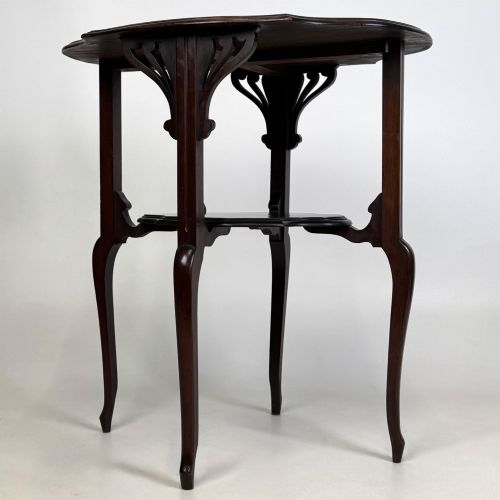
Dark Brown Accent Table
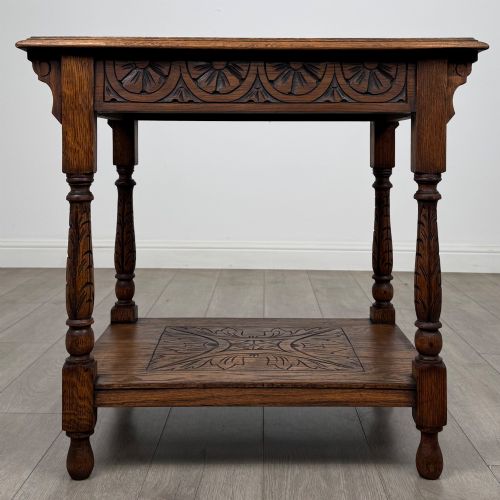
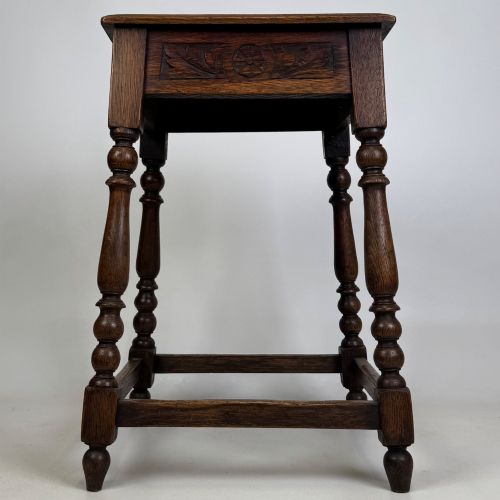
A dark brown accent table brings functional timber and period character to a room, ranging from robust seventeenth-century oak to polished Edwardian mahogany.
Dark Brown Accent Table
A dark brown accent table encompasses various utilitarian wooden forms designed for specific domestic tasks across multiple centuries. Buyers searching for a dark brown accent table typically encounter compact side tables, occasional tables, and plant stands produced in oak, mahogany, and walnut.
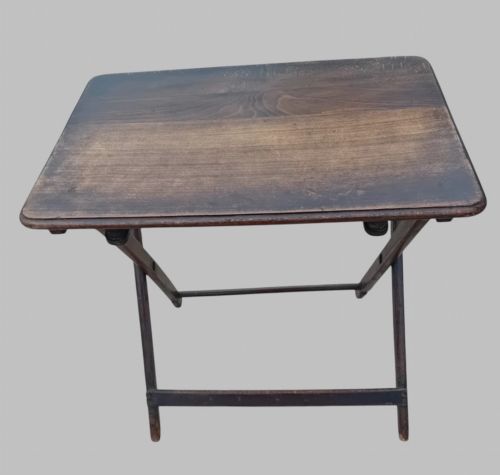
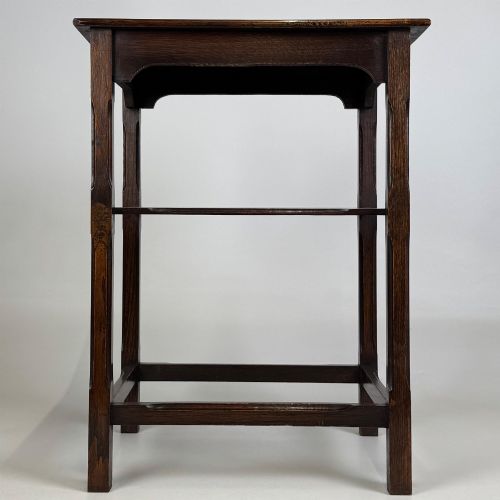
The selection on this page spans seventeenth-century gateleg and side tables through to Edwardian nests and campaign folding tables. Oak and mahogany dominate the material record, appearing in regional English designs alongside occasional continental and imported pieces.
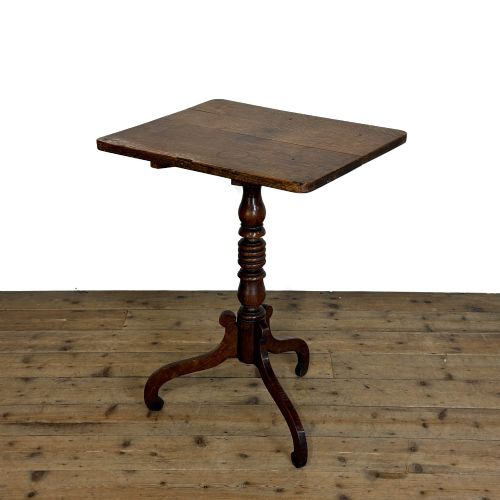
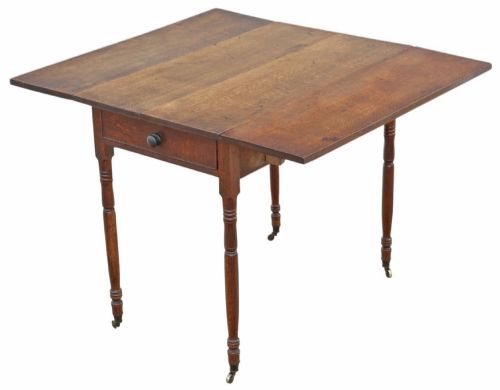
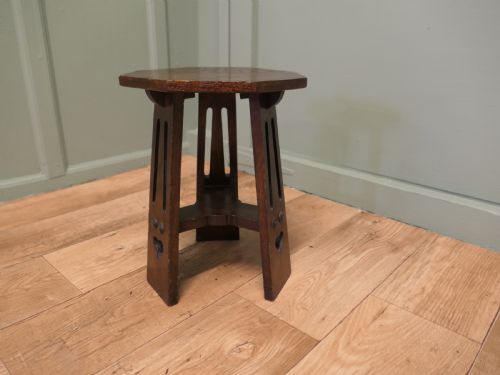
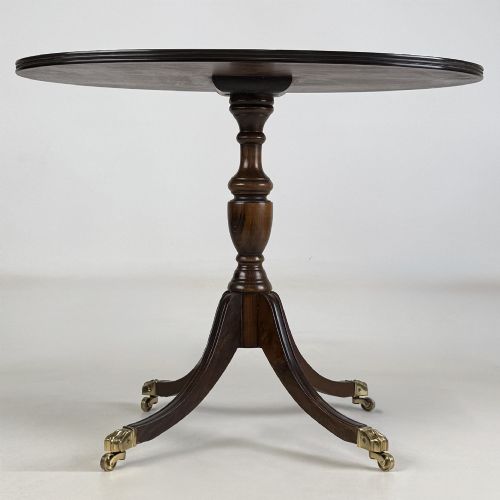
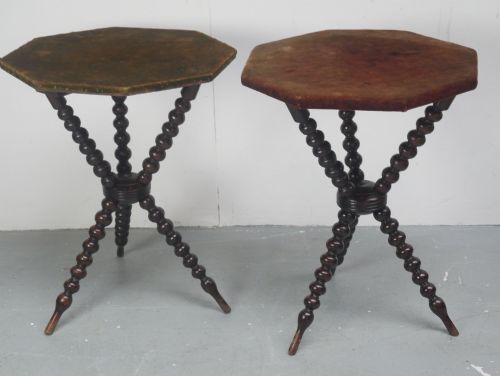
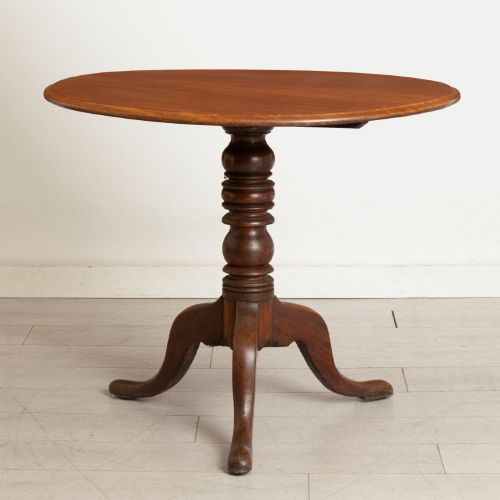
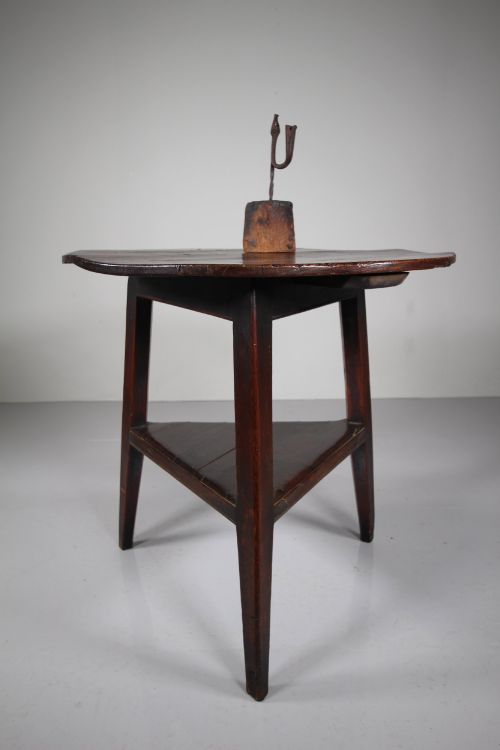
Common functional types include cricket tables with three legs, tilt-top pedestal tables, drop-leaf Pembroke dining tables, and small circular or octagonal occasional surfaces. These domestic objects reflect the changing requirements of interior furnishing from the seventeenth century into the twentieth.
Materials and Construction
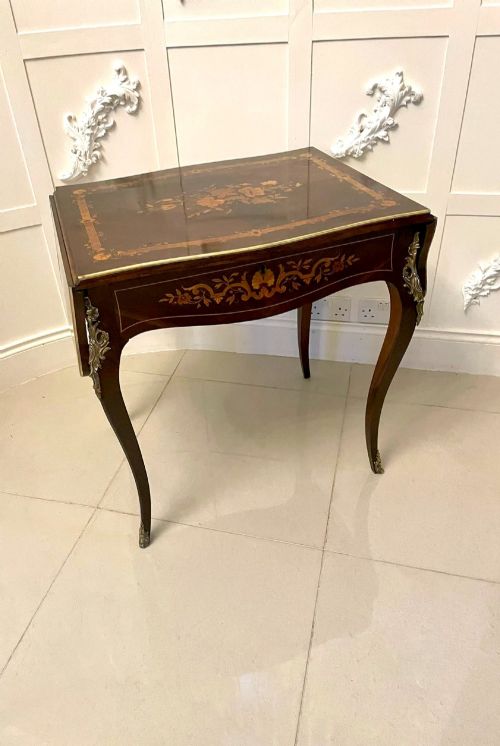
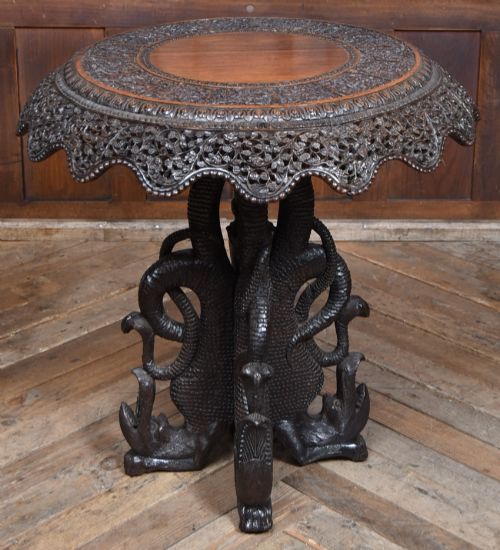
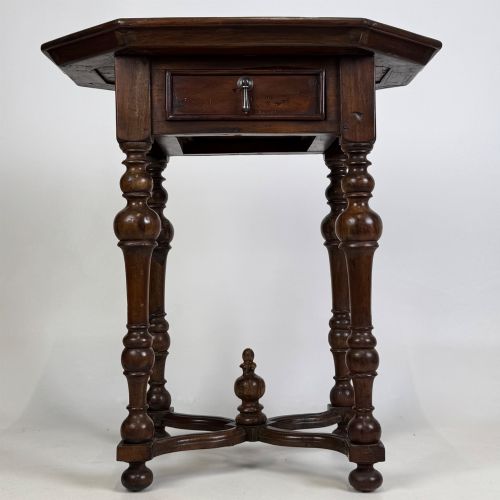
Cabinet makers utilised native and imported hardwoods, chiefly solid oak, mahogany, walnut, and rosewood, selected for grain density and deep natural colouration. Surfaces frequently display turned elements such as barley twist legs, or applied decorative details including marquetry inlay and carved panels.
Joinery methods range from pegged mortise and tenon joints on seventeenth-century and eighteenth-century oak frames to finer dovetails and turned supports on later Victorian and Edwardian examples. Timber surfaces were typically finished with traditional polishes and waxes that emphasise the dark brown tones of the core wood.
The inventory records diverse functional forms including plant stands, folding campaign tables, nests of tables, and gateleg dining variants.
Qualities of Construction and Age
Quality in these pieces rests upon the integrity of the timber selection, the crispness of hand-carved details, and the survival of original surface finishes. Solid hardwood construction with period-appropriate joinery distinguishes robust examples from later utilitarian reproductions.
The proportion of the timber, the subtlety of turned supports like barley twists or tapering legs, and the presence of documented maker attributions elevate certain pieces. Patina developed through prolonged domestic use indicates age and authentic handling over centuries.
Liberty & Co.·William Birch·Gregory & Co
The Dark Brown Accent Table Glossary
- Cricket table
- A small three-legged wooden table originating in the eighteenth century, traditionally utilised near hearths for domestic convenience. The three legs provide stability on uneven floors.
- Tilt-top table
- A pedestal table featuring a mechanism that allows the wooden top to pivot vertically when not in use. This clever design saved valuable floor space in period rooms.
- Gateleg table
- A drop-leaf table with hinged flaps supported by swing-out legs that resemble a gate opening. This form allows the surface area to expand or contract as required.
- Barley twist
- A decorative turning technique resembling a spiralling rope column, popular on seventeenth-century and later revival furniture. It adds textural depth to table legs and structural supports.
- Marquetry
- The art of applying decorative veneer pieces to a structural surface to form geometric or floral patterns. French rosewood examples frequently utilise this detailed craft.
Dark Brown Accent Table: Frequently Asked Questions
How do I date an old oak side table?
Examination of the timber grain, tool marks, and joinery methods reveals the period of manufacture. Hand-cut joints and pegged construction typically indicate earlier centuries.
Secondary woods, fastening types, and surface wear patterns further assist in confirming whether a piece originates from the seventeenth, eighteenth, or Victorian eras.
What is a tilt top table used for?
A tilt-top table served as a flexible occasional surface that could be stored flat against a wall when floor space was needed. The pivoting mechanism allowed households to clear rooms quickly.
In modern interiors, these pieces function effectively as display surfaces or bedside tables while retaining their mechanical pivot feature.
How should I clean a dark wood table?
Maintenance requires gentle dusting with a soft cloth and the occasional application of traditional beeswax to nourish the timber. Avoid synthetic sprays and prolonged exposure to direct sunlight.
Preserving the original polish and accumulated patina maintains the historical character and visual depth of the wood.