
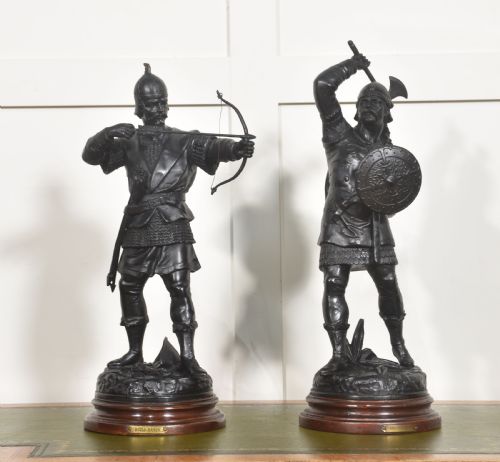


Dark Bronze Warrior Statue
A dark bronze warrior statue stands ready, capturing classical heroism, mythological power and historical defiance in heavy metal.

Dark Bronze Warrior Statue
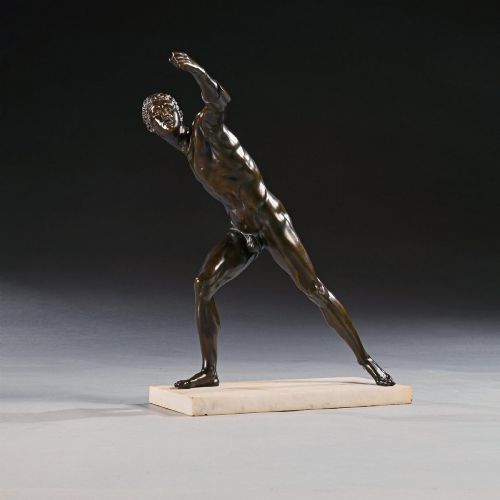
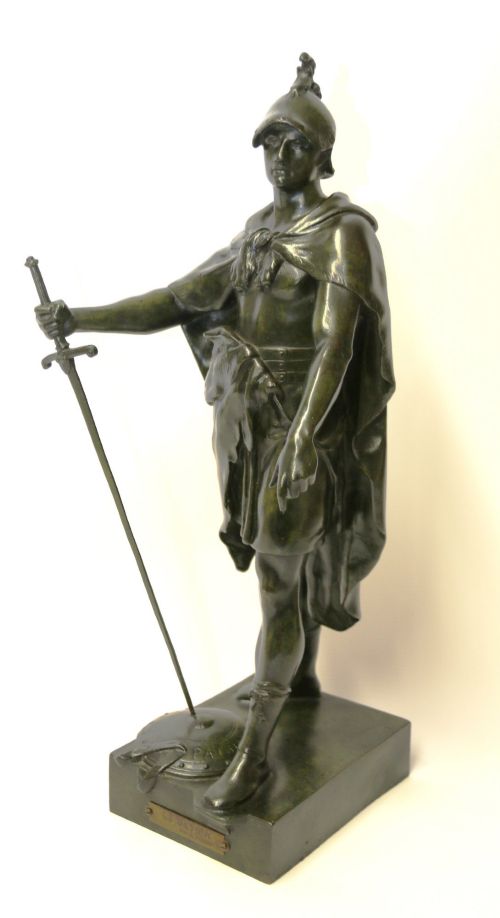
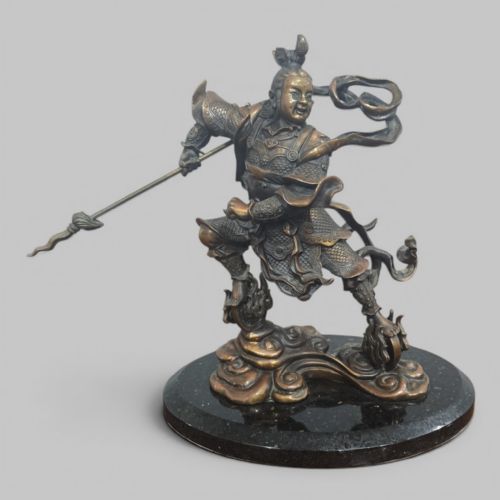
A dark bronze warrior statue represents figures from classical mythology, ancient history and global military tradition cast into enduring metal. When searching for a dark bronze warrior statue, collectors encounter pieces spanning the nineteenth century alongside later twentieth-century interpretations.
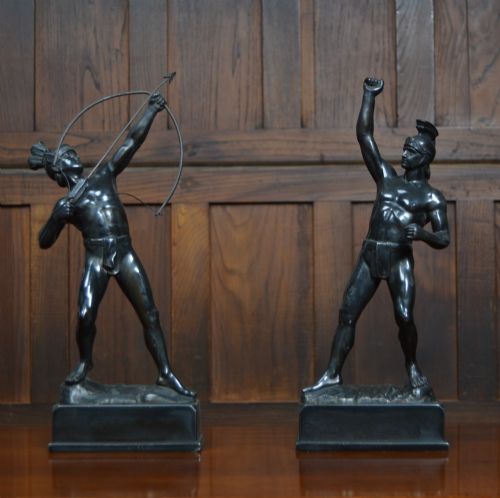
The selections on this page range from grand French academic casts and Italian Grand Tour souvenirs to specific historical commanders like Hannibal, Saladin and Vercingetorix. These sculptures appear as standing figures, archers, gladiators and equestrian monuments mounted upon stable bases.
Makers drew inspiration from ancient Greek, Roman, Renaissance and Victorian historicism to shape these heroic forms. The resulting objects function equally as decorative centrepieces and substantial historical representations.
Materials and casting methods
Foundries predominantly utilised bronze, patinated bronze and alternative metal alloys such as spelter and zinc to cast these sculptures. Artisans applied chemical patination treatments to achieve the characteristic dark surface tones visible across the pieces.
Many nineteenth-century examples incorporate marble plinths or wooden bases to support the heavier metal figures. Fine chasing and finishing work followed the initial casting process to define musculature, armour details and facial expressions.
Ancient Spartan kings, Roman gladiators and Celtic warriors share shelf space here, keeping watch over modern living rooms.
Assessing sculptural quality
The depth and durability of the patination contribute significantly to visual success. Original patination applied with skill preserves the contours of the metal without obscuring the underlying modelling.
Émile Louis Picault·Eugene Barillot·Franz Iffland·Emile Laporte·Richard Aurili
The Dark Bronze Warrior Statue Glossary
- Patinated bronze
- Bronze treated with chemical solutions to produce a specific surface colour, often dark brown, black or green. This layer protects the metal while enhancing visual depth.
- Spelter
- A zinc alloy frequently utilised as a less expensive alternative to bronze during the Victorian period. It accepts patination well to simulate heavier metals.
- Grand Tour
- A cultural journey undertaken by nineteenth-century travellers who acquired bronze souvenirs of classical sculptures in Italy and France. These reductions replicate famous museum antiquities.
- Lost-wax casting
- A traditional method where a wax model is melted from a mould and replaced with molten metal. This technique allows for intricate detail in figurative sculpture.
- Chasing
- The manual refinement of a metal casting using small chisels and hammers to sharpen details. Master sculptors employed this step to elevate the finish of the bronze.
Dark Bronze Warrior Statue: Frequently Asked Questions
How do I distinguish bronze from spelter?
Bronze is heavier, denser, and generally cooler to the touch than zinc alloy alternatives. Examining the underside often reveals the paler grey metal colour of spelter beneath worn patination.
Magnification helps identify casting seams and porosity that differ between traditional bronze foundries and mass-produced alloy manufacturing methods.
What is a Grand Tour souvenir?
Grand Tour souvenirs are smaller bronze reductions of famous classical statues purchased by travellers touring European cultural centres during the nineteenth century. These pieces allowed collectors to bring museum antiquities into private domestic spaces.
Such sculptures frequently bear patination designed to mimic excavated ancient artefacts and typically rest on integrated or fitted marble bases.
How should I clean a dark bronze statue?
Dusting gently with a soft, dry brush is sufficient for routine maintenance of patinated surfaces. Avoid commercial metal polishes, water, or abrasive cloths that strip the chemical patination.
Applying a very light coat of microcrystalline wax can protect the metal surface from atmospheric moisture without altering the dark finish.
Why do some figures depict historical commanders?
Victorian and nineteenth-century sculptors drew heavily upon classical history, literature and nationalist sentiment to portray legendary leaders. Figures like Vercingetorix, Saladin and Ajax embodied courage and defiance prized by contemporary collectors.
These sculptures served as educational ornaments and displays of erudition within nineteenth-century libraries, studies and formal reception rooms.