



Dark Bronze Vessel Pair
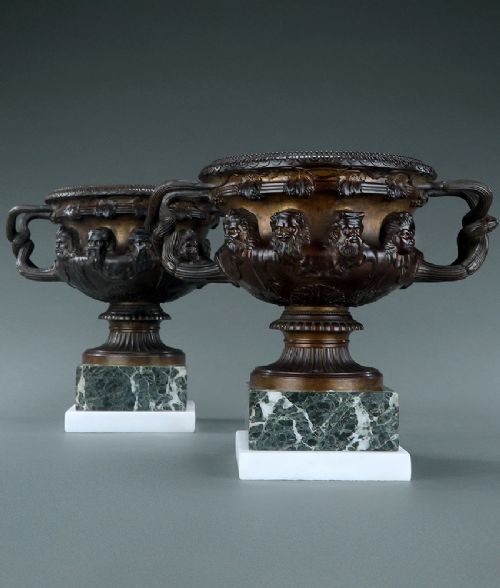
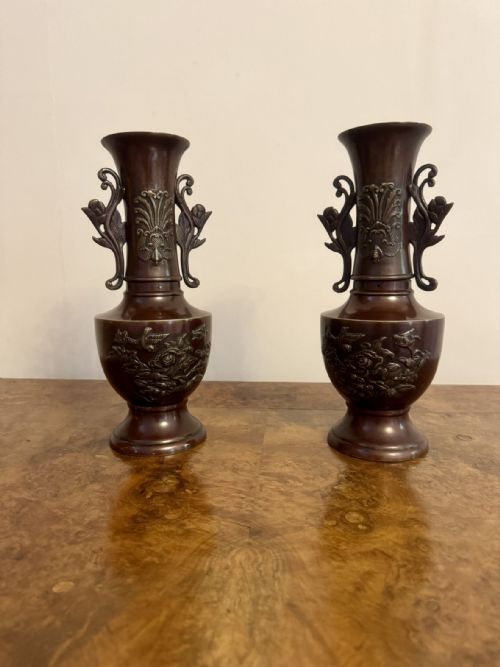
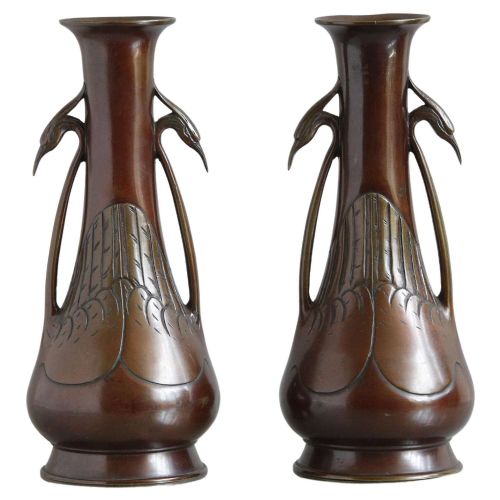
These dark bronze vessel pair examples bring together patinated metal, marble bases and intricate cast forms from the nineteenth century.
Dark Bronze Vessel Pair
A dark bronze vessel pair comprises matched containers cast during the nineteenth century, most commonly taking the form of Japanese Meiji period vases, urns and jardinieres alongside European Grand Tour pieces.
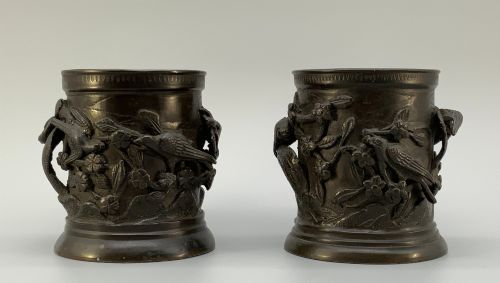
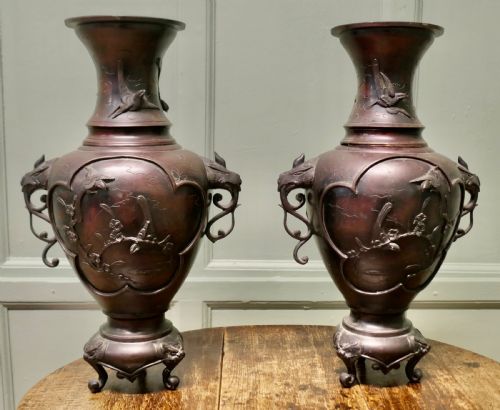
The selections on this page centre heavily on Japanese bronzes featuring birds, blossom, and raised detail, alongside Italian Grand Tour goblets and neoclassical urns.
Buyers seek these matched pairs for symmetry and decorative presence, utilising them as mantle ornaments, altar vessels or floral display pieces.
How they were made
Foundries utilised traditional casting methods in bronze, applying patination agents to achieve dark surface tones ranging from deep chocolate brown to near black.
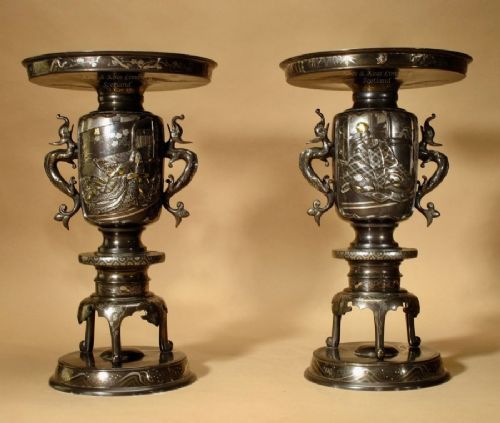
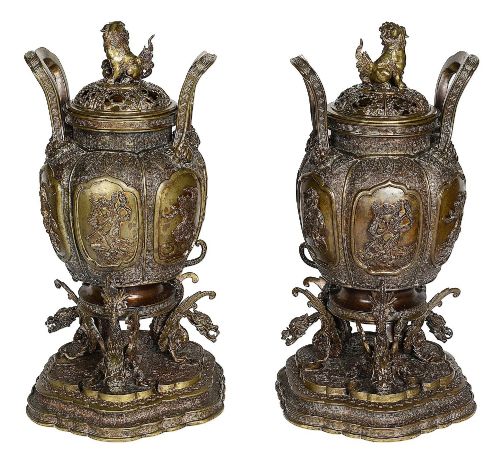
Many items incorporate mixed metal elements, applying gold inlay, silver inlay and raised metal details to depict natural scenes across the body of the vessel.
Certain pieces combine patinated bronze with green marble or white marble components, uniting cast metalwork with carved stone bases.
Several Meiji period pairs feature delicate handles sculpted as lifelike egrets and elephants guarding the vessel rims.
What varies in quality
The refinement of the casting and the depth of the chased surface work separate standard production pieces from exceptional foundry outputs.
Subtlety in the patination and the precision of inlaid gold or silver details indicate the skill of the maker during the Meiji period or the Grand Tour era.
The Dark Bronze Vessel Pair Glossary
- Patinated bronze
- Bronze treated with chemicals or heat to alter the surface colour, typically resulting in a dark, weathered tone. This finish protects the metal and defines the sculptural contours.
- Meiji period
- The era in Japanese history spanning from 1868 to 1912, characterised by the opening of trade with the West and exceptional metalwork production. Pieces from this time frequently feature naturalistic motifs like birds and blossom.
- Grand Tour
- A nineteenth-century cultural journey undertaken by wealthy Europeans to study classical antiquities, resulting in souvenirs such as bronze vases and goblets modelled on ancient artefacts.
- Jardinieres
- Large decorative containers designed to hold potted plants or floral arrangements, often cast in bronze with twin handles or raised relief decoration.
- Baluster urn
- A vase form featuring a rounded body swelling above a narrow base, topped by a slender neck and matching lid.
Dark Bronze Vessel Pair: Frequently Asked Questions
How are these bronze vessels cleaned?
Dust gently with a soft, dry cloth to preserve the historic patina and any delicate surface inlays.
Avoid chemical polishes or water, which can strip away the dark oxidised finish and damage mixed metal details.
What periods do these pieces date from?
The listings span the nineteenth century and the early twentieth century, with a concentration on the Meiji period and Victorian eras.
Dates are determined by stylistic markers, casting techniques, and historical documentation associated with the workshops of origin.
Can these vases hold water?
Most antique bronze vessels are intended for dry display or use with a concealed inner container to protect the historic metal.
Moisture can interact with residual casting materials or compromise ancient patination over extended periods.
Why are they sold as pairs?
Matched pairs were created by nineteenth-century foundries to provide symmetry for interior decoration on mantelpieces, sideboards and architectural consoles.
Keeping two complementary vessels together maintains their historical pairing and visual balance.