



Dark Bronze Stallion
A dark bronze stallion sculpture brings muscular power and classical equine grace into a room.
Dark Bronze Stallion
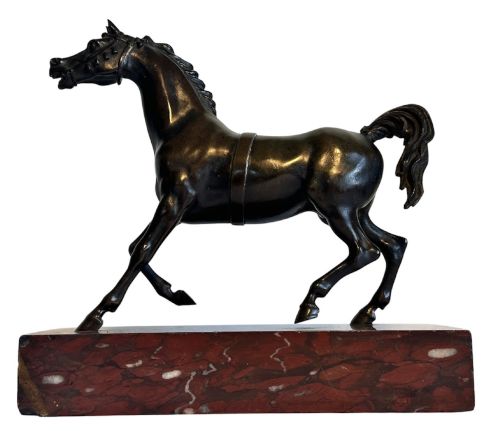
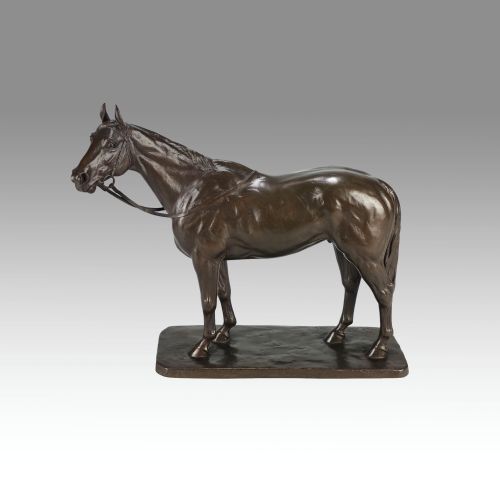
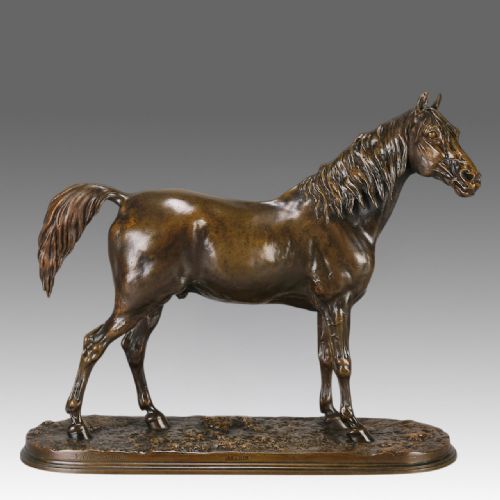
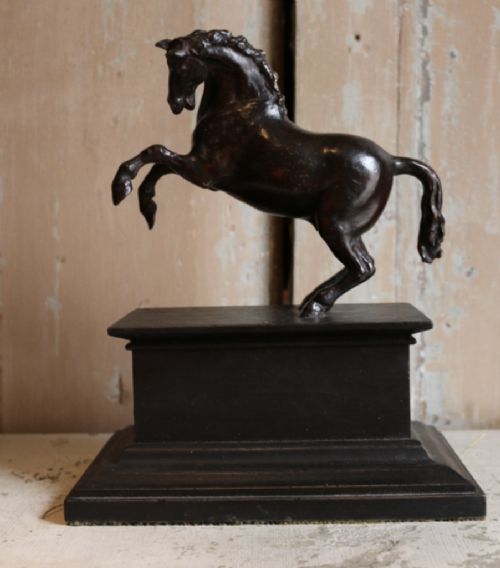
When searching for a dark bronze stallion, collectors find figurative sculptures capturing horses in motion or repose, frequently mounted on marble or stone bases. The pieces on this page span several centuries, running from the seventeenth century through nineteenth-century Animalier works up to contemporary equestrian pieces and vintage statues.
The most frequent examples encountered here belong to the nineteenth-century Animalier school, which focuses on realistic portrayals of animals with careful attention to musculature and anatomical detail. French and Italian makers dominate these historical sculptures, alongside Japanese Taisho period works and later twentieth-century interpretations.
How they were made
These sculptures are produced using traditional casting methods in bronze, often finished with a dark patinated surface that accentuates the contours of the animal. Many nineteenth-century and earlier examples rely on cast bronze mounted directly onto heavy marble or wooden bases for stability.
Makers utilise patination techniques to create deep, dark surface tones on the metal, which range from rich brown to near-black finishes. This dark skin protects the bronze while defining the musculature, veins, and texture of the stallion's coat.
Listings on this site include works spanning the 17th century, 19th century, and periods up to contemporary equestrian pieces.
What varies in quality
The depth and nuance of the patina also separate standard castings from exceptional ones. Master founders achieved subtle tonal gradations across the dark bronze surface that catch the light, while inferior pieces present a flat, uniform colour lacking depth.
Kunio Itô·P J Mêne·Luigi Secchi·Muñoz·Philip Blacker·Pierre Jules·Charles Crozatier
The Dark Bronze Stallion Glossary
- Animalier
- A nineteenth-century artistic movement dedicated to the realistic representation of animals. Sculptors in this tradition focused on accurate anatomy and dynamic movement.
- Patina
- The surface coloration and chemical layer developed on bronze over time or through artificial treatment. A dark patina enhances the sculptural details of the horse.
- Cast bronze
- Metal poured into a mould to form the sculpture. This technique allows for intricate detail in equine mane and muscle structures.
- Realism
- An artistic style striving for accurate, unidealized depiction of subjects. In these sculptures, it shows in the truthful rendering of the stallion's proportions.
Dark Bronze Stallion: Frequently Asked Questions
How old are these bronze stallions?
The pieces span from the seventeenth century through the nineteenth and twentieth centuries up to contemporary works.
Most examples originate from the nineteenth century during the height of the European Animalier movement.
What materials are used in the bases?
Many sculptures incorporate heavy marble or stone bases to support the weight of the cast metal.
Some pieces also utilise wooden plinths depending on the period and origin of the sculpture.
How do I care for a dark bronze sculpture?
Keep the bronze away from direct moisture and dust it gently with a soft, dry cloth.
Avoid using harsh chemical polishes that can strip the dark patina from the metal surface.
What is the Animalier school?
Animalier refers to nineteenth-century artists who specialised in lifelike sculptures of animals in action.
French and Italian bronze founders produced many of the most celebrated examples in this genre.