
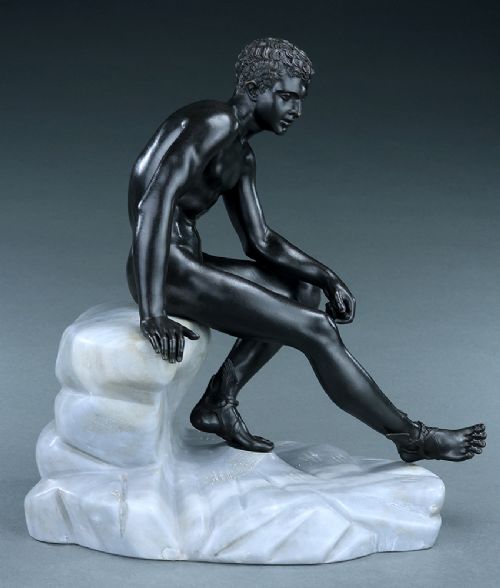
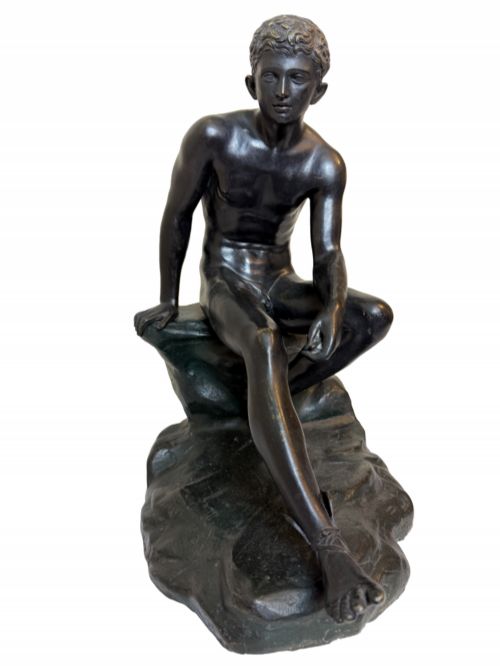


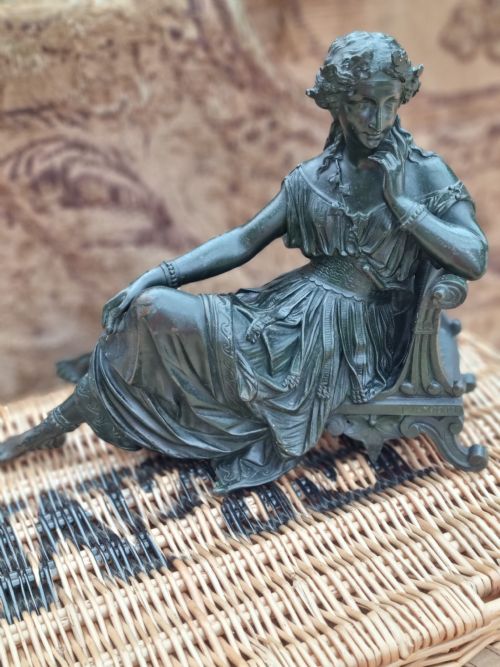
Dark Bronze Seated Figure
A dark bronze seated figure brings classical mythology, Eastern spirituality and nineteenth-century foundry skill straight into a room.
Dark Bronze Seated Figure
When you search for a dark bronze seated figure, you encounter an array of sculptural works spanning multiple centuries and cultural traditions. These pieces range from European Grand Tour souvenirs of classical deities and Renaissance figures to Southeast Asian devotional statues of Buddhas and Bodhisattvas. The nineteenth century yields a high proportion of French and Italian castings depicting mythological subjects, allegories and literary characters.
Forms vary from monumental gallery bronzes down to cabinet-sized souvenirs and cabinet figures mounted on marble, ebonised wood or timber bases. You will frequently find subjects seated on rocks, shells or classical plinths, reflecting the Neoclassical taste for heroic or contemplative postures. Eastern examples encompass Burmese Mandalay Buddhas and Thai deities cast in traditional mudras.
The aesthetic bridges European academic realism and sacred Asian iconography, united by the medium of cast metal. Whether depicting Hermes, Demeter, or Guanyin, the common denominator is a seated posture rendered in patinated or cast bronze.
How they were made
The works rely upon traditional foundry methods, primarily lost-wax casting, which allows for intricate detail in hair, drapery and facial expressions. Molten bronze is poured into moulds, capturing the subtle textures modelled by the sculptor.
Patination follows the casting process, giving the metal its characteristic dark surface tones through chemical application or natural ageing. Many European examples are paired with bases of grey marble, brass or inlaid wood to anchor the composition.
Styles represented include Neoclassical, Grand Tour, Art Nouveau and Burmese Mandalay traditions.
What varies in quality
The crispness of the chase work and the subtlety of the surface patination distinguish superior castings from standard commercial productions. A finer piece retains sharp anatomical definition, delicate hand-finishing on extremities and a deep, even colouration rather than a flat, painted finish.
The quality of the mount and the integrity of the base also dictate the standing of the work. European Grand Tour bronzes benefit from heavy, well-fitted marble or timber plinths that complement the proportions of the seated figure without overpowering the metalwork.
Hector Lemaire·Zoffoli·Mercié·Pierre Hebert·Henri Plé·Pigale
The Dark Bronze Seated Figure Glossary
- Grand Tour
- A cultural journey undertaken by wealthy young Europeans in the eighteenth and nineteenth centuries, resulting in the acquisition of classical art souvenirs such as bronze statuettes.
- Patinated Bronze
- Metal treated with chemicals to produce a specific surface colour, most commonly dark brown, green or near-black tones.
- Lost-Wax Casting
- A metalworking process where a molten metal is poured into a mould that has been created by means of a wax model.
- Bhumisparsha Mudra
- A Buddhist hand gesture symbolising the earth as witness, frequently seen in seated Buddha sculptures.
- Neoclassical
- A style originating in the mid-eighteenth century inspired by the classical art and architecture of ancient Greece and Rome.
Dark Bronze Seated Figure: Frequently Asked Questions
What periods do these bronzes come from?
The selection includes sixteenth-century temple bronzes alongside nineteenth-century European castings and twentieth-century interpretations. Most European items date from the height of the Grand Tour and the Victorian era.
Asian works span from historical temple pieces to later nineteenth-century Mandalay traditions.
How should I display a heavy bronze figure?
These sculptures require sturdy furniture capable of supporting considerable weight, particularly examples mounted on marble or timber bases. Position them away from direct heat sources to protect any patinated surfaces or inlaid wood.
Adequate side lighting helps reveal the subtle contours of the dark metal.
Are these figures solid bronze?
Many larger sculptures are cast hollow to reduce weight and material costs, while smaller cabinet figures may be cast solid. Foundry practices varied according to the size and intended placement of the piece.
Heavier bases often incorporate marble or brass to improve stability.
How do I care for the dark patina?
Dust the surface gently with a soft, dry brush to prevent particulate accumulation without disturbing the chemical finish. Avoid abrasive cleaners, moisture and chemical polishes that can strip the original patination.
Occasional light application of specialist museum wax can help protect the metal.