



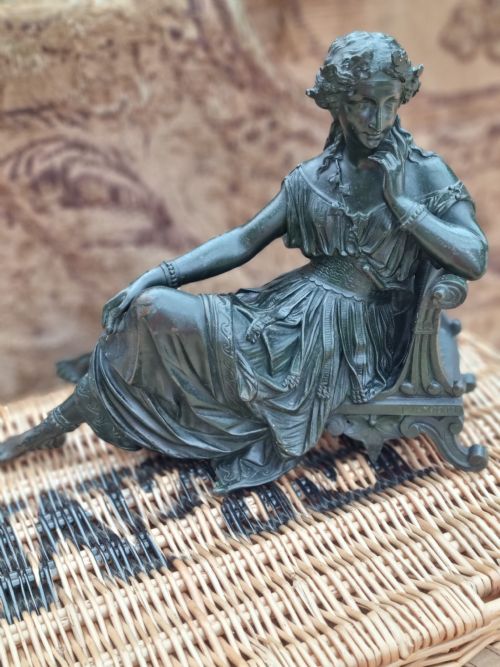


Classical Lady Bronze
These classical lady bronze figures combine romantic drapery and mythological poise, offering an enduring centrepiece for a mantel or desk.
Classical Lady Bronze
A classical lady bronze represents female figures drawn from antiquity, often styled as robed figures, bathing women, or neoclassical portraits. These sculptures frequently appear as tabletop bronzes, portrait busts, and figural bookends rooted in nineteenth-century French foundry traditions.
Buyers encounter subjects ranging from robed neoclassical ladies to Art Nouveau figures with flowing hair. The selection spans standing sculptures, reclining studies, and functional pieces like table lamps and figural mirrors.
Origins heavily lean towards French workshops spanning the Victorian and Edwardian eras, alongside related pieces executed in patinated metal and plaster. The pieces bridge decorative arts and sculptural portraiture, maintaining a distinct nineteenth-century aesthetic.
Judging sculptural quality
Quality rests in the crispness of the chasing and the subtlety of the surface patination. Finer casts preserve delicate facial expressions and intricate drapery folds without softening during the finishing process.
The weight of the cast and the integration of secondary materials like marble plinths elevate certain pieces. Signed works by documented sculptors carry a distinct level of sculptural fidelity compared to anonymous workshop productions.
Listings feature works spanning the 1860s through the 1930s, encompassing Victorian, Edwardian, and Art Deco movements.
Maurice Bouval·Emmanuel Villanis·Pierre Hebert·Henri Honore Ple·J C De Blezer
The Classical Lady Bronze Glossary
- Patinated bronze
- Bronze treated with chemical solutions to produce a specific surface colour and finish. This layer protects the metal while enhancing visual depth.
- Spelter
- A zinc alloy commonly utilised as a cost-effective alternative to bronze. It often receives a bronze-coloured coating to mimic heavier metal.
- Neoclassical
- A style reviving classical Roman and Greek motifs. It emphasises restraint, classical drapery, and formal symmetry.
- Art Nouveau
- A decorative movement characterised by flowing lines and organic plant-like forms. It heavily influenced European sculpture around the turn of the twentieth century.
- Plinth
- A heavy base supporting a bust or statue. These are frequently fashioned from marble or timber to stabilise the figure.
Classical Lady Bronze: Frequently Asked Questions
How do I identify a bronze from spelter?
Bronze is heavier, colder to the touch, and rings with a clear tone when tapped gently. Spelter is softer, lighter, and often reveals a greyish metal beneath worn areas of its surface coating.
Examining the underside or areas of natural wear usually clarifies the base metal used in the casting process.
Where were most of these figures made?
The majority originate from nineteenth-century French foundries and workshops. French artisans dominated the production of decorative neoclassical and Art Nouveau sculptures.
These pieces often reflect the stylistic trends of the Victorian and Edwardian periods in France.
How should I clean a patinated bronze?
Dust the surface gently with a soft, dry cloth. Avoid chemical cleaners, water, or abrasive polishes that can strip the original patination.
Preserving the chemical finish maintains the historical integrity and visual depth of the metal.
What does a signature indicate on a sculpture?
Signatures indicate the artist who modelled the original clay or wax sculpture before it went to the foundry. Many popular nineteenth-century models were cast in multiple editions by various foundries.
Signed works often provide a direct link to well-documented European sculptors of the period.