

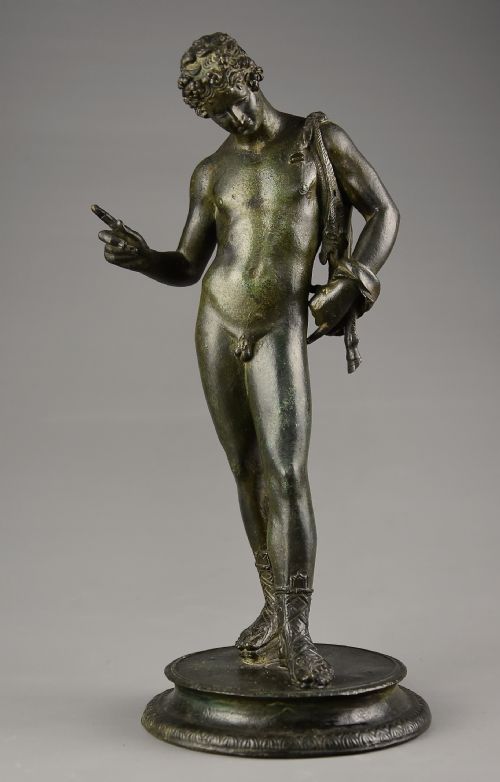
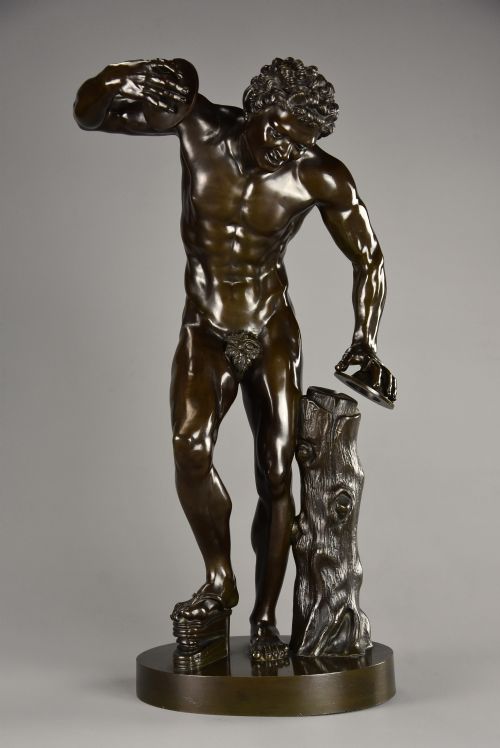


Dark Bronze Male Figure
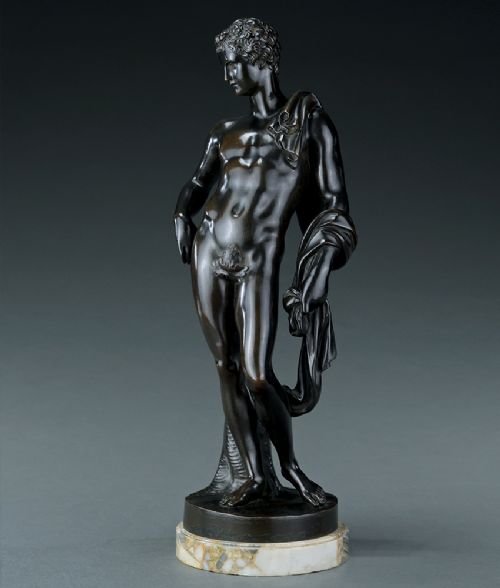
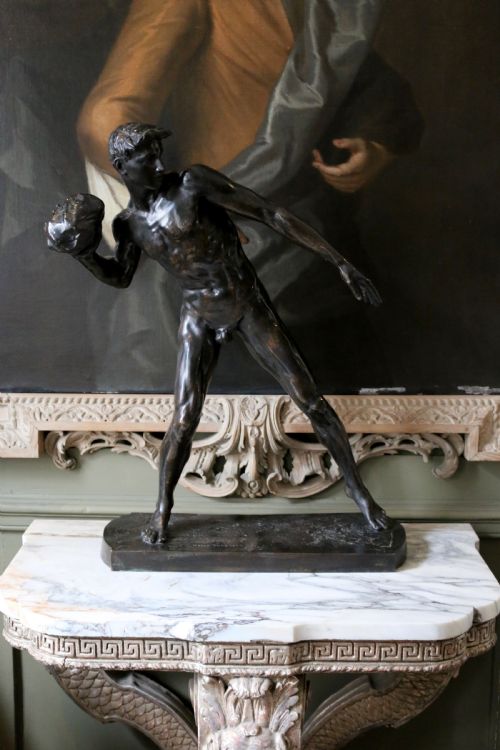
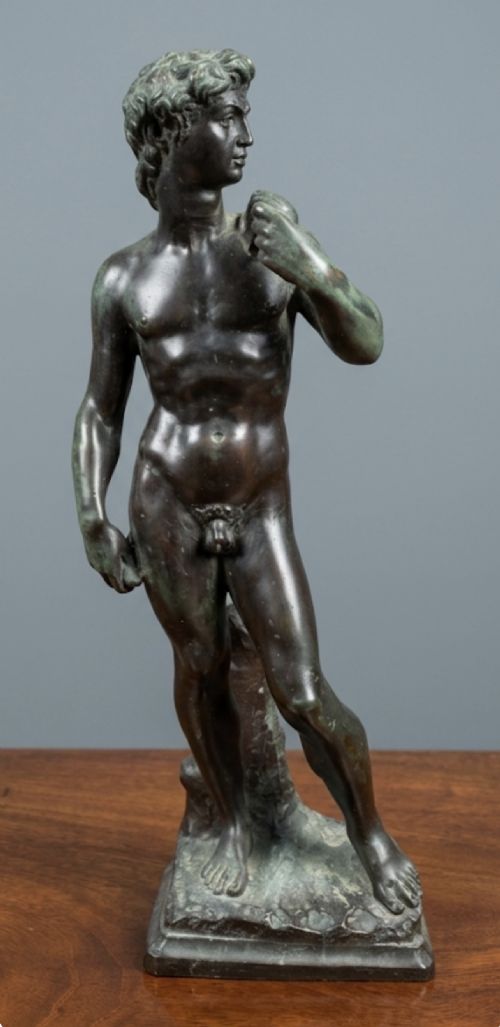
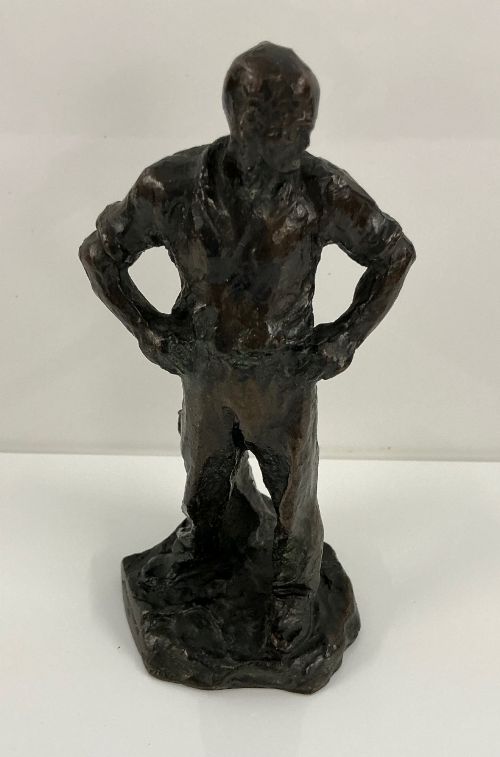
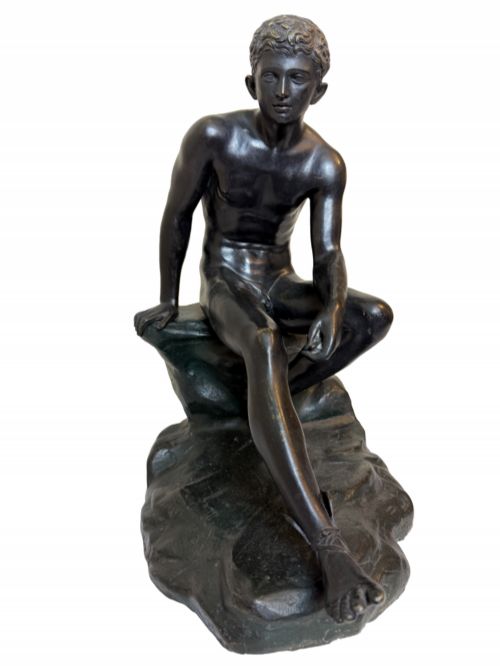
A dark bronze male figure brings classical mythology, athletic power and historical scale directly into a room.
Dark Bronze Male Figure
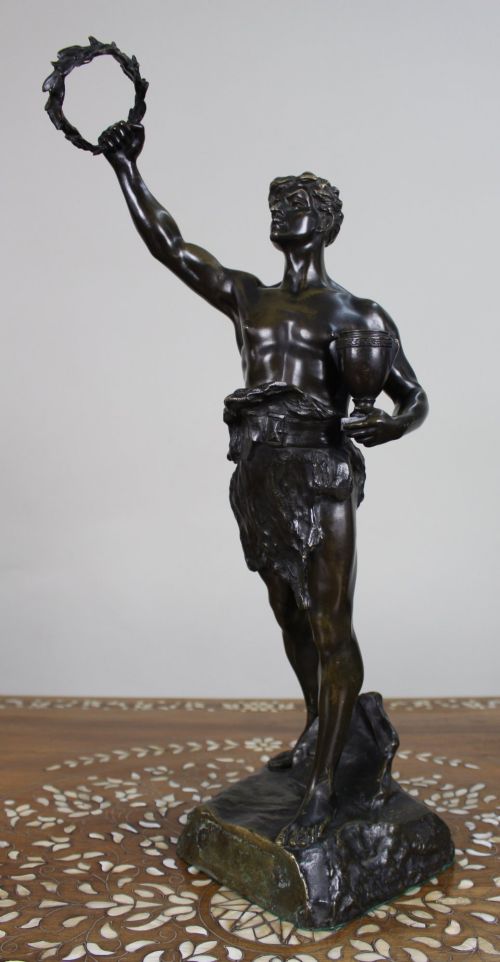
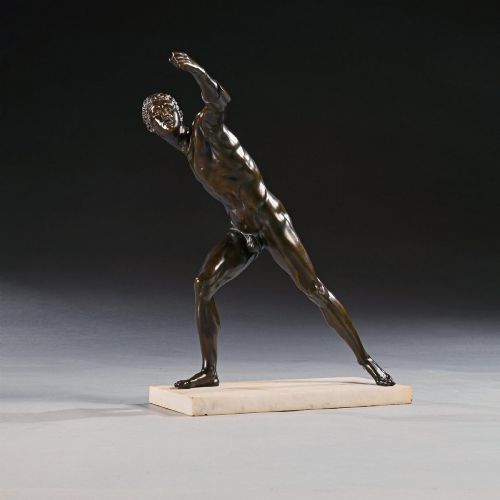
A dark bronze male figure encompasses classical subjects, mythological deities and heroic labourers spanning the nineteenth and early twentieth centuries. Pieces range from grand tour souvenirs cast in Italy to large-scale French salon sculptures and athletic studies.
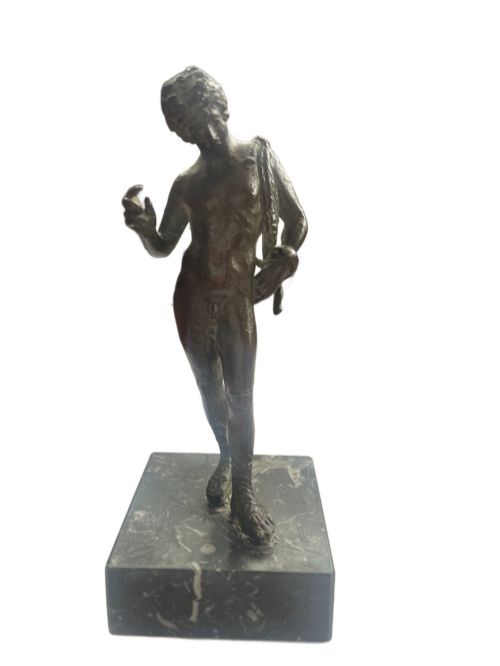
Collectors frequently encounter representations of antique originals such as Narcissus, the Dancing Faun, Mercury and various gladiators. These subjects reflect both classical revival taste and nineteenth-century academic sculpture traditions.
Forms extend from cabinet statuettes and heavy mantle pieces to figural table lamps and monumental works mounted on marble bases. The patination varies from rich dark brown to deep green surfaces applied over the bronze.
Materials and casting methods
The primary material is cast bronze, frequently finished with a dark chemical patination to simulate aged metal or replicate archaeological finds. Many examples incorporate integral bases of fossil marble or carved wood to support the weight of the sculpture.
Foundries utilised traditional lost-wax casting or sand casting techniques, followed by careful chasing of the metal surface with chisels and files to define musculature and drapery. Signatures, foundry stamps and titles are often cold-chiselled or cast directly into the metal base.
Listings include materials such as bronze, patinated bronze, fossil marble, brass, carved wood and glass across multiple sculptural forms.
Distinctions in craftsmanship
Quality rests primarily in the crispness of the chasing and the anatomical precision of the human form, where superior pieces retain sharp details in hair, hands and facial expressions. Lesser examples suffer from soft modelling and hurried surface finishing that obscure the underlying musculature.
The depth and stability of the chemical patination, along with the weight and integration of any marble or stone base, mark the distinction between commercial tourist souvenirs and ambitious works by named sculptors.
Hamo Thornycroft·Jules Dalou·Julien Lorieux·Emile Louis Picault·Raoul Francois Larche·Bruno Zach·Franz Iffland
The Dark Bronze Male Figure Glossary
- Grand Tour
- A cultural journey undertaken by nineteenth-century travellers who acquired bronze souvenirs cast after classical antiquities in Italy and France.
- Patination
- The chemical treatment or natural weathering applied to the surface of bronze to produce a specific dark colour or protective finish.
- Lost-wax casting
- A historic method of metal casting where a wax model is melted out and replaced with molten bronze to capture intricate details.
- Chasing
- The manual post-casting process of refining and detailing the metal surface using small hammers and punches.
- Neoclassical
- An artistic style drawing inspiration from the classical art and culture of ancient Greece and Rome.
Dark Bronze Male Figure: Frequently Asked Questions
What are grand tour bronzes?
Grand tour bronzes are reduced-scale or full-size souvenir sculptures cast in nineteenth-century European workshops, particularly in Naples and Rome. Travellers collected these pieces to commemorate their educational tours of classical antiquities.
These figures often reproduce famous statues discovered in excavations at Pompeii and Herculaneum. They served as scholarly decorations in nineteenth-century libraries and studies.
How do I identify a signed bronze?
Signatures and foundry stamps are typically located on the top or side of the integral bronze base near the feet of the figure. Sculptors and foundries stamped or incised these marks into the metal before or during the patination process.
Magnification helps distinguish genuine cast signatures from later spurious engravings. Comparing the lettering style to documented examples by the same maker confirms authenticity.
Why do some figures stand on marble bases?
Marble and fossil marble bases provide physical stability for heavy bronze sculptures and elevate the visual presentation of the artwork. Nineteenth-century makers frequently paired dark patinated figures with contrasting pale or fossiliferous stone plinths.
These bases also protected fine furniture surfaces from direct contact with heavy metal. Many original Grand Tour pieces retain their fitted stone mounts as an integral part of their design.