

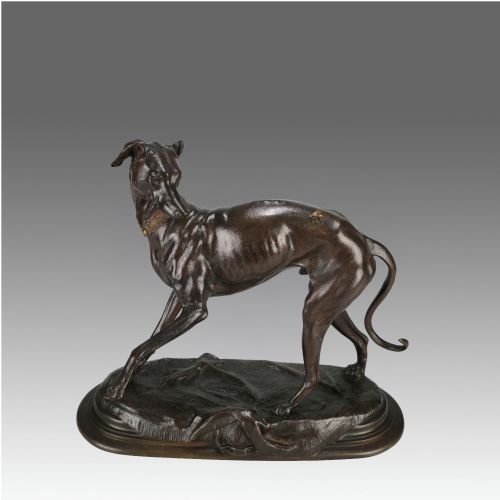


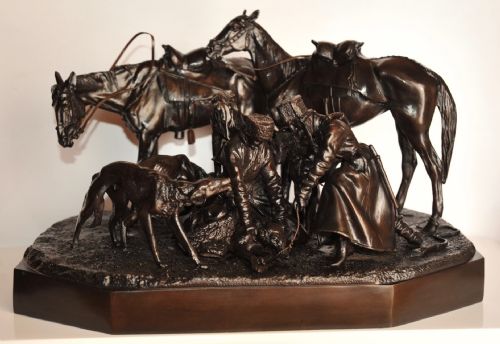
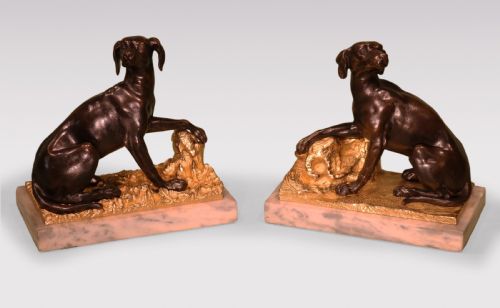


Dark Bronze Hound Figure
A dark bronze hound figure brings muscular tension and sculptural grace into a room through precise metalwork.
Dark Bronze Hound Figure
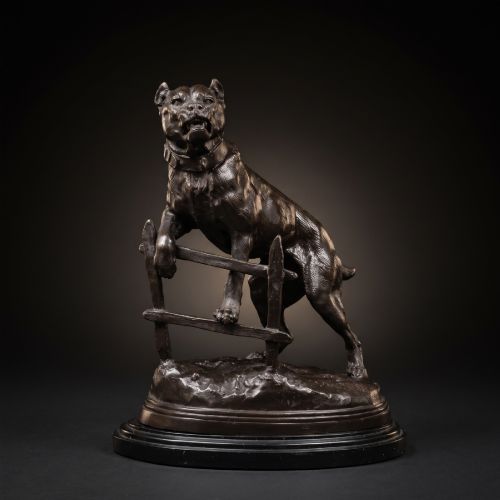
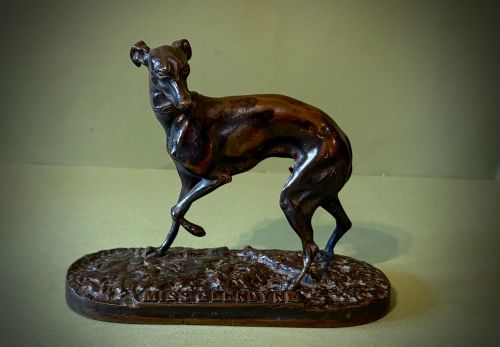
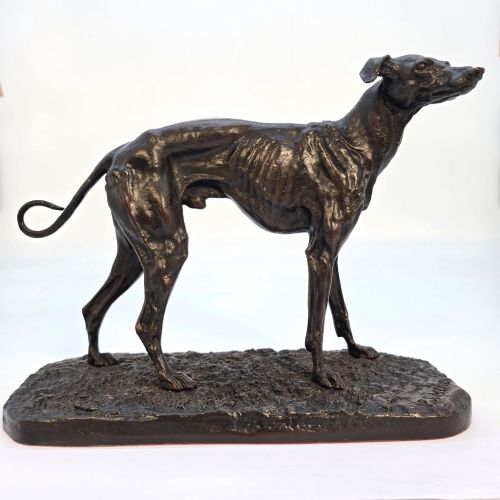
A dark bronze hound figure captures canine anatomy in cast metal, frequently depicting greyhounds, setters, and hunting dogs in still or active poses. These pieces emerge predominantly from nineteenth-century European foundries and extend into later twentieth-century interpretations.
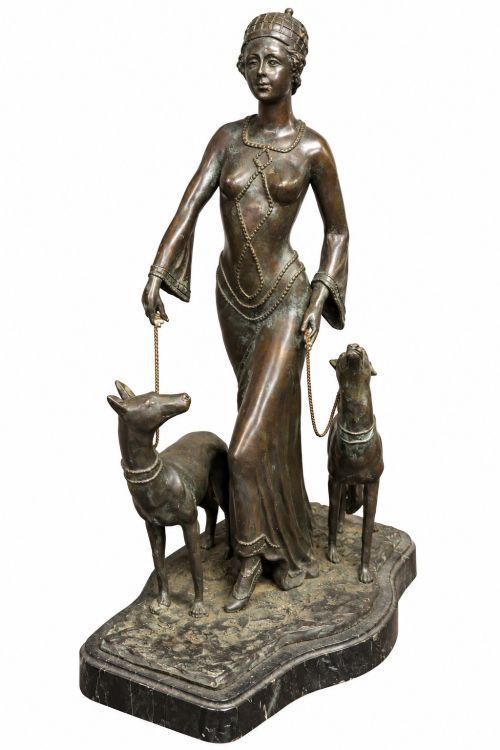
The objects take the form of freestanding sculptures and mounted groups upon marble bases or wooden supports. Figures often interact with secondary elements such as fences, birds, or prey, reflecting the dominant Animalier style of the period.
Materials and construction
The core material is cast bronze, finished with dark patination ranging from deep brown to near-black tones. Certain examples incorporate contrasting ormolu highlights alongside polished marble or wood plinths.
Foundries employed traditional lost-wax casting methods to capture fine muscular detail and fur texture. Signatures and foundry stamps are frequently chiselled directly into the metal surface after casting.
Dark Bronze Hound Figure Retail Price Guide 2026
Typical asking prices for dark bronze hound figure among the pieces listed under this phrase on Sellingantiques today, from the lower quarter to the upper quarter. They describe what is for sale here now, not the wider market.
Listings feature works spanning the nineteenth century through to the 1920s and beyond 1960, utilising bronze, marble, and ormolu.
Elements of quality
The crispness of the chase work dictates the definition found in muscle sinews, facial expressions, and coat textures. Superior casts retain sharp anatomical accuracy without smoothing away fine details during post-casting cleanup.
The integrity of the dark patina and the quality of the base material contribute significantly to the piece. Dense, finely veined marble or carefully fitted wooden mounts complement the weight and stability of the bronze sculpture.
Charles Valton·Georges Gori·P. J. Mène·Alfred Barye·Joseph Francois Victor Chemin·Christophe Fratin·Alfred Dubucand·Nikolai Lieberich·Barbedienne
The Dark Bronze Hound Figure Glossary
- Animalier
- A nineteenth-century artistic movement dedicated to the realistic portrayal of animals. Sculptors in this tradition focused heavily on naturalistic movement and anatomical precision.
- Patina
- The surface coloration and sheen developed through chemical treatment or natural ageing on bronze. Dark patination provides depth and highlights the contours of the casting.
- Ormolu
- Gilded bronze used for decorative mounts or highlights. It creates a bright golden contrast against the dark bronze hound figure.
- Lost-wax casting
- A historic metalworking method where a molten alloy is poured into a mould created from a wax model. This technique allows for complex and intricate sculptural details.
Dark Bronze Hound Figure: Frequently Asked Questions
How do I clean a dark bronze hound figure?
Dust the surface regularly with a soft, dry brush to prevent particulate buildup within the textured areas of the metal. Avoid harsh cleaning agents or water, which can strip away the dark patination.
Apply a very light coat of microcrystalline wax occasionally if the bronze appears dry, buffing it gently with a clean cloth. This protects the dark finish from moisture and handling oils.
Where should I display my sculpture?
Position the piece on a stable surface such as a wooden desk, bookshelf, or side table where it can be viewed from multiple angles. Ensure the display area is clear of excessive direct sunlight and high humidity.
Keep the sculpture away from heat sources that might dry out or crack the integrated marble or wood bases. A secure, level location protects the heavy bronze from accidental drops.
How do I identify nineteenth-century casts?
Examine the underside and lower edges of the bronze for foundry stamps, caster marks, or artist signatures. Nineteenth-century pieces often exhibit hand-chased surface details that differ from later mass-produced editions.
Look closely at the colour and depth of the dark patination, which tends to wear naturally over decades. The weight and density of the associated marble or wooden base also offer clues to the period of manufacture.
What subjects besides hounds appear in these sculptures?
Sculptors frequently paired hounds with game birds, pheasants, or hunting scenes involving human figures and fences. These narratives reflect the sporting interests of the nineteenth-century collectors who originally commissioned them.
Other compositions incorporate multiple dogs, wolves, or human figures such as ladies and hunters. The presence of these companion elements adds context to the primary dark bronze hound figure.