



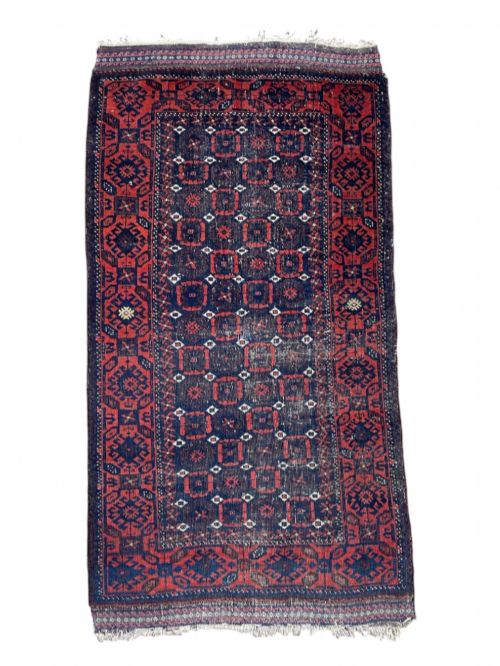


Dark Blue Red Rug
Dark blue red rug selections gather tribal weavings and village carpets spanning the nineteenth and early twentieth centuries.
Dark Blue Red Rug
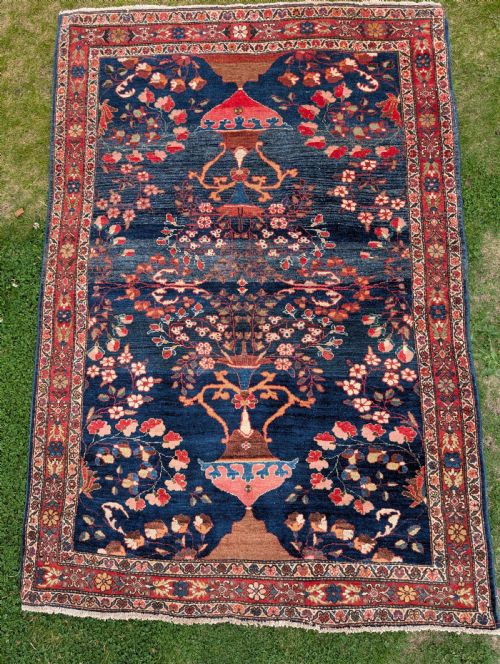
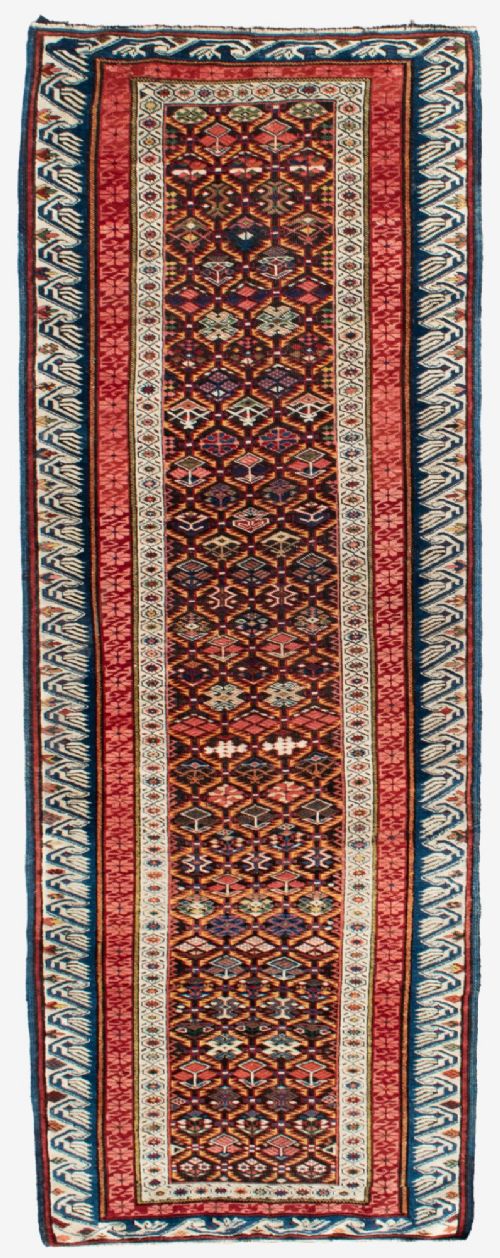
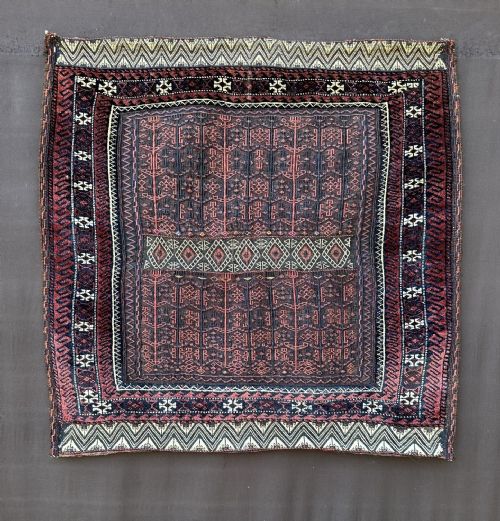
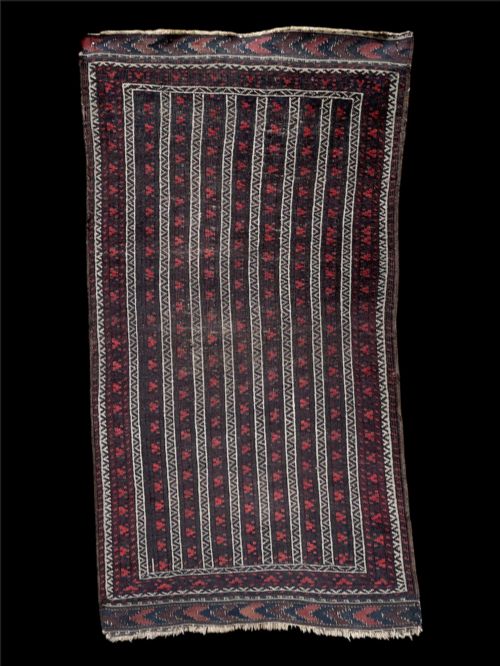
A dark blue red rug brings together hand-knotted tribal and village floor coverings originating from Persian, Afghan, Caucasian and Turkish regions. Buyers exploring this category encounter pieces created by nomadic and semi-nomadic groups, including Baluch, Qashqai, Kurdish and Ersari weavers.
The selection ranges from compact saddle-bag faces and prayer rugs to room-sized carpets and narrow runners. Dating predominantly from the late nineteenth century through to the early decades of the twentieth century, these textiles reflect traditional regional patterns and tribal iconography.
Materials and Construction
These textiles rely on wool, hand-spun wool, cotton and goat hair foundations and pile structures. Weavers utilised natural dyes to achieve deep indigo blues and rich madder reds.
The integration of hand-spun wool provides resilience and texture, while natural dyestuffs yield complex tones that develop depth over decades of use.
Listings span nineteenth and early twentieth century periods, featuring wool, cotton and natural dyes across tribal Persian and Afghan forms.
Factors That Determine Quality
Quality rests upon knot density, the precision of the tribal design execution and the handling of natural colour palettes. Finer examples display meticulous geometric or floral drawing and well-balanced proportions across the field and borders.
Condition and integrity of the original wool pile, selvedges and ends also shape the standing of individual pieces. Strong structural survival alongside vibrant, saturated natural dyes elevates a textile within its regional group.
The Dark Blue Red Rug Glossary
- Sofreh
- A flat-woven or piled spread utilised for communal dining or food preparation by tribal groups.
- Torba
- A small storage bag or wall hanging traditionally produced by Turkmen and related nomadic weavers.
- Mina Khani
- A repeating grid pattern of floral motifs connected by delicate vines, frequently seen in Persian village weaving.
- Mihrab
- A niche design element indicating the direction of prayer, central to the composition of many rugs.
- Gul
- An octagonal medallion or tribal crest motif repeated across Turkmen and Baluch carpets.
Dark Blue Red Rug: Frequently Asked Questions
What is a tribal rug?
A tribal rug is a hand-knotted textile produced by nomadic or village weavers for practical domestic use or personal transport. These pieces utilise traditional geometric and symbolic designs passed down through generations.
Unlike urban workshop carpets, tribal weavings often incorporate improvisational design changes and local materials gathered directly from the surrounding environment.
How do I care for an antique rug?
Antique wool rugs require gentle maintenance, beginning with regular, careful vacuuming without a beating brush roll. Professional cleaning tailored to historic textiles preserves the natural lanolin in the wool.
Keeping the rug out of direct, prolonged sunlight prevents the natural dyes from fading prematurely. Using a quality underlay also reduces friction and wear beneath the feet.
Where were these rugs made?
These rugs originated across the Middle East and Central Asia, including regions of Persia, Afghanistan, the Caucasus and Turkey. Specific tribes and villages such as the Baluch, Qashqai and Khamseh produced distinct regional styles.
Local access to specific sheep breeds, plants for dyeing and regional weaving looms dictated the unique characteristics of each producing area.
How are different regional types identified?
Identification relies on examining the structural elements, including knot types, side cord finishes, end finishes and foundation materials. Colour combinations and specific tribal motifs like guls or mina khani patterns further point to precise geographic origins.
Comparing the handling of the wool and the secondary weft threads helps separate pieces made by neighbouring nomadic groups.