






Damask Tub Chairs
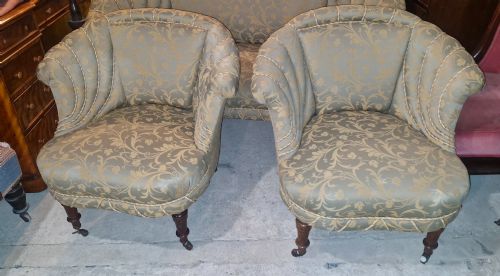
These damask tub chairs combine enclosing curved backs with rich patterned upholstery, offering a traditional seating choice for period interiors.
Damask Tub Chairs
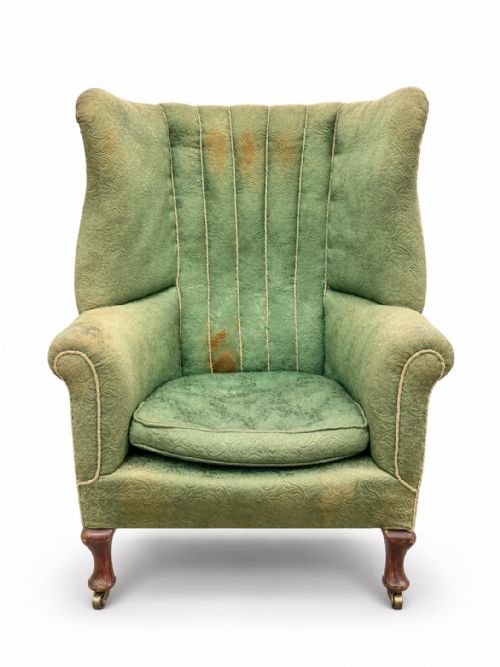
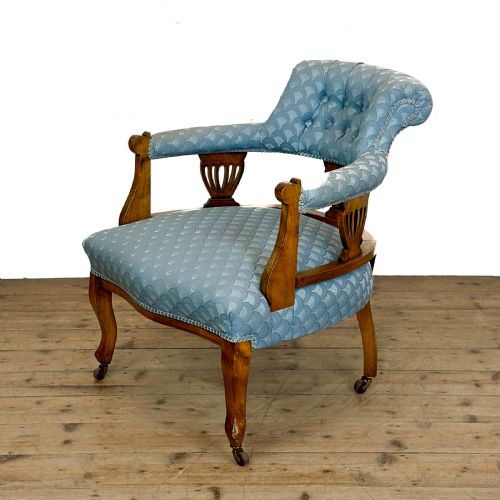
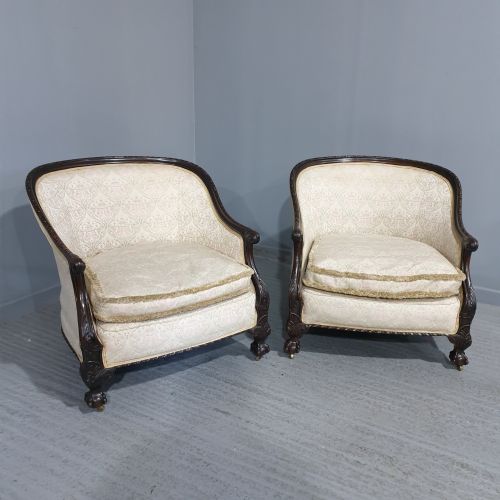
Damask tub chairs include Victorian, Edwardian, and nineteenth-century examples that feature deep, curved backs designed to wrap comfortably around the sitter. The selection spans several distinct stylistic variants, ranging from plain mahogany frames to elaborate French Empire models.
Most entries on this page date from the Victorian and Edwardian eras, encompassing barrel backs, hoop backs, and revolving easy chairs alongside pairs of bedroom chairs. Makers such as Harrods, London also appear among the nineteenth-century armchairs.
The styles recorded across the stock include Art Nouveau, French Chateau, French Empire, and Napoleon III designs. Buyers frequently encounter armchairs accompanied by hardwood frames, mahogany, walnut, and rosewood constructions.
How they were made
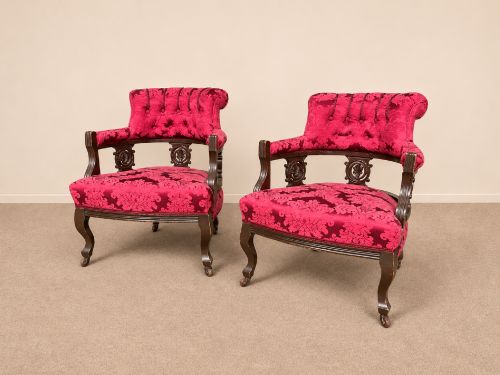
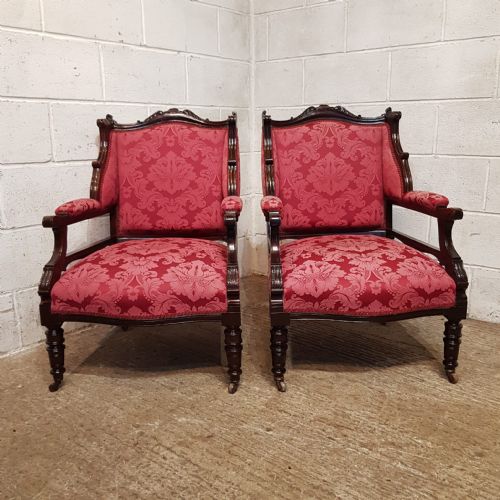
Frames rely predominantly on hardwoods like mahogany, rosewood, walnut, and general hardwood timber, often shaped with carved details. Brass components frequently support movable mechanisms or accent the wooden structures.
Upholstery incorporates damask fabric, silk damask, velvet, and standard fabric, sometimes finished with traditional button-back detailing. These textiles provide the characteristic patterned surface associated with the upholstery.
Damask Tub Chairs Retail Price Guide 2026
Typical asking prices for damask tub chairs among the pieces listed under this phrase on Sellingantiques today, from the lower quarter to the upper quarter. They describe what is for sale here now, not the wider market.
Listings feature mahogany, rosewood, and walnut frames alongside silk damask and velvet upholstery.
What varies in quality
Quality differences emerge through the crispness of the wood carving on the frames and the selection of the upholstery material. Silks and rich damasks indicate a higher grade of original furnishing compared to standard fabrics.
The distinctiveness of the style heavily influences the standing of the piece, with pieces bearing attribution to retailers like Harrods, London, or specific movements like Art Nouveau and French Empire sitting above standard domestic production.
Harrods, London
The Damask Tub Chairs Glossary
- Tub chair
- An armchair featuring a continuous curved back and arms that form a single enclosing shell. This shape evolved during the nineteenth century to provide added draught protection and comfort.
- Damask
- A reversible figured fabric traditionally woven on a jacquard loom with patterns formed by contrasting warp and weft threads. Silk and standard damask variants supply the formal patterned upholstery on these seats.
- Barrel back
- A style of chair where the curved back resembles the staves of a cask, enclosing the sitter deeply. This form dates commonly to the Victorian period.
- Fauteuil
- An open-framed armchair with upholstered back and armrests originating in France. Empire and Napoleon III examples utilise this traditional seating form.
- Hoop back
- A circular or semi-circular wooden framework shaping the upper portion of the chair. It provides the structural support for the upholstered barrel or tub shape.
Damask Tub Chairs: Frequently Asked Questions
What is a tub chair?
A tub chair is an upholstered seat characterised by a low, rounded back that curves continuously into the arms. This enclosed design offers a comfortable and supportive sit.
Such chairs appeared in various forms throughout the nineteenth and early twentieth centuries, serving as bedroom chairs, salon seating, or library armchairs.
How do I date a tub chair?
Dating relies upon examining the timber of the frame, the upholstery style, and design markers like Art Nouveau curves or Victorian buttoning. Edwardian examples often display lighter mahogany frames and simpler lines.
Comparing the recorded periods such as eighteen-eighty or nineteen-ten helps place the construction within the correct nineteenth or early twentieth-century bracket.
What materials are used in these chairs?
The frames employ hardwoods including mahogany, walnut, and rosewood, sometimes accented with brass elements. Structural stability depends on these solid timbers.
Upholstery materials consist of damask fabric, silk damask, velvet, and standard textiles. These fabrics define the patterned appearance of the seating.
Are these chairs suitable for daily use?
Many of these pieces function well as occasional or living room armchairs, provided the underlying frame and upholstery remain sound. Revolving and easy chair variants offer practical modern seating options.
Placing them in appropriate interior settings allows you to enjoy their historical craftsmanship safely.