
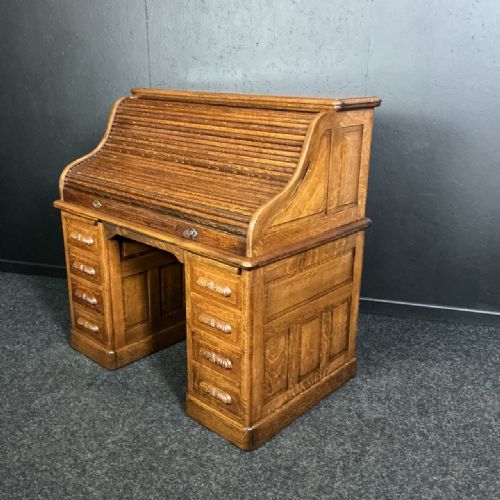
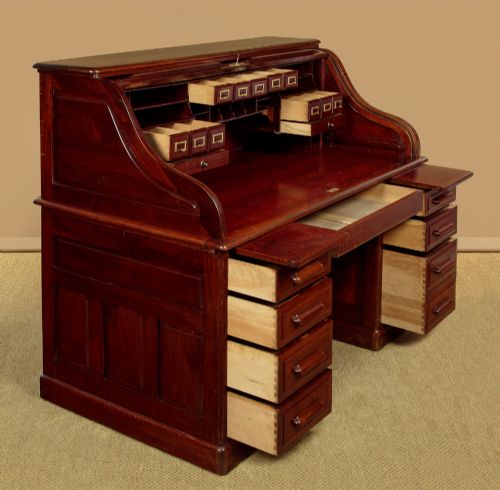


Cylinder Front Office Desk
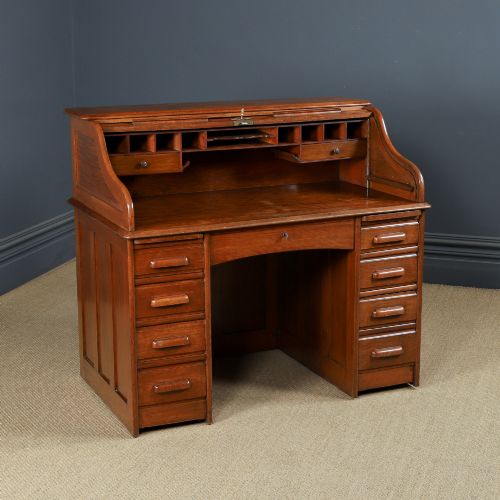
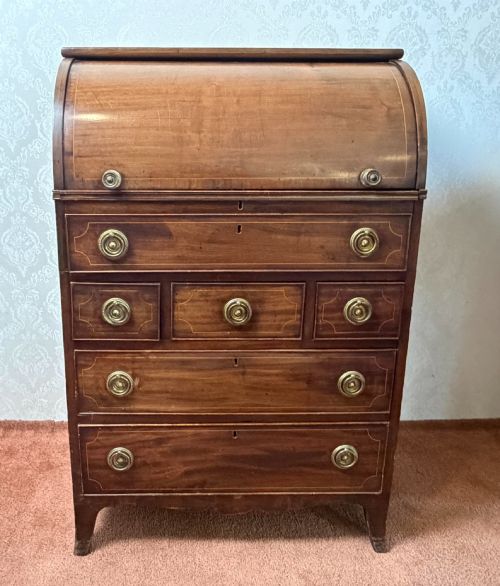
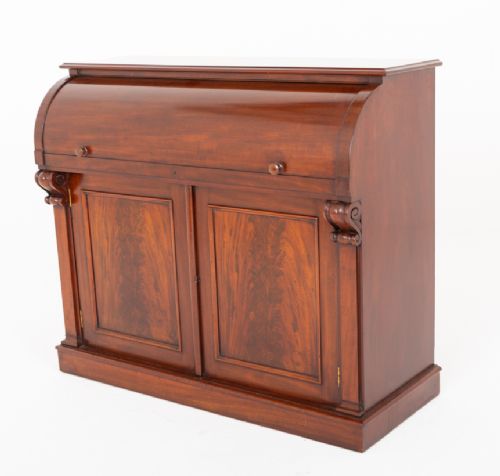
A cylinder front office desk offers a concealed workspace with a curved wooden top, combining a grand appearance with practical daily organisation.
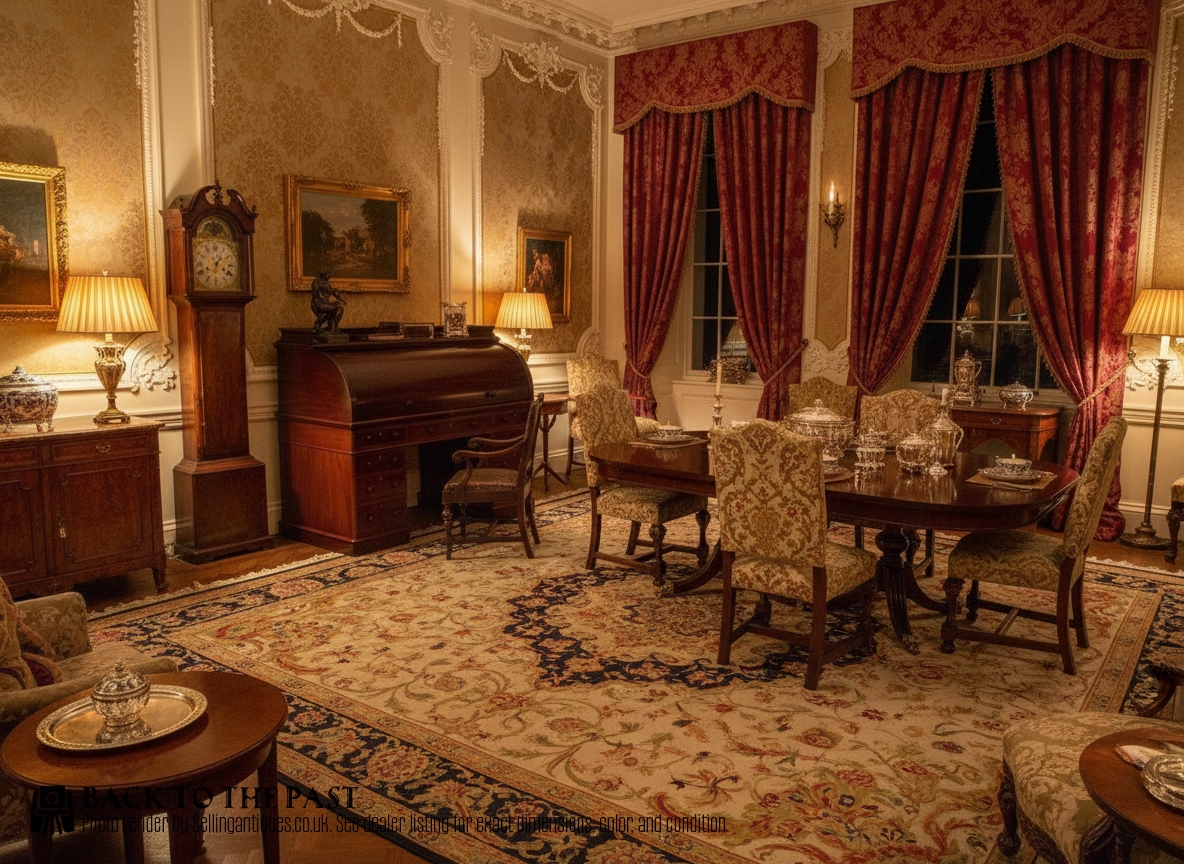
Cylinder Front Office Desk
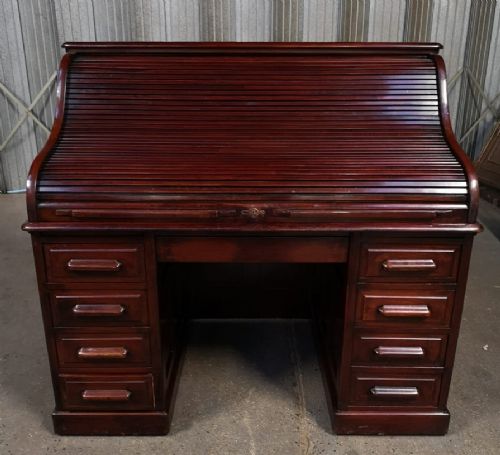
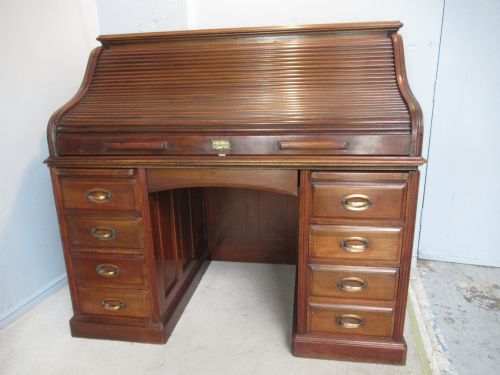
A cylinder front office desk brings together the functionality of a writing cabinet and the sturdy build of a pedestal desk. When searching for a cylinder front office desk, buyers encounter forms that span from the Georgian period through to the Edwardian era. These pieces often arrive in woods such as mahogany, oak, and walnut.
Materials and construction methods
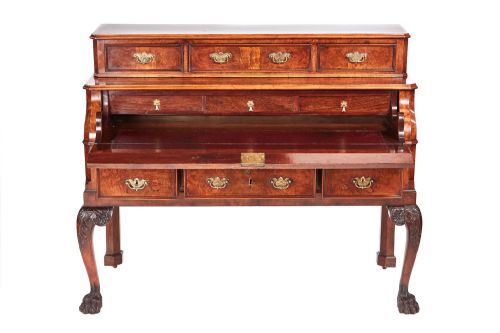
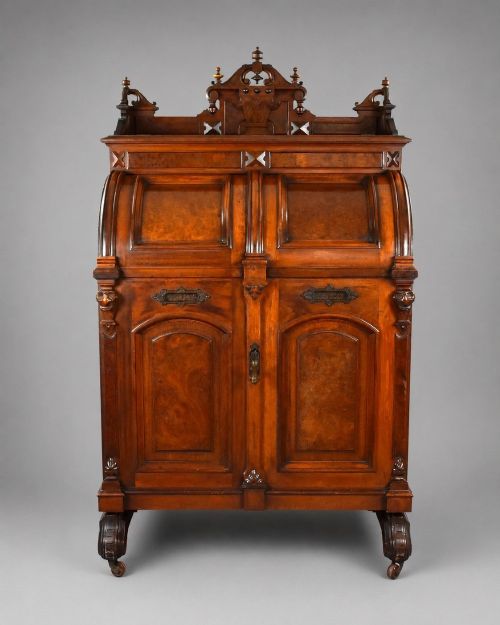
Makers utilised solid timbers and veneers including mahogany, oak, walnut, and burr walnut to construct these desks. Brass hardware often appears on handles and drawer pulls, while leather frequently lines the pull-out writing slides.
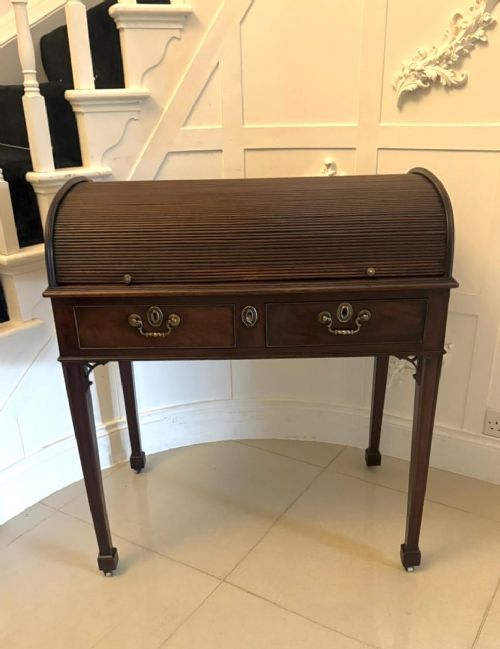
The defining mechanical element involves the slatted cylinder or tambour mechanism, which requires precise woodworking to allow smooth movement along curved tracks. Carved details, such as paw feet, and inlaid woodwork appear on select pieces from the Georgian and Victorian periods.
The listings on this page span the Georgian, Victorian, and Edwardian periods, utilising mahogany, oak, and walnut.
Factors that define quality
The smoothness of the cylinder or tambour mechanism dictates daily usability, separating superior desks from those with stiff or misaligned tracks. The choice of timber, particularly figured burr walnut or well-grained mahogany, influences the visual character of the piece.
Interior complexity also distinguishes different models, with elaborate arrangements of small drawers and pigeonholes reflecting finer craftsmanship. Original hardware, intact leather writing surfaces, and robust pedestal construction contribute to a higher standard of manufacture.
Boston Chair Company of Massachusetts
The Cylinder Front Office Desk Glossary
- Cylinder front
- A desk featuring a convex, quarter-circle wooden shutter that slides back to cover the writing surface. This design protects documents while maintaining a tidy appearance when the workspace is closed.
- Tambour
- A flexible shutter constructed from narrow strips of wood glued to canvas or fabric backing. It allows the cover to follow a curved track around the desk.
- Pedestal desk
- A heavy freestanding desk supported by two banks of drawers reaching down to the floor. The cylinder mechanism sits above these pedestals.
Cylinder Front Office Desk: Frequently Asked Questions
How does a cylinder front desk work?
The curved wooden front slides along a concealed track, disappearing into the body of the desk when opened. This reveals an interior fitted with small drawers and storage compartments.
Closing the shutter secures the entire writing surface and any papers left inside.
What is the difference between a cylinder desk and a roll top?
A cylinder desk uses a solid, curved wooden shell that slides smoothly in a single piece. A roll top relies on narrow wooden slats joined together on fabric.
Both styles conceal the writing area, but the solid cylinder offers a more formal, architectural appearance.
Where were these desks used?
These pieces served as executive workspaces in private studies, libraries, and grand offices. They provided a secure place to manage correspondence and keep ledgers private.
Today, they function effectively as home office desks that conceal modern equipment when closed.
How do I care for the sliding mechanism?
Keep the wooden tracks clean and free from dust to ensure the cylinder moves without catching. Avoid using heavy polishes or moisture that could warp the wood inside the channels.
Regular, gentle use prevents the mechanism from sticking over time.