
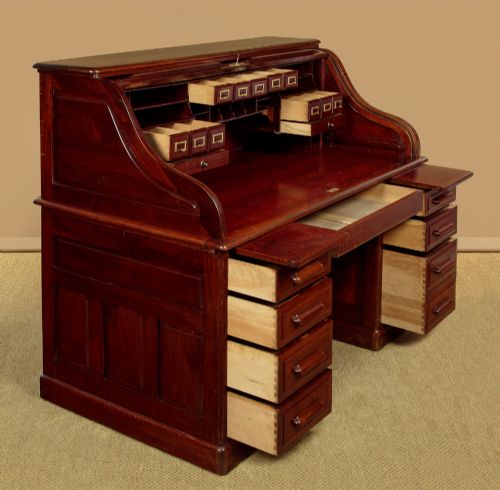

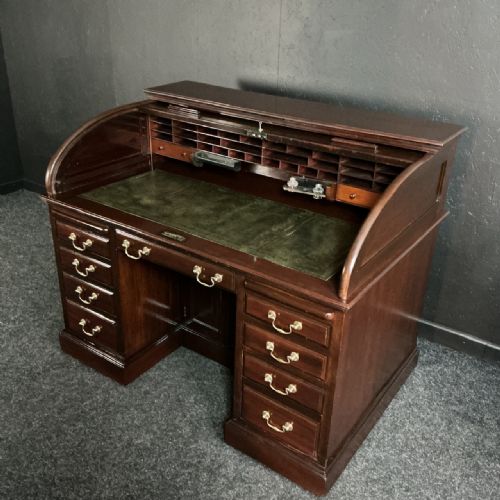


Roll Top Pedestal Desk
A roll top pedestal desk provides a secure, compartmentalised workspace hidden behind a sliding slatted or solid cylinder cover.
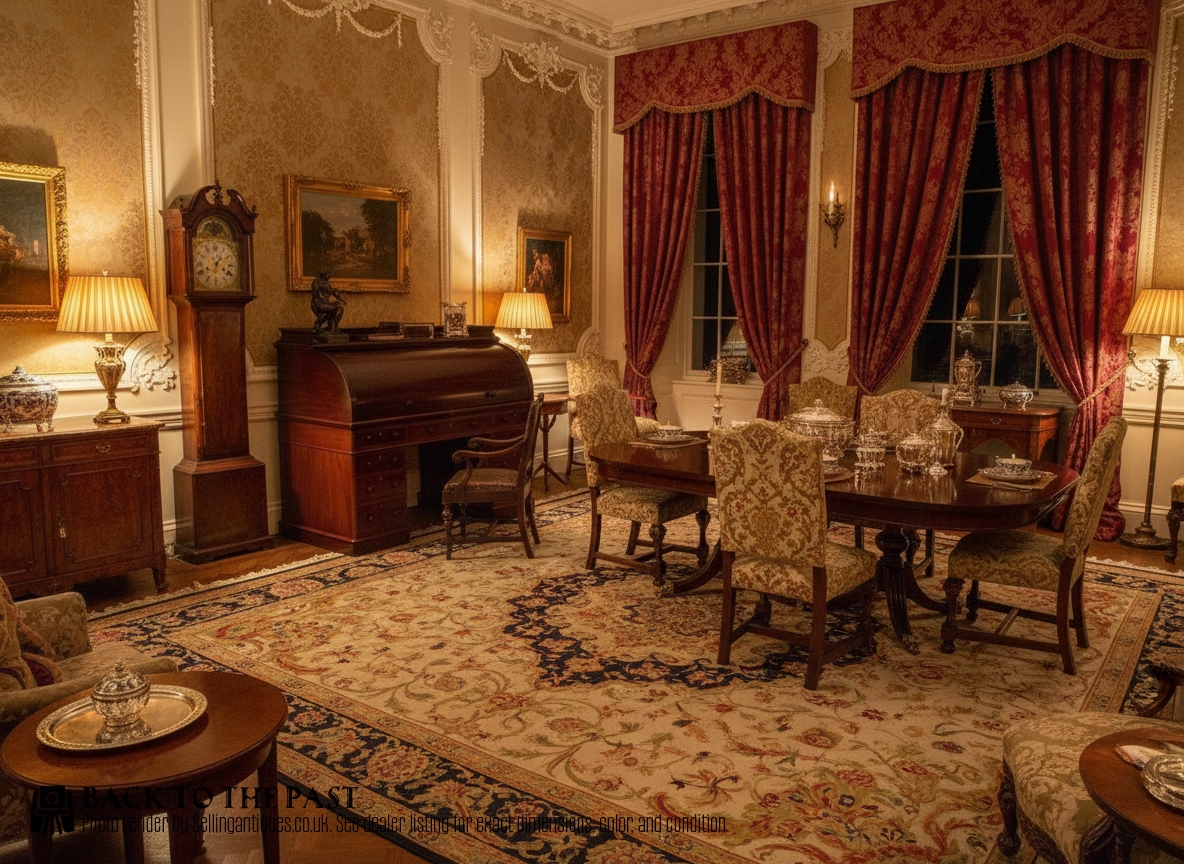
Roll Top Pedestal Desk
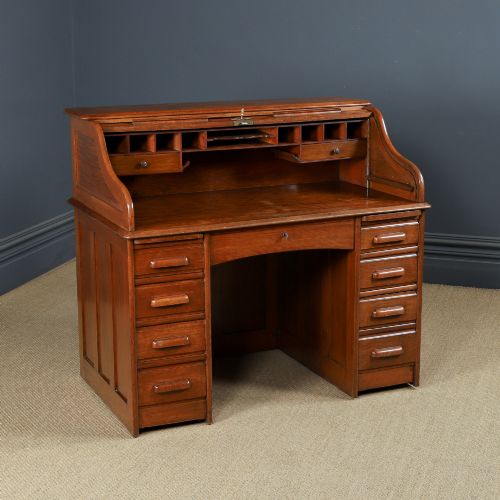
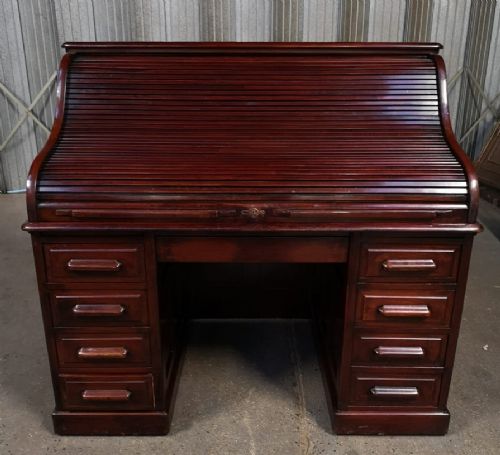
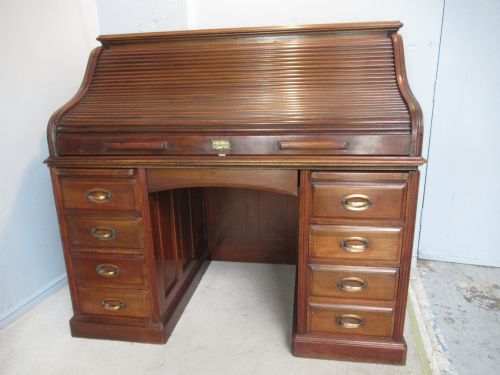
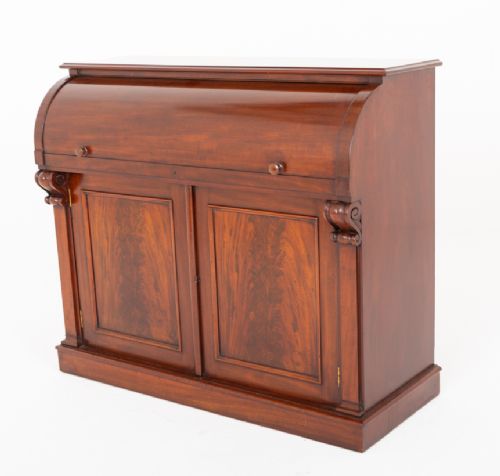
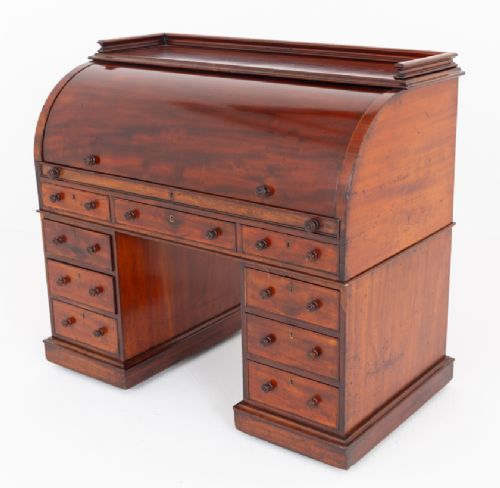
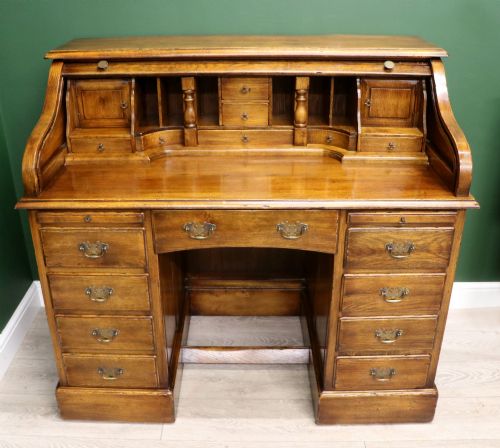
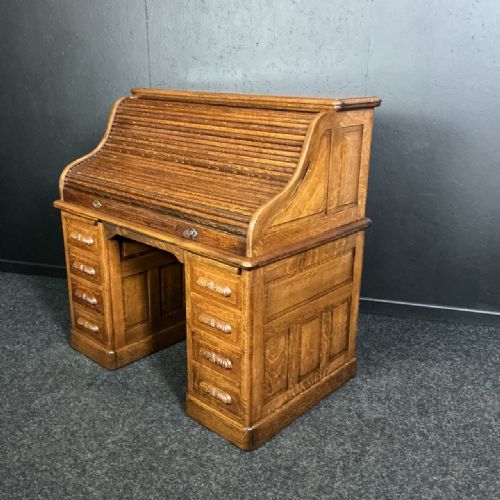
A roll top pedestal desk is a substantial writing and office station designed with two supporting banks of drawers beneath a main writing surface. The defining characteristic is the flexible or solid curved cover that slides down to conceal the pigeonholes, small drawers, and writing surface from view.
Most examples encountered on this page date from the Victorian and Edwardian periods, constructed predominantly in oak or mahogany. These pieces range from compact domestic writing tables to massive administrative furniture designed for commercial offices.
The form developed to keep paperwork organised and secure without requiring the user to lock individual internal compartments. Pedestal formats provide generous storage alongside the primary writing surface.
How They Were Made
Makers utilised solid timbers and veneers including oak, mahogany, walnut, and satinwood, often pairing them with secondary woods for internal drawer construction. Brass hardware and leather writing inserts provide functional contrast to the wooden carcase.
The characteristic rolling mechanism relies either on tambour construction, where narrow wooden slats are glued to a flexible canvas backing, or on a solid curved wooden cylinder that rotates on a pivot. These elements require precise joinery to ensure smooth movement along recessed tracks.
Pedestals are typically built as separate modular sections to facilitate transport, supporting a heavy middle section and the overarching writing enclosure.
Early twentieth-century offices relied on these desks to hide the rising clutter of paperwork and the occasional newly introduced typewriter.
What Varies in Quality
The distinction between standard commercial furniture and superior examples rests on the selection of timber and the complexity of internal fittings. Higher grade pieces feature finely figured mahogany or quarter-sawn oak with meticulous attention paid to hidden secondary surfaces.
The smoothness of the mechanical action reveals much about the original workmanship. A well-constructed tambour or cylinder glides evenly without binding, reflecting precise alignment of the internal tracks and slats.
Interior configuration further separates grades, with finer desks offering intricate arrangements of dovetailed pigeonholes, secret compartments, and panelled writing slopes.
Wells Fargo Wooton Desk·Boston Chair Company·Maples of London and Paris·Angus of London·Waring & Gillows·Horrocks Standard Company·Lebus
The Roll Top Pedestal Desk Glossary
- Tambour
- A flexible shutter formed of narrow vertical wooden strips glued to a canvas backing. This construction allows the cover to curve smoothly around tracks built into the desk sides.
- Cylinder
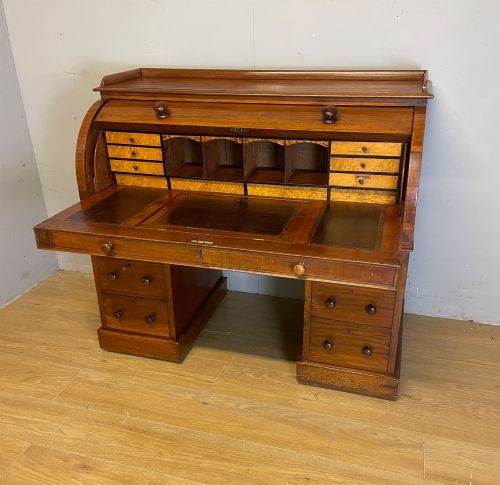
- A solid, curved wooden top that rotates on pivots to open and close the desk interior. Unlike a tambour, it moves as a single rigid piece.
- Pedestal
- A structural column of drawers supporting one side of the desk top. Twin pedestal examples feature two matching stacks with a kneehole space between them.
- Secretaire
- A piece of furniture incorporating a writing drawer or fold-down writing surface equipped with internal pigeonholes and small drawers. These fittings are frequently integrated into the upper section of roll top desks.
- Quarter-sawn
- A method of timber cutting that yields boards with perpendicular growth rings. This technique produces durable wood displaying characteristic decorative flecks.
Roll Top Pedestal Desk: Frequently Asked Questions
How do I maintain the roll top mechanism?
Keep the wooden tracks clean and free from dust build-up over years of use. A light application of appropriate wax helps the tambour slats or cylinder glide smoothly along the grooves.
Avoid using heavy oils or moisture on the moving parts, as excess liquid can warp the canvas backing or swell the wooden slats.
Were these desks made for offices or homes?
They served both environments depending on their scale and timber. Compact versions suited domestic studies, whilst large oak examples equipped corporate offices and administrative spaces.
The secure tambour cover allowed professionals to leave paperwork undisturbed at the end of the working day.
How can I tell an Edwardian desk from a Victorian one?
Victorian examples frequently utilise rich mahogany with heavier proportions and deep, dark finishes. Edwardian pieces often favour quarter-sawn oak with lighter golden tones and simpler architectural lines.
Construction details such as drawer linings and interior hardware also help distinguish the decades of production.
Can these desks be dismantled for moving?
Most pedestal formats separate into distinct sections consisting of the two drawer pedestals, the main writing desk body, and the upper roll top enclosure. This modular construction assists with transport and placement in smaller rooms.
Care should be taken with internal writing slides and tambour tracks when reassembling the components.