
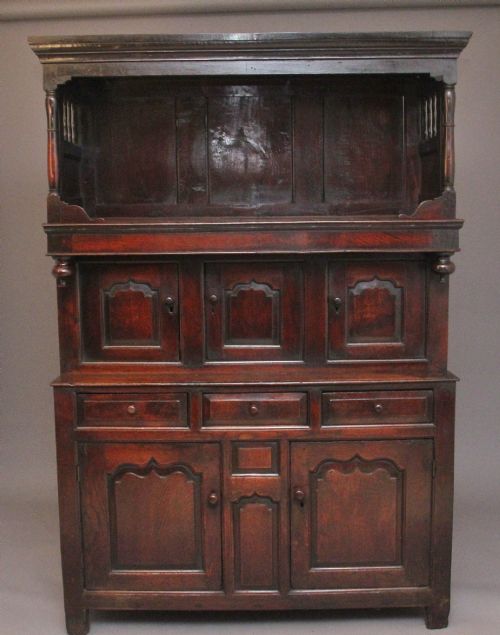


Cwpwrdd Press Oak
A cwpwrdd press oak is a traditional Welsh storage piece offering timber depth and regional character for a country interior.
Cwpwrdd Press Oak
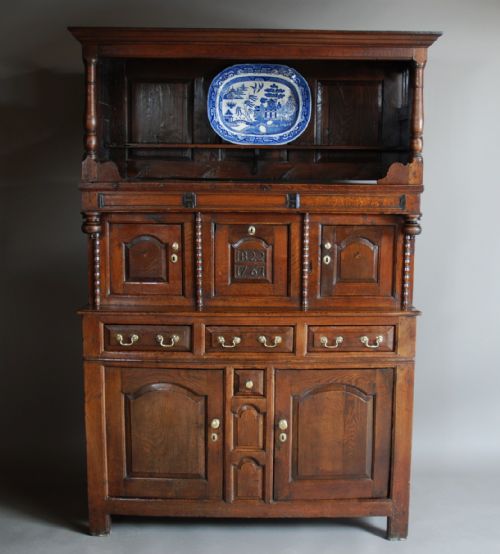
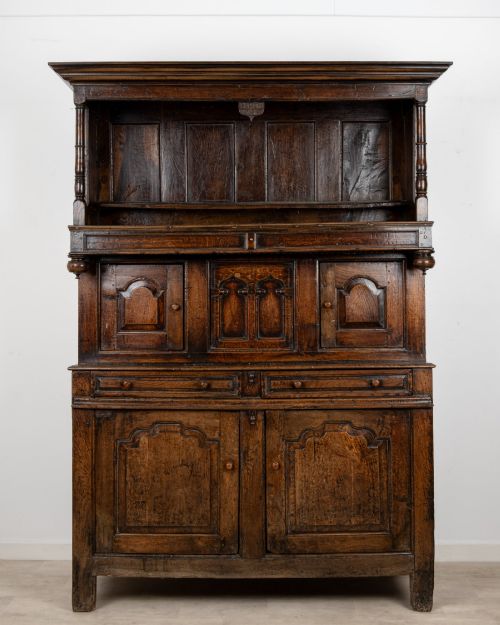
When buyers search for a cwpwrdd press oak, they encounter traditional Welsh storage forms that include tridarns, deuddarns, and food cupboards. These regional pieces range from seventeenth-century carved court cupboards to nineteenth-century display cabinets.
The version most commonly met on this page is the oak tridarn or deuddarn originating from Welsh workshops. These architectural structures reflect country cabinet-making traditions spanning the eighteenth and nineteenth centuries.
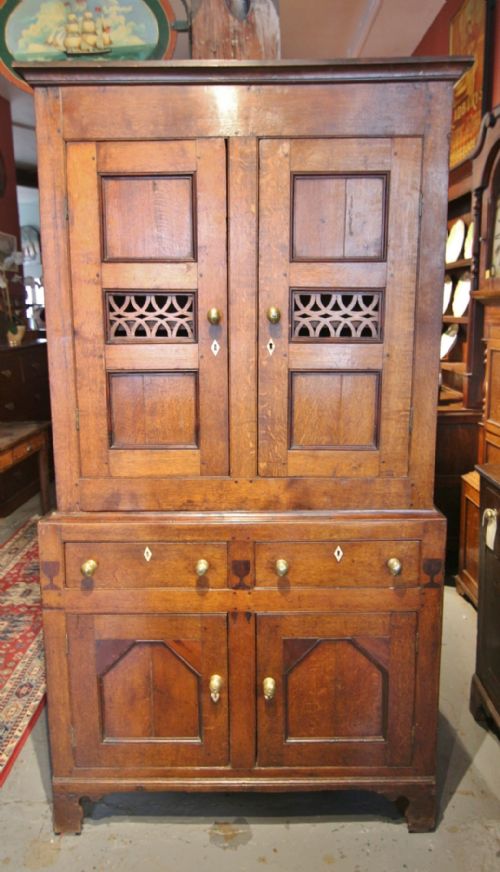
Regional variations span from Snowdonia tridarns to general Welsh country pieces. Forms vary from open-stage court cupboards to enclosed cupboards and bread and cheese food furniture.
What varies in quality
Quality rests upon the proportion of the architectural tiers and the depth of the timber's surface character. Earlier seventeenth and eighteenth-century examples display more intricate regional carving and substantial patination.
The presence of original regional detailing, such as specific inlay work or period brass hardware, elevates certain examples above simpler nineteenth-century utility cupboards.
One exceptional survival even includes dedicated ventilation space for historic farmhouse cheese.
The Cwpwrdd Press Oak Glossary
- Tridarn
- A three-piece Welsh cupboard consisting of a lower base, a middle section with enclosed cupboards, and an open upper stage. This grand form dominated prosperous Welsh farmhouses.
- Deuddarn
- A two-part Welsh cupboard featuring an upper and lower section with panelled doors. It provides substantial enclosed storage compared to the multi-tiered tridarn.
- Cwpwrdd gwydr
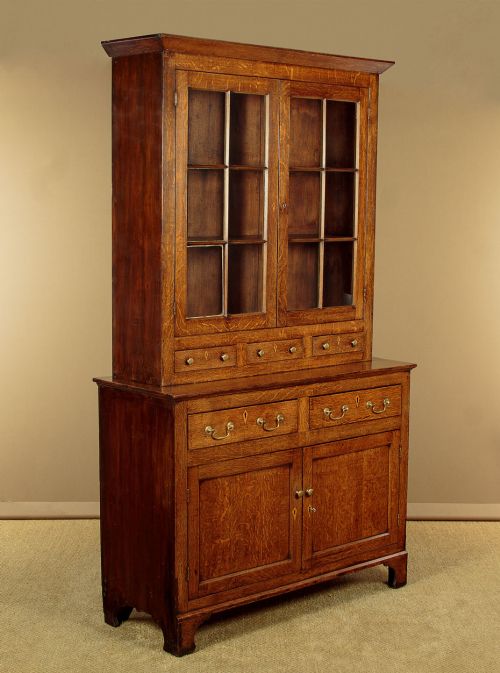
- A glazed Welsh cupboard intended for displaying household ceramics and glassware. These pieces often date to the nineteenth century.
- Patina
- The surface sheen and colour developed by aged oak through decades of polishing and handling. It indicates the age and historical depth of the timber.
- Vernacular
- Architecture and furniture built by local craftsmen using regional styles and materials rather than academic London designs. Welsh country pieces represent this domestic tradition.
Cwpwrdd Press Oak: Frequently Asked Questions
What is a cwpwrdd press oak?
A cwpwrdd press oak is a traditional Welsh storage unit, often built as a tridarn or deuddarn. These regional cupboards served central domestic functions in historic Welsh homes.
They combine architectural tiers with solid oak construction, showing distinct local cabinet-making traditions from the seventeenth to the nineteenth century.
How were these cupboards used?
Historically, these pieces stored household provisions, linens, and valued utensils in rural dwellings. The upper stages displayed prized ceramics while lower cupboards concealed bulk stores.
Food cupboards specifically ventilated perishable items like bread and cheese through panelled mesh or pierced doors.
Where do these pieces originate?
The majority originate from Welsh regional workshops, with specific examples attributed to areas such as Snowdonia. Local vernacular makers adapted urban Georgian and earlier styles to rural domestic needs.
Regional differences appear in the carving styles, timber selection, and overall proportions of the tridarns and deuddarns.
How do I live with a tridarn?
Placing a large tridarn requires an interior wall with sufficient height and depth to accommodate its multi-tiered structure. These statement pieces anchor dining rooms or spacious hallways.
Routine maintenance involves natural beeswax polishing to nourish the historic oak surface without altering its accumulated patina.
How can I tell the periods apart?
Seventeenth-century examples feature heavier carved ornamentation and structural court cupboard forms. Eighteenth-century pieces often present clean panelled tridarn or deuddarn proportions.
Nineteenth-century items introduce glazed display doors, lighter yew accents, or simpler food cupboard formats lacking the earlier multi-tier superstructure.