


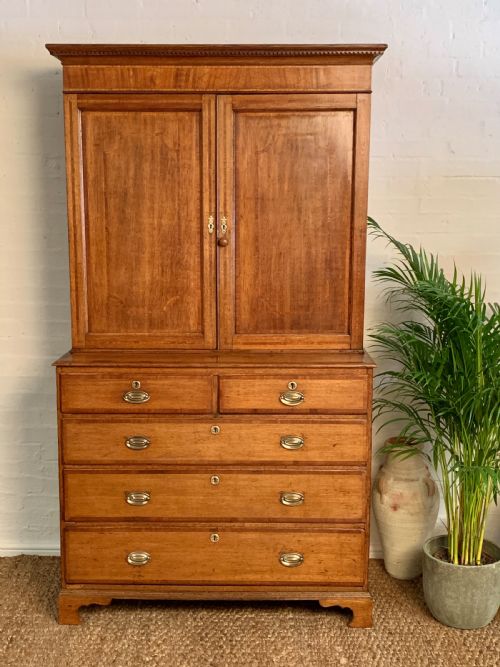
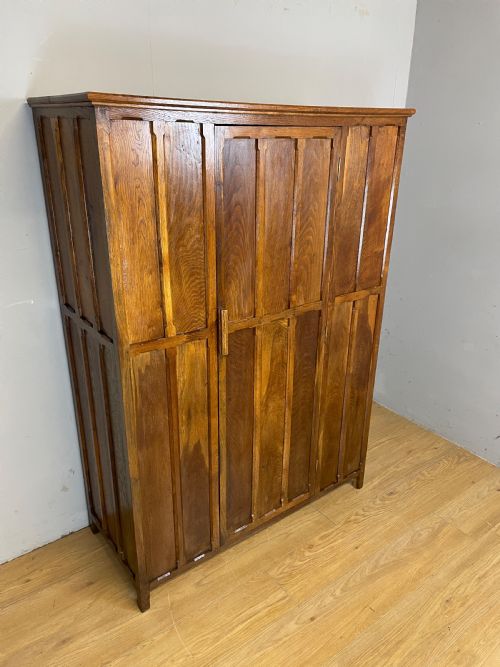


Warm Oak Linen Press
A warm oak linen press offers honest storage, bringing solid timber presence and grounded utility to a bedroom or hallway.
Warm Oak Linen Press
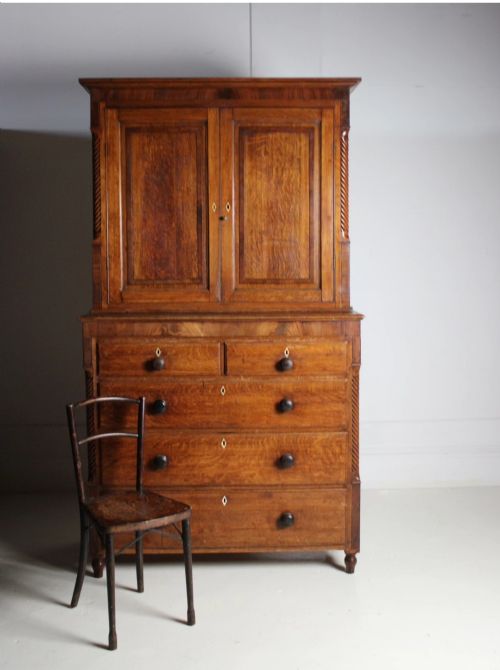
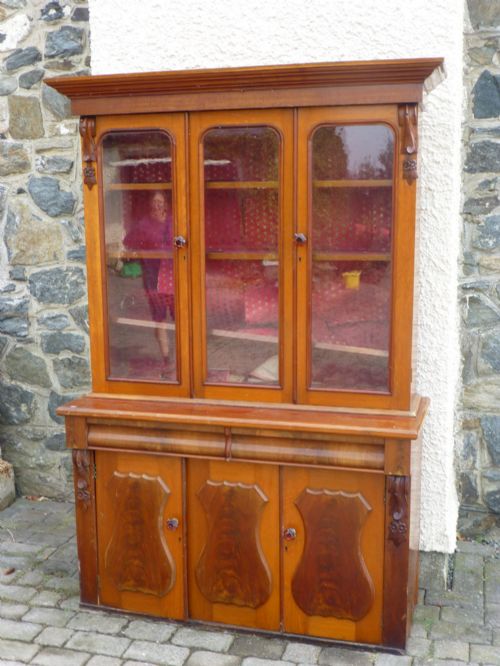
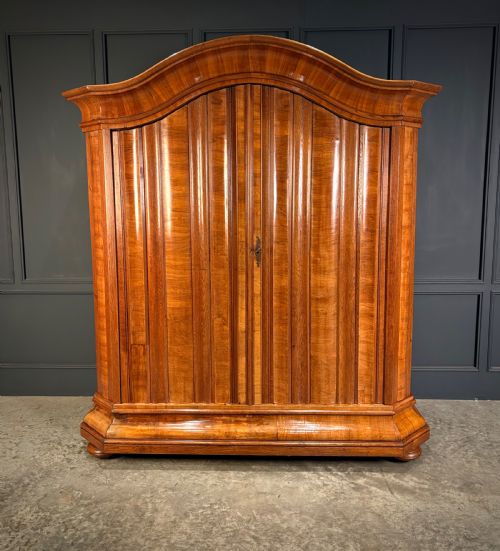
When you search for a warm oak linen press, you are looking at substantial storage furniture designed to hold folded textiles and garments. The selection on this page draws on Georgian, Victorian, and Edwardian periods, featuring robust timbers with deep patination.
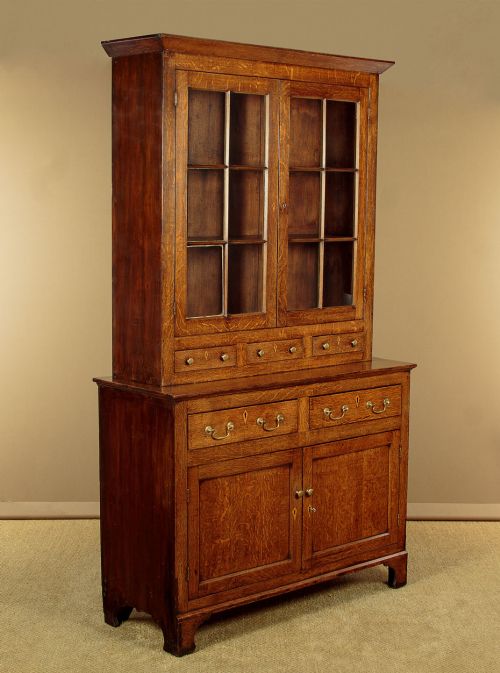
The versions you will most commonly meet here span regional vernacular cupboards, housekeepers' presses, and two-stage fitted pieces. These examples often incorporate drawer bases beneath upper cupboard sections, reflecting traditional British and continental domestic requirements.
Origins vary from local Welsh workshops to continental European makers, showing styles such as Georgian, Victorian Welsh Vernacular, and Arts and Crafts. Each piece demonstrates the heavy utility expected of period storage furniture built for daily family life.
How they were made
Construction relies heavily on solid oak, occasionally paired with secondary woods like mahogany or walnut for cross-banding and decorative contrast. Cabinetmakers used traditional joinery techniques to build carcases capable of supporting heavy internal shelving and linen storage.
Hardware details typically include brass handles, escutcheons, and occasional bone or porcelain elements on functional fittings. Glazed doors on dresser-bookcase variants incorporate glass panes held by slender wooden glazing bars.
Listings span multiple eras from the eighteenth to the early twentieth century, incorporating oak, walnut, mahogany, brass, and glass.
What varies in quality
The distinction between standard vernacular pieces and finer examples rests on the crispness of the timber grain, the depth of the finish, and the restraint of decorative accents like cross-banding. Superior items maintain balanced proportions across upper and lower stages without appearing overly heavy.
Construction integrity and timber selection dictate the long-term character of the piece, particularly how well the oak doors hang and slide. Grain matching and the subtlety of brass or wooden hardware further separate ordinary utility cupboards from distinguished regional furniture.
The Warm Oak Linen Press Glossary
- Linen press
- A large storage cabinet traditionally used for storing folded linen and bedding, usually featuring sliding trays or shelves in the upper section and drawers below.
- Housekeepers cupboard
- A large utilitarian storage piece designed for domestic management, often incorporating extensive shelving and lower drawer capacity.
- Cwpwrdd Gwydr
- A Welsh term for a glazed cupboard, frequently denoting regional vernacular furniture with upper display sections.
- Cross-banding
- A decorative border technique where veneer is laid with the grain running perpendicular to the surrounding wood, adding subtle visual contrast.
- Vernacular
- Furniture built by local tradesmen using regional traditions and available materials rather than following metropolitan stylistic decrees.
Warm Oak Linen Press: Frequently Asked Questions
What is a warm oak linen press used for?
These large cabinets provide substantial storage for clothing, bedding, and household linens through a combination of internal shelving and deep drawers.
They function well in bedrooms, hallways, or large dressing rooms where substantial wooden furniture anchors the room.
How do I date a warm oak piece?
Dating relies on observing construction methods, timber selection, handle styles, and overall proportions relative to known historical periods.
Georgian pieces often display cross-banding and refined bracket feet, whereas vernacular Welsh and later Edwardian examples prioritise heavy utility and simpler lines.
Are these pieces made of solid oak?
The listings predominantly feature solid oak construction, occasionally complemented by mahogany, walnut, or secondary woods for structural and decorative elements.
Hardware components incorporate brass, glass, bone, and porcelain depending on the specific regional style and period.
How do I integrate one into a modern room?
The rich patination and heavy timber presence of these presses allow them to act as grounding anchor pieces against neutral walls.
Their generous internal capacity hides clutter effectively while introducing historical character and tactile warmth to contemporary spaces.