



Cut Paper Silhouette
These cut paper silhouette works capture profile portraits and domestic scenes in delicate monochrome paper, offering a direct window into Georgian and Victorian life.
Cut Paper Silhouette
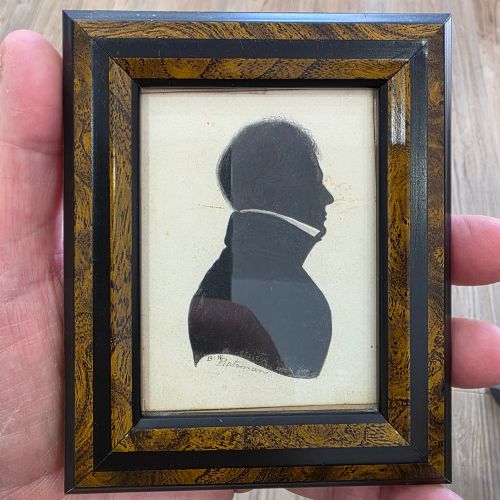
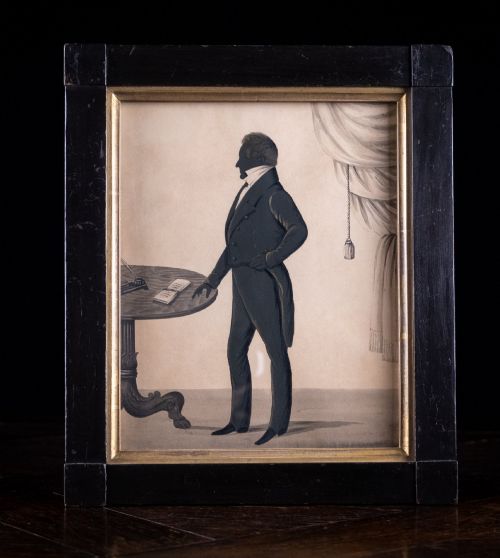
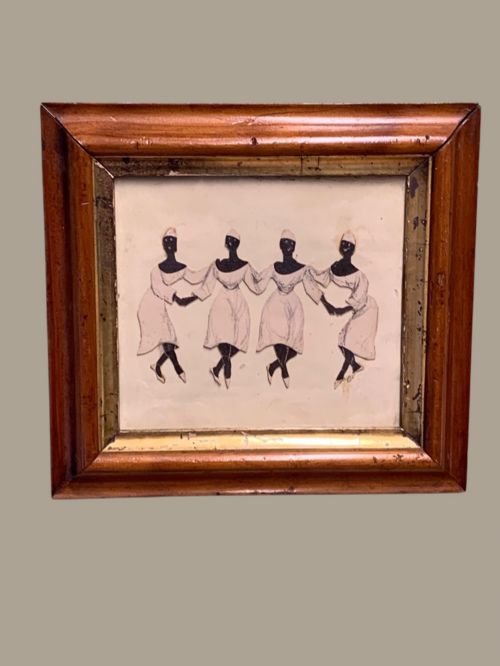
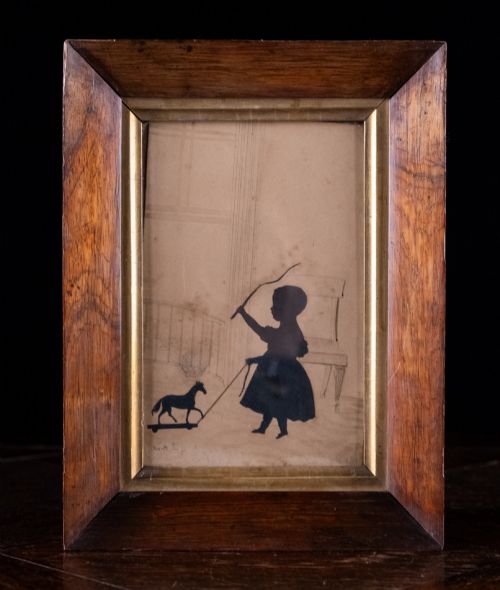
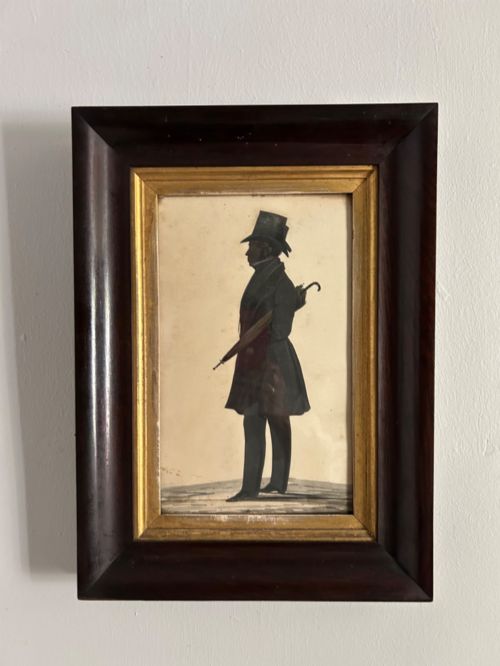
A cut paper silhouette presents a profile portrait or narrative scene meticulously hand-cut from dark paper, frequently mounted against a lighter background. When you search for a cut paper silhouette, you encounter framed artwork spanning the Georgian, Regency, and Victorian periods.
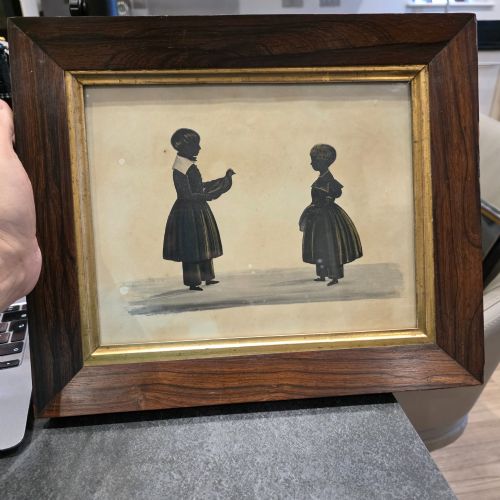
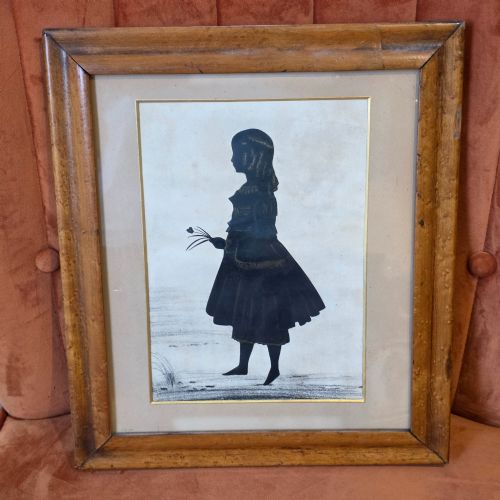
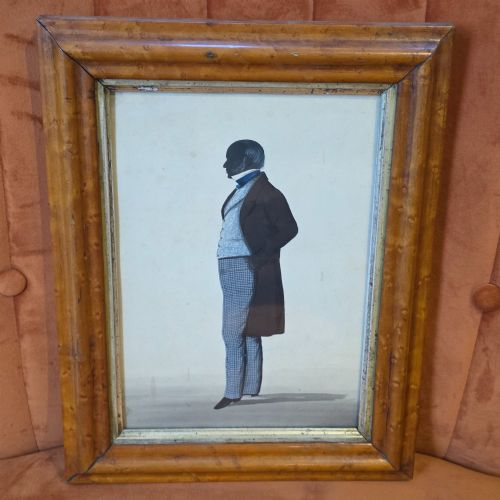
The most common examples on this page are framed silhouette portraits of gentlemen, ladies, and children, often executed with paper and ink. You will also find conversation pieces, botanical arrangements, and animal studies from the nineteenth century.
Pieces range from single profile heads to full-length figures accompanied by painted highlights, gold leaf, or watercolour details. The materials typically include glass, wood frames such as maple or ebony, and occasionally brass elements.
Judging Quality
Quality rests upon the precision of the scissor work, where the crispness of the cutting defines eyelashes, fingers, and fabric folds without hesitation or ragged edges. The most accomplished works convey personality and likeness solely through the outline and subtle brushwork.
The presentation elevates the piece, distinguishing standard portraits from superior examples framed in maple or ebony with original glass and signed mounts from known galleries.
Listings feature paper, glass, wood, and gold leaf across eighteenth and nineteenth-century periods, spanning simple profiles to elaborate framed conversation pieces.
William James Hubard·Augustin Edouart·Frederick Frith·Alfred Darbyshire·Nathaniel Bermingham
The Cut Paper Silhouette Glossary
- Silhouette
- A portrait or scene cut from dark paper or painted in profile, named after the French finance minister Étienne de Silhouette. It reached immense popularity before the widespread adoption of photography.
- Conversation piece
- An informal group portrait showing family members or companions interacting in a domestic setting. These complex cut paper scenes often include multiple figures, animals, and furniture.
- Reverse cut
- A technique where the background paper is cut away and removed, leaving the silhouette figure attached to the backing sheet. This method allows light to pass through surrounding areas if unbacked.
- Hollow cut
- A portrait method where the profile is cut out from a sheet of white paper, which is then laid over black fabric or paper to reveal the likeness. It differs from a solid paper silhouette applied directly to a surface.
Cut Paper Silhouette: Frequently Asked Questions
How do I date a silhouette?
Dating relies on costume, hair styling, and the framing materials used by the maker. Gentlemen in high cravats or ladies in Regency turbans point firmly to the early nineteenth century.
Backing papers and framing styles also provide clues, as Georgian and Victorian framers used distinct woods, seals, and brass fittings that changed over the decades.
Who were the major silhouette artists?
Prominent practitioners include Augustin Edouart and William James Hubard, whose studios produced extensive records of sitters during the nineteenth century. Many works also bear signatures from regional artists or gallery stamps like the Royal Victoria Gallery.
Other pieces remain anonymous, representing the work of itinerant cutters and talented amateurs who toured towns and country houses to capture likenesses.
Where should I hang silhouettes?
These delicate works suit narrow wall spaces, hallways, or grouped arrangements salon-style alongside other small framed art. Their monochrome palettes allow them to anchor gallery walls with varied frames.
Keep them away from direct sunlight to prevent the paper from fading and to protect any watercolour or gold leaf highlights applied to the surface.
Are silhouettes fragile?
The paper components are sensitive to moisture, light, and physical pressure, requiring sealed frames behind glass for protection. Original Victorian and Georgian glass should be preserved where possible.
Avoid hanging them in damp rooms or areas with fluctuating temperatures to prevent the paper from warping or foxing over time.