


Black Cut Paper Portrait
These black cut paper portrait pieces capture faces through sharp scissor work on dark paper.
Black Cut Paper Portrait
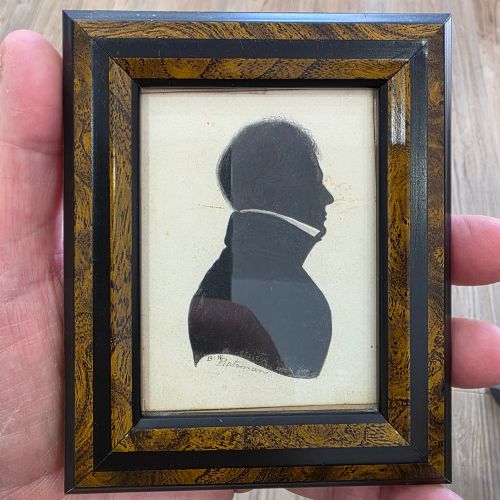
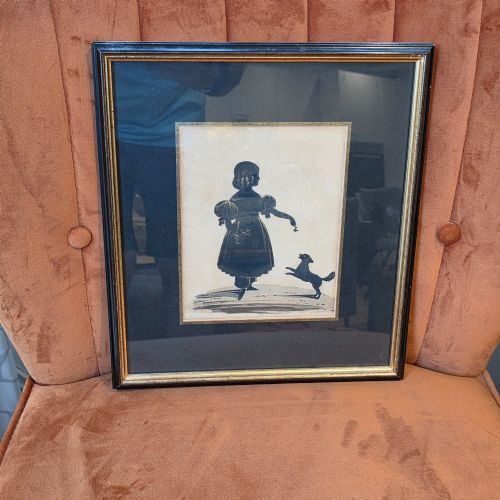
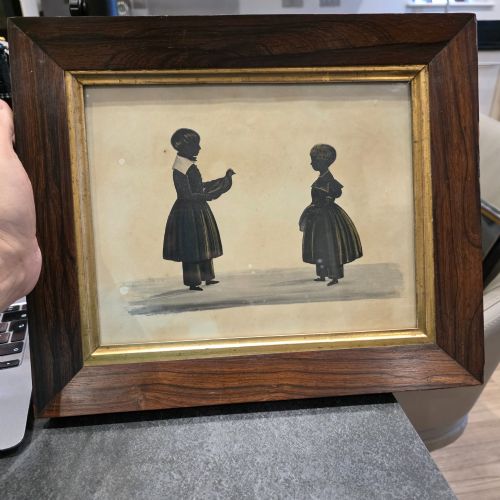
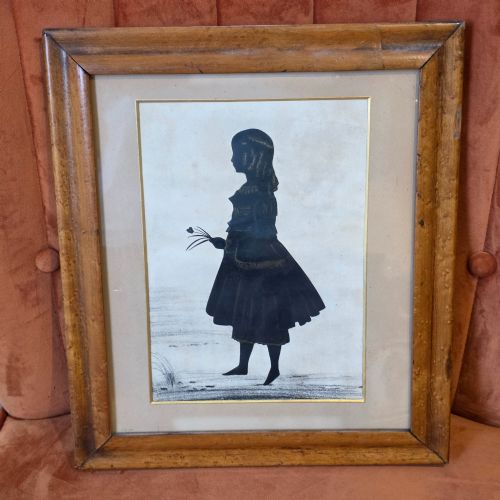
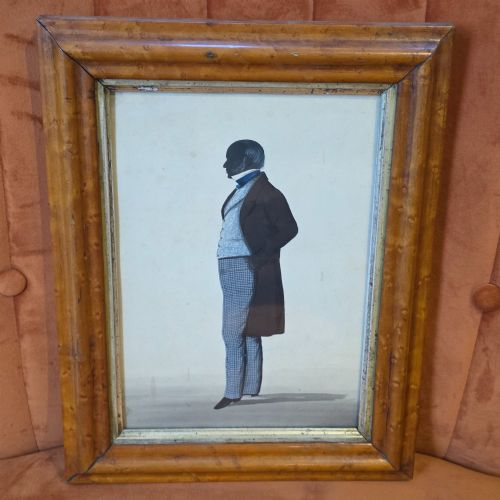
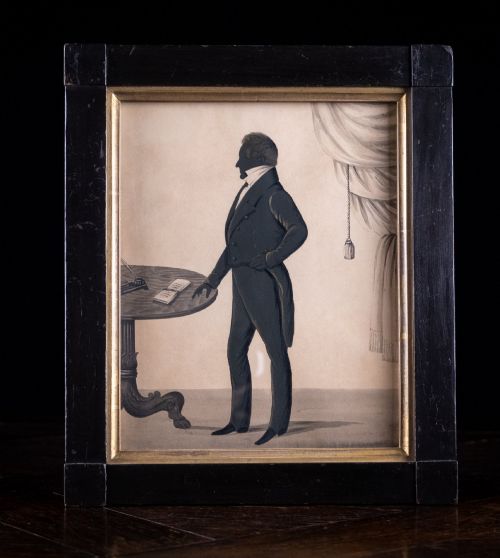
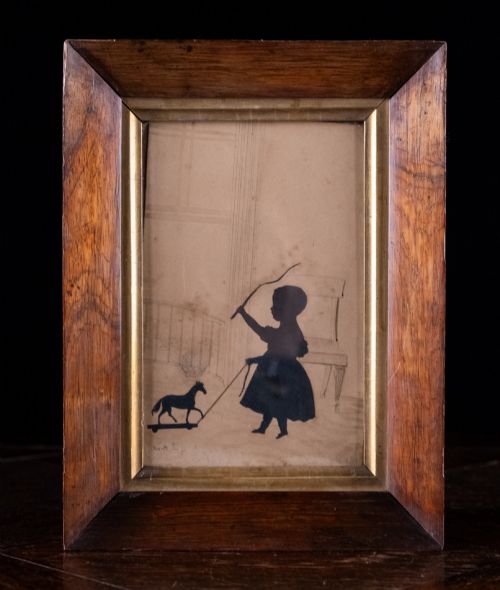
A black cut paper portrait presents a profile or full-length figure rendered in dark paper, often mounted against a contrasting light background. These works emerge primarily across the Georgian, Regency, and Victorian periods, capturing gentlemen, ladies, children, and family groups.
Makers and artists working in this medium recorded sitters through profile cutting or hollow-cut techniques, sometimes housed within maple, rosewood, or ebony frames beneath glass.
Materials and Technique
Makers utilised dark paper and card, cutting the silhouette freehand with scissors or specialised knives. The resulting paper cutouts were then pasted onto light backgrounds, frequently accompanied by ink or watercolour additions for waistcoats, bonnets, and hair.
Frames employ timber such as maple, rosewood, and ebony, often fitted with brass hangers or gilded bezels. Selected pieces incorporate gold leaf highlights directly onto the paper or glass to enhance the profile.
Listings feature paper, glass, wood, ink, gold leaf, and brass across 19th-century works.
Assessing Quality
Quality rests upon the precision of the paper cutting and the fidelity of the likeness. Master practitioners achieved clean, confident edges that rendered complex attire, lace collars, and facial expressions without hesitation.
The sophistication of the composition elevates certain pieces, particularly full-length figures, conversation pieces involving multiple subjects, and works enhanced with delicate watercolour or gold leaf detailing by identified hands.
William James Hubard·Augustin Edouart·Frederick Frith·Alfred Darbyshire
The Black Cut Paper Portrait Glossary
- Silhouette
- A portrait profile filled in with a solid dark colour, typically cut from paper or painted. The form takes its name from Étienne de Silhouette, an 18th-century French finance minister.
- Conversation piece
- An artwork depicting a group of figures in a domestic or outdoor setting, engaged in conversation or shared activities. In cut paper work, these show family members or children with animals.
- Hollow-cut
- A silhouette technique where the profile is cut out from a sheet of light paper, leaving the surrounding paper to serve as the mount against a dark background.
- Full-length
- A portrait depicting the entire figure of the sitter from head to toe rather than simply a head and shoulders bust.
Black Cut Paper Portrait: Frequently Asked Questions
How are these silhouettes dated?
Dating relies upon the costume of the sitter, the framing materials, and any signatures or studio stamps present on the work. Regency pieces often feature specific hat styles, high-waisted dresses, or elaborate cravats that anchor them to a specific decade.
The backing papers and the type of timber used in the frame also offer chronological clues. Maple and rosewood frames from the Georgian and Victorian eras display distinct construction methods that help separate early examples from later productions.
What is a conversation piece?
A conversation piece is a multi-figure portrait that depicts people interacting within a scene rather than sitting for a formal single pose. These complex works often include children, pets, and household objects cut from paper.
Such compositions require high technical skill from the artist to maintain correct proportions across multiple figures. They provide a narrative glimpse into domestic life during the 19th century.
Are these works signed by artists?
Certain pieces bear the signature or attribution of notable silhouette artists who travelled and operated galleries during the 19th century. Signatures may appear written in ink on the backing paper or incorporated into the mount.
Works associated with prominent studios or known practitioners carry particular interest for collectors. Unsigned pieces remain common, reflecting the widespread popularity of itinerant profile cutters.
How should framed paper silhouettes be displayed?
Display these works away from direct sunlight to prevent the dark paper and watercolour highlights from fading over time. Maintaining stable indoor humidity levels protects the paper from warping inside the antique frame.
Original glass and timber frames should be preserved where possible, as they form an integral part of the piece's history. Gentle dusting of the exterior glass is all that is required for ongoing maintenance.