


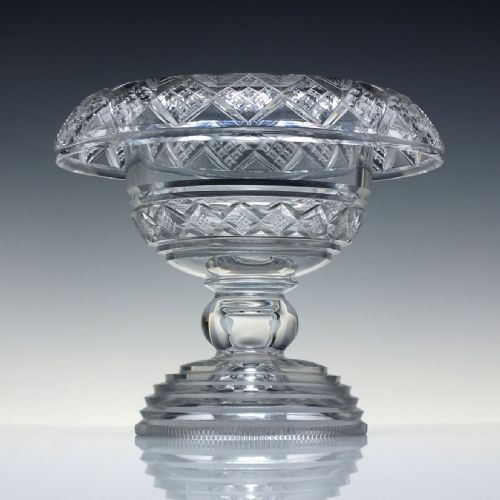


Cut Lead Crystal Bowl
These heavy, refractive vessels catch the light across centuries of dining, making a cut lead crystal bowl an essential centrepiece for any serious table.
Cut Lead Crystal Bowl
A cut lead crystal bowl is a functional and decorative vessel shaped by historic techniques, appearing here in forms ranging from grand Georgian fruit containers to Edwardian dishes and centrepieces. When you search for this phrase, you encounter heavy glass objects designed to hold fruit, tea, or decorative arrangements while reflecting ambient light through deep facets.
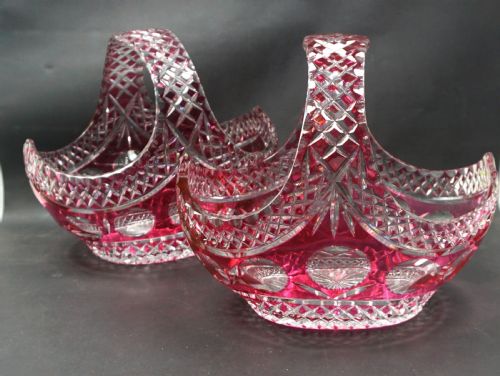
The pieces on this page span several distinct periods, including Georgian, Regency, Victorian, and Edwardian eras, alongside later Art Deco examples. Alongside traditional clear lead crystal, the selection encompasses ruby glass and blue over crystal variations that demonstrate how glassmakers adapted the form over time.
Most items fulfil ornamental or serving roles on dining tables and sideboards, adopting shapes such as standing bowls, oval fruit bowls, and lidded butter dishes. The presence of traditional Irish crystal and pieces from Belgian makers like Val St. Lambert shows the geographical spread of this craft.
Materials and production
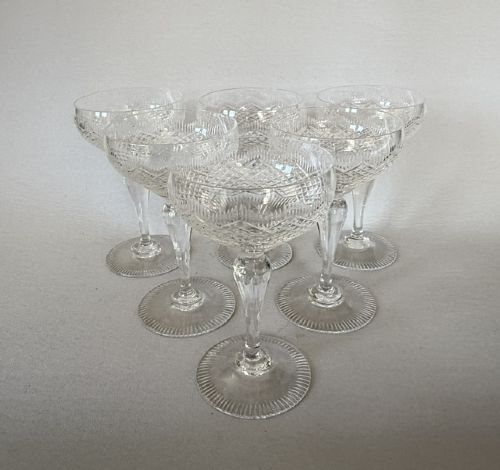
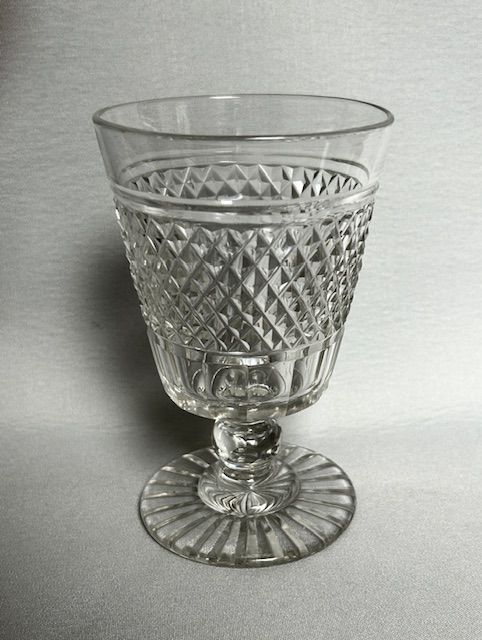
Makers produced these objects using lead crystal and clear glass, frequently applying deep wheel cuts to the exterior surface to create geometric patterns like the hobnail motif. This high lead content increased the refractive index of the glass, giving each piece a heavier weight and greater brilliance than standard soda-lime alternatives.
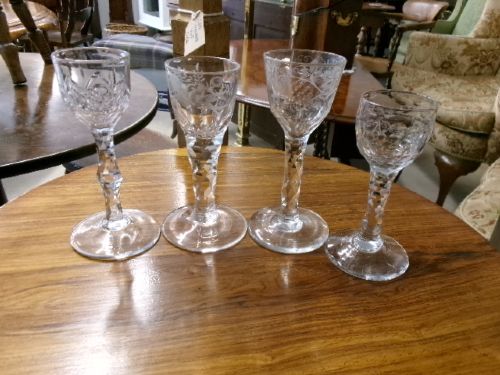
Skilled artisans shaped the molten material by hand before cooling and applying decorative incisions, wheel-cutting, and occasional etching. Overlay techniques appeared in later periods, fusing coloured glass layers over clear crystal to create striking contrast when cut away.
Listings include items spanning the Georgian, Regency, Victorian, Edwardian, and Art Deco periods, alongside mid-century Belgian production.
Assessing quality and craftsmanship
The distinction between ordinary and superior pieces rests on the crispness of the cutting and the clarity of the metal itself. Deeper, sharper facets demand greater skill from the cutter and produce a more intense prismatic reflection when turned in the light.
Weight serves as a reliable indicator of quality, as higher lead content yields a denser, more resonant vessel. The proportion of the cut design to the blank surface also dictates visual balance, separating finely conceived centrepieces from utilitarian production.
Val St. Lambert·Joseph Simon·Waterford
The Cut Lead Crystal Bowl Glossary
- Hobnail cut
- A raised, multi-faceted pattern resembling the hobnails on traditional boots. This texture provides a tactile grip and catches light from multiple angles.
- Lead crystal
- Glass containing a significant percentage of lead oxide, which softens the material for easier cutting and increases its density and brilliance. It produces a clear, resonant ring when struck gently.
- Tazza
- An ornate pedestal plate or shallow bowl elevated on a central stem. These pieces served sweetmeats or fruit in formal dining settings.
- Over crystal
- A technique involving a layer of coloured glass fused over a clear crystal base. Cutting through the top layer exposes the clear glass underneath to form contrasting patterns.
Cut Lead Crystal Bowl: Frequently Asked Questions
How do I date an old bowl?
Dating relies on observing the weight, colour of the metal, and the style of the cutting patterns present on the surface. Earlier Georgian pieces often show hand-polished facets and slight irregularities in the glass.
Later Victorian and Edwardian examples tend to feature more mechanical precision in their geometric cuts and may incorporate moulded elements alongside hand finishing.
Are these bowls safe for food?
Most historic glassware can hold dry foods, fruit, or packaged items without issue. However, prolonged storage of acidic foods in antique lead crystal is generally avoided by collectors.
Modern handling guidelines suggest gentle hand washing rather than dishwasher use to preserve the clarity and surface integrity of the glass.
What is hobnail cutting?
Hobnail cutting is a decorative surface treatment formed by intersecting cuts that create rows of small, pointed pyramids across the glass. It scatters light intensely and adds considerable texture to the exterior.
This pattern appears frequently on nineteenth-century rummers, jars, and heavy serving vessels.
Why is lead crystal heavy?
The inclusion of lead oxide in the molten batch increases the density of the finished material significantly. This extra weight distinguishes crystal from standard glassware and allows for deeper, sharper facet cutting.
It also gives the material its characteristic acoustic ring when tapped.