

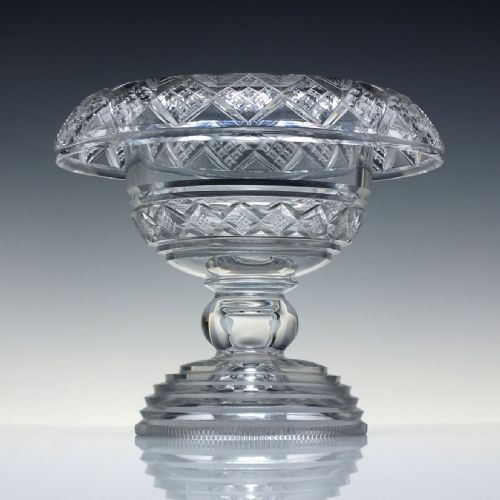


Cut Glass Compote Bowl
A cut glass compote bowl stands as a raised serving piece, bringing brilliant sparkle and height to a table.
Cut Glass Compote Bowl
A cut glass compote bowl combines a shallow or deep vessel with a pedestal foot, often serving as a fruit bowl, centrepiece, or tazza. When searching for a cut glass compote bowl, a buyer encounters pieces originating from the Georgian, Victorian, and Edwardian eras, alongside later Art Deco designs.
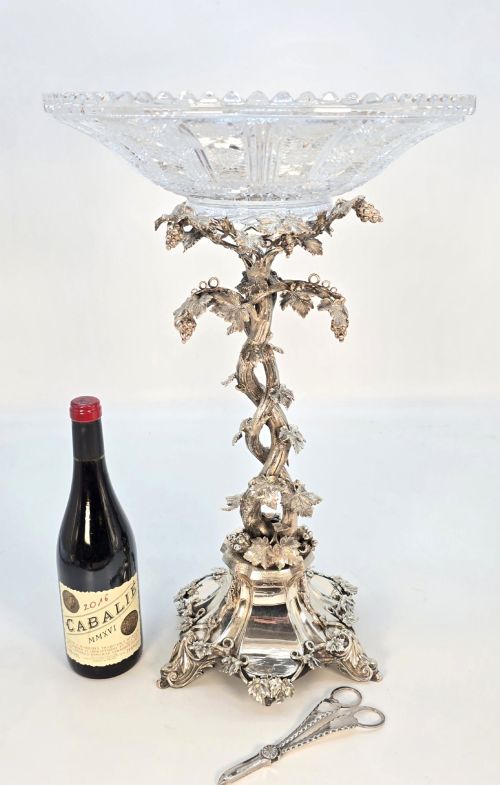
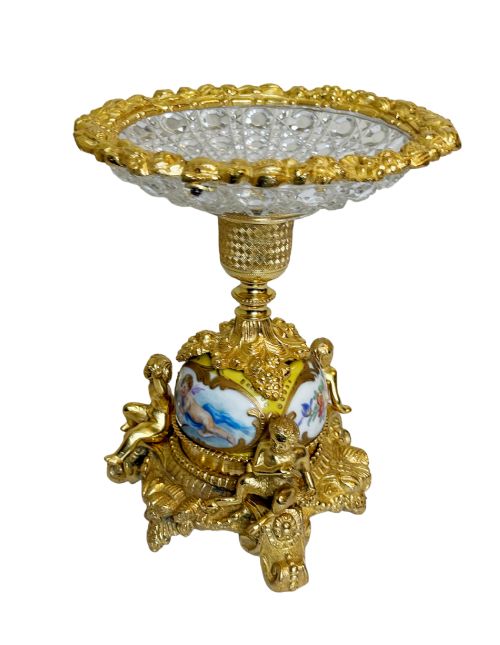
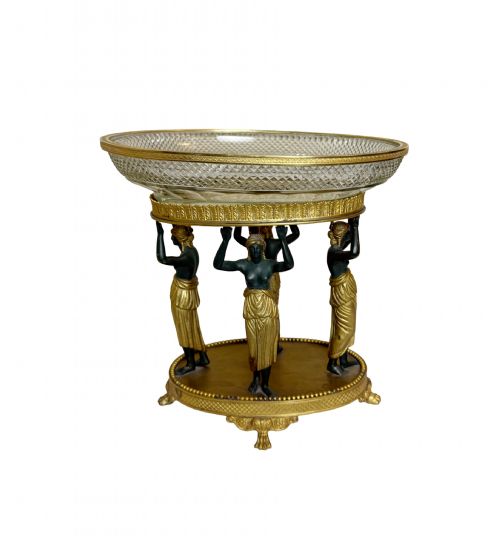
The selection ranges from early Irish turnover bowls and Georgian standing bowls to elaborate Victorian and Edwardian pedestal pieces. Many examples incorporate stands or mounts fashioned from silver plate, gilt bronze, or patinated bronze.
Makers such as W M F and Christofle et Cie appear alongside traditional Irish crystal and English lead crystal production. These decorative vessels function equally well for displaying fruit or standing alone as table centrepieces.
How they were made
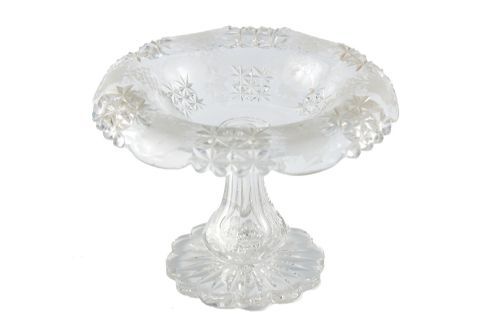
Glassmakers utilised lead crystal and hand-blown glass, shaping the bowls before applying deep wheel-cut patterns such as hobnail designs and intricate etching. Molten metal was blown and manipulated into pedestals and bowls, then cooled slowly before the cold-working stage.
Metal mounts in silver plate, gilt bronze, and patinated bronze were cast separately and integrated to support or frame the crystal vessels. Artisans combined these mixed media elements with secure fixings, attaching handles, cherubs, or nautical figures to the glass bodies.
Materials documented across the selection include lead crystal, silver plate, gilt bronze, porcelain, and patinated bronze.
What varies in quality
The clarity and weight of the lead crystal establish the foundational quality of the bowl, distinguishing heavy, resonant material from lighter glass. Crispness in the wheel-cut facets dictates the visual sharpness and the way light refracts across the surface.
The sophistication of the mounting hardware and auxiliary materials, such as heavy silver plate or detailed gilt bronze castings with cherubs or nautical figures, elevates the overall execution. Integrity in the joinery between the glass bowl and its metal base indicates superior craftsmanship.
W M F·Christofle et Cie·Waterford
The Cut Glass Compote Bowl Glossary
- Compote
- A raised bowl on a stem or pedestal used for serving fruit or sweetmeats at the table. This term is often interchangeable with comports and tazzas in historical listings.
- Tazza
- A shallow saucer-shaped ornamental vessel mounted on a stem and foot. It functions in much the same manner as a compote bowl.
- Lead Crystal
- Glass containing metallic lead oxide, which increases the refractive index and weight of the material. This composition allows for deeper and sharper cutting by the artisan.
- Hobnail Pattern
- A raised, faceted surface decoration resembling the hobnails used in sturdy boots. It creates a dense texture that catches light from multiple angles.
- Turnover Bowl
- An early form of serving vessel featuring an everted or folded rim. These pieces frequently date to the eighteenth and early nineteenth centuries.
Cut Glass Compote Bowl: Frequently Asked Questions
What is a compote bowl used for?
These elevated vessels traditionally held fruit, preserves, or sweetmeats for the dining table. They served both a practical function during meals and a decorative role as a centrepiece.
Today, they suit similar displays of fresh fruit or stand alone on sideboards and dining tables to catch and reflect light.
How do I tell Georgian cut glass apart from Victorian pieces?
Georgian and early nineteenth-century pieces often display heavier lead crystal with deep, hand-polished facets and distinctive blueish or greyish tints in the metal. The cutting tends to be bold and specific to the period, such as early Irish turnover designs.
Victorian examples frequently introduce varied surface textures, including combination etching, machine-assisted precision, and elaborate pairings with silver-plated or bronze mounts.
Are metal mounts original to the glass bowls?
Many nineteenth-century centrepieces were conceived as mixed-media objects from the outset, combining cast gilt bronze, silver plate, or patinated bronze with hand-blown crystal. Makers like Christofle et Cie and W M F produced integrated designs where metal frames secure the glass bowls.
Clues to originality include matched patination, precise fitting of the metal collars to the glass contours, and period-appropriate assembly techniques.
How should I clean an antique cut glass compote?
Wash the glass gently in lukewarm water using mild detergent, avoiding sudden temperature changes that can stress old material. Dry it promptly with a lint-free cloth to maintain the brilliance of the cut facets.
Keep metal plating and bronze mounts away from harsh submersion liquids, wiping them carefully with a dry cloth instead.