




Pedestal Glass Centrepiece Bowl
These pedestal glass centrepiece bowl examples anchor a dining table with height and clarity, gathering light through cut crystal and coloured glass.
Pedestal Glass Centrepiece Bowl
A pedestal glass centrepiece bowl elevates fruit, flowers, or confectionery above the surface of a table on a raised foot or stem. When searching for a pedestal glass centrepiece bowl, buyers encounter forms ranging from low Victorian comports to tall Edwardian tazzas and heavy Georgian standing bowls.
The selection includes pieces spanning the nineteenth century through the Art Deco and Art Nouveau periods. Victorian cut glass and heavy lead crystal versions appear alongside coloured glass from Germany, France, and Bohemia.
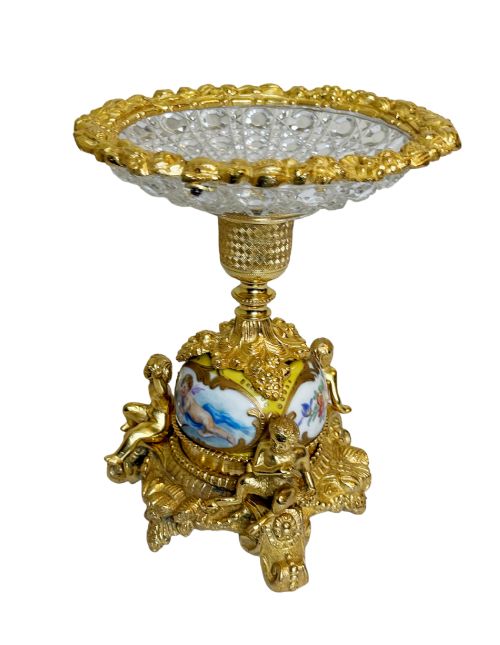
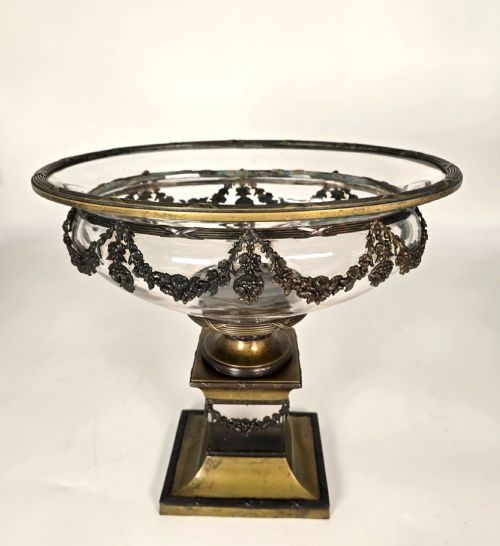
Makers and manufacturers of the period combined blown or pressed glass bowls with mounts in silver plate, gilt bronze, and brass. Many examples integrate metal handles, figural bases, or silver rims.
How They Were Made
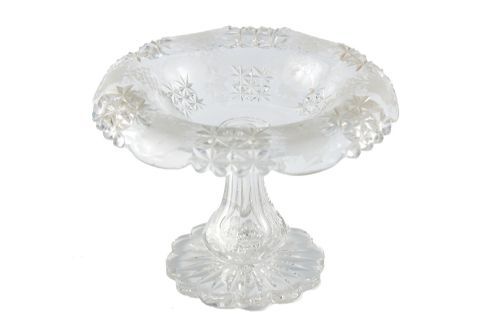
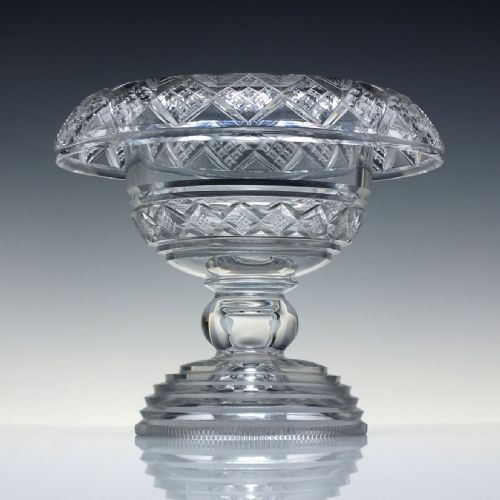
Glass bowls were shaped by hand blowing into moulds or free-blowing, then finished with wheel-cut flutes, hobnail patterns, or delicate surface etching. Craftsmen applied heat to join the bowl to a separate pedestal foot or stem.
Metal mounts in silver plate, pewter, and gilt bronze were cast and chased before securing the glass components with collars or pins. Coloured glass variants relied on metallic oxides added during the melting process to achieve ruby, cobalt blue, vaseline, and green hues.
Listings feature lead crystal, cut glass, and coloured glass alongside metal mounts in silver plate, brass, and gilt bronze.
What Varies in Quality
Depth and crispness of the wheel-cut facets separate standard production from finer display pieces, where light refracts sharply through thick lead crystal. Hand-engraved motifs show deliberate control of the cutting wheel rather than hasty surface scratching.
The weight and finish of the metal mounts dictate the overall quality of mounted pieces. Solid silver or heavy gilt bronze mountings securely fit the contours of the glass, whereas lighter plated alternatives show less structural substance.
Graystan·Viners·WMF·Etling·Orivit·Christofle et Cie
The Pedestal Glass Centrepiece Bowl Glossary
- Comport
- A shallow dish on a raised pedestal used for serving fruit or sweetmeats at dessert.
- Tazza
- An Italian term for a shallow saucer-like dish mounted on a stem and foot.
- Hobnail
- A raised, sharp-pointed glass cutting pattern resembling the hobnails used on heavy boots.
- Turnover bowl
- A bowl form with an everted rim folded outward while hot by the glassmaker.
- Lead crystal
- Glass containing lead oxide that increases weight, brilliance, and softness for cutting.
Pedestal Glass Centrepiece Bowl: Frequently Asked Questions
How were these bowls used historically?
These bowls held fruit, sweetmeats, or floral displays at the centre of formal dining tables during dessert courses.
Their elevated pedestals allowed guests to converse across the table beneath the display.
Can I use an antique bowl for serving food?
Most antique glass bowls safely accommodate dry foods, fruit, or confectionery for modern dining.
Acidic foods or prolonged moisture should be avoided with pieces possessing delicate metal mounts or silver plating.
How do I distinguish Victorian from Art Deco pieces?
Victorian examples rely on heavy cut crystal, hobnail patterns, and ornate silver-plated or gilt bronze mounts.
Art Deco items feature smooth coloured glass, stylised figural supports, and minimal geometric decoration.
How should I clean an antique glass bowl?
Wash the glass gently in lukewarm water using mild detergent and a soft cloth to protect the surface.
Submerge metal-mounted pieces with caution to prevent moisture damage to adhesives or plated surfaces.