




Cut Glass Toilet Bottle
A cut glass toilet bottle brings heavy lead crystal and bright metal together for the dressing table.
Cut Glass Toilet Bottle
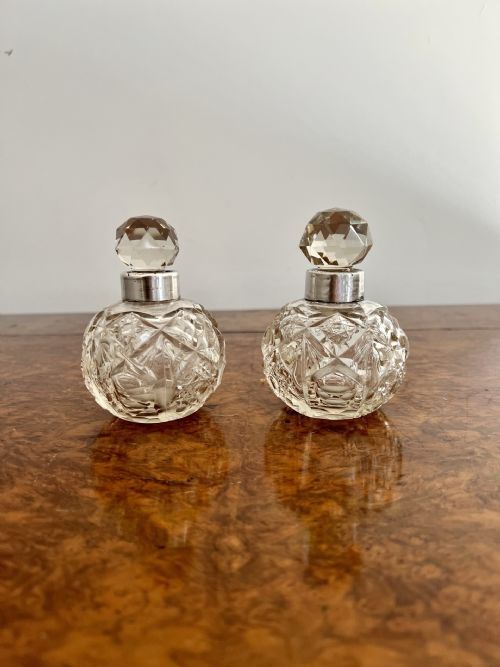
A cut glass toilet bottle is a vanity accessory designed to hold scents, colognes or powders on a dressing table. These vessels combine heavy, light-reflecting glass bases with metal collars and lids.
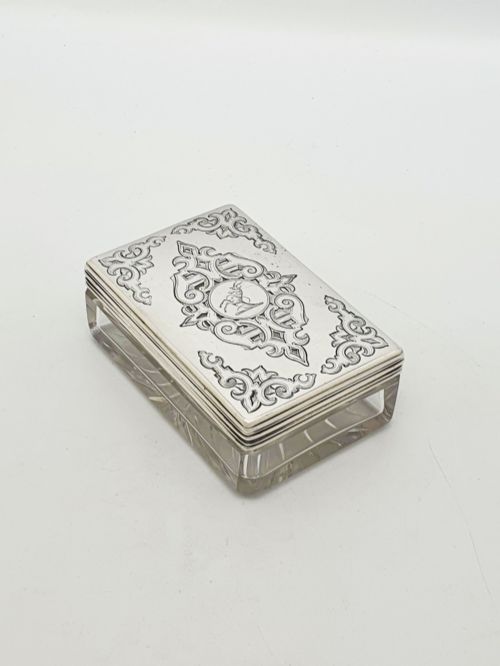
The versions most often met on this page date from the Georgian era through to the Art Deco period, taking forms such as globular perfume bottles, tall vanity jars and rectangular trinket boxes.
Makers paired the glass with sterling silver mounts, tortoiseshell, and guilloche enamel, frequently supplying them individually or as part of a larger matching dressing table set.
How they were made
Makers fashioned the bodies from thick glass and cut crystal, using wheel-cutting techniques to carve deep geometric facets, flutes, and stars that catch the light from every angle. These heavy glass bases provide the stability needed for daily use on a dressing table.
Silversmiths then fitted sterling silver collars, mounts, and screw lids, often hallmarked with assay office marks for cities like Birmingham and Sheffield. Some examples incorporate contrasting details such as tortoiseshell panels or colourful guilloche enamel beneath the silver top.
Some lidded jars preserve the secret initials of past owners hidden beneath delicate floral engravings.
What varies in quality
Quality in a cut glass toilet bottle rests on the crispness of the wheel-cut facets and the weight of the crystal itself. Superior pieces show sharp, clean lines in the glass cutting rather than rounded or smoothed edges.
The standard of the metalwork also divides the range, with substantial gauge sterling silver mounts and clear, legible hallmarks indicating better craftsmanship. Matched sets featuring engraved crests or specialist materials like enamel elevate a piece beyond standard utilitarian wares.
Jonathan Douglas·Goldsmith's and Silversmith's Co.
The Cut Glass Toilet Bottle Glossary
- Cut Glass
- Glass shaped and patterned by holding it against a rotating abrasive wheel. This process creates deep facets and brilliant optical effects across the surface of the bottle.
- Sterling Silver
- An alloy of silver containing 92.5 percent pure silver and 7.5 percent other metals, usually copper. This standard metal appears frequently on the collars and lids of these vanity vessels.
- Guilloche Enamel
- A decorative technique where precise geometric patterns are mechanically engraved into metal beneath a translucent layer of coloured enamel. It adds rich colour and texture to the lids of jars.
- Vanity Jar
- A lidded container used on a dressing table for holding powders, creams or small trinkets. These pieces often match the glass and silver style of nearby perfume bottles.
- Hallmark
- A series of official marks stamped onto precious metal items to guarantee their purity, origin year, and maker. They provide reliable clues to the exact age of the silver mount.
Cut Glass Toilet Bottle: Frequently Asked Questions
What is a cut glass toilet bottle?
A cut glass toilet bottle is a decorative glass container fitted with a metal lid, used historically on dressing tables for perfumes, colognes, and cosmetics.
These pieces range from single scent bottles to matching sets incorporating jars and trinket boxes.
How do I date a silver and glass bottle?
You date these items primarily by examining the hallmarks stamped onto the silver collars or lids, which indicate the assay office and year of manufacture.
Stylistic clues such as Georgian facet-cutting or Art Deco enamel work also help narrow down the period.
Were these bottles sold individually?
Makers retailed them both as standalone pieces and as part of larger, comprehensive dressing table sets that included brushes and powder jars.
Some surviving pieces still retain their original matching companions or crest engravings.
How do I care for antique glass and silver?
Clean the glass carefully with warm soapy water while avoiding harsh abrasives that might scratch the surface. Polish the sterling silver mounts gently with a soft cloth, keeping silver polish away from the glass and enamel.