
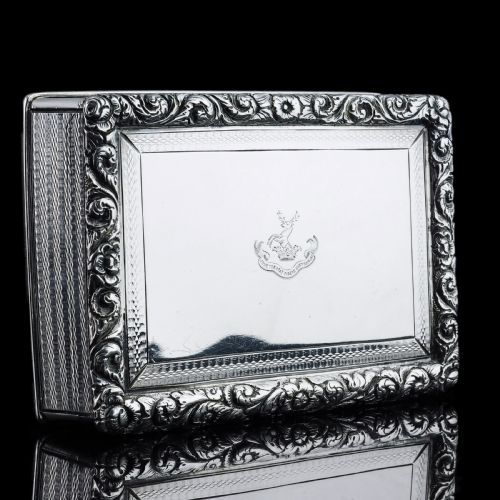
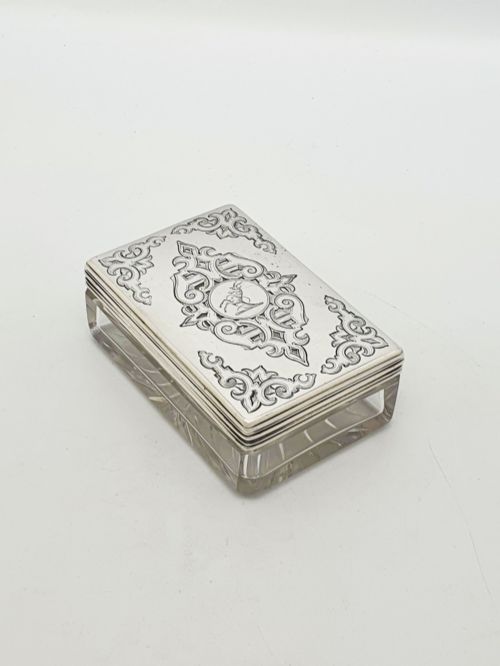


Engraved Crest Silver Box
An engraved crest silver box carries a family coat of arms or personal motto, offering a tangible link to past heritage through functional precious metal.
Engraved Crest Silver Box
When you search for an engraved crest silver box, you enter a domain where heraldry meets precious metalwork, encompassing everything from pocket-sized snuff containers to substantial cigar receptacles. These pieces span the eighteenth, nineteenth, and early twentieth centuries, drawing heavily on Georgian and Victorian design idioms.
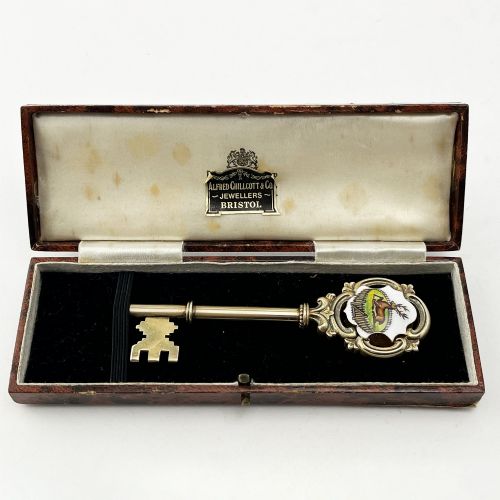
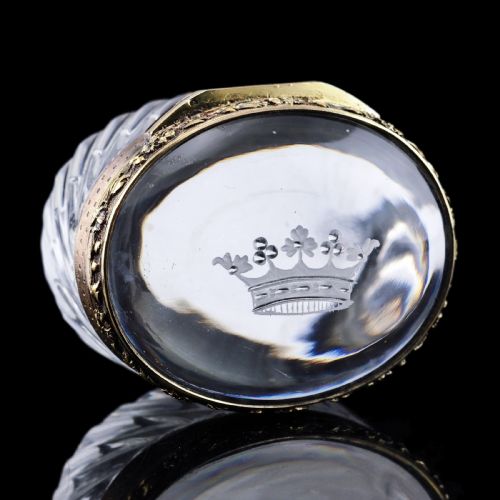
The most common formats you will encounter on this page are snuff boxes and trinket boxes fashioned from sterling silver or silver gilt. Many of these items incorporate cut crystal, glass, or enamel alongside the metalwork, reflecting the varied domestic and personal uses of their original owners.
Makers ranged from notable provincial silversmiths to prominent London workshops, each applying crests that identified specific families, regiments, or individuals. The presence of these heraldic engravings transforms a standard container into a personal historical document.
Materials and construction
The primary material is sterling silver, often augmented with silver gilt interiors or accents to prevent corrosion from tobacco or cosmetics. Workshops also combined silver mounts with cut crystal and cut glass for larger trinket boxes, while internal linings occasionally featured velvet or leatherette.
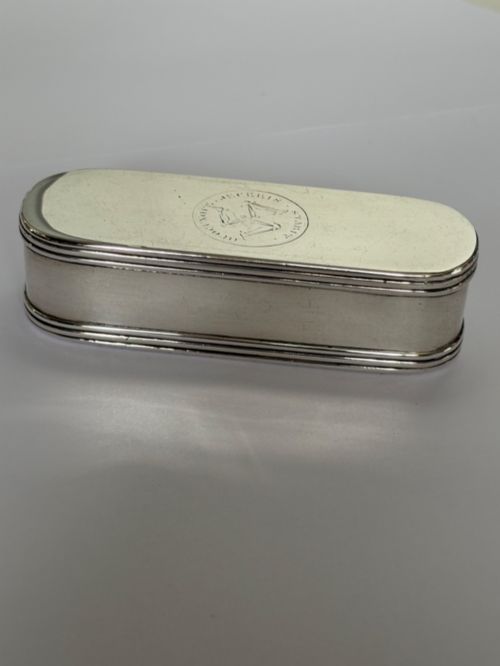
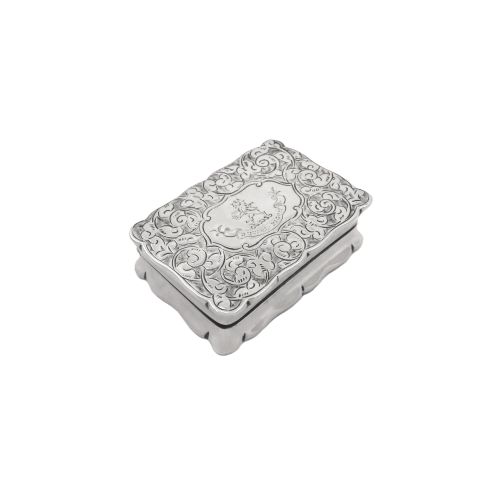
Techniques relied upon traditional silversmithing methods such as casting, chasing, and hand engraving. Artisans cut heraldic crests and floral borders directly into the metal surface using sharp gravers, ensuring precise representation of family mottos and crests.
Listings feature items spanning the eighteenth, nineteenth, and early twentieth centuries, encompassing Georgian, Victorian, and Edwardian periods.
Assessing quality and execution
Quality in these pieces is dictated by the crispness of the heraldic engraving and the weight of the metal. Finer examples display deeply cut, highly detailed crests that retain sharp definition, whereas inferior specimens show shallow or worn surface work.
The integration of materials also marks the division between standard production and superior craftsmanship. Well-executed boxes feature tight hinges, secure closures, and harmonious pairings of silver with materials like enamel or cut crystal.
Cornelius Bland·Joseph Willmore·Reid and Summers·Jane Brownett Alexander Jones·E Cornock·James Phipps I·John Hillery MacNamara
The Engraved Crest Silver Box Glossary
- Sterling silver
- An alloy of silver containing ninety-two point five percent silver and seven point five percent other metals, typically copper. This standard composition forms the basis of the vast majority of antique boxes.
- Silver gilt
- Silver that has been coated with a thin layer of gold on its surface. This technique was frequently applied to the interiors of snuff and tobacco boxes to protect the silver from chemical corrosion.
- Heraldic crest
- The upper component of a complete coat of arms, often depicting an animal, plant, or symbolic object. These were engraved onto silver boxes to denote family lineage or personal allegiance.
- Chasing
- A metalworking technique where the artisan pushes and displaces metal from the front using hammers and punches to create a raised decorative design. It is commonly seen on the borders of Georgian and Victorian boxes.
- Snuff box
- A small pocket-sized container designed to hold ground tobacco leaves for inhalation. These pieces often feature tightly fitted hinged lids to preserve the contents.
Engraved Crest Silver Box: Frequently Asked Questions
What is an engraved crest silver box used for?
These boxes served primarily as personal containers for tobacco, snuff, pills, cards, or small trinkets depending on their scale.
Owners carried them daily or kept them on dressing tables and desks, using the engraved crest to display their identity.
How do I identify the period of a silver box?
Dating relies heavily on hallmarks stamped into the metal, which indicate the assay office, year of manufacture, and maker.
Stylistic cues such as floral chasing, Georgian proportions, or Victorian weight also help establish the era of production.
Are all crests on these boxes authentic?
Most period crests were added contemporaneously to mark ownership, often corresponding to specific historical families or mottoes.
Researching the heraldic design alongside the assay marks helps confirm whether the engraving dates to the original manufacture of the piece.
How should I care for antique silver boxes?
Maintain the metal with minimal, gentle cleaning using appropriate silver cloths to avoid damaging delicate hand-engraved details.
Store them in stable environments away from high humidity to protect any internal velvet, leatherette, or enamel elements.