



Solid Silver Tobacco Box
When you search for a solid silver tobacco box, you enter a world of pocket-sized pocket histories shaped by Georgian, Victorian, and Edwardian silversmiths.
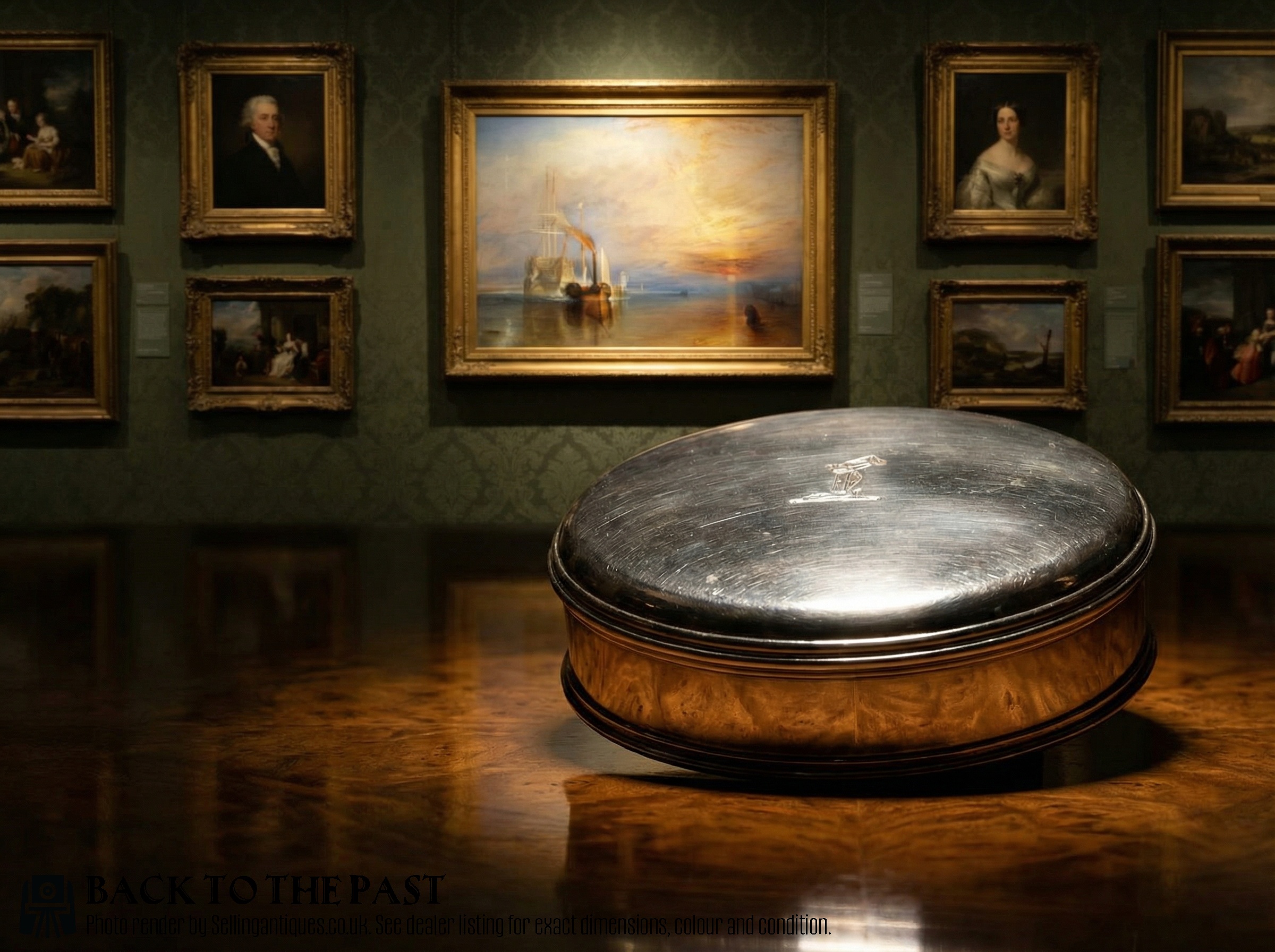
Solid Silver Tobacco Box
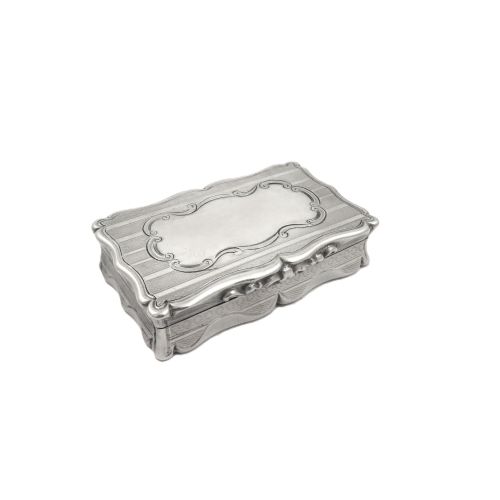
A solid silver tobacco box is a small, hinged container designed to hold loose leaf tobacco, snuff, or cheroots for personal use. These portable containers reflect the smoking habits and social rituals of past centuries, particularly the Georgian and Victorian eras.
The versions most commonly met on this page range from small pocket snuff boxes to larger table boxes and cigar cases. Makers utilised sterling silver, silver-gilt, and occasionally paired silver with oak to house smoker's requisites.
Geographic origins span British workshops in London, Birmingham, and Chester alongside continental and export pieces from Dutch, French, and Ottoman makers. Each box offers a glimpse into historical metalwork traditions spanning the eighteenth to early twentieth centuries.
Materials and technique
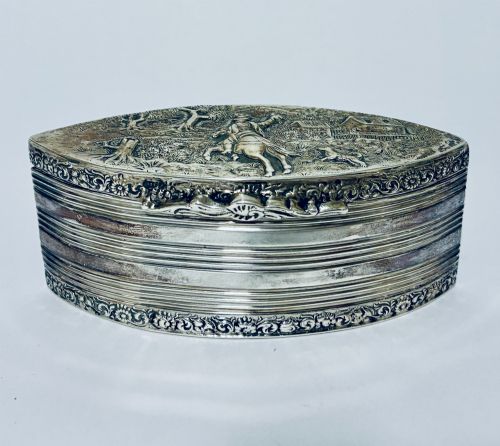
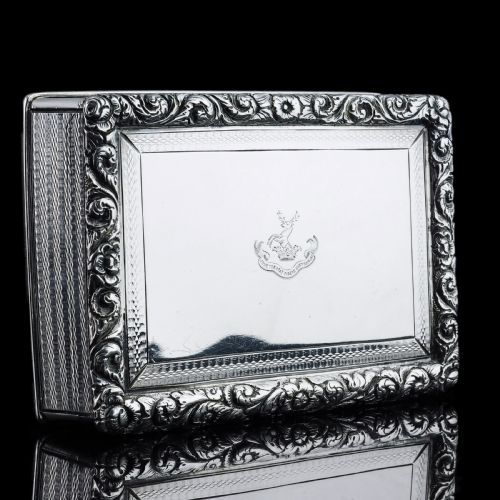
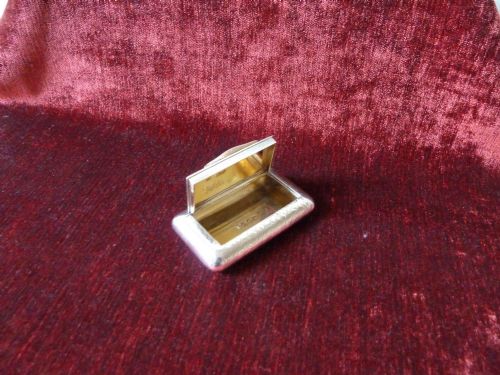
Silversmiths constructed these pieces using solid sterling silver, frequently applying gold washes known as silver-gilt to the interior surfaces to prevent corrosion from leaf moisture. Some larger desk and cigar boxes incorporated wooden bodies, such as oak, mounted with silver plaques and hinges.
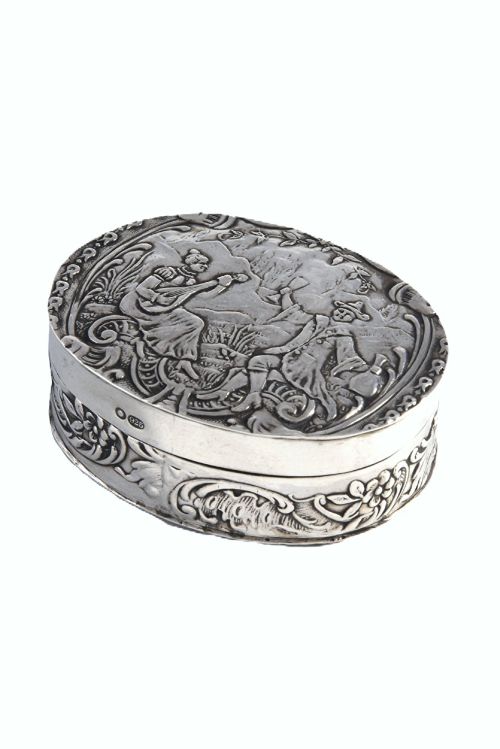
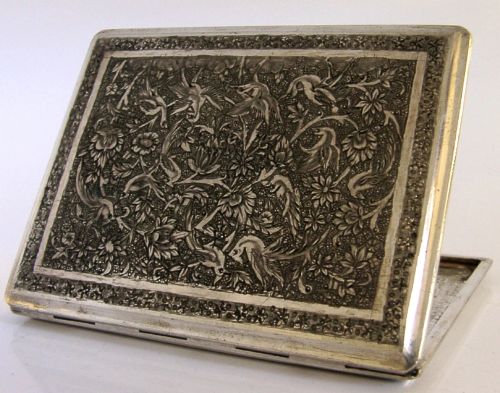
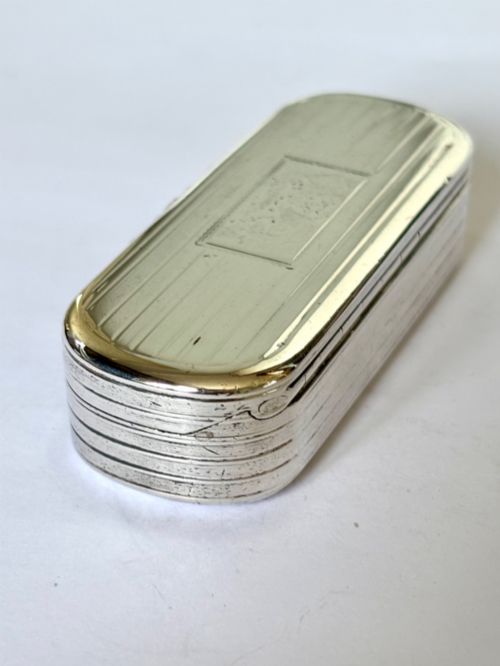
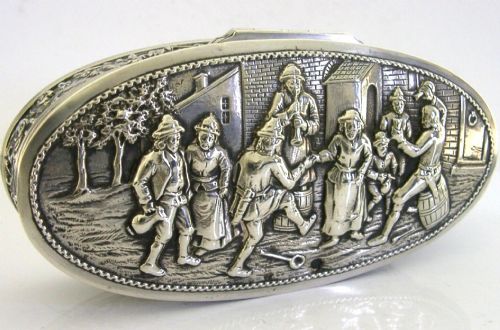
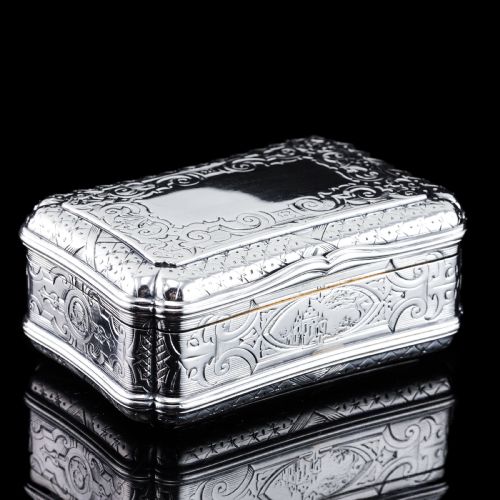
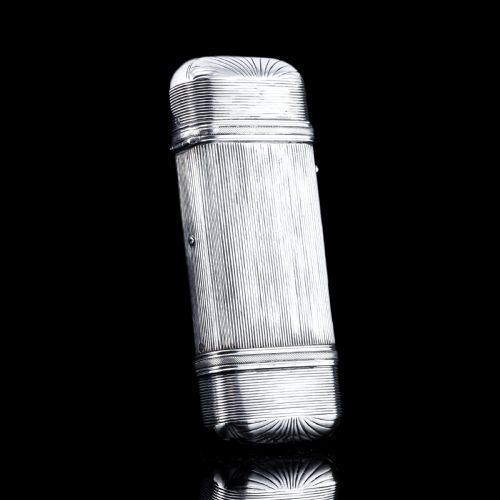
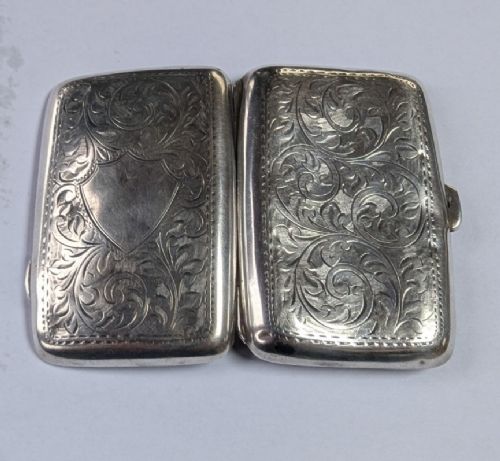
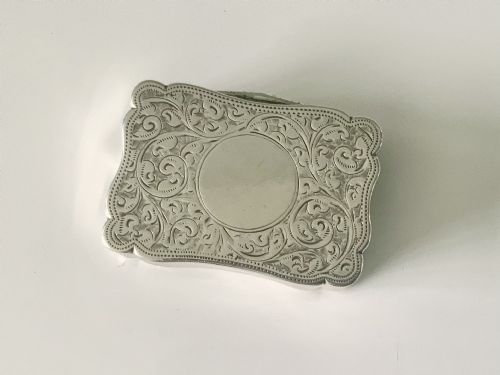
Decoration relied heavily on chased borders, floral motifs, engine-turned geometric patterns, and cast acanthus leaf thumbpieces. Skilled artisans also employed niello inlay and detailed pictorial scenes chased or engraved onto lid surfaces.
Object forms span small pocket snuff boxes, heavy desk boxes, cheroot cases, and double-lidded containers.
What separates quality
Quality rests upon the crispness of the chasing, the weight of the metal utilised, and the precision of the box's construction. Superior examples exhibit tightly fitted hinges that shut firmly and retain intact hallmarks stamped clearly into the metal.
Artistic depth distinguishes ordinary containers from exceptional ones, particularly where hand-cast borders, detailed figural scenes, or complex engine-turning display the maker's technical mastery. Heavy gauge silver and well-preserved interior gilding indicate superior original manufacture.
Robert Thornton·Edward Smith·Joseph Willmore·Edward Edwards·William Eaton·Matthew Linwood·Joseph Ash·John Caw·J Keating·Frederick Mason·James Phipps I·E Cornock·George Unite
The Solid Silver Tobacco Box Glossary
- Sterling silver
- A silver alloy containing 92.5 percent pure silver and 7.5 percent other metals, usually copper, chosen for durability.
- Silver-gilt
- Silver that has been coated with a thin layer of gold on its surface, often found inside tobacco boxes to protect the metal.
- Engine-turned
- A decorative technique involving precise geometric patterns cut into metal by a lathe, common on nineteenth-century cases.
- Chasing
- A metalworking method where a design is hammered into the front surface of the silver to push the metal inward and create relief.
- Hallmark
- A series of official marks stamped on precious metals indicating the standard of purity, maker, and year of assay.
Solid Silver Tobacco Box: Frequently Asked Questions
What is a solid silver tobacco box?
A solid silver tobacco box is a lidded metal container made to hold loose smoking tobacco or snuff securely in a pocket or on a desk.
These pieces were produced in various sizes, ranging from small pocket items to heavy table boxes designed to stay in one room.
How were these boxes used originally?
Owners carried them daily to dispense tobacco, snuff, or cheroots during social gatherings, travel, or leisure moments.
The tight-fitting hinged lids kept the contents fresh and prevented loose leaf from spilling into pockets or waistcoats.
How do I date an antique silver box?
Dating relies upon examining the stamped hallmarks, which reveal the assay office, city, and specific year letter designated for when the piece was tested.
Stylistic clues like Rococo motifs, engine-turned patterns, or Victorian cartouches also help narrow down the period of manufacture.
Can I still use an antique tobacco box?
Many collectors use these boxes today for storing small items, business cards, or modern dry goods rather than actual tobacco.
Careful handling ensures the antique hinges and delicate chased lids remain undamaged during everyday modern use.