


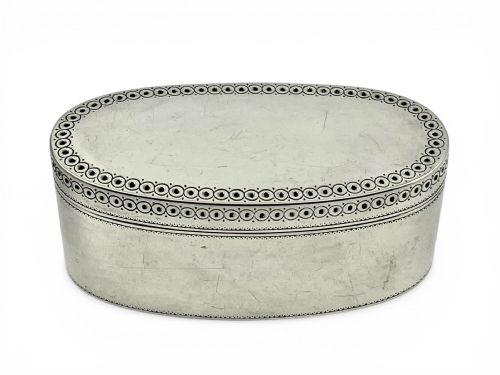


Georgian Silver Tobacco Box
A georgian silver tobacco box is a pocket or table container for dried leaf, prized for its hand-chased relief and crisp armorial engraving.
Georgian Silver Tobacco Box
When you search for a georgian silver tobacco box, you encounter small desk containers and pocket receptacles made during the eighteenth and nineteenth centuries. The examples appearing on this page span the Georgian, Regency, and early Victorian periods, alongside related forms like snuff boxes and mull types.
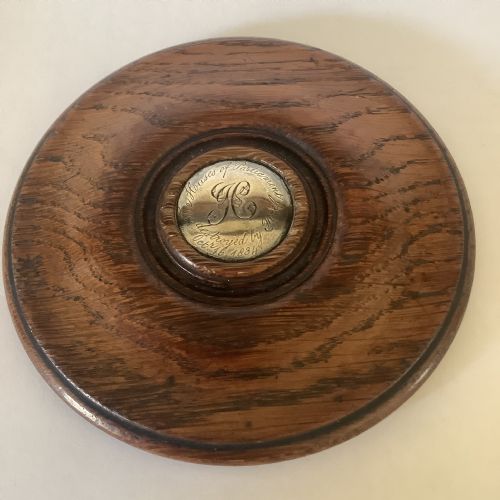
Makers fashioned these objects in sterling silver and silver gilt, frequently incorporating tortoiseshell, horn, oak, and shell into the body. While specific tobacco boxes appear alongside coin-embellished containers and cigar cases, the overarching group centres on small personal containers for smoking leaf.
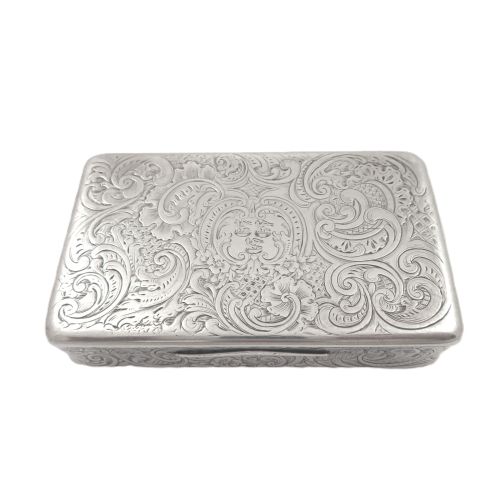
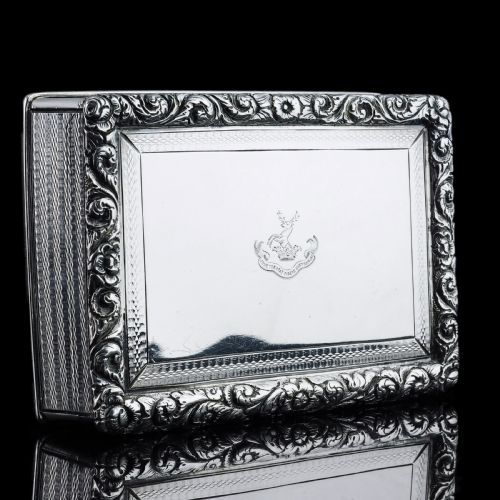
Most pieces date from the reigns of George III and George IV, with assay marks pointing to London, Birmingham, Edinburgh, and Dublin workshops. Collectors find both plain pocket models and heavy table boxes engraved with family crests and rococo motifs.
Materials and Techniques
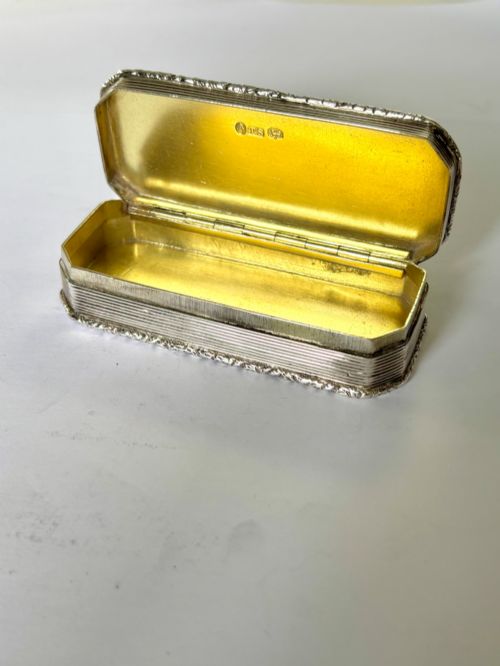
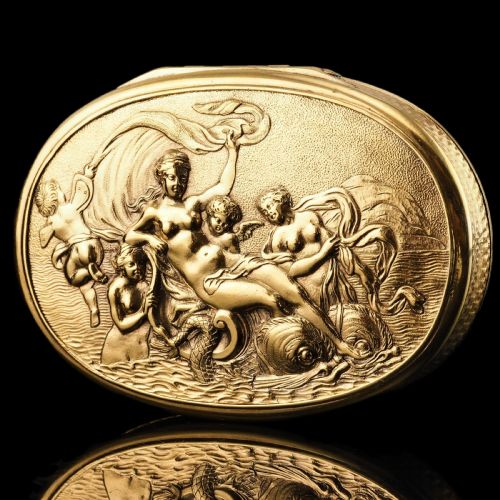
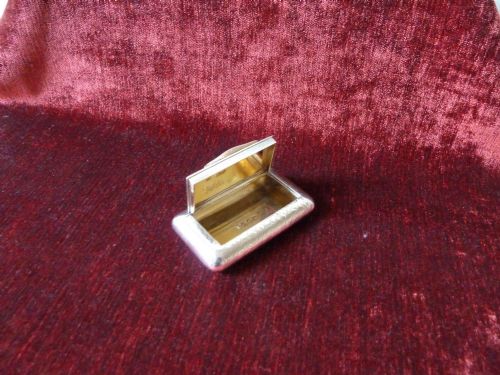
Silversmiths constructed these boxes using solid sterling silver, often applying a layer of gold wash known as silver gilt or vermeil to the interior surfaces. Techniques included engine turning for geometric texture and floral chasing for deep, raised decorative borders.
Alternative organic materials like horn and tortoiseshell received silver mounts, hinges, and thumbpieces to create robust containers. Workers utilised shell and oak in specialised pieces, securing metal shields and crests directly onto the organic substrates.
Listings feature materials spanning sterling silver, silver gilt, vermeil, horn, oak, tortoiseshell, and shell across the Georgian and Victorian eras.
Separating the Grades
Quality rests upon the crispness of the chased decoration and the depth of the metal relief work. Boxes featuring pictorial scenes or cast rococo motifs demand higher skill than plain, smooth surfaces.
The precision of the hinge mechanism and the tightness of the lid closure dictate the standard of manufacture. Heavy gauge silver with clear hallmarks from noted makers elevates a piece above standard workshop production.
Cornelius Bland·Thomas Shaw·Joseph Willmore·William Eaton·Edward Edwards·Matthew Linwood·Joseph Ash·John Caw·J Keating·Edward Farrell·E Cornock·James Phipps I
The Georgian Silver Tobacco Box Glossary
- Silver Gilt
- Silver covered with a thin layer of gold on the interior or exterior surfaces. This technique protected the metal from the corrosive oils of tobacco.
- Snuff Mull
- A Scottish personal container for ground tobacco, traditionally formed from a ram's horn with silver mounts and a hinged lid.
- Engine Turned
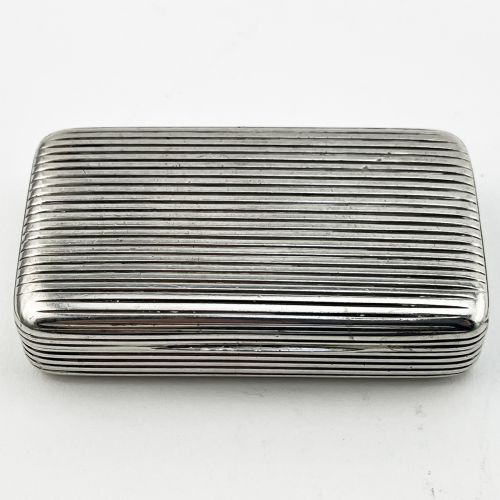
- A geometric pattern of fine lines cut into metal by a lathe. It provides texture and light refraction across the surface of the box.
- Hallmark
- A series of official stamps indicating metal purity, assay office, and date letter. These marks verify the origin and period of the object.
- Crest
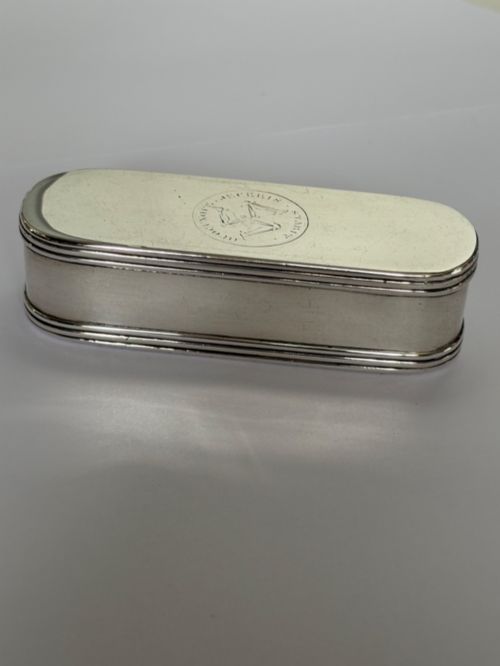
- An engraved family symbol or heraldic device placed upon the lid. It often identifies the original owner of the piece.
Georgian Silver Tobacco Box: Frequently Asked Questions
What is a georgian silver tobacco box?
These objects are pocket or table containers designed to hold loose tobacco for smoking or chewing in the eighteenth and nineteenth centuries.
Craftsmen built them from sterling silver, horn, and tortoiseshell, often embellishing the lids with crests, chased flowers, and pictorial scenes.
How were they used?
Owners carried them in waistcoat pockets or kept them on desks for dispensing tobacco throughout the day.
Spring hinges and tight lids kept the contents dry and secure during travel.
How do I read the hallmarks?
Hallmarks consist of stamped symbols that reveal the assay town, the maker's mark, and the specific year of manufacture.
By checking these small stamps against registry records, you can date a box to a precise decade.
How do I clean silver boxes?
Silver boxes require gentle dusting with a soft cloth to preserve the original patina and fine engraved details.
Harsh dips and abrasive polishes strip away the surface highlights and damage organic elements like horn or tortoiseshell.