





Regency Silver Snuff Box
A regency silver snuff box is a pocket-sized Georgian container that carried ground tobacco, built for daily use and social display.
Regency Silver Snuff Box
When you search for a regency silver snuff box, you enter a world of pocket-sized containers made during the Georgian and Regency periods. The pieces on this page span the early nineteenth century, including the reign of George IV, alongside related items such as vinaigrettes and horn mulls.
The objects take various forms, from small pocket boxes to larger table boxes mounted in horn or turtle shell. Most examples found here originate from British makers working in centres like London and Birmingham during the 1800s.
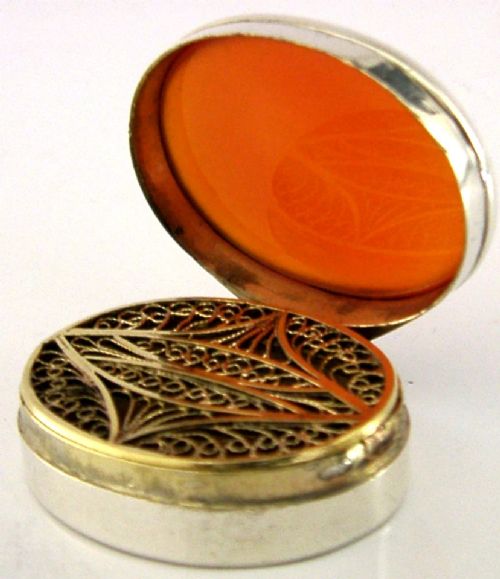
Alongside standard sterling silver constructions, you will frequently encounter silver-gilt, vermeil, and gold-plated interiors. Agate insets and intricate scenes depicting figures like Venus also appear among the selections.
How they were made
Silversmiths utilised sterling silver and silver-gilt to construct the bodies of these boxes, often applying fire gilding to the interior surfaces to protect the metal from tobacco corrosion. Some examples combine metalwork with organic materials, employing horn and turtle shell for the main structure with silver mounts.
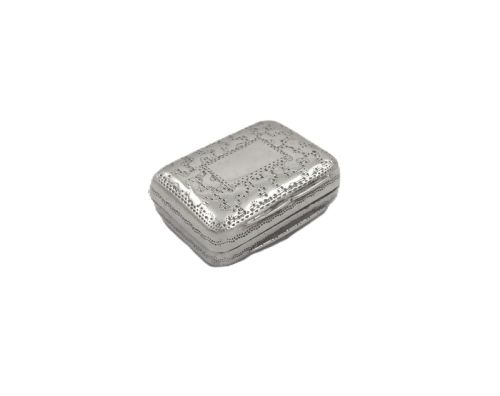
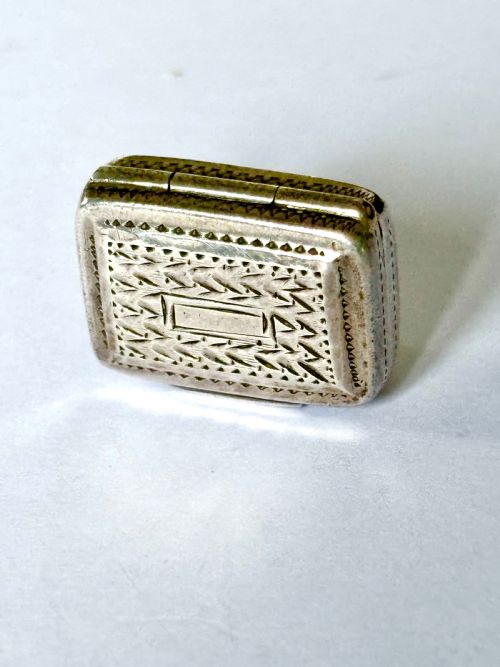
Specialised makers shaped the metal through pressing, chasing, and engraving to produce detailed lids featuring crests, floral motifs, or classical scenes. Agate stones were cut and polished to fit securely into the silver bezels of the lid.
Several boxes double as miniature art galleries, framing tiny engraved scenes of Venus for moments of discreet pocket-sized contemplation.
What varies in quality
The distinction between standard examples and finer pieces lies in the crispness of the chased decoration and the depth of the gilding. Boxes featuring detailed pictorial scenes or specialised materials like orange agate demonstrate higher levels of silversmithing skill.
Maker marks, clear hallmarks, and well-preserved internal gilt surfaces elevate certain pieces above unmarked or heavily worn alternatives. The integration of organic elements such as horn or turtle shell with clean silver mounts also distinguishes superior craftsmanship.
John Bettridge·Joseph Wilmore·Nathaniel Mills
The Regency Silver Snuff Box Glossary
- Silver-gilt
- Sterling silver that has been coated with a thin layer of gold, often found on the interior of snuff boxes to prevent tarnishing from tobacco. This technique is also known as vermeil.
- Vinaigrette
- A small ornamental box similar in size to a snuff box, featuring an internal pierced grille that held a sponge soaked in aromatic vinegar.
- Snuff mull
- A pocket or table container made from animal horn and mounted with silver, used for holding and dispensing dry snuff.
- Hallmark
- A series of official marks stamped on precious metals showing the standard of purity, the assay office, and the date letter.
- Chasing
- A metalworking technique where the silversmith hammers the metal from the front to raise and define surface designs.
Regency Silver Snuff Box: Frequently Asked Questions
How do I identify a Georgian box?
Look for British hallmarks stamped on the metal, which typically include a date letter, assay office symbol, and maker's mark.
The styles, materials such as sterling silver and silver-gilt, and specific decorative motifs also point to the early 1800s period.
What is the difference between a snuff box and a vinaigrette?
A snuff box is designed to hold loose tobacco powder for inhalation, featuring a simple enclosed compartment.
A vinaigrette contains a removable pierced metal grille inside the lid, meant to hold a sponge soaked in scented vinegar.
How should I clean my silver box?
Dust the surface gently with a soft cloth and avoid harsh chemical dips that can strip the original patina or damage gilt interiors.
If the piece contains agate, horn, or turtle shell, keep moisture away from the organic or stone inserts.
Why do some boxes have gold interiors?
Silversmiths applied a layer of gold, known as silver-gilt or vermeil, to protect the sterling silver from the corrosive acids in tobacco.
This technique also added a rich visual contrast when the lid was opened.