


Cut Glass Silver Cruet
A cut glass silver cruet brings together sparkling crystal bottles and gleaming metal framework for the dining table, offering both utility and elegance.
Cut Glass Silver Cruet
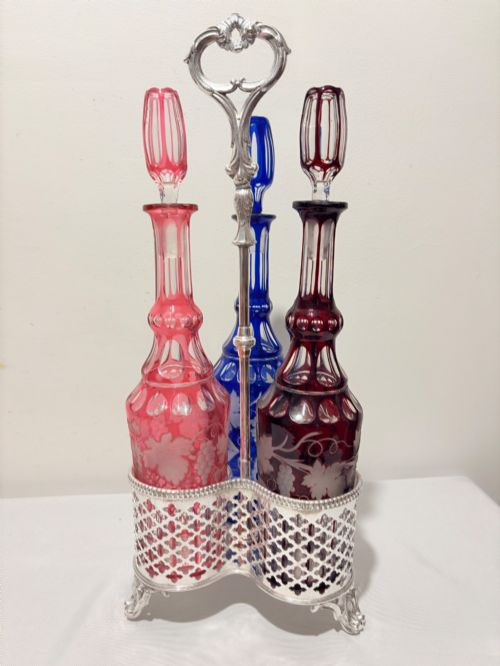
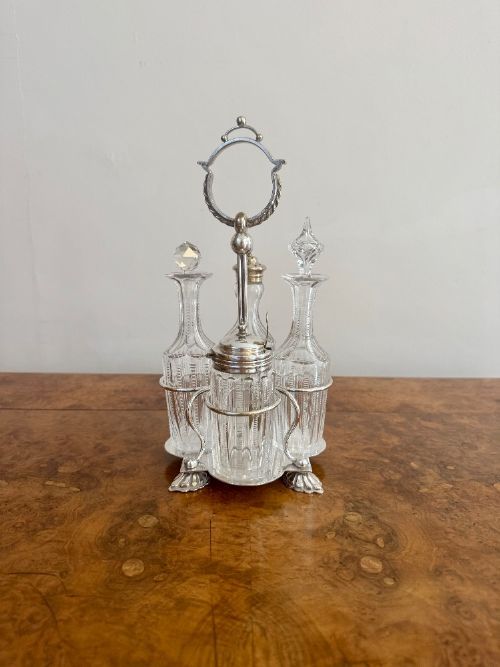
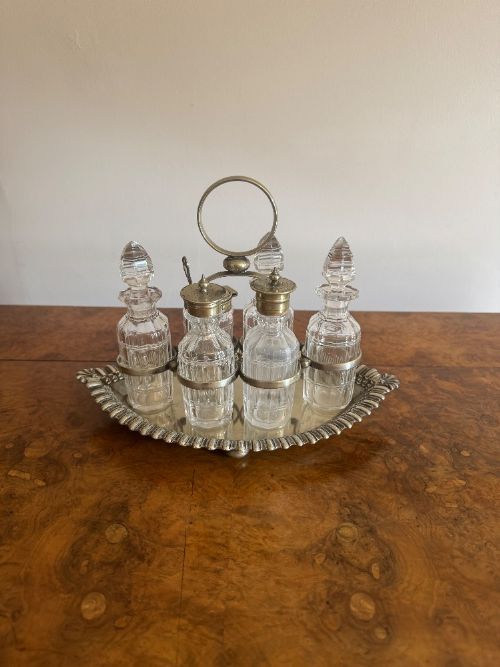
When you search for a cut glass silver cruet, you are looking at functional table sets designed to hold condiments, oils, vinegars, and sauces during formal meals. These ensembles typically combine heavy faceted glass bottles with fitted stands made from sterling silver, silver plate, or Old Sheffield plate.
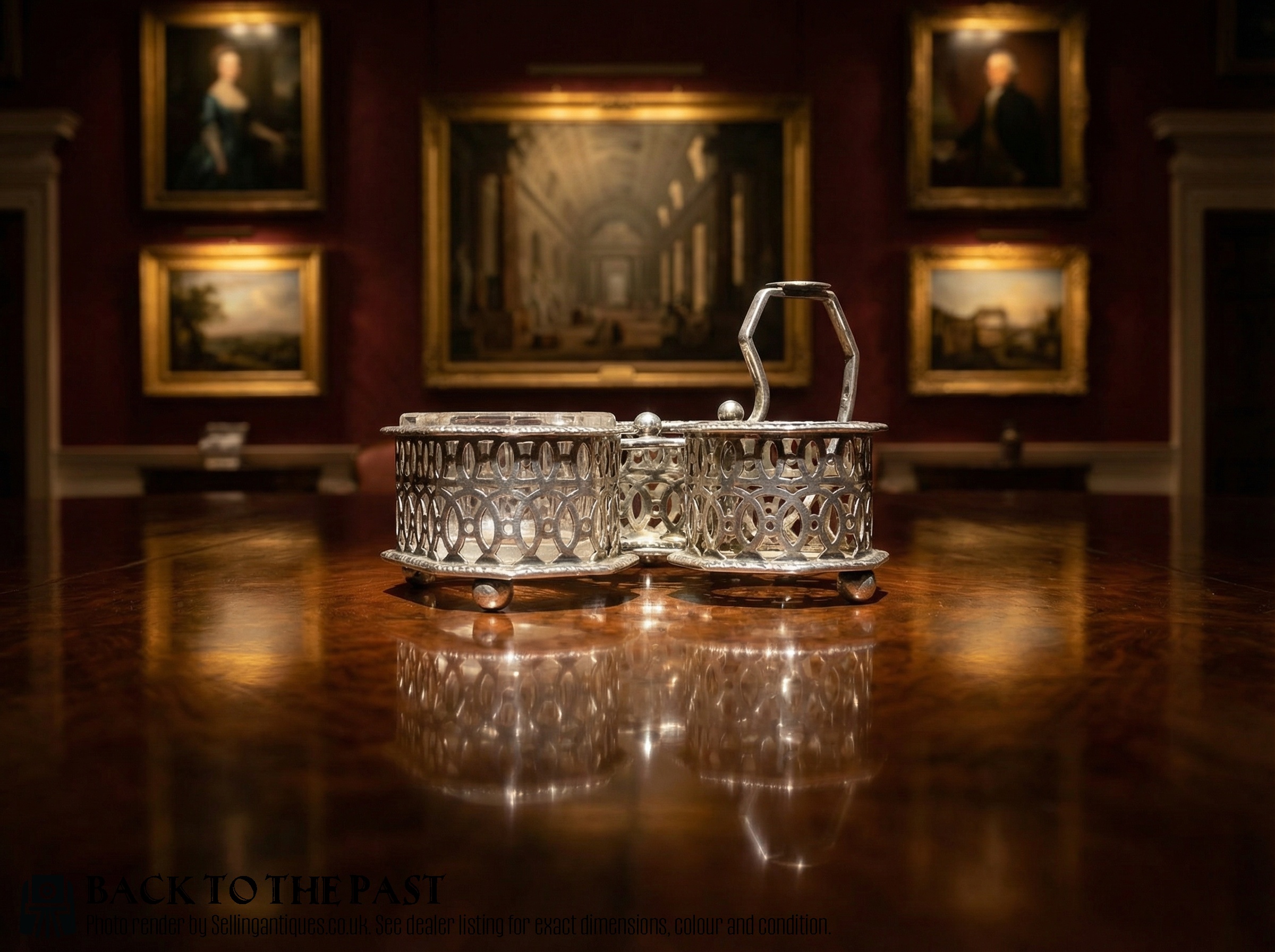
The most common examples you will meet on this page date from the Edwardian period and the Victorian era, often featuring multiple glass bottles nestled inside ornate silver-plated frames with carrying handles. Georgian examples also appear, ranging from simple three-bottle frames to large seven-bottle Warwick sets complete with casters.
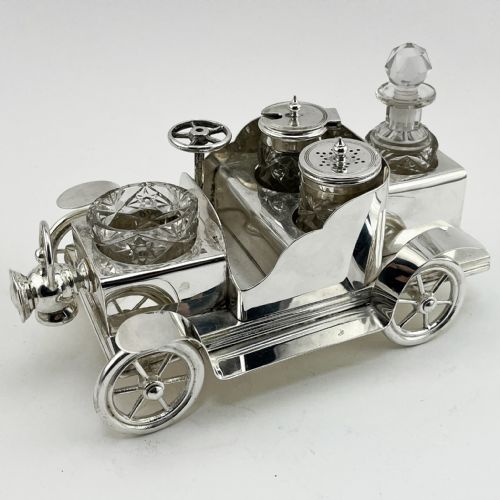
Beyond standard dining arrangements, the evidence shows novelty variations including vintage car cruets, carriage sets, and figural pieces designed to amuse guests. Bachelor cruets appear in smaller scales for individual use, while decanter stands and egg cruets expand the category into broader barware and breakfast service.
How they were made
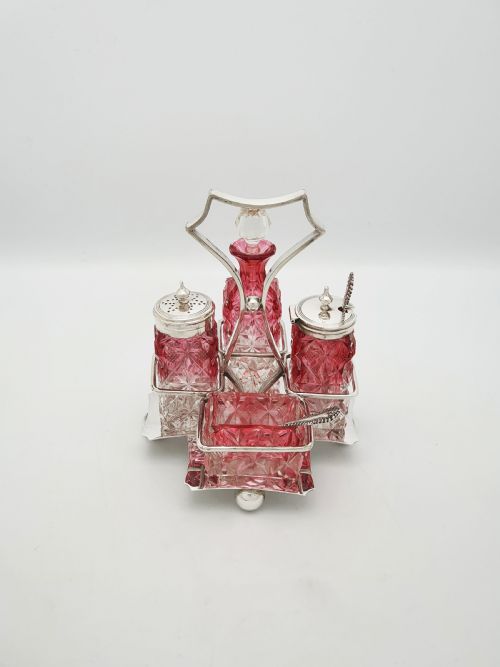
Makers shaped the heavy vessels using deep cut glass techniques, producing brilliant geometric facets that catch the candlelight on a dining table. Coloured variants, such as cranberry flashed glass, added rich visual contrast to the transparent crystal forms.
The accompanying frameworks required expert metalworking, utilising sterling silver or applying thin layers of silver onto base metals through silver plating and Old Sheffield plate methods. Silversmiths cast, pierced, and chased the metal stands to securely cradle the individual bottles while providing a sturdy central handle.
Victorian makers produced whimsical novelty cruet sets shaped like vintage cars and horse-drawn carriages to amuse guests between courses.
What varies in quality
The distinction between ordinary and exceptional sets rests on the crispness of the glass cutting and the weight of the metal framework. Superior pieces display deep, sharp facets on every bottle and substantial silver or heavy silver plating that resists wear on the high points of the handle and base.
Completeness dictates upper-tier standing, as having the full matching complement of original bottles and casters separates a preserved set from a marriage of replacement parts. Furthermore, master workshops applied refined chasing, pierced galleries, and clear hallmarks that elevate standard dining ware into documented works of silversmithing art.
Charles Thomas Fox·Elkington and Co·Wade Wingfield Wilkins·William Hutton and Sons·James Dixon and Son·Heath and Middleton·Mappin Brothers·Walker and Hall·Hester Bateman
The Cut Glass Silver Cruet Glossary
- Cruet stand
- The metal framework or chassis designed to hold multiple condiment bottles upright, usually fitted with a central loop handle for transport. It anchors the entire table service together.
- Caster
- A small cylindrical container with a pierced lid used for sprinkling sugar, pepper, or dry spices over food. These form part of larger Georgian table sets.
- Old Sheffield plate
- An early composite material made by fusing a thin sheet of sterling silver to a thicker copper base before rolling and shaping. This technique predates modern electroplating.
- Bachelor cruet
- A smaller, compact version of a condiment set intended for single diners or small households. They typically feature fewer bottles and occupy minimal table space.
- Cranberry glass
- A rich red glass produced by adding gold chloride to the molten batch during manufacturing. It appears frequently in Edwardian flashed items.
Cut Glass Silver Cruet: Frequently Asked Questions
What is a cut glass silver cruet?
A cut glass silver cruet is a decorative table set consisting of glass bottles housed within a silver or silver-plated metal stand.
These pieces held essential mealtime liquids and seasonings like oil, vinegar, and mustard within easy reach of diners.
How were cruet sets used?
Hosts placed these stands in the centre of the dining table during formal meals so guests could season their food to taste.
Individual bottles dispensed specific condiments, while the central handle allowed servants to pass the entire ensemble around the table.
How do I date a cruet set?
Dating relies on stylistic clues, manufacturing techniques, and official silver hallmarks stamped onto the metal framework.
Georgian sets often feature heavier cast silver and simpler frames, whereas Victorian and Edwardian examples lean towards elaborate ornamentation and silver plating.
How do I care for antique silver and glass?
Clean the glass bottles gently with warm soapy water, avoiding harsh abrasives that might scratch the surface.
Polish the metal frames sparingly with a specialist silver cloth to preserve the plating or solid metal beneath without wearing down the details.