


Cut Glass Pitcher
A cut glass pitcher brings heavy lead crystal and bright silver mounts together for the dining table.
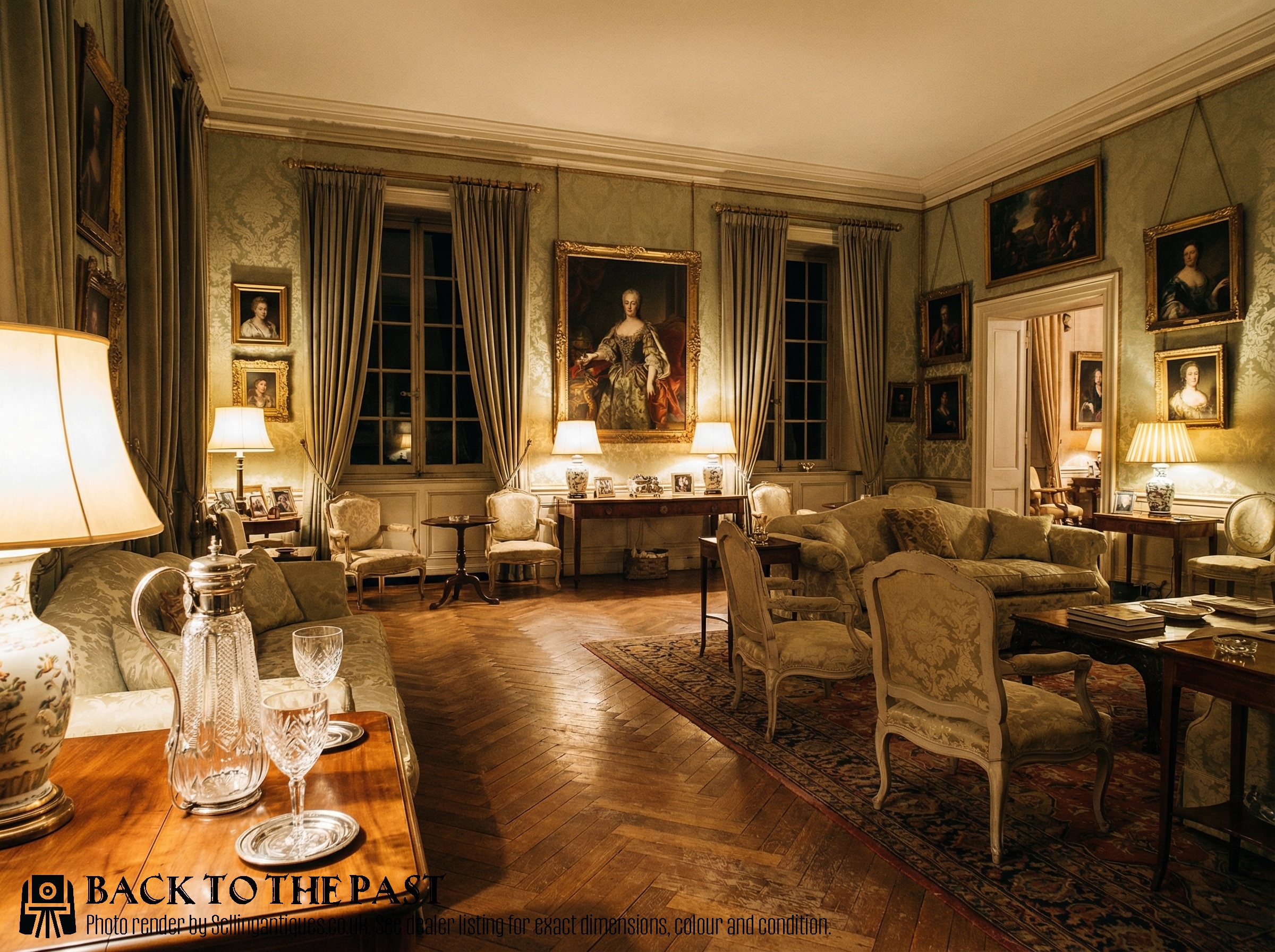
Cut Glass Pitcher
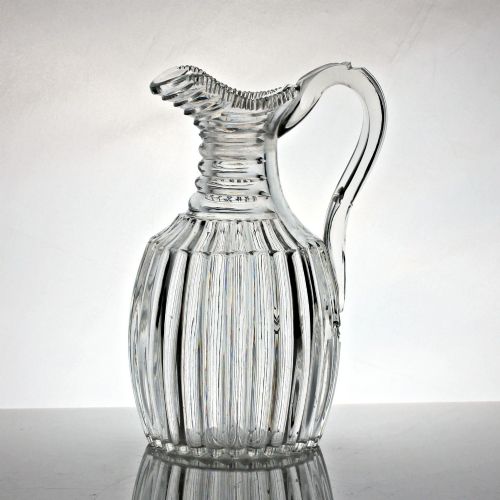
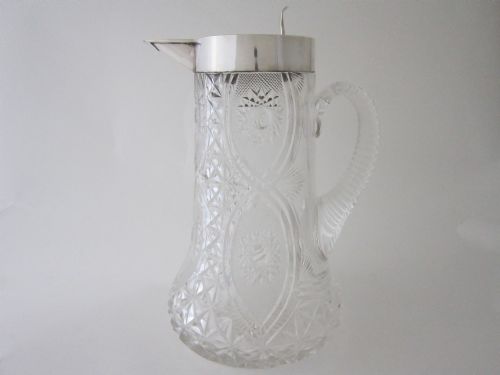
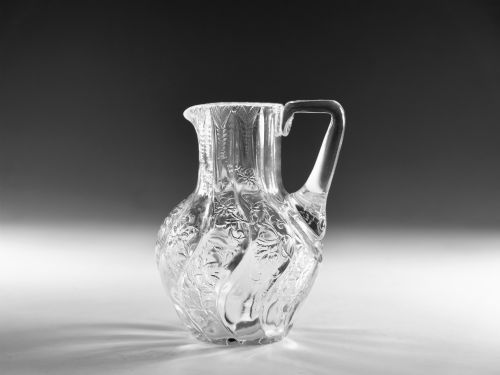
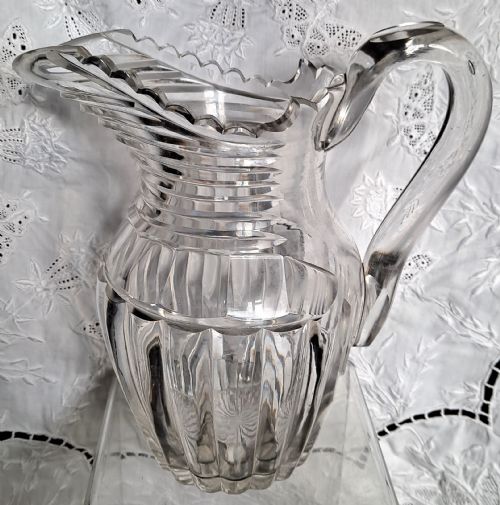
A cut glass pitcher serves water, wine, lemonade, and claret across periods spanning the nineteenth and early twentieth centuries. These vessels combine heavy glass bodies with pouring spouts and handles, often mounted with silver or silver-plated hardware.
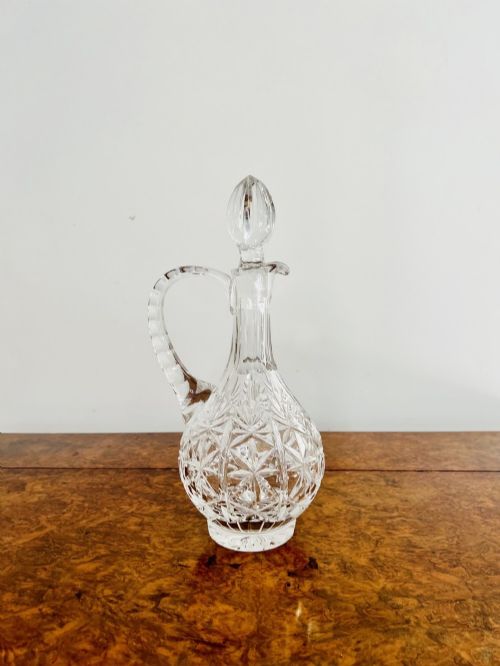
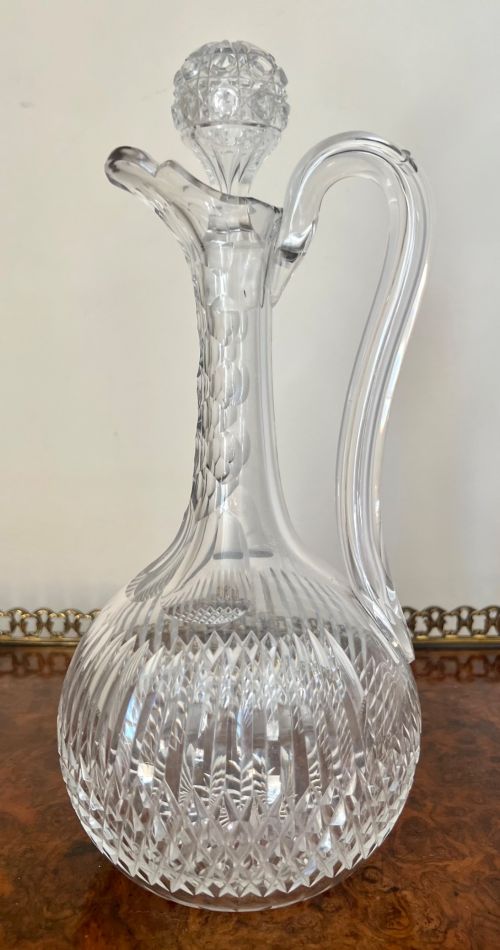
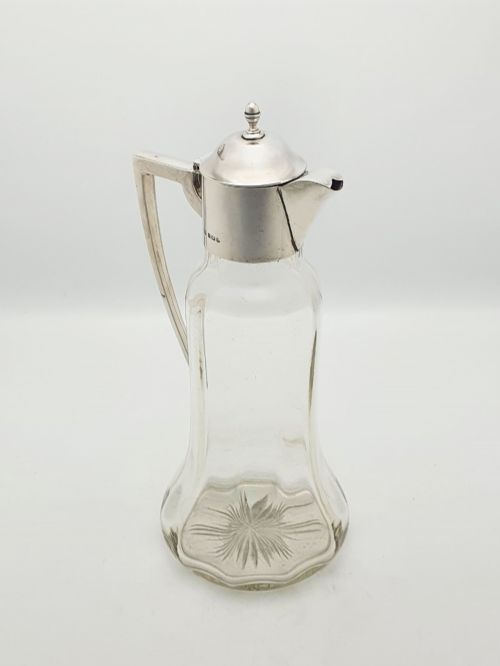
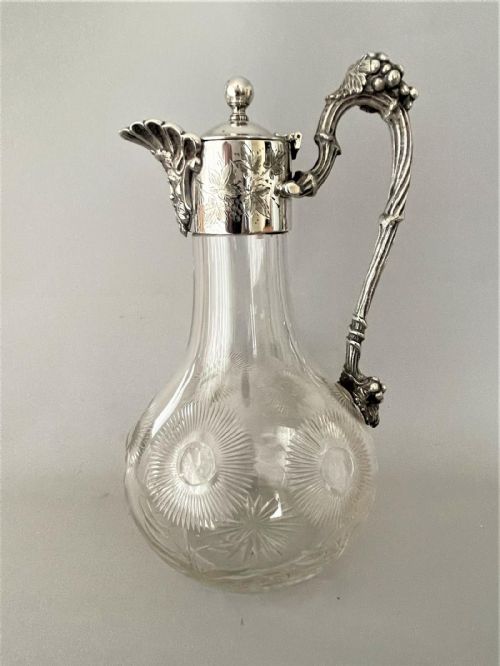
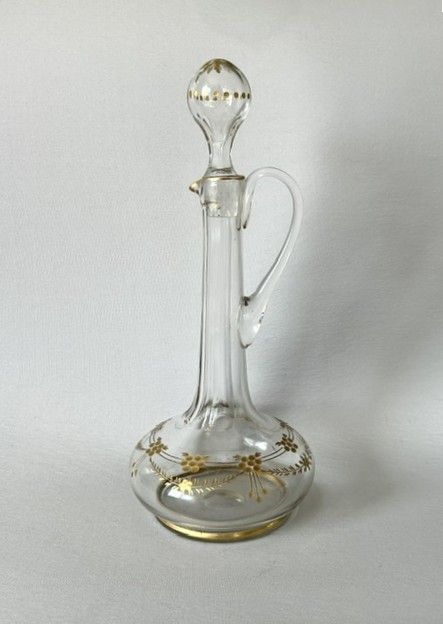
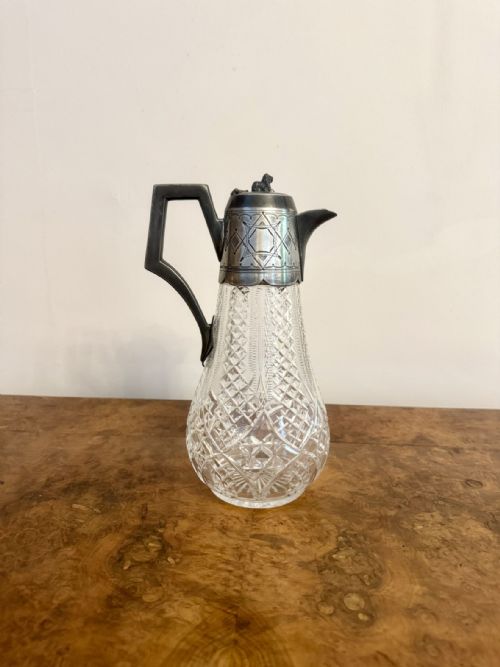
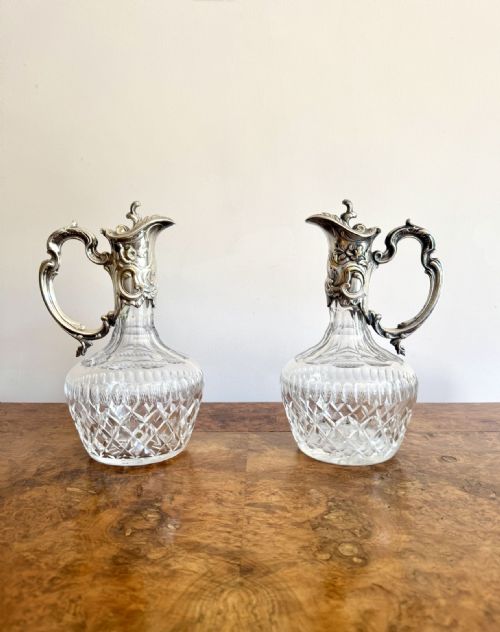
The version most commonly met on this page is the Edwardian or Victorian claret jug, shaped with deep facets and fitted with hinged metal lids. Alongside these, buyers find larger water jugs, lemonade pitchers with internal ice tubes, and smaller whisky noggins.
Makers and makers' marks appear on the metal mounts, while the glass itself demonstrates the heavy weight and sharp prismatic cutting characteristic of nineteenth-century production. Forms range from simple pillar-cut water vessels to elaborate Bohemian coloured overlays and engraved Art Deco pieces.
How they were made
Makers blew lead crystal or clear glass into moulds or formed vessels by hand before applying wheel-cut facets, flutes, and intaglio decoration. The resulting deep cuts scatter light and provide a tactile grip.
Silversmiths and electroplaters constructed mounts, lips, and hinged lids from sterling silver or silver-plated metal, securing them tightly around the glass necks. Internal components such as removable ice tubes were soldered into place to keep drinks chilled without dilution.
Cut Glass Pitcher Retail Price Guide 2026
Typical asking prices for cut glass pitcher among the pieces listed under this phrase on Sellingantiques today, from the lower quarter to the upper quarter. They describe what is for sale here now, not the wider market.
Some nineteenth-century hosts kept guests' drinks chilled by filling internal silver ice tubes that plunged straight down the middle of the lemonade.
What varies in quality
Quality rests in the crispness of the glass cutting and the thickness of the metal mounts. Deep, sharp facets require skilled hand-polishing that leaves clean edges, whereas lesser pieces display soft or shallow incisions.
Substantial silver mounts and solid hinges separate superior vessels from standard plated wares. The weight of the lead crystal and the clarity of the glass further distinguish standard production from exceptional studio pieces.
Stevens and Williams·Mappin and Webb·Richardsons Birmingham·Elkington and Co·Tiffany·Karl Palda·Webb Corbett
The Cut Glass Pitcher Glossary
- Claret jug
- A pouring vessel specifically designed for serving red wine at the table. These pieces usually feature a narrow neck, a hinged metal lid, and a handle.
- Intaglio
- A technique where glass is carved beneath the surface rather than raised in relief. The design is ground into the glass using small revolving wheels.
- Pillar cut
- A pattern of broad, vertical facets carved into the body of a vessel. This style creates strong optical lines that run down the length of the glass.
- Silver plate
- A layer of silver fused or electroplated onto a base metal such as copper or Britannia metal. This process provided the look of solid silver at a lower cost.
- Ewer
- A large jug with a wide spout and a curving handle, traditionally used for water or wine. Antique examples often feature decorative mounts and elaborate faceted bodies.
Cut Glass Pitcher: Frequently Asked Questions
Were these pitchers used only for wine?
While many examples served claret or wine, others functioned as water jugs, lemonade pitchers, or cocktail servers. Variants with internal ice tubes were specifically built to keep summer drinks cool.
Smaller pieces, such as whisky noggins, were designed for spirits and typically included a matching glass or label. The form generally followed the intended beverage.
How can I tell Victorian from Edwardian pieces?
Victorian pitchers often feature heavier, highly ornate silver-plated mounts and deep, complex glass cutting. The forms tend toward heavy Rococo Revival curves or bulbous shapes.
Edwardian examples frequently lean towards lighter, brighter sterling silver mounts and cleaner architectural lines. Art Deco pieces from later decades introduce geometric engraving and streamlined silhouettes.
Can I still use these pitchers for serving drinks?
These vessels remain entirely functional for serving water, wine, or cocktails at the dining table. The thick lead crystal and sturdy silver mounts were built for daily use.
Care should be taken with older silver-plated mounts, which benefit from hand washing rather than machine dishwashers. Ice should be added gently to avoid chipping the heavy base glass.