




Cut Glass Perfume Flask
A cut glass perfume flask combines heavy brilliance with precious metal mounts, offering both portable luxury and functional elegance for the dressing table.
Cut Glass Perfume Flask
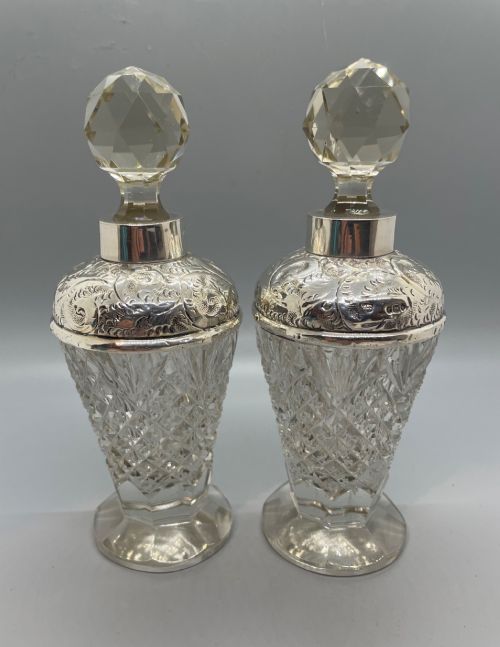
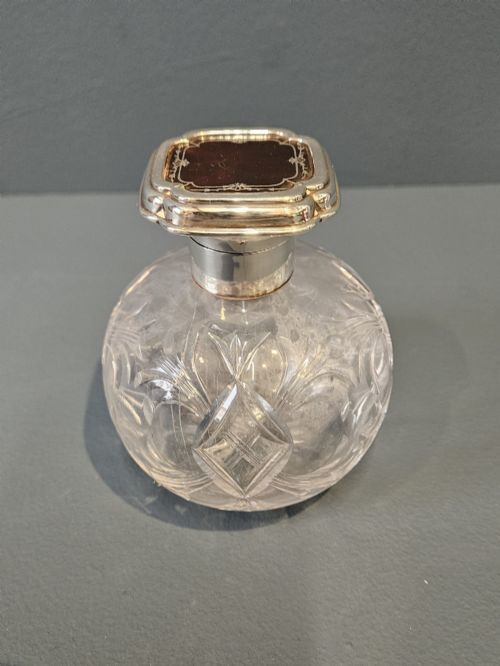
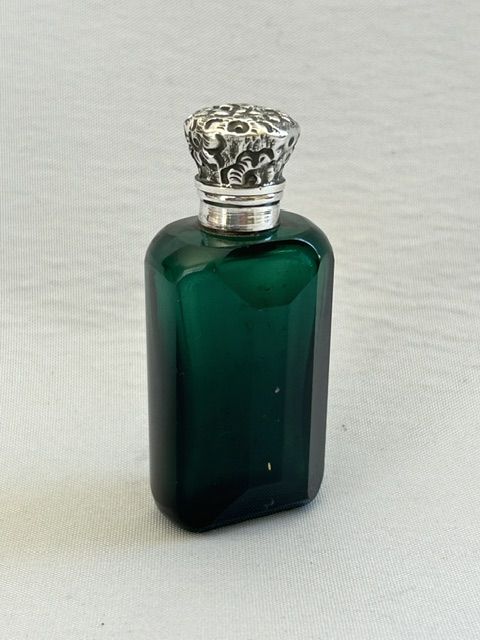
When you search for a cut glass perfume flask, you encounter vessels designed to hold precious scents securely while travelling or sitting upon a vanity. These objects span periods from the nineteenth century into the twentieth century, combining heavy glass bodies with fitted metal lids.
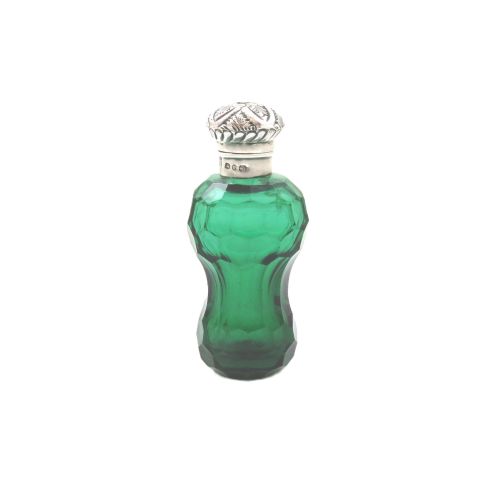
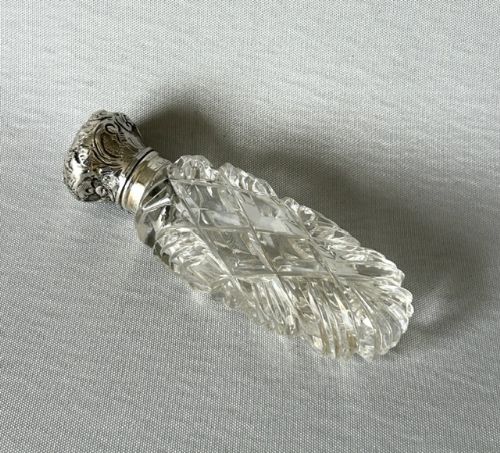
The most frequent examples on this page are Victorian and Edwardian pieces featuring sterling silver screw or hinged caps. Alongside clear cut crystal, you meet coloured glass bodies in shades of green, cranberry, and amethyst, often shaped as pocket flasks or dressing table bottles.
How They Were Made
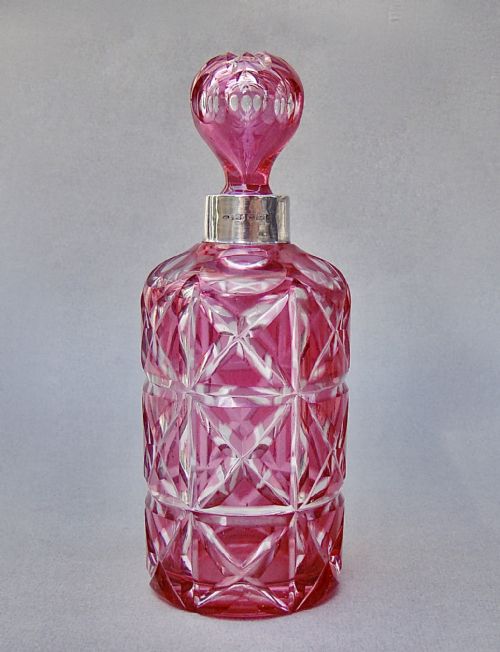
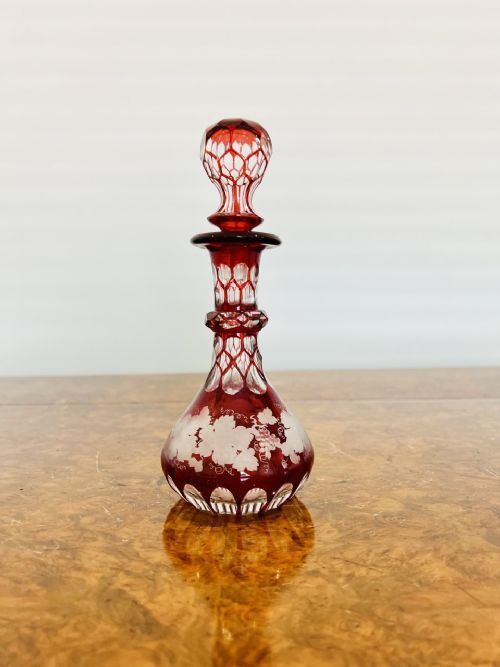
The bodies rely on heavy-walled glass that is wheel-cut or moulded to create deep facets, flutes, and geometric patterns that catch the light. Overlay techniques involve casing a clear or coloured glass core with a contrasting layer of glass, which is then cut away to reveal the colour beneath.
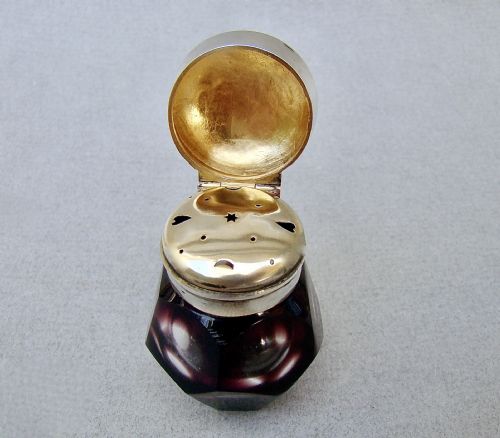
Metal mounts utilise sterling silver, silver-gilt, or tortoiseshell, often shaped and hinged by silversmiths to seal the bottle securely. Enamel work, guilloché patterns, and engraved details frequently embellish the metal tops, particularly on pieces from later decades.
Materials include cranberry, Bristol green, and amethyst glass combined with sterling silver.
What Varies in Quality
The distinction between ordinary and exceptional examples rests on the crispness of the glass cutting and the weight of the metal mount. Sharp, deep facets and heavy crystal indicate superior workshops, whereas shallow moulding points to mass production.
Artistry in the metalwork sets finer pieces apart, such as hand-engraved silver caps, guilloché enamel panels, or complex double-ended designs. Maker marks and hallmarks provide clear attribution, elevating the standing of signed pieces from established silversmiths.
Harold Bushell and Co·Karl Palda·Henry Perkins·Barnsley and Co·S Morden and Co
The Cut Glass Perfume Flask Glossary
- Cut glass
- Glassware shaped and patterned by holding the vessel against a rotating abrasive wheel. This technique produces sharp-edged facets and deep geometric designs that maximise refraction.
- Guilloché enamel
- A decorative technique where intricate geometric patterns are mechanically engraved into metal and then covered with translucent enamel. This method creates a luminous, patterned surface popular on twentieth-century vanity items.
- Overlay glass
- A method of casing one layer of coloured glass over another contrasting layer before cutting through the outer stratum. It creates striking contrast and depth in nineteenth-century decorative flasks.
- Vinaigrette
- A small ornamental box or bottle containing a perforated grille beneath the lid, holding a sponge soaked in aromatic vinegar. These portable containers were carried to combat unpleasant odours.
Cut Glass Perfume Flask: Frequently Asked Questions
What is a cut glass perfume flask?
A cut glass perfume flask is a small portable or vanity container made from faceted crystal or glass, fitted with a secure metal lid for holding liquid scents.
These items were essential personal accessories for Victorians and later generations, designed to prevent evaporation while offering tactile elegance.
How do I date a perfume flask?
Dating relies primarily on the style of the glass cutting, the colour palettes, and the hallmarks stamped upon the silver mounts.
Victorian pieces often display deep slicing or rich cranberry and green overlay, while Art Deco examples feature clean geometric lines and guilloché enamel.
Were these flasks meant for travel?
Many examples feature robust screw-down silver caps specifically engineered to prevent leakage inside luggage or chatelaine pouches.
Gentlemen's cologne bottles often included lockable mechanisms, whereas smaller chatelaine flasks hung from belts for daily portable use.
What are double-ended scent bottles?
Double-ended bottles feature two separate compartments accessible from opposite ends, typically allowing the owner to carry two different scents or smelling salts.
These pieces usually incorporate hinged silver caps at both terminals and require careful handling due to their balanced symmetry.