

Cut Glass Lighting
Cut glass lighting brings heavy brilliance to a room, catching daylight and evening flame alike.
Cut Glass Lighting
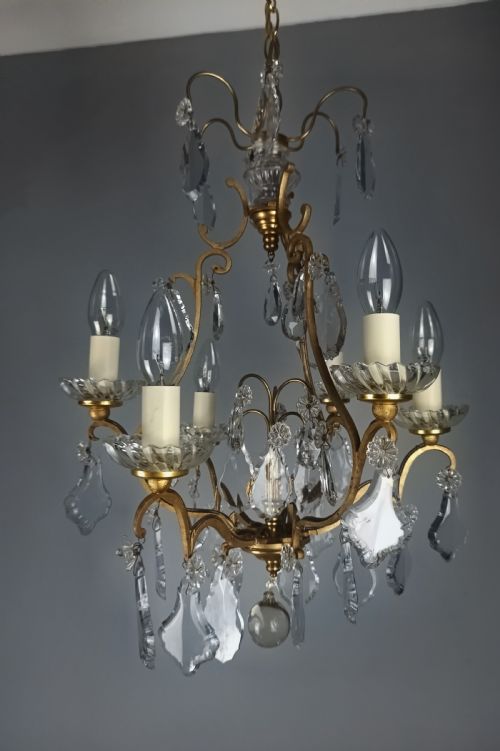
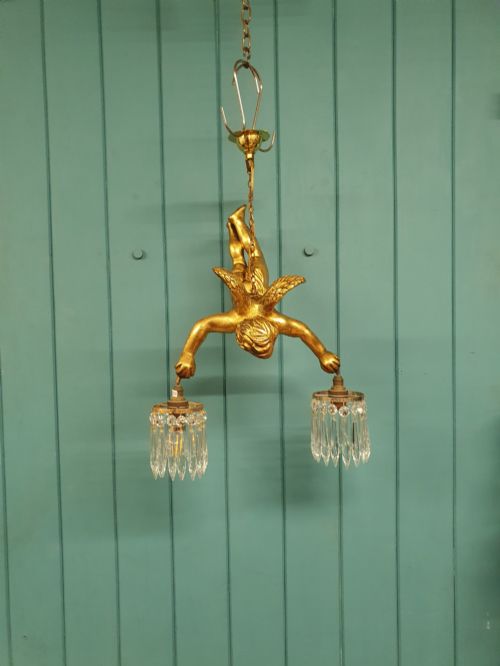
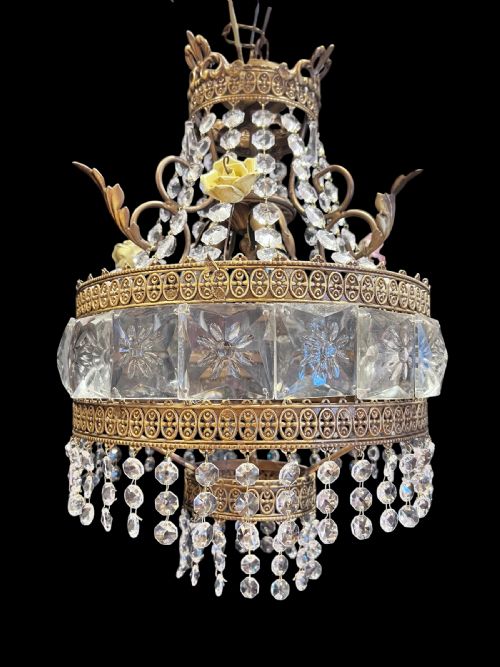
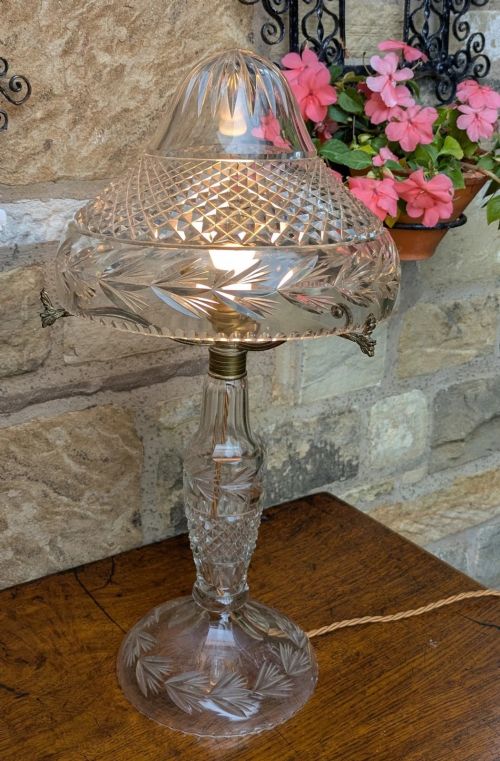
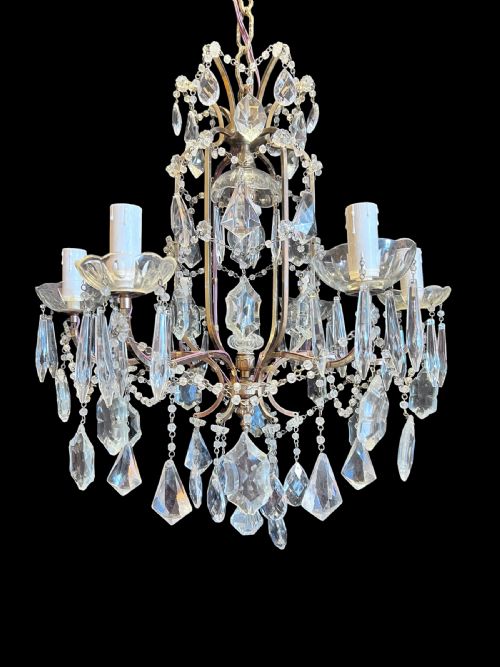
Cut glass lighting comprises chandeliers, ceiling lights, wall lights, table lamps, and oil lamps formed from glass, crystal, and metal. These pieces illuminate spaces through faceted prisms and pendants that refract light across walls and ceilings.
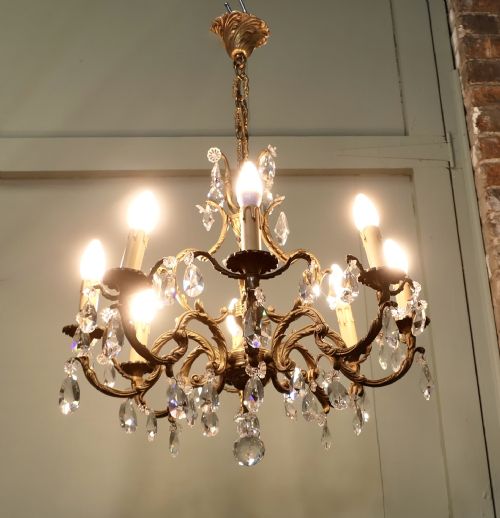
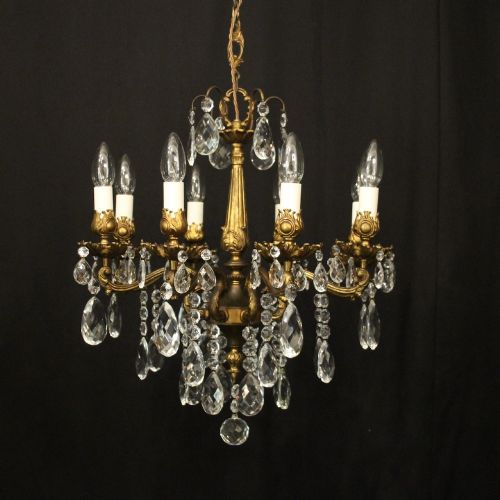
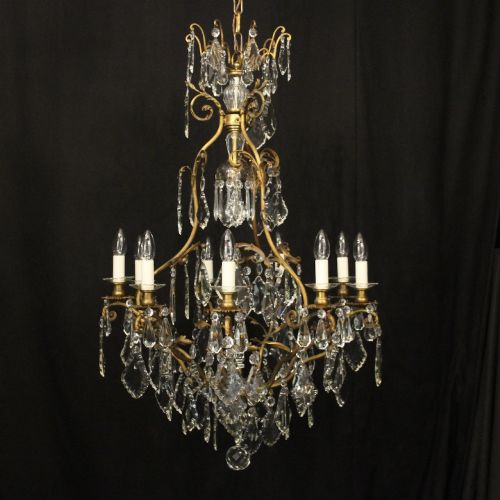
The most common examples on this page date from the Edwardian period and the 1920s, heavily featuring French styles such as Louis Revival, Rococo, and Empire. Brass frames, gilt bronze, and cut crystal spikes or drops appear frequently among these listings.
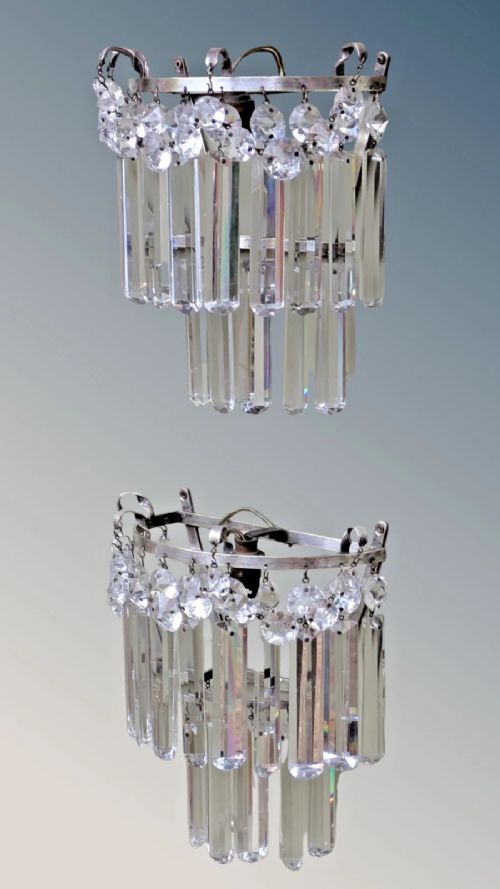
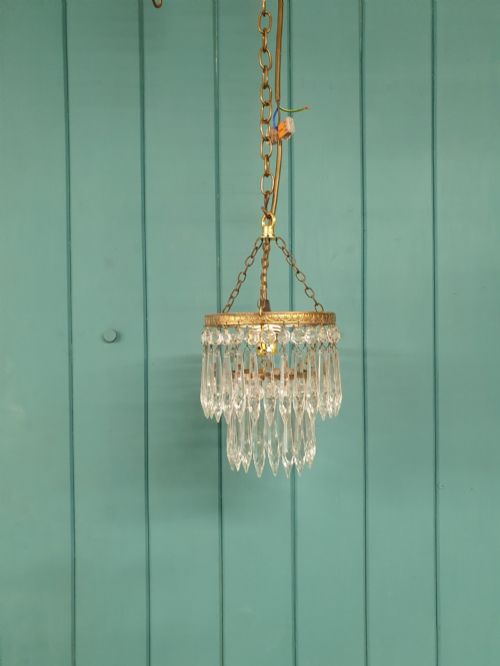
Larger ballroom chandeliers sit alongside compact dome plafonniers, wall sconces, and mantel lustres. Materials range from simple brass and glass to elaborate gilt bronze and uranium glass set within structured metal frameworks.
Standards of craftsmanship
Depth and crispness of the facet cutting separate superior glass from simpler moulded items. Sharp, clean edges on prisms refract light more intensely than soft, rounded surfaces.
Substance and weight in the metal framework dictate how securely a fixture supports large tiers of crystal. Substantial brass and gilt bronze castings bear the load of extensive drop arrays without flexing.
Completeness and matching of the crystal drops influence the visual harmony of a fixture. Original matched lustres and uniform bead strands maintain a deliberate design rhythm across multi-arm chandeliers.
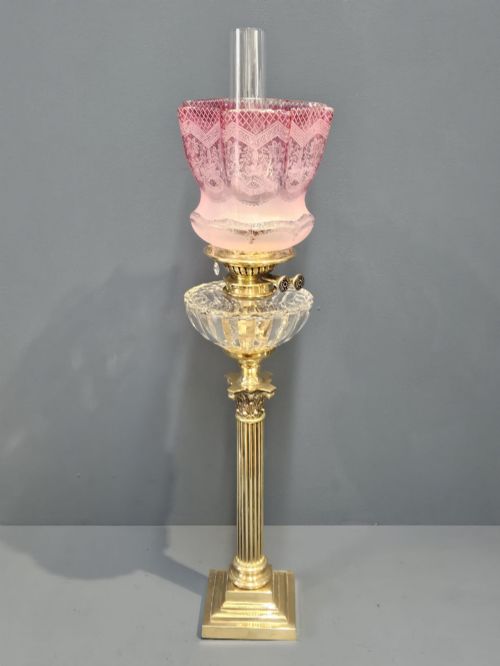
Materials span from simple brass and glass to gilt bronze, uranium glass, and cranberry-tinted ruby glass.
The Cut Glass Lighting Glossary
- Lustre
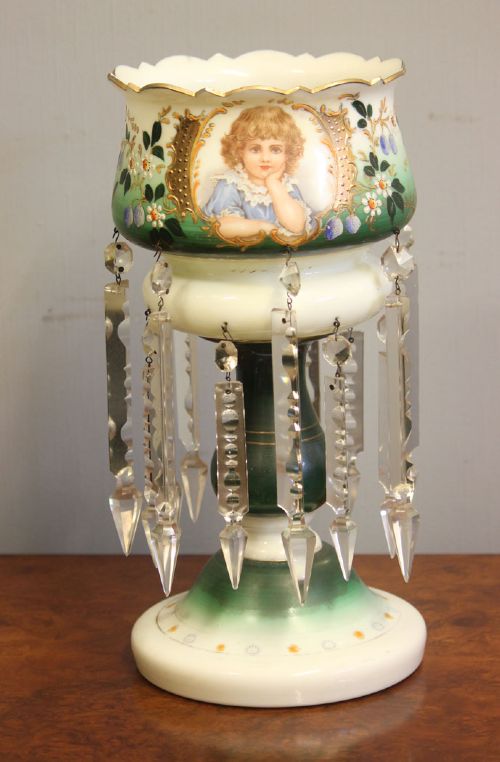
- A ornamental vase or candlestick hung with crystal pendants that catch and reflect candlelight. They often sit upon mantelpieces or side tables.
- Plafonnier
- A ceiling light fixture mounted flush or very close to the ceiling surface. It frequently takes a dome or bowl shape in cut glass.
- Tent chandelier
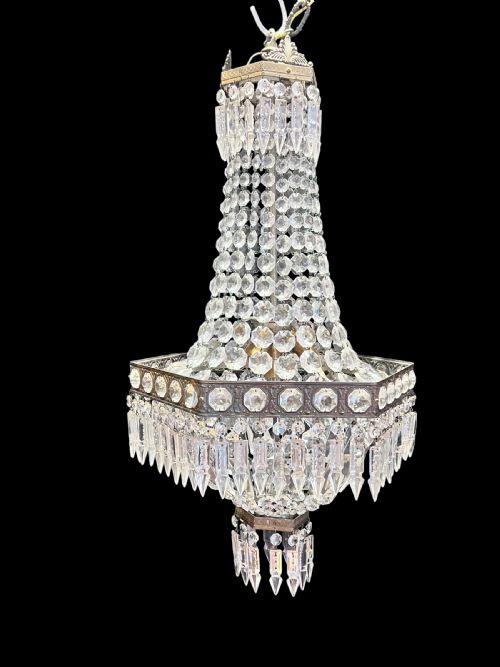
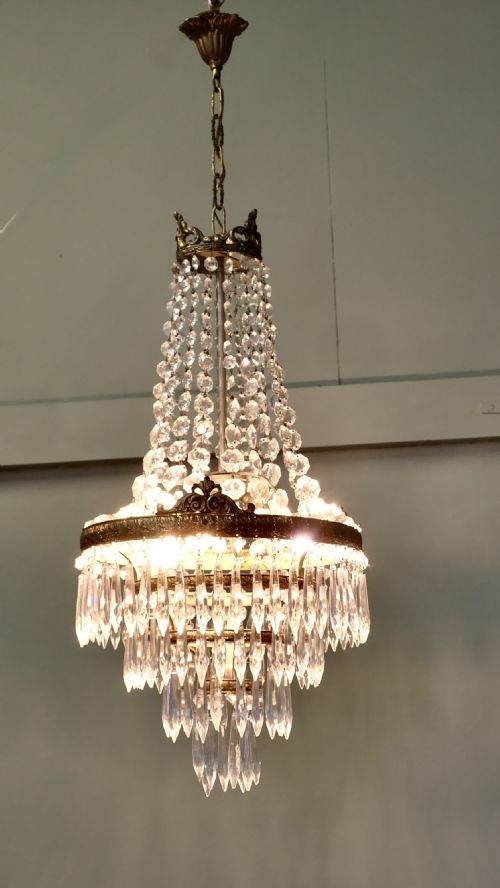
- A lighting fixture featuring an upper conical canopy of strung glass beads falling downward to a wider metal ring. Crystal drops hang below this gathered section.
- Spike
- A long, slender faceted glass pendant suspended from chandelier arms or borders. These sharp points direct and splinter the emitted light.
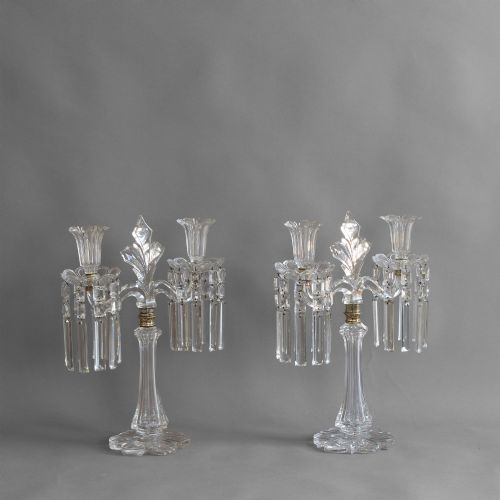
- Mantel lustre
- A decorative glass or porcelain stand adorned with dangling crystal prisms. Pairs of these objects traditionally decorate a fireplace mantel.
Cut Glass Lighting: Frequently Asked Questions
How do I clean cut glass lighting?
Remove accessible crystal drops and wash them individually in warm soapy water before drying with a lint-free cloth. Wipe fixed metal frames carefully with a dry brush to protect aged brass or gilt surfaces.
Avoid soaking entire fixtures while wired to prevent moisture damage to old electrical components or structural pins.
Are these fixtures wired for modern homes?
Many older pieces arrive with surviving wiring or require rewiring to meet current electrical standards. A qualified electrician can adapt internal lamp holders safely without altering the exterior metalwork.
Check the drop weight and ceiling height before installation to ensure adequate clearance and secure anchor points.
How do I date a cut glass chandelier?
Examine the metal casting techniques, screw threads, and suspension methods alongside stylistic clues like Edwardian frames or Louis Revival ornamentation. Heavier gilt bronze and elaborate tent structures often point toward the late nineteenth or early twentieth century.
Compare the specific cut patterns of the glass drops with known period production styles to narrow down the decade of origin.
What is the difference between glass and crystal?
Crystal contains added mineral content such as lead oxide that increases the weight, clarity, and refractive index of the material. This composition allows crystal to scatter light into sharp spectral colours more effectively than standard glass.
Pieces described as cut crystal generally offer heavier substance and crisper facet edges than simpler pressed glass alternatives.