
Cut Crystal Light
Exploring cut crystal light reveals grand chandeliers, flush plafonniers, and delicate wall sconces designed to refract illumination across historic rooms.
Cut Crystal Light
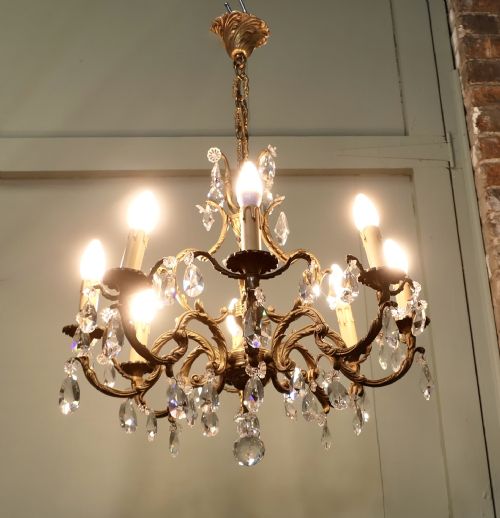
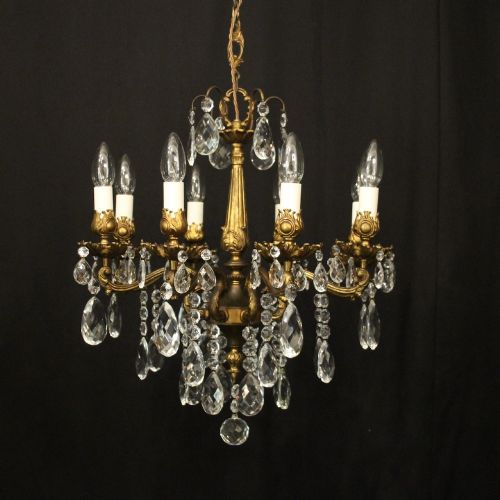
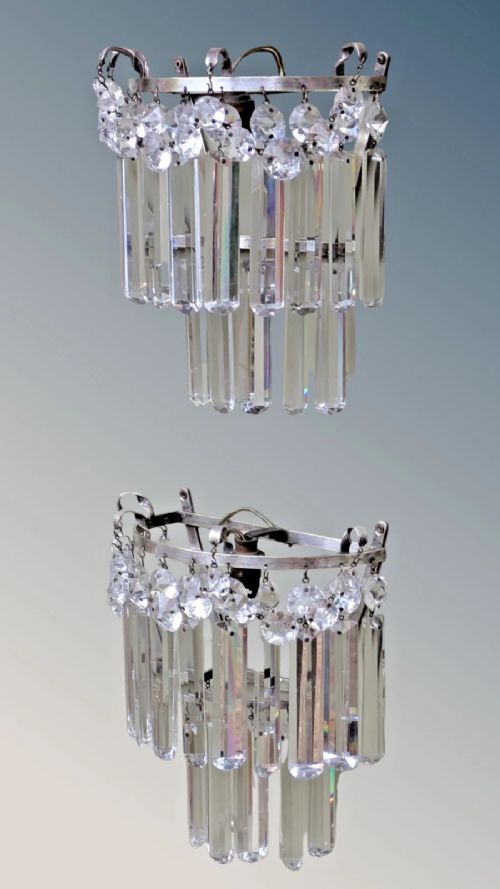
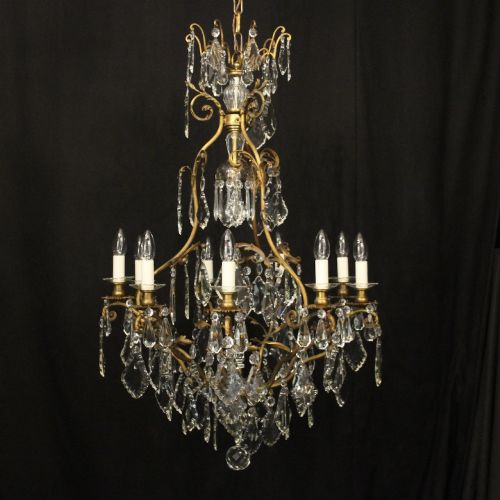
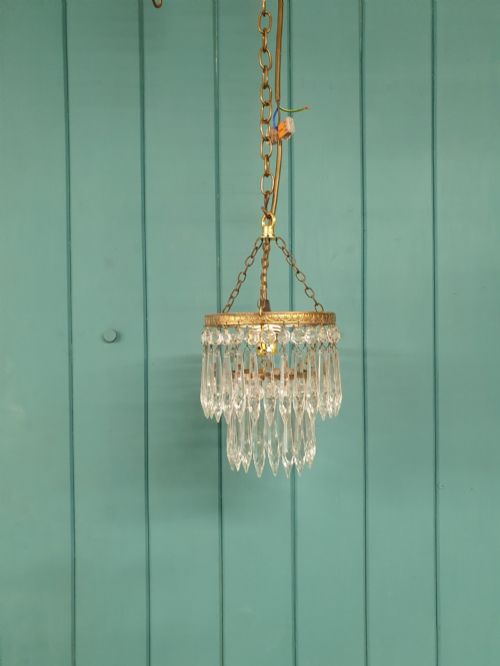
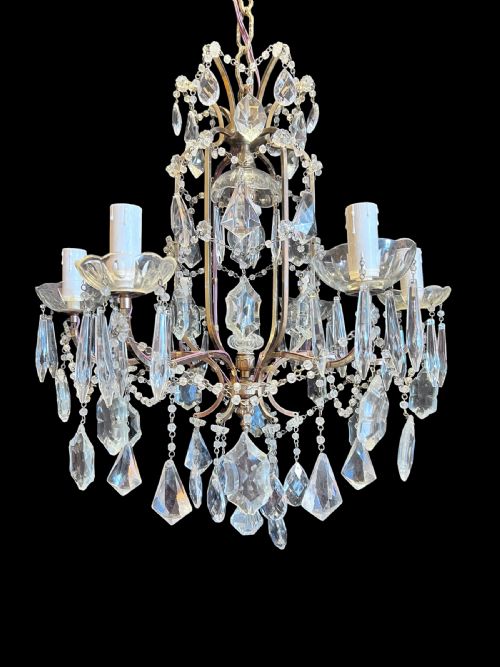
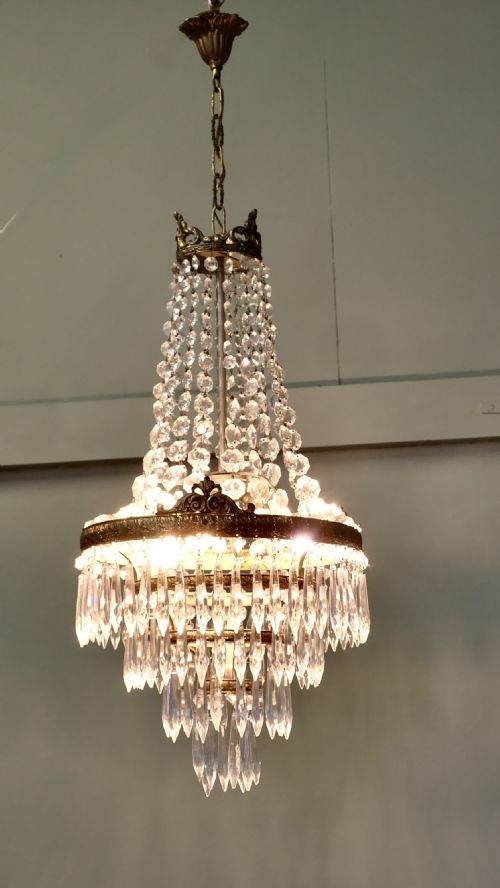
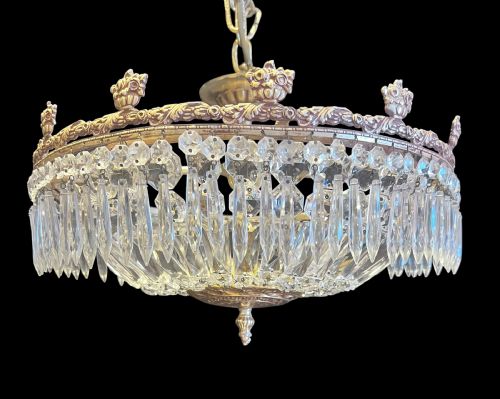
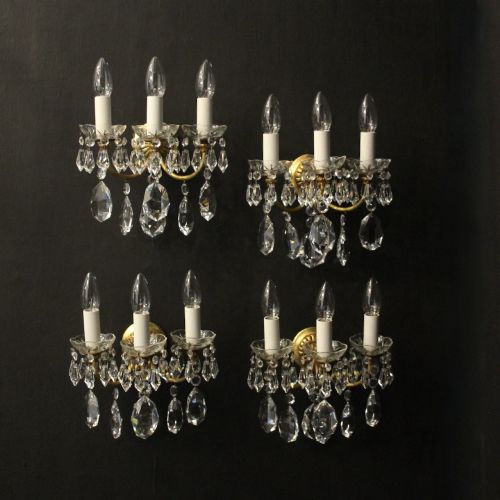
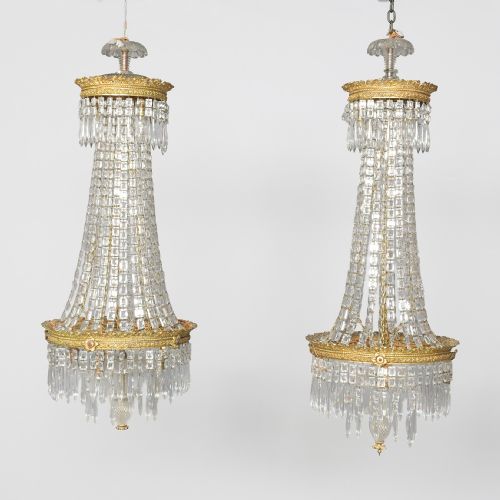
A cut crystal light encompasses multi-tiered chandeliers, basket fixtures, bag pendants, and wall lights originating primarily from the Edwardian era through the 1920s and 1930s. Buyers frequently encounter French and Italian designs alongside English pieces, ranging from compact dome plafonniers to sprawling ballroom fixtures.
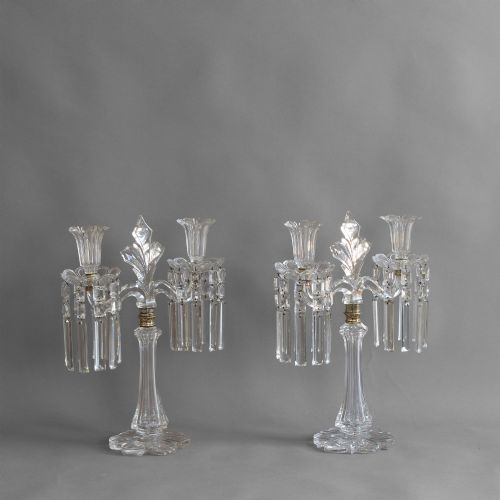
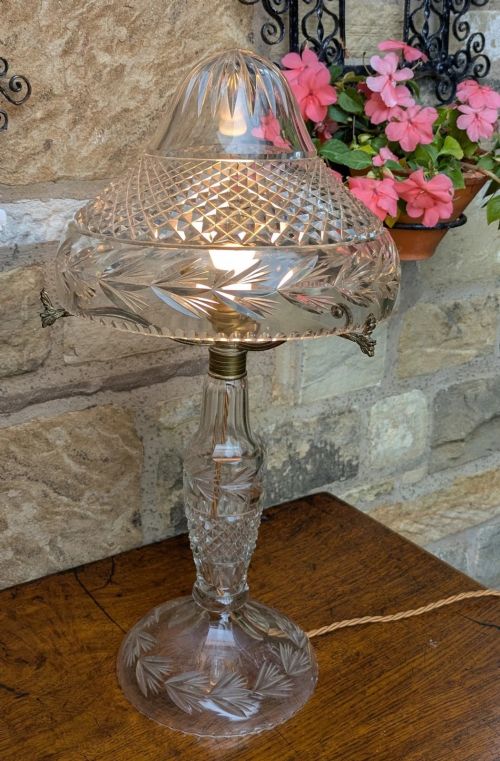
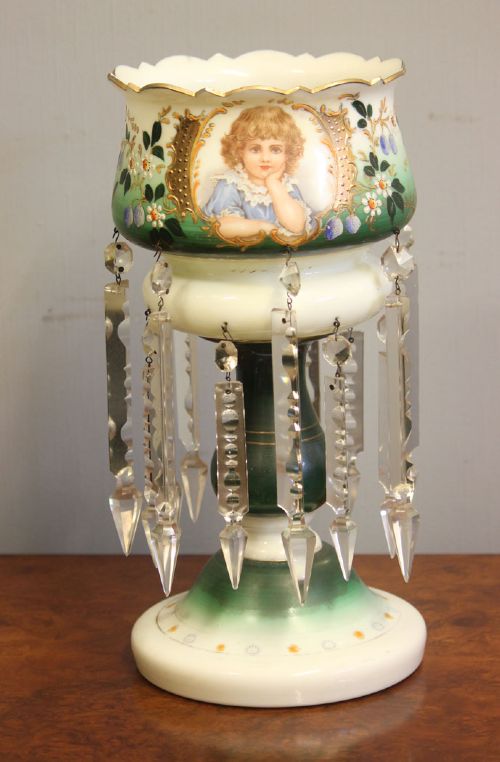
The selection includes specialised objects such as mantel lustres, table lamps, and candelabras that integrate prismatic glass drops with metal frames. Earlier nineteenth-century examples appear alongside twentieth-century revivals of Louis XV and Empire styles, providing varied profiles for domestic interiors.
Materials and construction
These fixtures combine metal armatures of brass, bronze, or gilt metal with hand-cut glass and crystal pendants linked by wire loops. Frames are cast or spun, often decorated with brass galleries, leaf motifs, or gilt bronze mounts.
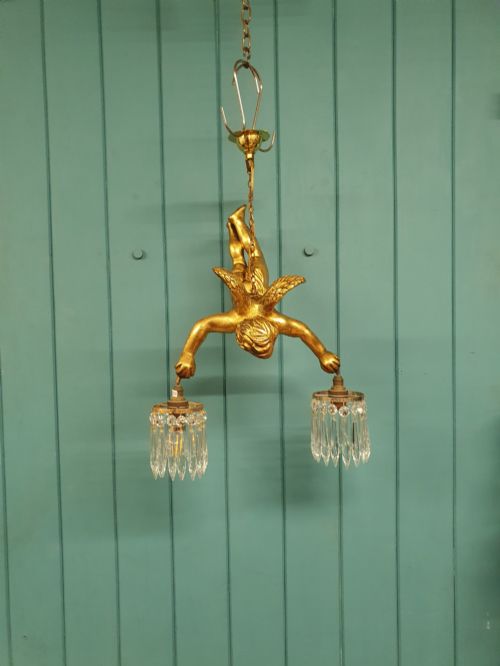
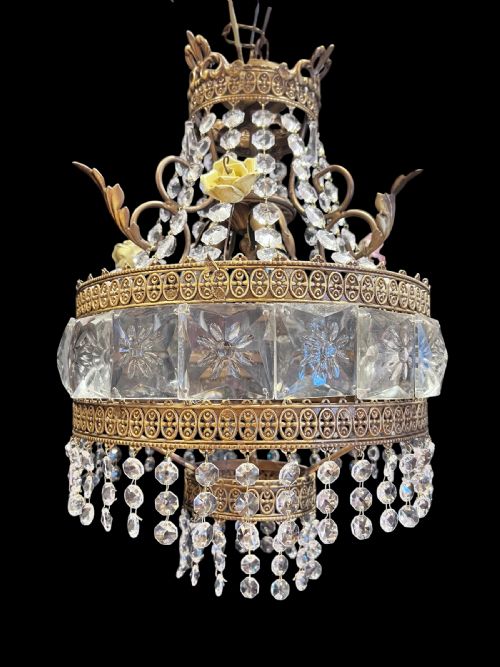
Prisms, beads, and central spindles utilise lead glass shaped by wheel-cutting to create faceted surfaces that disperse light. Supporting structures range from simple metal bands to elaborate cast brass frames set with porcelain flowers or spelter cherubs.
Listings demonstrate a concentration of brass and cut glass combinations originating from the Edwardian period and the 1920s.
Assessing manufacture
Quality rests on the depth and crispness of the glass cutting, the weight of the metal framework, and the harmony of the overall design. Superior pieces utilise high-lead crystal with sharp facets that catch the eye, suspended from robust brass or bronze structures rather than thin stamped metal.
The integrity of the piece depends upon the completeness of the hanging lustres and the proportional balance between the frame and the glass drapery. Examples featuring heavy cast mounts, original galleries, and dense arrangements of matching drops demonstrate superior workshop standards.
GEC English
The Cut Crystal Light Glossary
- Plafonnier
- A ceiling light that mounts flush or semi-flush against the surface, popular in Edwardian and later hallways. These direct illumination downwards through a decorated glass bowl or shade.
- Tent chandelier
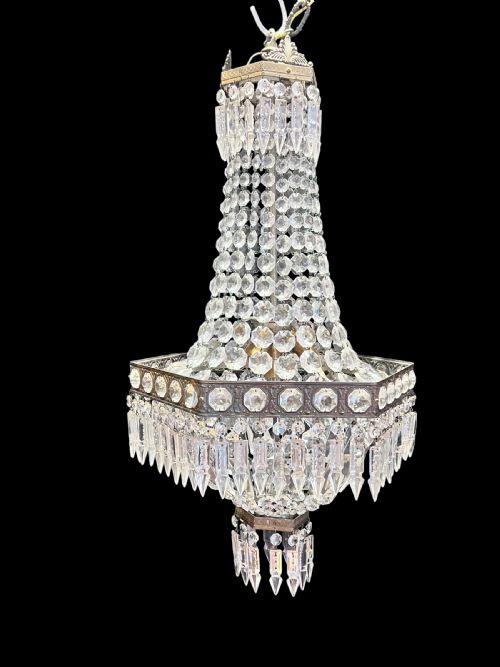
- A lighting fixture featuring an upper conical section of strung crystal beads that cascades down to a lower metal ring. This style gained favour during nineteenth-century revivals.
- Mantel lustre
- An ornamental shelf ornament hung with glass pendants, originating in the nineteenth century. They flank clocks or candelabras on hearths without providing primary room illumination.
- Bag light
- A ceiling fixture shaped like a tapered pouch or bag, densely packed with cut glass drops. They emerged during the early twentieth century for compact spaces.
- Lustre
- A cut glass pendant or drop suspended from a chandelier or wall sconce to refract light. They attach via small metal pins through drilled holes in the glass.
Cut Crystal Light: Frequently Asked Questions
How do I hang a heavy antique chandelier safely?
Suspension requires securing the fixture directly into ceiling joists using a heavy-duty metal hook and appropriate mounting bracket. Professional electricians evaluate the ceiling weight capacity before installation.
Wiring older brass frames often necessitates internal rewiring to meet modern safety standards while retaining original exterior metal components and brass galleries.
What is the difference between glass and crystal?
Crystal contains lead oxide, which increases the weight, refractive index, and softness of the material compared to standard window or bottle glass. This softness allows artisans to cut deeper, sharper facets into the surface.
Standard glass lacks this high lead content, resulting in less sparkle when light passes through the prisms and drops.
How do I clean cut crystal without damaging the metal?
Maintenance involves removing hanging drops individually and washing them in lukewarm water with a mild detergent. Harsh chemicals strip gilt finishes from brass and bronze frames.
Metal armatures require dusting with a soft brush rather than liquid immersion to preserve patination and original surface treatments.
How do I identify an Edwardian ceiling light?
Edwardian pieces often feature polished brass galleries holding dome-shaped cut glass shades or modest basket frames. These designs prioritise practical hallway illumination over the massive scale of earlier ballroom fixtures.
Registration marks or stampings on the metal galleries frequently point to British registry dates from the early twentieth century.