


Florentine Ceiling Light
A florentine ceiling light brings dramatic Italian craftsmanship and ornate illumination to a room, offering grand chandeliers and lanterns crafted from carved giltwood and crystal.
Florentine Ceiling Light
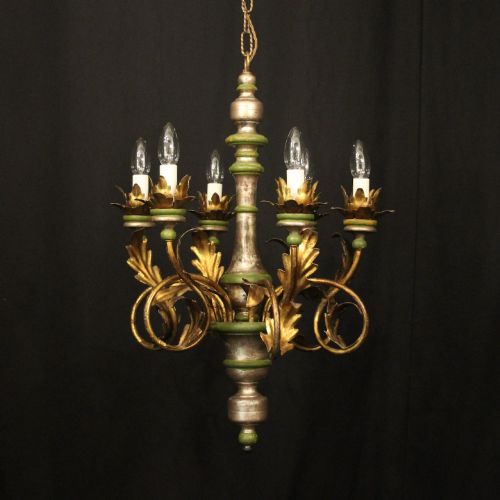
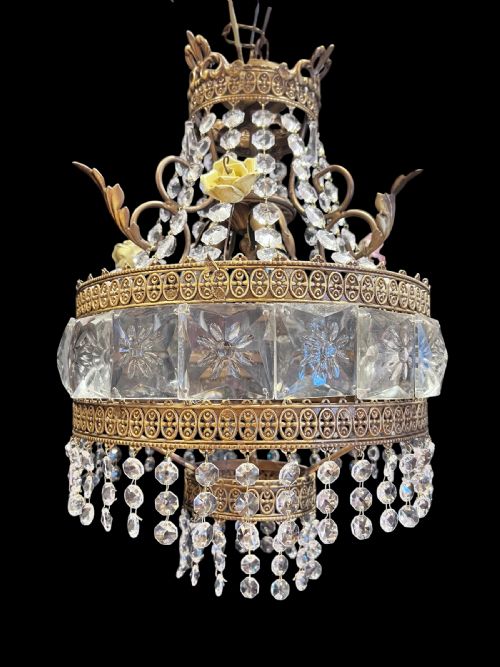
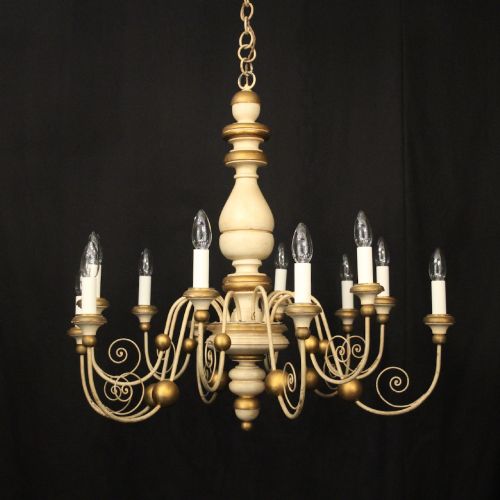
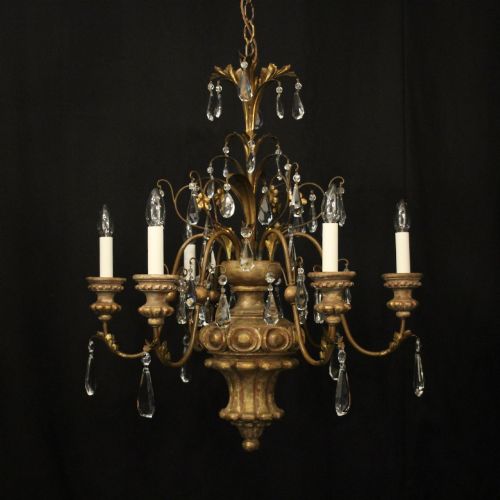
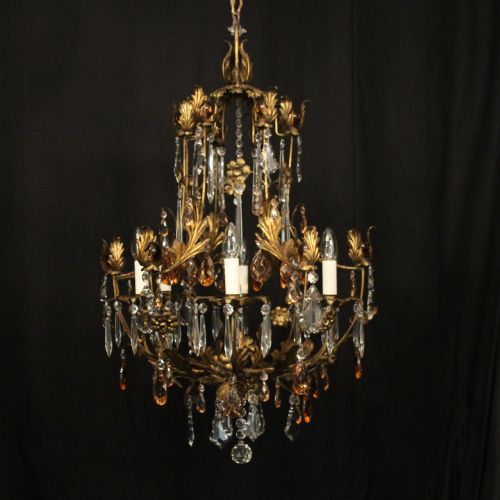
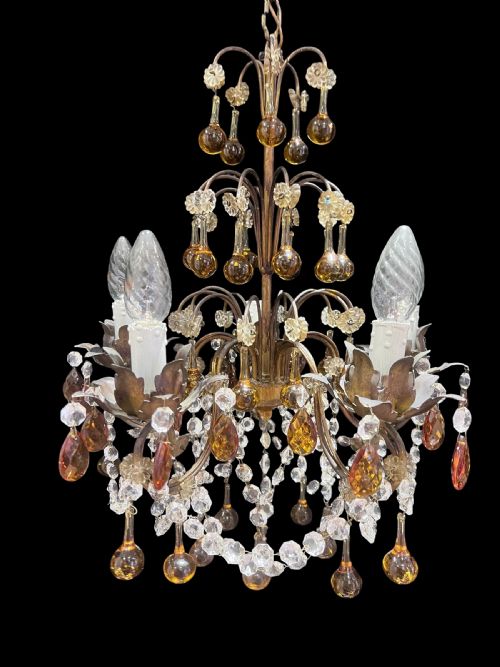
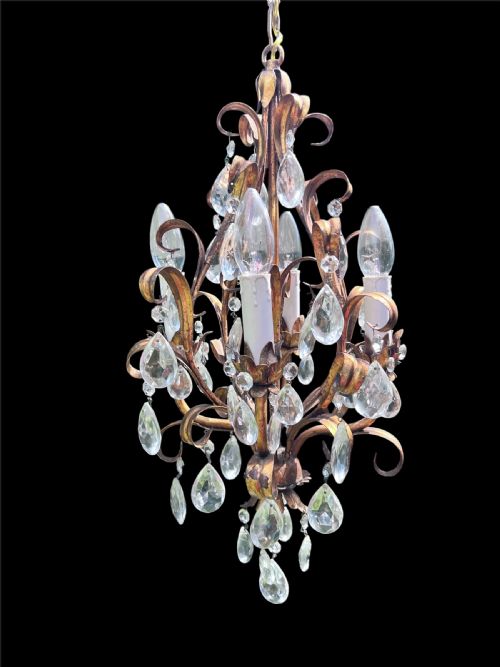
A florentine ceiling light typically takes the form of a multi-light chandelier, a pendant light, or a hanging lantern originating from Italy. The selection spans compact three-light fixtures up to large twenty-four-light double-tiered centrepieces.
The aesthetic leans heavily into ornate regional styles, featuring Florentine, Italian Baroque, and Italian Rococo revivals alongside carved giltwood and polychrome finishes. These overhead fittings serve as primary decorative focal points in high-ceilinged spaces.
Dating ranges from the eighteenth century through the Edwardian era up to the nineteen-thirties, with early twentieth-century examples appearing most frequently. Buyers encounter both single fixtures and matched pairs designed for symmetrical interior schemes.
How they were made
Makers constructed the primary framework using carved gesso and giltwood, wrought iron, or cast metal enhanced with gold leaf and silver gilding. Many pieces incorporate polychrome painted details to accentuate floral motifs and carved foliage.
Hanging elements rely on clear or coloured crystals, glass drops, porcelain flowers, and beaded garlands suspended from the metallic or wooden arms. Artisans wired these frames to accommodate multiple internal light sources ranging from three up to twenty-four bulbs.
Florentine Ceiling Light Retail Price Guide 2026
Typical asking prices for florentine ceiling light among the pieces listed under this phrase on Sellingantiques today, from the lower quarter to the upper quarter. They describe what is for sale here now, not the wider market.
Listings feature items dated across the eighteenth, nineteenth, and early twentieth centuries, spanning nineteen-ten through nineteen-thirty.
What varies in quality
The refinement of the hand-carved wood and gesso foundation distinguishes standard production from superior work, particularly in the depth of the floral and leafy relief. Crisp detailing in giltwood and the subtlety of polychrome paint layers show the maker's hand.
The integration and abundance of glass elements also set pieces apart, from simple glass drops to dense arrangements of coloured crystals and porcelain flowers. Double-tiered frames and larger multi-light configurations demand more intricate structural engineering.
The Florentine Ceiling Light Glossary
- Giltwood
- Wood that has been treated with a thin layer of gold leaf or gold paint to give a metallic sheen. This technique provides the rich, luminous finish characteristic of traditional Italian frames.
- Polychrome
- Painted in several colours to decorate the surface of the wood or metal. It often highlights carved floral details and fruit motifs on Florentine arms.
- Gesso
- A plaster mixture applied to wood surfaces as a base for carving and gilding. It allows artisans to create crisp, raised relief ornamentation before applying gold leaf.
- Pendant light
- A single light fixture suspended from the ceiling by a cord, chain, or metal rod. These smaller fittings offer focused illumination compared to expansive chandeliers.
- Beaded
- Decorated with strings of small glass or crystal beads draped across the arms. This embellishment catches the light and adds textural complexity to the lower tier.
Florentine Ceiling Light: Frequently Asked Questions
How do I choose the right size florentine ceiling light?
Consider the proportions of your room and the height of your ceiling before selecting a fixture. Smaller spaces accommodate three to six-light models, while grand rooms require multi-tiered structures holding eighteen or twenty-four lights.
Ensure adequate clearance beneath the lowest hanging crystals or glass drops for foot traffic. Larger pairs work well in expansive open areas to maintain visual symmetry.
What periods do these ceiling lights come from?
The pieces span several centuries, starting from eighteenth-century carved giltwood items through Edwardian examples up to nineteen-thirties productions. The early twentieth century accounts for a significant portion of the available lighting.
Stylistic influences draw heavily from Italian Baroque and Rococo traditions regardless of the exact decade of manufacture. Craftsmanship methods remained rooted in traditional wood carving and metal gilding techniques.
How should I clean a crystal and gilt chandelier?
Dust the frame and hanging elements regularly using a soft feather duster or dry microfiber cloth. Avoid harsh chemical cleaners that might strip the gold leaf or damage the giltwood surfaces.
For thorough cleaning, wipe individual glass drops and crystals gently with a mild soapy solution while supporting them from beneath. Ensure the fixture is switched off before undertaking any maintenance.
Are these lights suitable for modern interiors?
These ornate fixtures provide a striking contrast when installed in contemporary minimalist spaces. The warm metallic finishes and crystal elements soften clean architectural lines and add historical depth.
Pairing a giltwood chandelier with neutral walls allows the intricate carving and coloured crystals to stand out as sculptural art.