

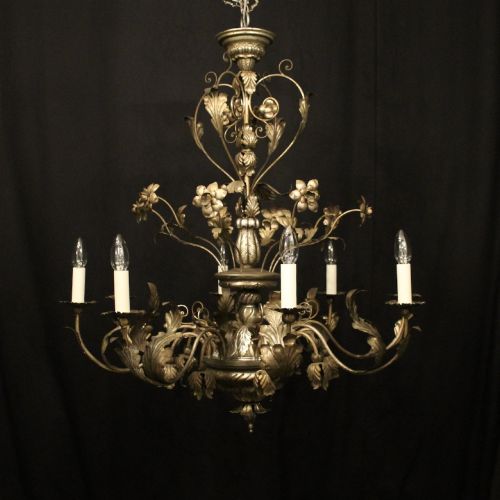
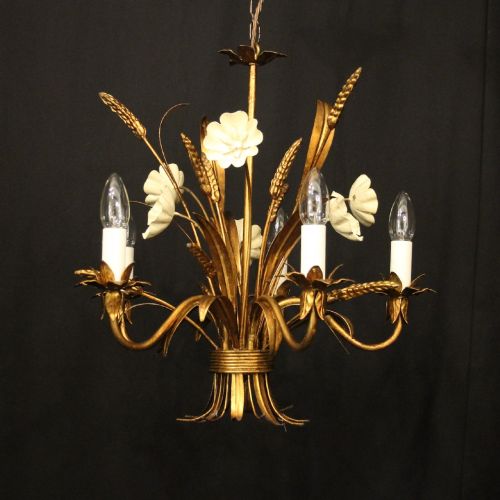
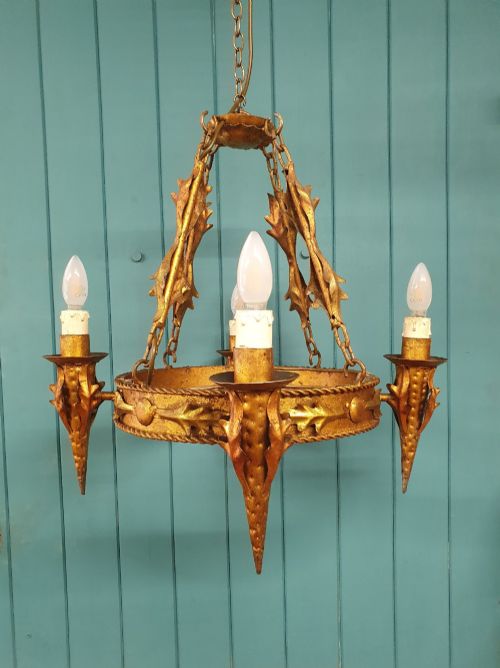
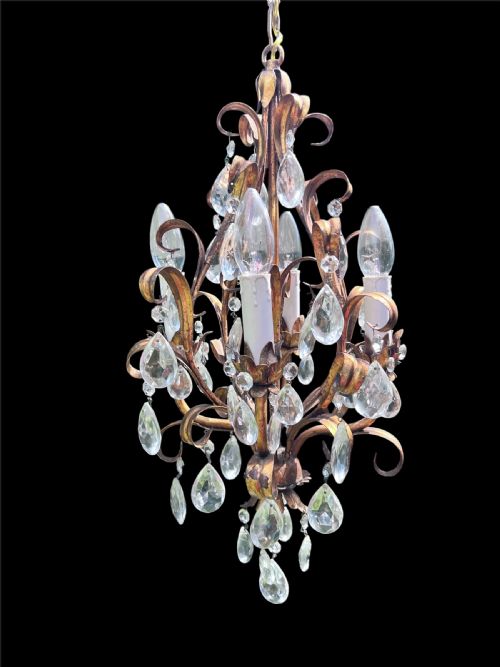


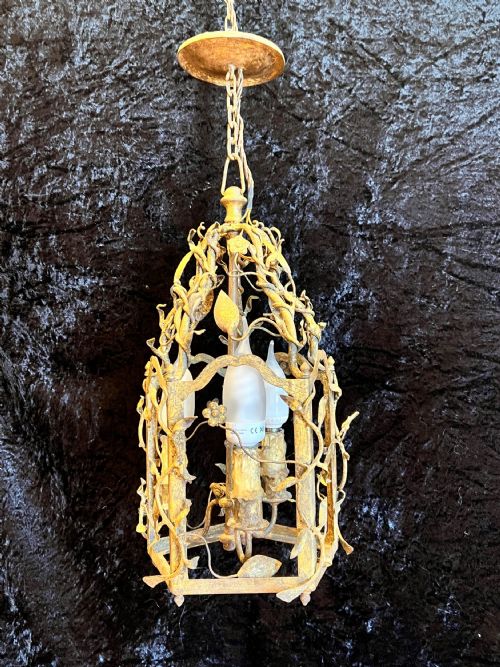


Gilded Iron Chandelier
A gilded iron chandelier brings warmth and historic character to a room through the combination of gilded metalwork and sturdy iron frames.
Gilded Iron Chandelier
A gilded iron chandelier combines metal frames with applied gold finish, often taking the form of pendant lights or chandeliers. These fixtures span the early twentieth century, offering robust construction paired with decorative illumination.
Italian and French regional designs dominate the selection, ranging from Florentine floral motifs to provincial styles. Buyers most frequently encounter early twentieth-century examples featuring wrought iron or gilt metal structures.
The objects serve as central ceiling illumination, utilising glass drops, crystal elements, or polychrome details to enhance their visual weight. Each piece reflects the decorative preferences of European interiors from around nineteen-ten to nineteen-thirty.
How they were made
Wrought iron forms the foundational structure of these chandeliers, shaped by hand to create scrolling arms, leafy branches, or coronet crowns. This durable metal provides the necessary strength to support multiple light sources and hanging ornaments.
Gilt finish and polychrome paint layer over the iron or gesso surfaces, catching the light and adding warmth to the metallic framework. Artisans incorporated glass crystal drops and glass beads to refract illumination across the room.
Listings feature pieces from the nineteen-tens, nineteen-twenties, and nineteen-thirties, incorporating wrought iron, gilt metal, glass crystal, and wood.
What varies in quality
The refinement of the metalwork and the application of the gilding set finer examples apart from simpler utilitarian pieces. Delicate hand-forged leaves and complex floral arrangements demonstrate superior artisan skill.
The presence and completeness of original glass crystals or polychrome paint details elevate the character of a fixture. Subtlety in the ageing of the gilt surface indicates genuine period manufacture rather than later replication.
The Gilded Iron Chandelier Glossary
- Gilt iron
- Iron treated with a thin layer of gold leaf or gilt paint to create a metallic sheen. This technique combines structural strength with decorative brilliance.
- Wrought iron
- Iron shaped through heating and hammering by a blacksmith. It yields durable, pliable components ideal for scrolling chandelier arms.
- Polychrome
- Painted in several colours, often used alongside gilding to accent floral or leafy motifs. This decoration adds depth and visual interest.
- Glass crystal
- Cut glass pendants or drops hung from the frame to refract light. They catch and multiply the illumination from the bulbs or candles.
Gilded Iron Chandelier: Frequently Asked Questions
What periods do these chandeliers come from?
The available fixtures predominantly date from the early decades of the twentieth century, specifically between nineteen-ten and nineteen-thirty. Some designs draw inspiration from earlier historical eras such as the French Baroque or Rococo.
Regional variations include Italian Florentine styles and French provincial designs. These pieces reflect the enduring popularity of historicist revival aesthetics in European lighting.
Are these fixtures suitable for modern ceilings?
These chandeliers work effectively in contemporary spaces by providing a strong focal point and historic contrast. Their proportions vary from smaller three-light lanterns to larger multi-arm configurations.
Professional electrical installation is recommended to support the weight of iron and glass structures safely. Consulting an electrician ensures the ceiling junction box can bear the load.
What materials are used in these pieces?
Construction primarily relies on wrought iron and gilt metal to form the structural skeleton and decorative arms. Artisans added gesso, wood, and various types of glass to complete the ornamentation.
Gold leaf or metallic paint provides the distinctive surface finish, while glass crystal drops add sparkle. Polychrome pigments appear on specific floral and leafy Italian and French designs.