
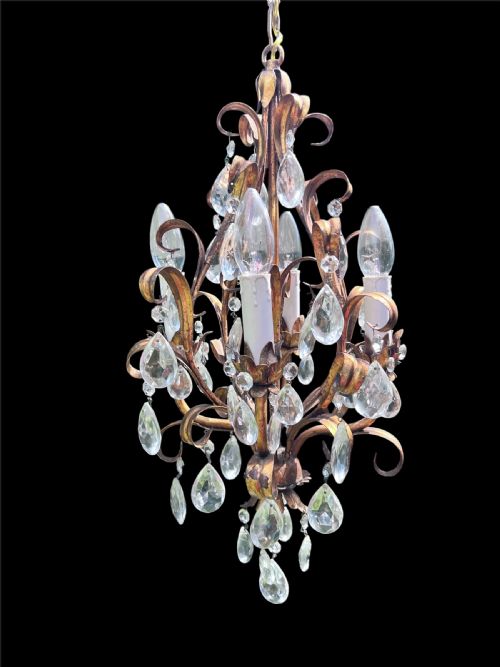


Florentine Gilt Chandelier
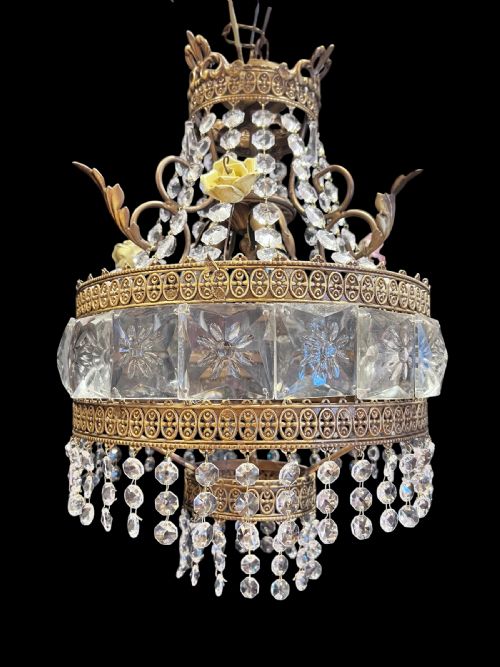
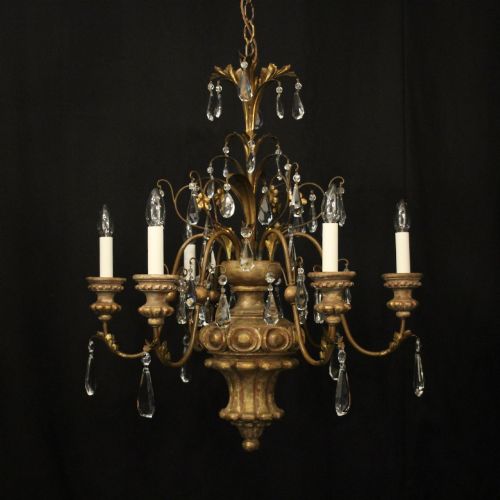
A florentine gilt chandelier brings Italian craft and warm illumination into a room, offering ornate carved detail and sparkling glass drops.
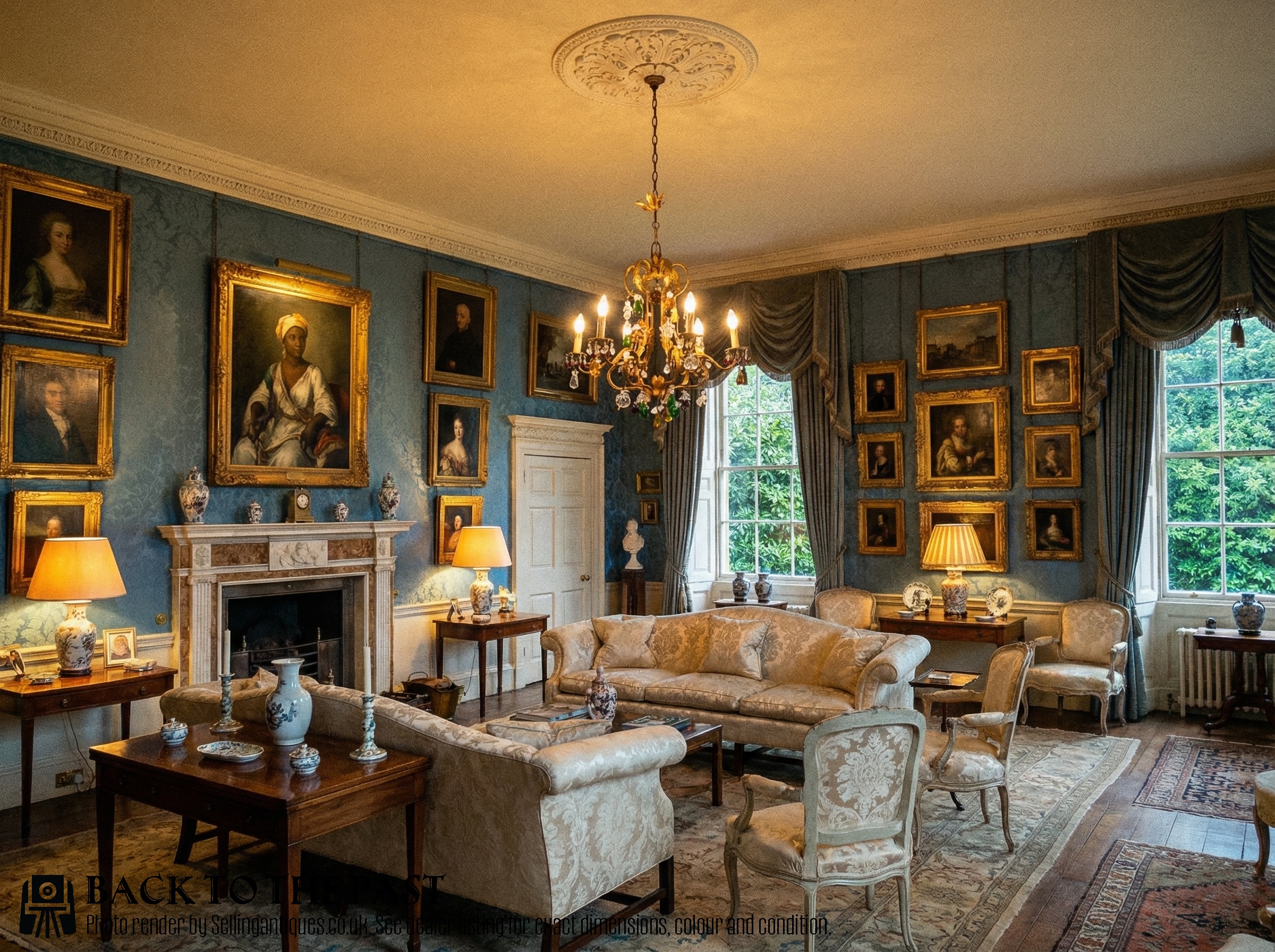
What florentine gilt chandelier pieces are
When searching for a florentine gilt chandelier, buyers encounter decorative Italian lighting fixtures designed to hang from ceilings and provide ambient illumination. These pieces originate from periods spanning the nineteenth century through the nineteen thirties, including Edwardian examples.
The most common iterations on this page feature carved giltwood frames combined with multiple light arms, often holding six or twelve lights. Many examples incorporate polychrome details or glass crystal drops alongside the gilded surfaces.
Origins heavily lean towards Italian workshops, though French chateau styles also appear within the selection. Forms range from compact triple light fixtures to large double tiered chandeliers suitable for principal rooms.
What varies in quality
The depth and intricacy of the hand carving separate simpler iron or metal versions from elaborate giltwood specimens. Rich polychrome detailing and the presence of genuine crystal rather than plain glass elevate a piece.
Proportion and scale dictate the visual impact, with larger twelve light double tiered arrangements representing substantial undertakings by makers. The preservation of the original gilt surface against later repainting alters the character and desirability of each fixture.
Retail Price Guide 2026
Typical UK retail prices for florentine gilt chandelier, calculated from the Sellingantiques database of over a million retail prices indexed since 2003. This retail price guide relies exclusively on Sellingantiques data; no external sources or auction records are used, so the figures do not describe the wider market.
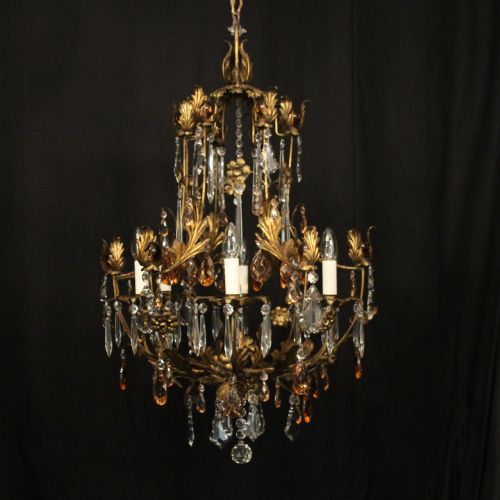
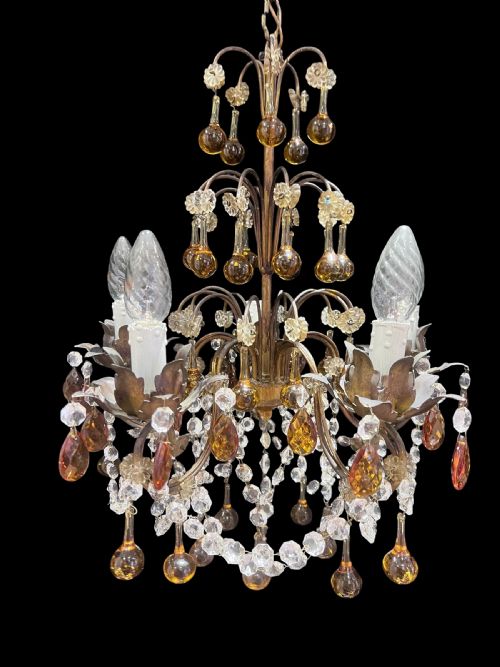
Several chandeliers come heavily laden with coloured fruits dangling among the crystals, proving that Italian lighting designers took a wonderfully literal approach to fruit salad.
The Florentine Gilt Chandelier Glossary
- Giltwood
- Timber that has been coated with fine gold leaf or gilt powder over a preparation layer. This finish provides the characteristic metallic gleam seen on Italian fixtures.
- Polychrome
- Painted in several colours, usually applied over gesso or gilt surfaces to highlight carved details like leaves and flowers. It adds visual depth to the overall design.
- Toleware
- Enamelled or lacquered sheet metal shaped into decorative forms. It appears alongside carved elements in specific lighting fixtures.
- Crystal
- High quality glass cut and polished to refract light effectively. These drop from the arms and crown of the fixture to enhance illumination.
Frequently Asked Questions
How do I clean a gilt chandelier?
Dust the structure gently with a soft feather duster or dry microfibre cloth to protect the delicate gold leaf finish. Avoid harsh chemical cleaners that strip metallic surfaces.
Glass drops can be removed individually and washed in warm soapy water before drying thoroughly and rehanging on the frame.
What rooms suit a large chandelier?
Grand spaces with high ceilings provide the ideal drop height and volumetric clearance for twelve light or double tiered fixtures. Dining rooms and entrance halls accommodate the generous spread and visual weight effectively.
Ensure the ceiling structure supports the combined weight of timber, metal and crystal components safely before installation.
How do I date an antique chandelier?
Examine the underlying materials, wiring methods and fastening techniques used in the construction of the frame. Nineteenth century pieces often show hand carved wooden armature with distinct tool marks.
Twentieth century examples from the nineteen tens, twenties and thirties may incorporate different metal alloys and standardised electrical components alongside traditional gilding.
Are these chandeliers electrified?
Most surviving fixtures have been adapted for modern electrical supplies to accommodate standard bulbs within their candle style sockets. Rewiring is frequently updated to meet safety standards while retaining the original external appearance.
Some Edwardian and nineteenth century examples preserve remnants of earlier candle or gas configurations within their design.