

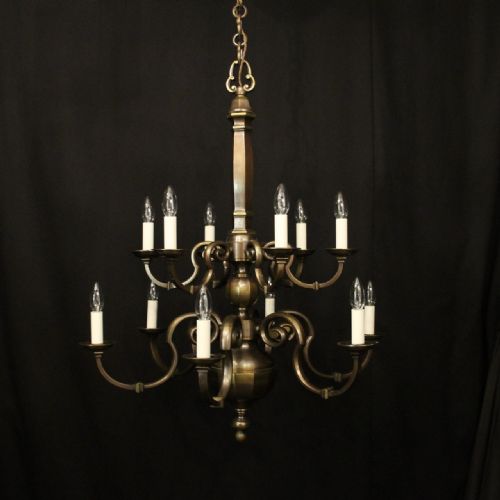
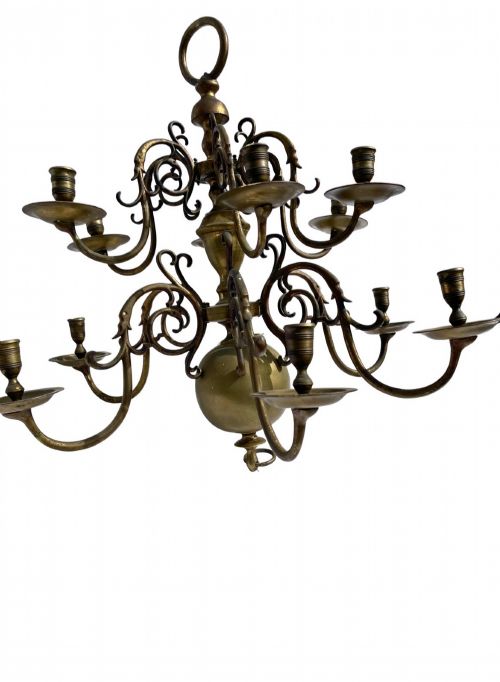


Multi Tier Chandelier
A multi tier chandelier brings grand vertical presence and brilliant illumination to high-ceilinged rooms.
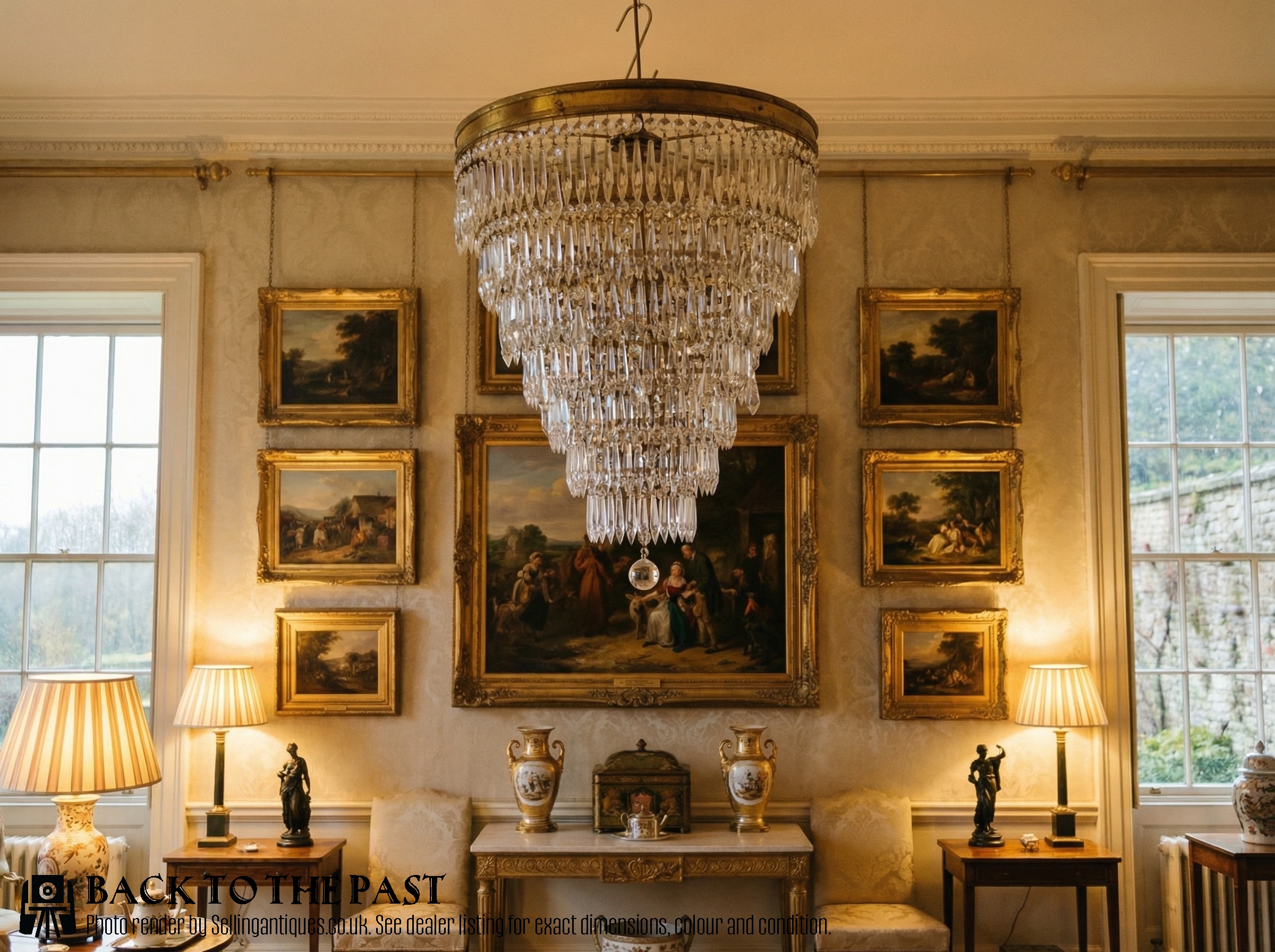
Multi Tier Chandelier
The selections on this page range from modest twelve-light configurations up to massive forty-one-light ballroom centerpieces. Styles draw heavily on French Chateau, Grand Regency, Florentine, and Victorian aesthetics, often incorporating Dutch Baroque revival elements.
Most pieces combine significant metal armature frameworks with cascading levels of glass or crystal drops, swags, and beads. They originate from English, French, Italian, and Bohemian workshops, reflecting distinct regional interpretations of grand lighting.
How they were made
The structural framework relies on cast and spun metals, predominantly brass, bronze, and gilt metal, which provide the necessary strength to support heavy stacked tiers. Smiths shaped these armatures to carry multiple branches and candle arms arranged in ascending or descending tiers.
Decorative elements consist of hand-cut glass and crystal drops, beads, and swags that wire onto the metal frame to catch and refract light. Artisans shaped, ground, and polished these crystal components individually before suspending them from the tiers.
Multi Tier Chandelier Retail Price Guide 2026
Typical asking prices for multi tier chandelier among the pieces listed under this phrase on Sellingantiques today, from the lower quarter to the upper quarter. They describe what is for sale here now, not the wider market.
Listings for multi tier chandeliers feature pieces spanning from the late nineteenth century through the nineteen-thirties, including Edwardian and Grand Regency styles.
What varies in quality
The weight and gauge of the metal armature determine the foundational quality of the fixture, with heavier cast bronze and brass frameworks commanding greater stability and presence. Lighter stamped metals sit at the simpler end of the range.
The clarity, cut, and quantity of the crystal elements distinguish standard productions from exceptional works. Fine examples utilise hand-cut crystal drops with sharp facets that create distinct light refraction, paired with dense swags and beads.
The Multi Tier Chandelier Glossary
- Tier
- A single level or row of lights and decorative elements arranged horizontally within a stacked lighting structure. Multi-tiered fixtures feature two or more distinct levels.
- Drop
- A small piece of cut glass or crystal suspended from the chandelier frame to reflect light. Drops take various shapes, including spears, prisms, and pendants.
- Swag
- A draped garland of crystal beads or glass droplets suspended between points on the chandelier frame. Swags soften the rigid geometry of the metal branches.
- Armature
- The underlying metal skeleton or frame of the chandelier that supports the branches, tiers, and hanging glass elements. It is typically constructed from brass, bronze, or gilt metal.
- Ballroom chandelier
- An exceptionally large multi-light fixture designed for expansive public rooms and high ceilings. These pieces often feature numerous tiers and dozens of light points.
Multi Tier Chandelier: Frequently Asked Questions
How do I hang a multi tier chandelier?
Hanging a multi tier chandelier requires securing a heavy-duty ceiling hook directly into structural joists, as these fixtures possess substantial weight. Professional electrical installation is essential to support the armature safely and connect the multiple internal circuits.
Position the fixture at a height that clears head traffic while anchoring the room's vertical space. In high-ceilinged entryways or ballrooms, the bottom tier typically hangs well above normal reach to maintain proper proportions.
How do I clean a crystal chandelier?
Cleaning involves wiping individual crystal drops and glass components with a specialised cleaning solution and a lint-free cloth. Many restorers spray the fixture while placing absorbent materials below to catch drips, allowing the solution to dissolve accumulated dust.
Avoid rotating or pulling heavily on wired crystal swags during the process to prevent snapping the connecting pins. Regular dusting maintains the refractive quality of the glass without requiring full disassembly.
What rooms suit a multi tier chandelier?
These prominent fixtures suit spaces with generous ceiling heights and substantial floor areas, such as formal dining rooms, grand stairwells, and entrance halls. Their vertical scale overwhelms standard domestic ceilings, making high clearance a functional requirement.
In commercial or period properties, they anchor large reception spaces and ballrooms. The stacked tiers distribute light effectively across wide perimeters when paired with high wattage output.
How do I date an antique chandelier?
Dating relies on examining the metal casting techniques, wiring methods, and the style of the glass cutting. Nineteenth-century examples often display hand-finished bronze or brass work with pinned crystal drops, while nineteen-twenties pieces introduce standardised machine-cut elements.
Stylistic cues such as Florentine polychrome finishes or Edwardian Marie Therese configurations further narrow the period. Comparing the armature construction and decorative motifs against known regional traditions clarifies the origin.