
Vintage Waterfall Chandelier
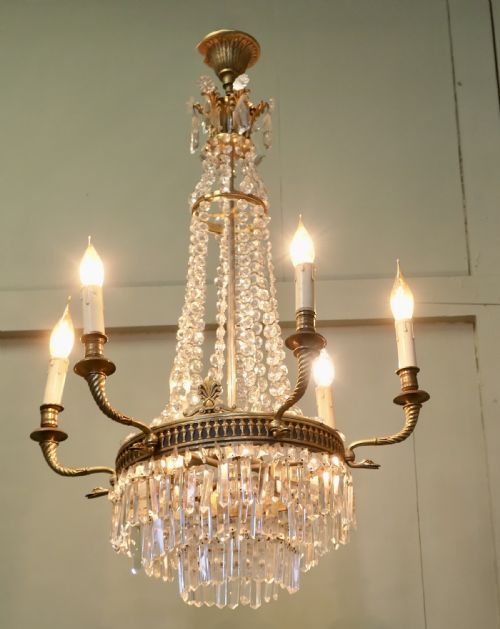
A vintage waterfall chandelier brings cascading tiers of crystal and glass into a room, diffusing candlelight or electric light through dozens of cut prisms.
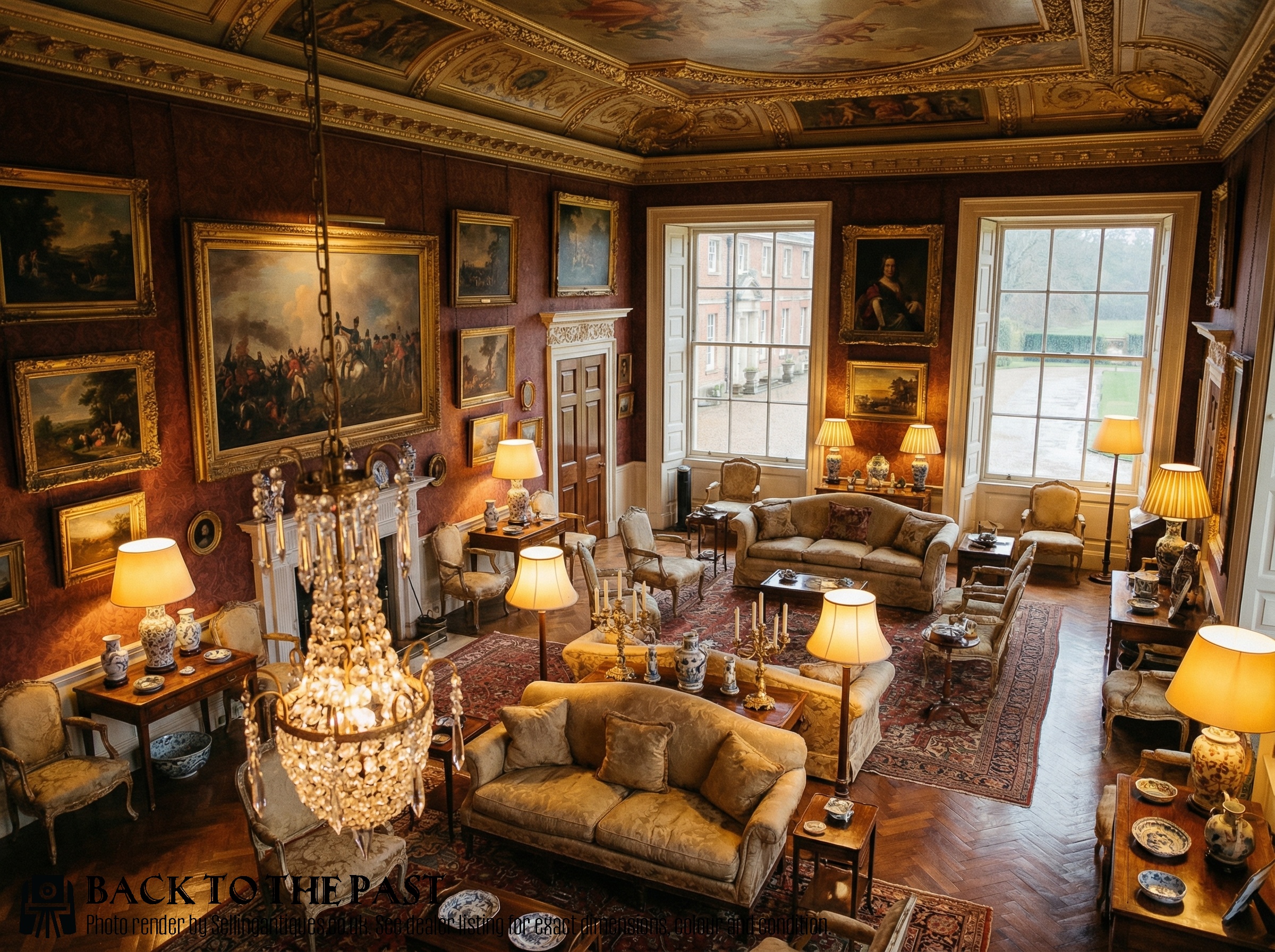
Vintage Waterfall Chandelier
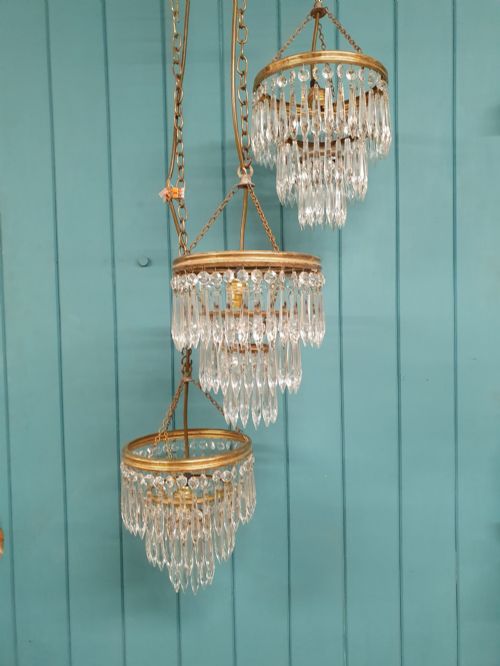
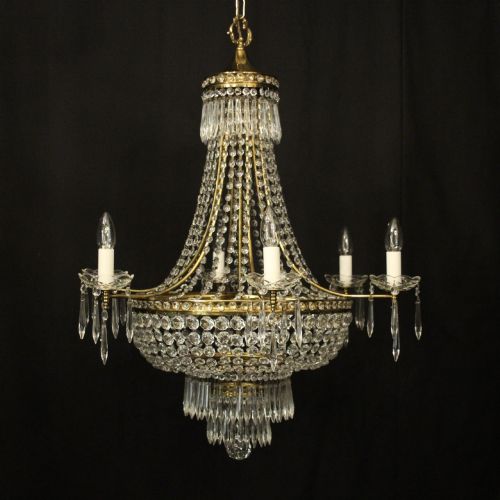
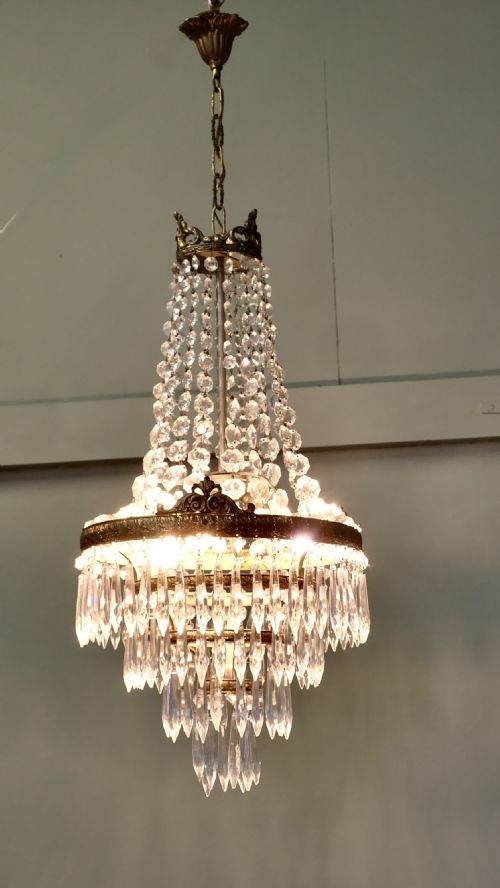
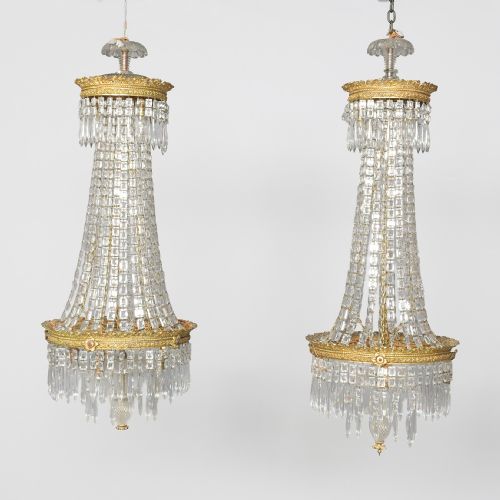
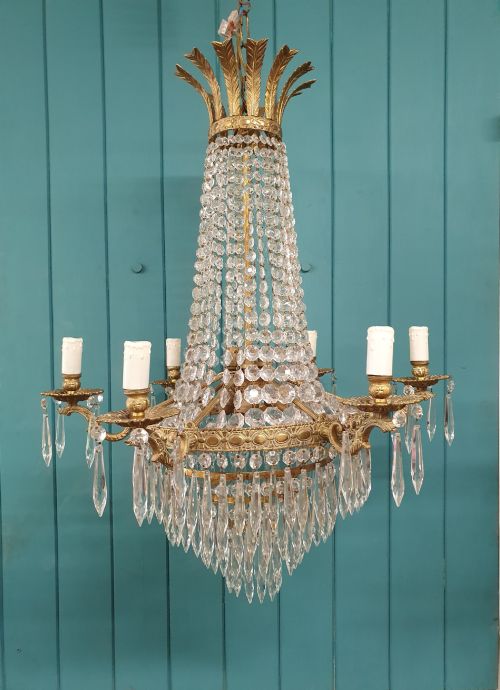
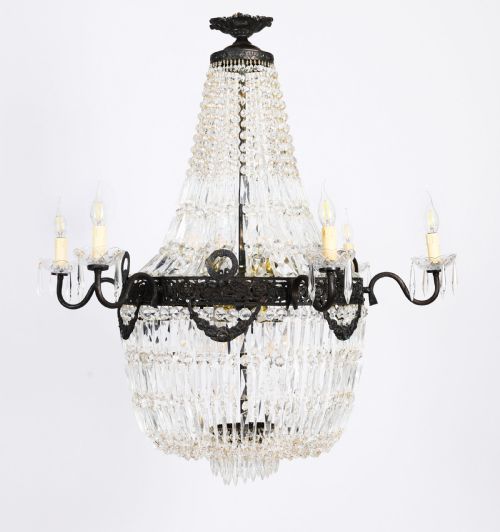
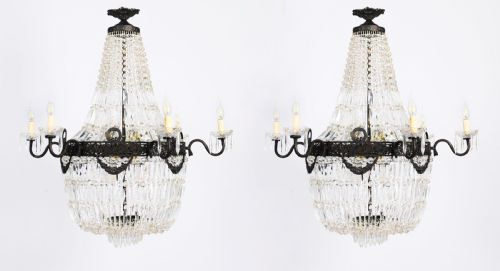
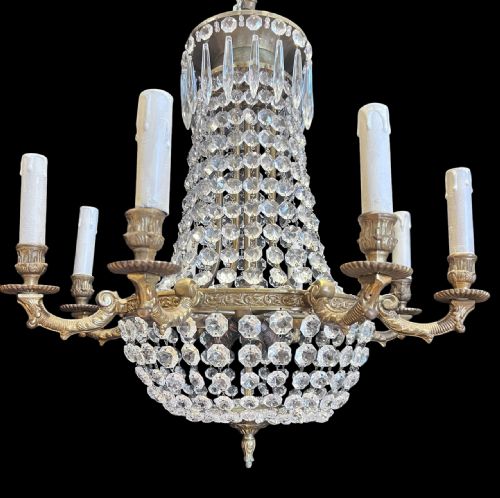
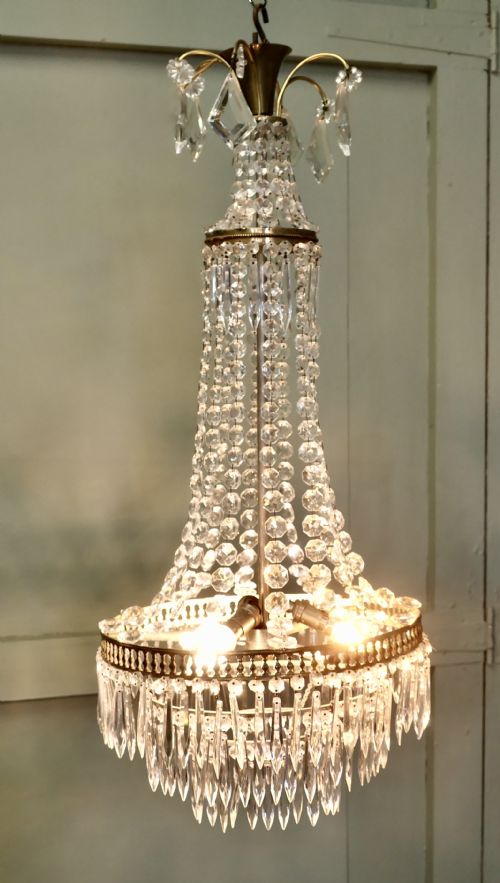
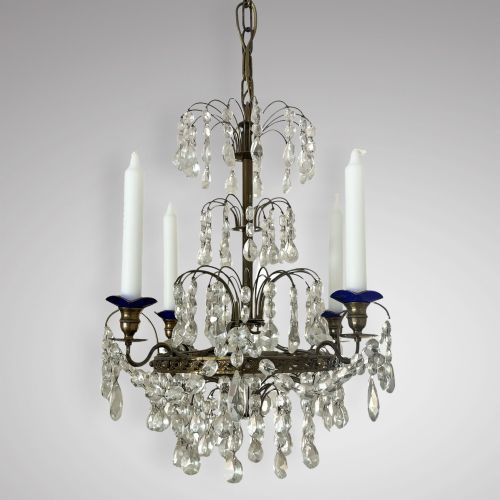
A vintage waterfall chandelier is a ceiling light defined by a tapering descent of glass or crystal drops, often arranged in tents, bags, or spikes below a brass, gilt brass, or bronze mount. These fixtures appear across several periods, most notably the Edwardian era, the 1920s, and the 1930s, alongside French Empire and Louis Revival styles.
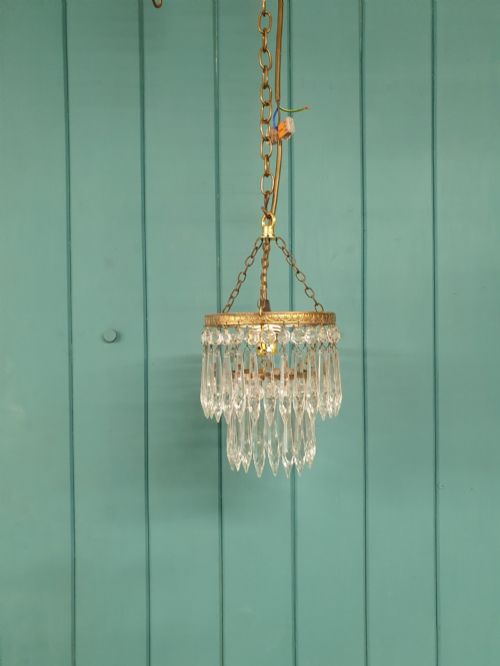
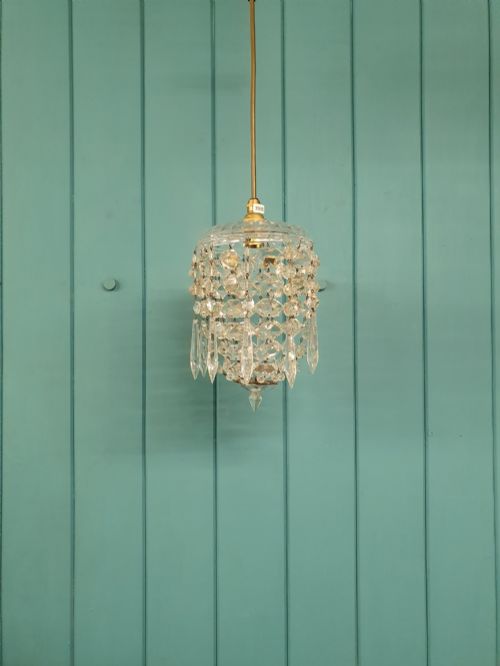
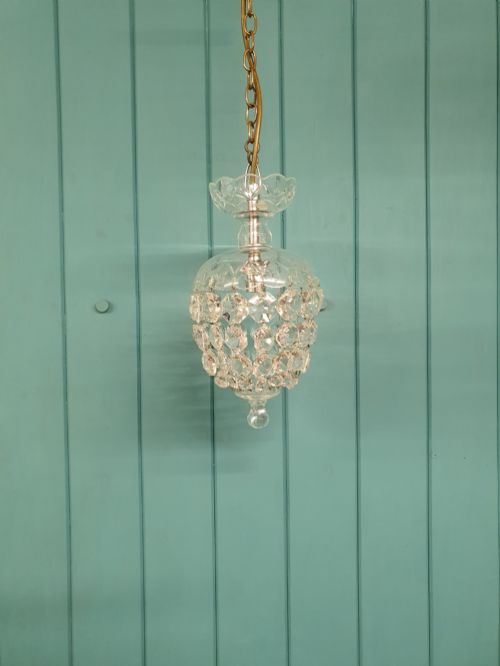
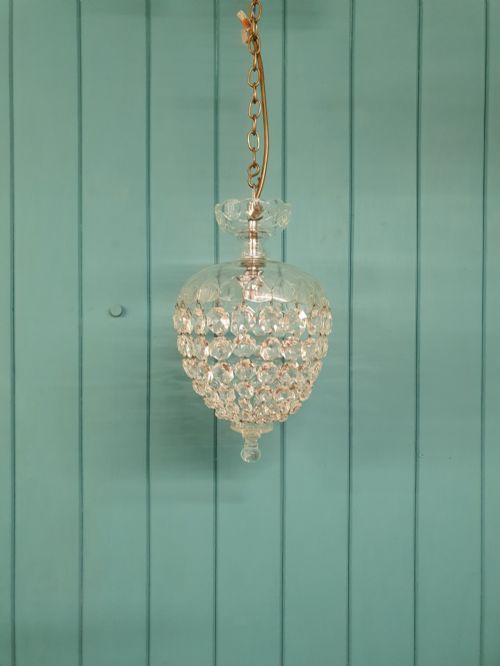
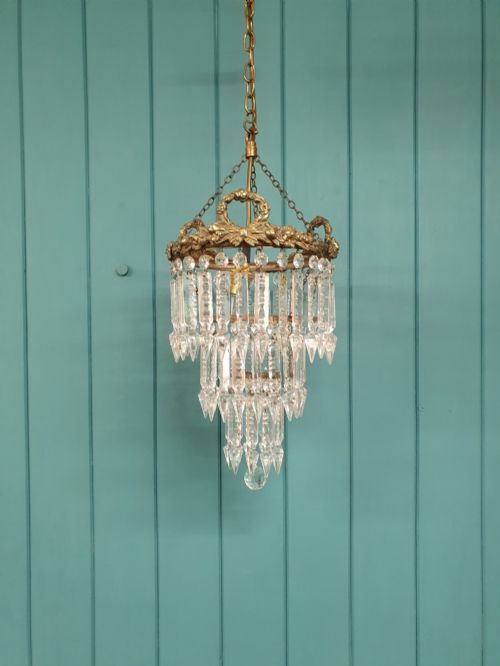
Buyers seeking a vintage waterfall chandelier frequently encounter French designs featuring tiered drops, tent arrangements, and multiple light branches. Smaller Edwardian examples, such as single light plafonieres or compact bag chandeliers, also populate the selection alongside larger ballroom fixtures.
The silhouettes range from structured spike chandeliers to sweeping tent and bag forms adorned with leaf decoration or bronze mounts. These pieces function as dramatic overhead lighting for dining spaces, halls, and high-ceilinged reception rooms.
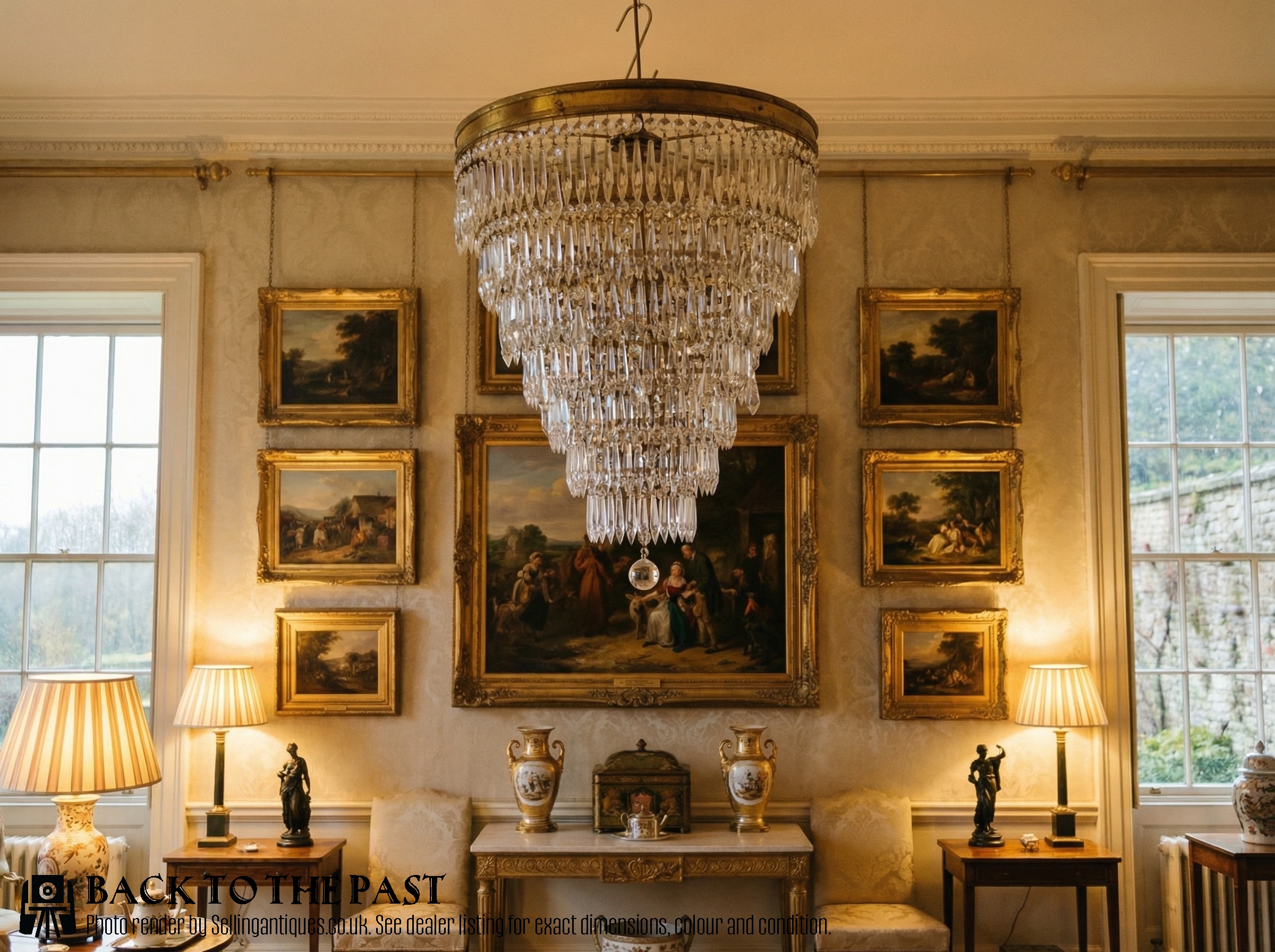
Materials and construction
Makers constructed the frames of these chandeliers using brass, gilt brass, bronze, and occasionally wire to support the weight of the glass elements. These metal mounts often feature decorative castings, such as leaf motifs or structural bands, which secure the upper tiers.
The suspended elements consist of glass, crystal, and cut crystal shaped into drops, prisms, and lustres. Technicians wired these components together with metal pins, creating the flexible cascading curtains characteristic of bag, tent, and waterfall formations.
Vintage Waterfall Chandelier Retail Price Guide 2026
Typical asking prices for vintage waterfall chandelier among the pieces listed under this phrase on Sellingantiques today, from the lower quarter to the upper quarter. They describe what is for sale here now, not the wider market.
Listings feature items from the 19th Century, Edwardian era, 1900, 1910, 1920, and 1930.
Distinctions in quality
The calibre of a fixture rests on the depth of the cutting in the crystal and the weight of the metal frame. Heavier cast brass or bronze mounts and sharp, hand-cut glass prisms produce clearer light refraction and greater durability than lighter pressed alternatives.
Assembly methods and completeness differentiate standard pieces from finer examples. Original matching lustres, secure wire bindings, and cohesive French Empire or Louis Revival styling indicate superior workshop standards from the Edwardian period and the 1920s and 1930s.
The Vintage Waterfall Chandelier Glossary
- Waterfall chandelier
- A lighting fixture featuring cascading tiers of glass or crystal drops that flow downward from a central mount. This design creates a dense sheet of light refraction.
- Tent and bag chandelier
- A style combining an upper tent shape of strung crystals with a lower basket or bag formation of droplets. It is frequently seen in French Empire and Louis Revival pieces.
- Bag chandelier
- A compact ceiling light where drops form a flattened bag or basket suspended close to the ceiling. These are common in smaller Edwardian rooms.
- Spike chandelier
- A linear or tiered hanging light terminating in pointed crystal or glass drops. The form emphasises vertical descent.
- Lustre
- A cut glass or crystal pendant hung from a chandelier to reflect light. These pieces swing slightly with air currents.
- Plafoniere
- A shallow bowl-shaped ceiling light mounted close to the ceiling surface. Single light versions appear in early twentieth-century French lighting.
Vintage Waterfall Chandelier: Frequently Asked Questions
How do I clean a vintage waterfall chandelier?
Cleaning requires a gentle hand and a mild solution applied directly to the glass with a soft cloth. Technicians advise against submerging wired frames or harsh scrubbing of the metal mounts.
Individual crystal drops may be detached for careful washing and drying before being reattached to the brass or bronze frame with original wire or pins.
Where should I hang a waterfall chandelier?
These fixtures suit spaces with adequate ceiling height, such as entrance halls, dining rooms, and high-ceilinged bedrooms. Smaller bag and dome versions fit more intimate areas where drop length must remain minimal.
Positioning the light centrally allows the cut crystal and glass prisms to distribute illumination evenly across the room.
How do I date a crystal chandelier?
Dating relies on examining the metal composition, mounting style, and the cut of the glass. Edwardian and 1920s pieces often feature specific brass stampings, wire fixings, and distinct tent-and-bag proportions.
French Empire revival pieces from the early twentieth century mimic nineteenth-century forms through heavier bronze mounts and specific leaf decorations.
Are these chandeliers compatible with modern wiring?
Most antique and vintage fixtures require professional rewiring to meet contemporary electrical safety standards. Qualified electricians can retain the original brass or bronze lamp holders while updating internal cables.
This process ensures the fixture safely supports modern low-energy bulbs without altering the exterior appearance.