

Beaded Glass Chandelier
These beaded glass chandeliers catch the light across a room, bringing period character and sparkle to a ceiling.
Beaded Glass Chandelier
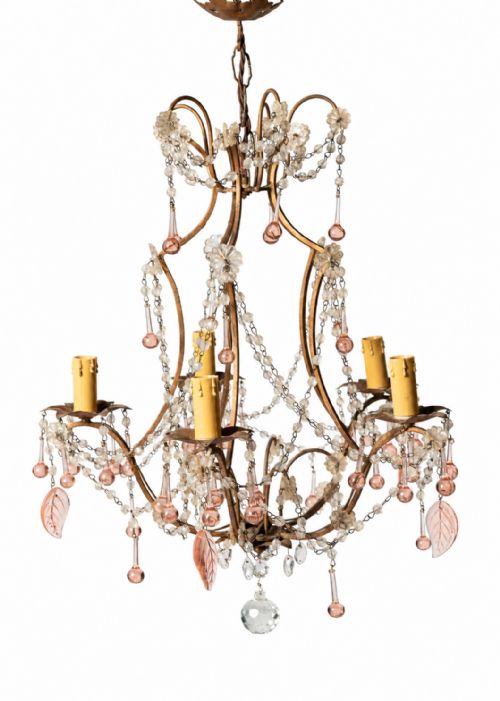
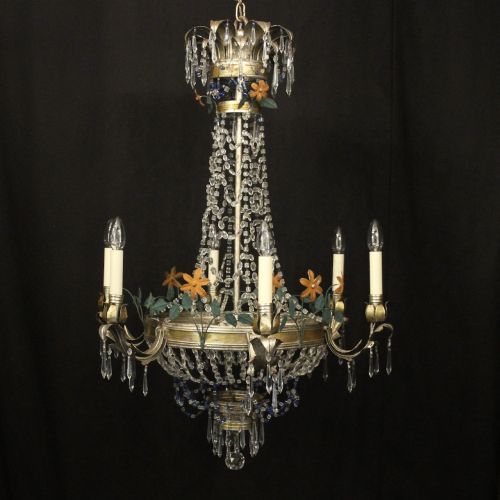
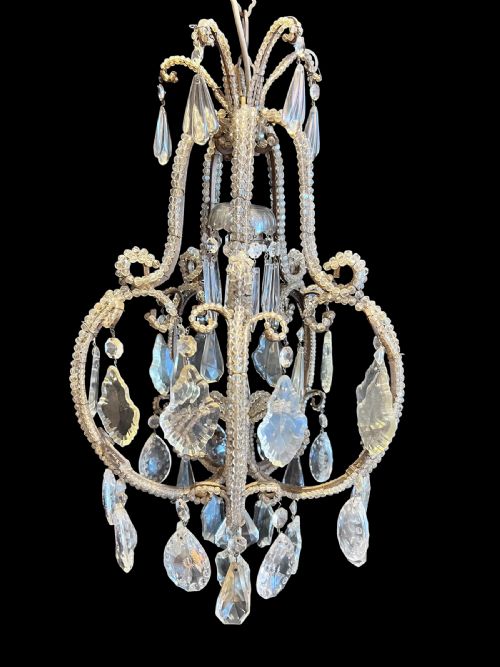
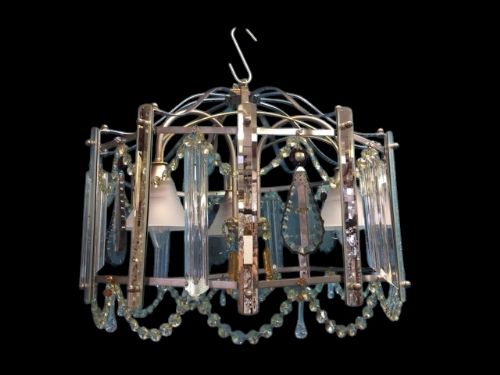
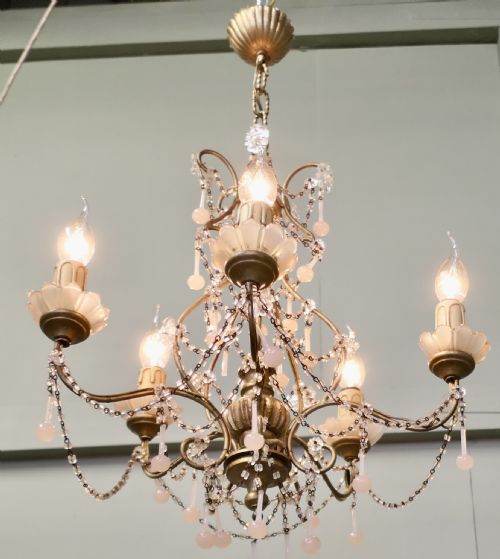
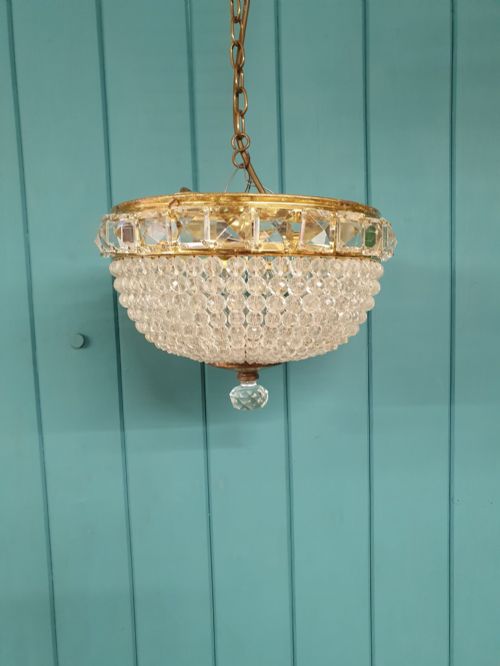
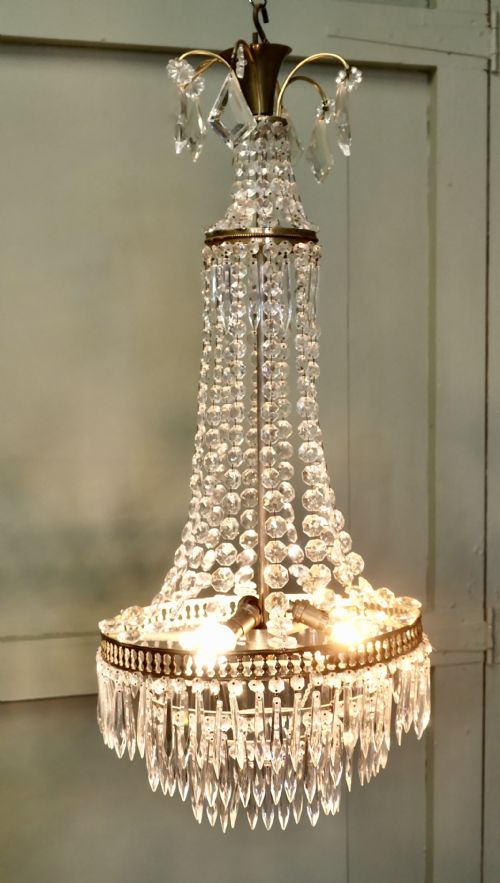
A beaded glass chandelier brings together structural frames and suspended glass elements, forming pieces designed to illuminate interior spaces from above. When searching for a beaded glass chandelier, a buyer encounters various formats ranging from compact dome top fixtures to multi-branch lights and large tent and waterfall configurations.
The pieces on this page originate primarily from the early twentieth century, spanning Edwardian examples alongside creations from the 1910s, 1920s, and 1930s, with occasional nineteenth-century items. Italian Venetian, Florentine, and French Empire styles appear frequently among the listings, alongside basket and bag chandeliers.
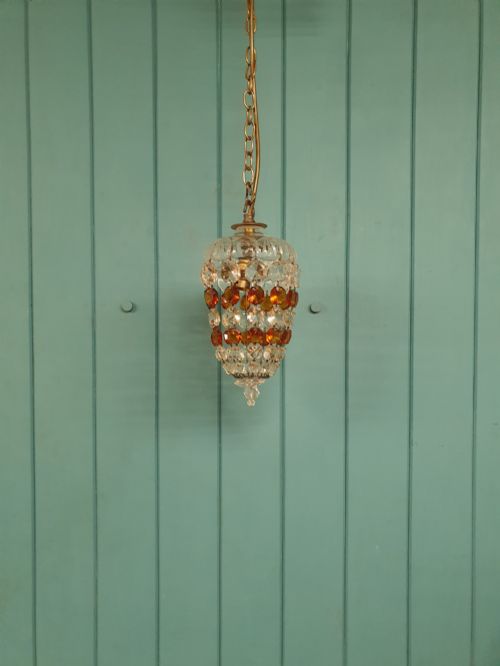
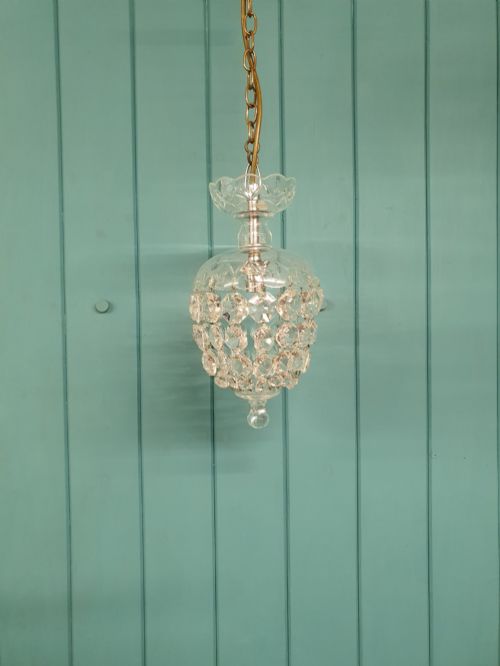
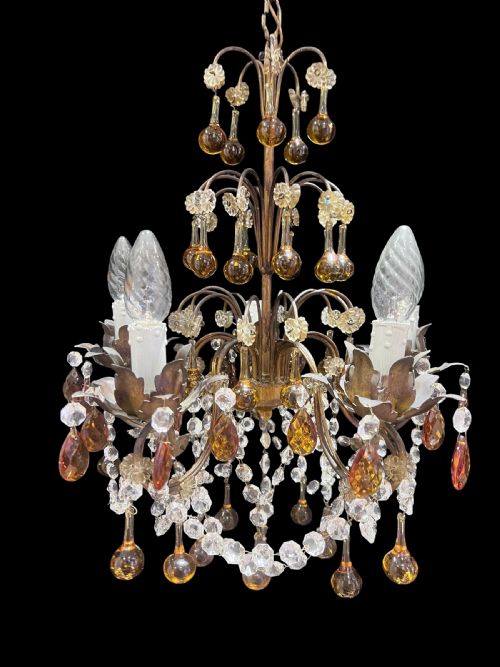
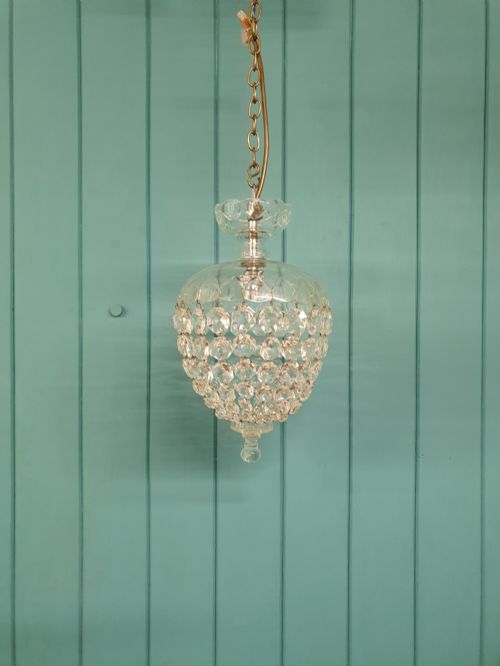
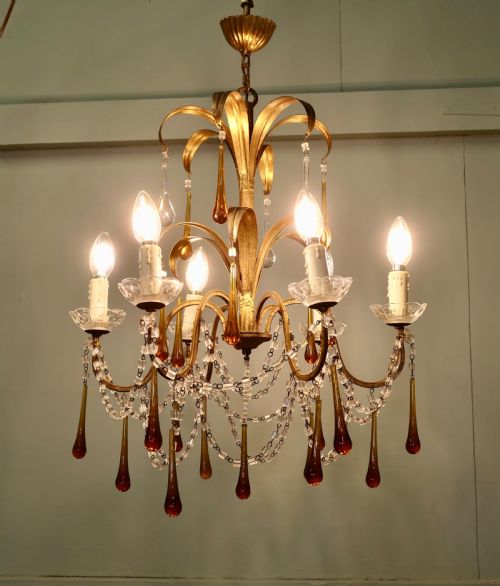
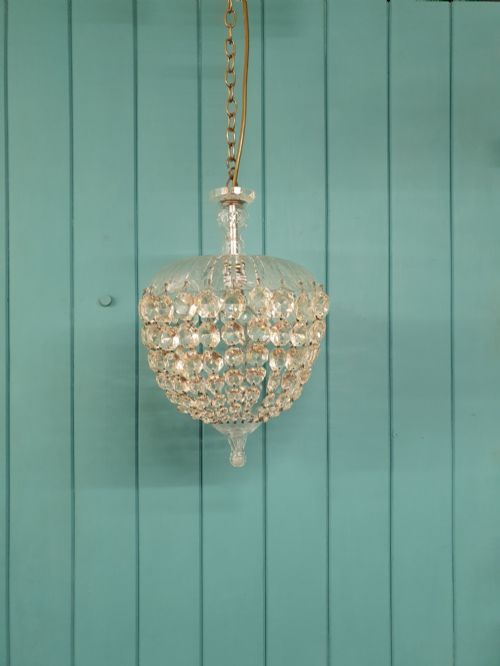
Smaller iterations such as dome top fixtures and lanterns sit alongside substantial multi-light installations like the large Florentine gilt designs. Buyers frequently find specialised forms including galleon chandeliers and lampshades hung with coloured crystal fruits or floral wire motifs.
Materials and Construction
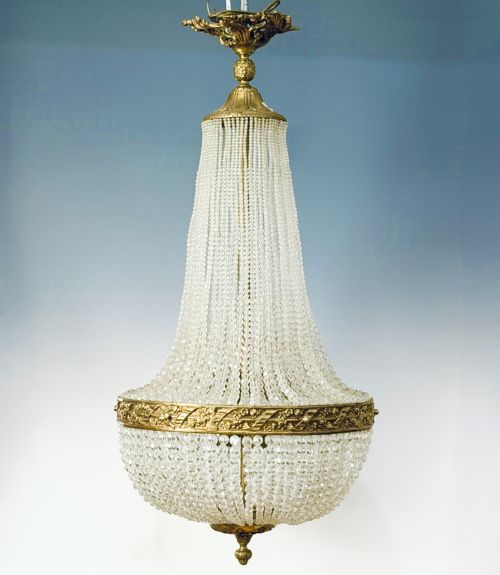
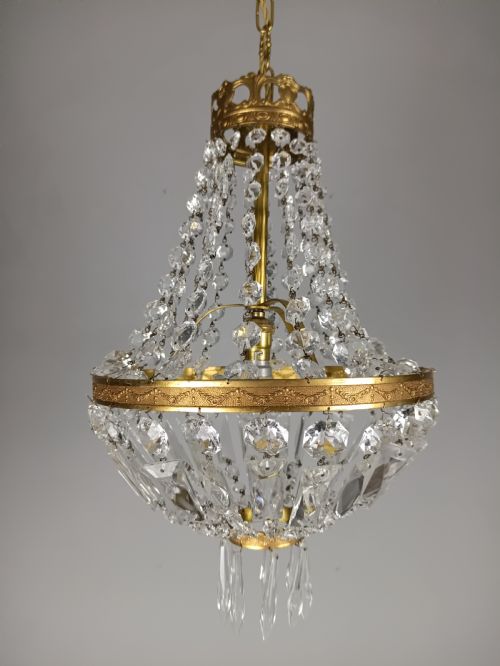
Makers constructed the foundational frames of these fixtures using brass, gilt metal, wrought iron, and wire to support the hanging weight. These structural metals determine the silhouette, whether shaped into a tapered bag, a basket, or an extensive French Empire style tent and waterfall framework.
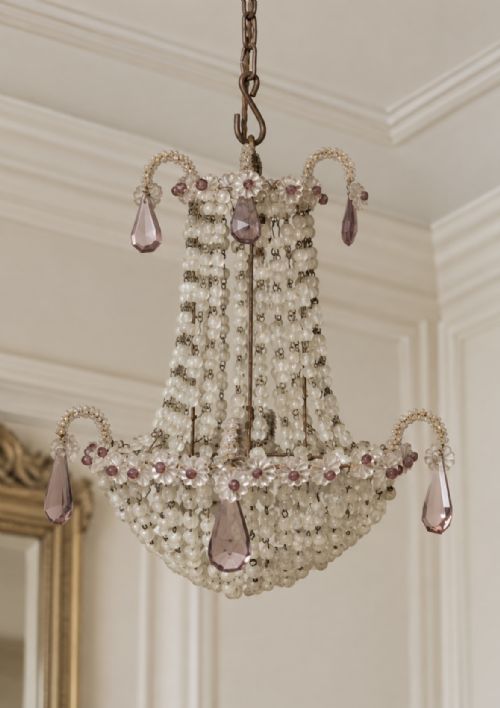
Glass and cut crystal form the defining visual components, utilised as beads, drops, prisms, and coloured crystal fruits like grapes, apples, and pears. Artisans strung these glass elements together to drape across the arms and bodies of the fittings, creating layered textures that refract light.
Beaded Glass Chandelier Retail Price Guide 2026
Typical asking prices for beaded glass chandelier among the pieces listed under this phrase on Sellingantiques today, from the lower quarter to the upper quarter. They describe what is for sale here now, not the wider market.
Quality and Execution
The distinction between tiers of these fixtures lies in the complexity of the metalwork and the precision of the glass cutting. Heavier cast brass frames and intricate gilt frames demonstrate superior construction compared to simpler wire frameworks.
The richness of the hanging elements further defines the standard, with multi-coloured crystals, amber drops, and detailed moulded fruit clusters showing higher artisan investment than plain clear glass beads.
Wedgwood
The Beaded Glass Chandelier Glossary
- Bag chandelier
- A lighting fixture shaped like a tapered bag where strings of beads run from a circular top ring down to a lower metal base.
- Tent and waterfall
- A style featuring an upper tent of strung beads above a cascading waterfall of crystals falling outward toward the light branches.
- Dome top
- A compact ceiling light form characterised by a rounded upper canopy covered in glass beads or prisms.
- Galleon chandelier
- An elongated lighting form inspired by historic ship silhouettes, constructed with metal frames and glass bead dressing.
- Prism
- A cut glass pendant designed to refract light into spectral colours as it hangs from the arms or base of the fixture.
Beaded Glass Chandelier: Frequently Asked Questions
How do I clean a beaded glass chandelier?
Cleaning requires a gentle solution applied by hand to each individual glass bead and crystal drop while it remains attached to the frame. Using a soft cloth prevents scratching the antique glass surfaces.
Careful support of the wire or thread holding the beads ensures the delicate structures do not snap during the maintenance process.
Where should I hang a bag chandelier?
Bag chandeliers suit spaces with moderate ceiling heights where the tapered profile can be viewed closely without obstruction. Entryways and smaller reception rooms benefit from their compact downward projection.
Their restrained diameter allows them to provide focused downward illumination without overwhelming the proportions of the room.
Are these chandeliers wired for modern electricity?
Many antique fixtures retain older electrical components or require rewiring to meet contemporary safety standards before installation. Consulting a qualified electrician ensures the internal metal wiring safely supports the bulb count.
Modern conversion often involves adapting socket sizes while preserving the original brass or gilt metal frame integrity.
How do I distinguish Edwardian from 1930s styles?
Edwardian examples often lean towards delicate brass frames, subtle cut glass, and traditional basket or dome shapes. Pieces from the 1930s frequently introduce bolder geometric lines, Art Deco influences, and vibrant coloured crystals.
Examining the metal patina and the cut of the glass drops helps clarify the manufacturing era of the fixture.