
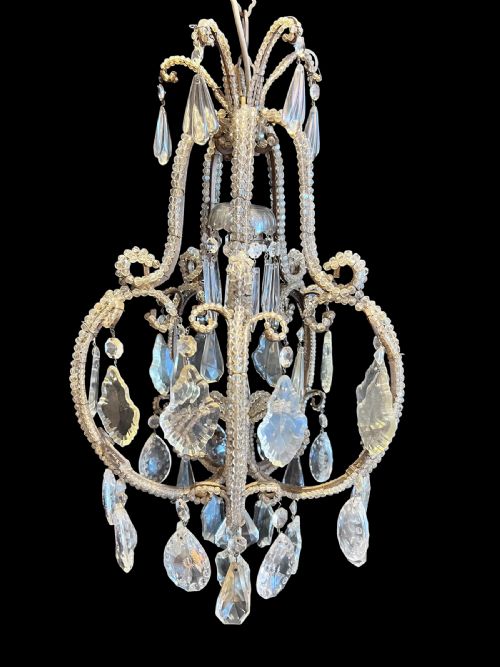
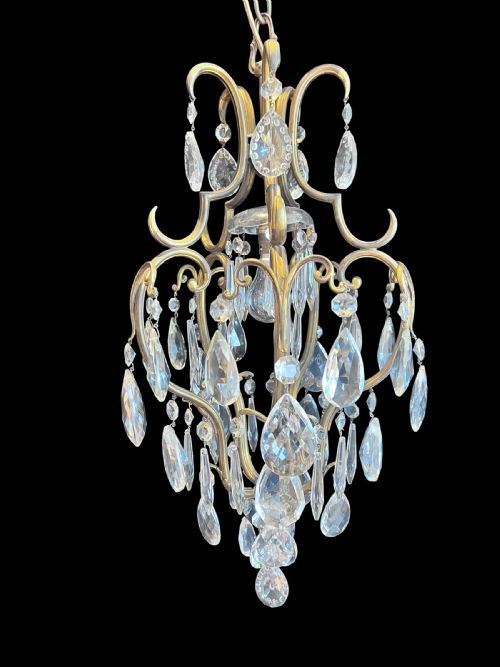
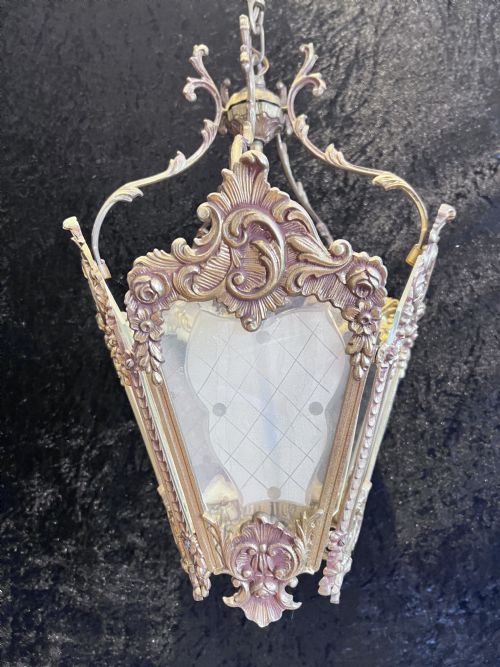

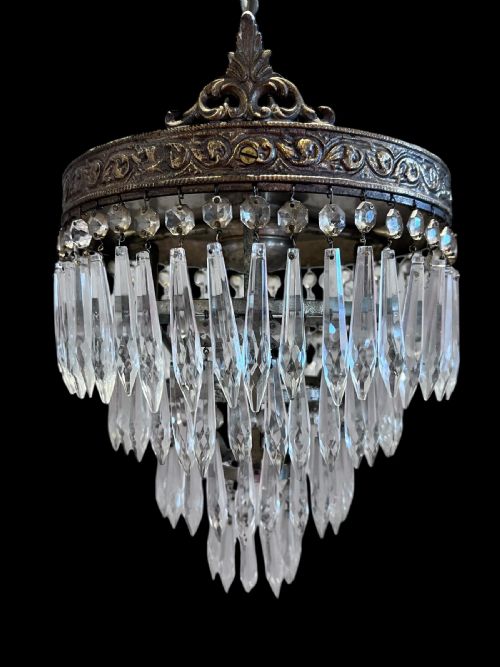


Single Light Chandelier
A single light chandelier brings concentrated brilliance and intimate charm to compact spaces through historic European craftsmanship.
Single Light Chandelier
A single light chandelier focuses illumination through a solitary bulb position while retaining the decorative grandeur of larger multi-branch fixtures. When searching for a single light chandelier, buyers encounter a concentrated form often designed for smaller rooms, halls or vestibules where a large fixture would overwhelm the proportions.
The pieces appearing here span from the turn of the twentieth century through the 1920s and 1930s, drawing heavily on French and Italian design vocabularies. Forms range from basket and birdcage configurations to lanterns, plafonieres and mantel lustres.
French and Italian examples dominate the record, manifesting styles such as Empire, Rococo, Maria Theresa and transitional revival aesthetics. These fixtures utilise single internal or central illumination points framed by cascading crystals, beads and shaped metalwork.
Materials and Construction
Metalwork forms the structural skeleton of these fixtures, predominantly utilising brass, gilt brass, bronze, silver gilt metal, toleware and standard metal frames. These metals are frequently cast, shaped and gilded to provide a robust armature for suspended glass elements.
Glass and crystal constitute the visual weight and reflective surface of the pieces, incorporating cut glass, etched glass, opaline glass and green glass alongside strands of beads. Artisans wired or pinned these transparent components into intricate mesh or wire frames like birdcages and baskets to maximise the play of light from the single bulb.
Single Light Chandelier Retail Price Guide 2026
Typical asking prices for single light chandelier among the pieces listed under this phrase on Sellingantiques today, from the lower quarter to the upper quarter. They describe what is for sale here now, not the wider market.
The recorded pieces span the 1900, 1920 and 1930 periods, incorporating brass, crystal, opaline glass, gilt metal and toleware.
Distinctions in Quality
The refinement of a fixture rests in the crispness of the metal casting and the clarity of the glass or crystal drops. Superior examples display finely chased brass or gilt frames alongside hand-cut crystal elements that refract light cleanly rather than diffusing it dully.
Construction integrity defines the upper tier, where metal frames hold their shape securely and glass beads are strung with precision wire rather than crude ties. The harmony between the metal armature and the glass drapery determines whether a piece achieves decorative cohesion.
The Single Light Chandelier Glossary
- Birdcage chandelier
- A fixture shaped with curved metal ribbons resembling an avian enclosure, densely hung with crystal drops and beads. This form was widely utilised in French and Italian workshops.
- Plafoniere
- A ceiling light designed to sit flush or close to the ceiling surface, often featuring moulded or cut glass bowls. It provides direct downward illumination in restrained interior spaces.
- Mantel lustre
- A decorative ornamental vase or stand adorned with hanging crystal prisms, placed traditionally on fireplace mantels. These share materials and decorative vocabulary with matching chandeliers.
- Toleware
- Painted or lacquered sheet metal used to create decorative light fixtures with coloured surfaces. It introduces vibrant polychrome tones to the metalwork.
- Bag chandelier
- A light fixture featuring a gathered lower section of glass beads resembling a pouch or bag beneath a crown. This design creates a distinctive conical silhouette.
Single Light Chandelier: Frequently Asked Questions
Where should I hang a single light chandelier?
These compact fixtures suit hallways, landings, powder rooms and small bedrooms where a multi-bulb chandelier is too large.
Their focused downward or filtered light creates an intimate focal point without dominating low ceilings.
How do I distinguish French styles from Italian ones?
French pieces often lean towards structured Empire frameworks, gilt brass baskets and precise tent-and-waterfall crystal arrangements.
Italian examples frequently exhibit flowing Rococo curves, Maria Theresa influences and expressive gilding or silvered finishes.
What materials are most common in these fixtures?
Brass, gilt metal and bronze form the structural frames, paired extensively with cut crystal, glass beads and occasionally opaline or green glass.
Surface finishes include gilding, silver gilt and polychrome paint.
How do I date these antique chandeliers?
Dating relies on stylistic markers from periods like the 1900s, 1920s and 1930s, alongside construction techniques and metal patination.
Revival styles from the early twentieth century often reinterpreted eighteenth and nineteenth-century French and Italian aesthetics.
Can these chandeliers provide enough light for a room?
A single light source is designed for ambient or accent illumination rather than bright task lighting.
The surrounding crystal drops and glass elements amplify and refract the single bulb to cast a decorative glow.