



Amber Glass Pendant Light
An amber glass pendant light brings a warm, diffused glow to a room, drawing on decades of decorative hanging fixtures.
Amber Glass Pendant Light
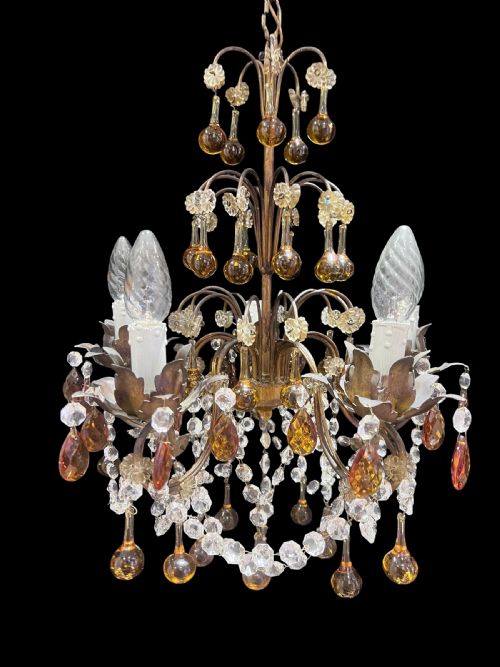
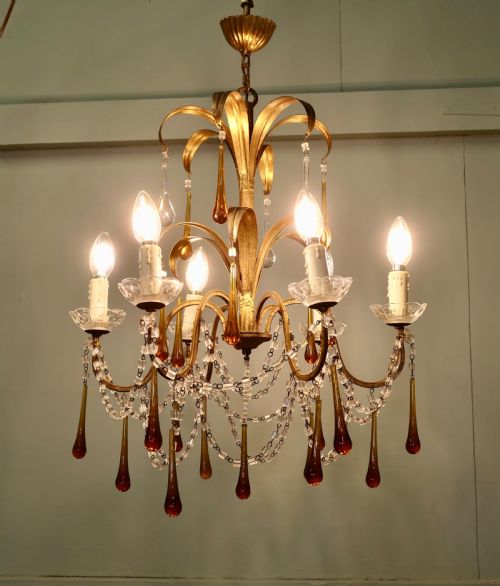
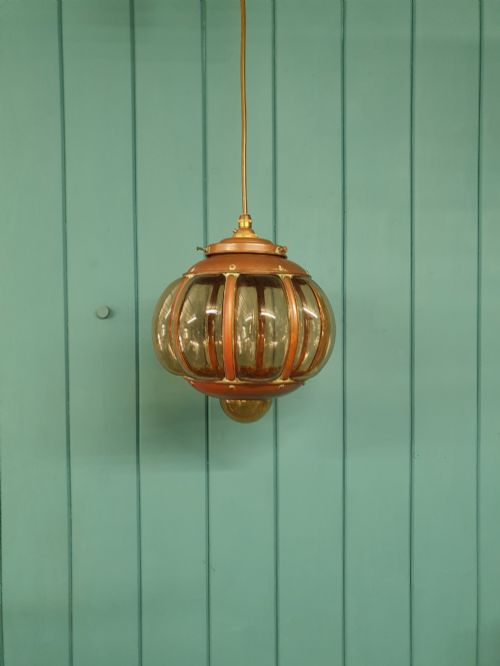
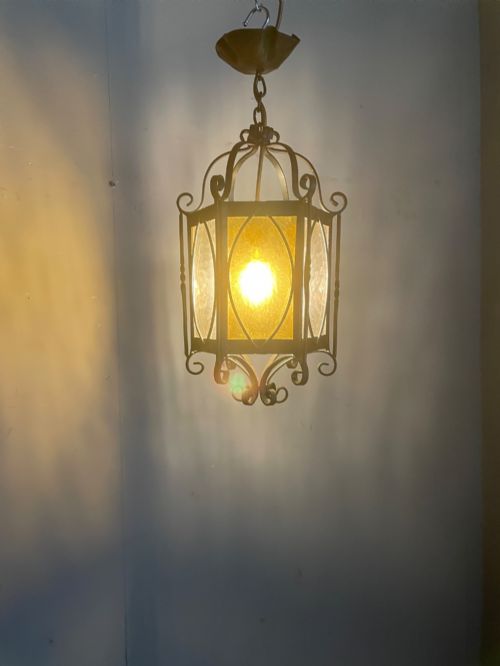
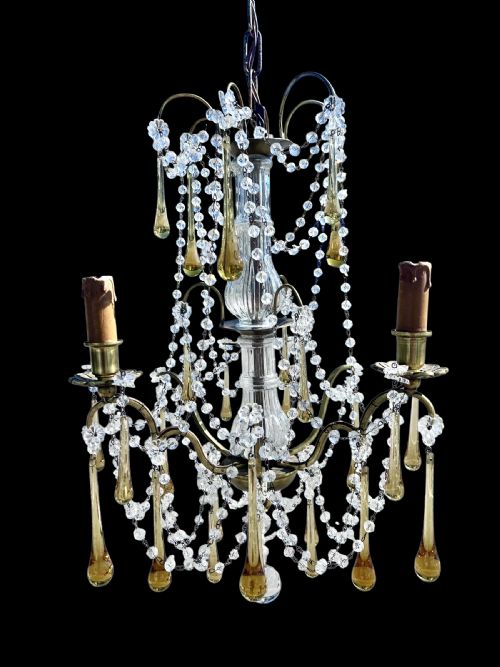
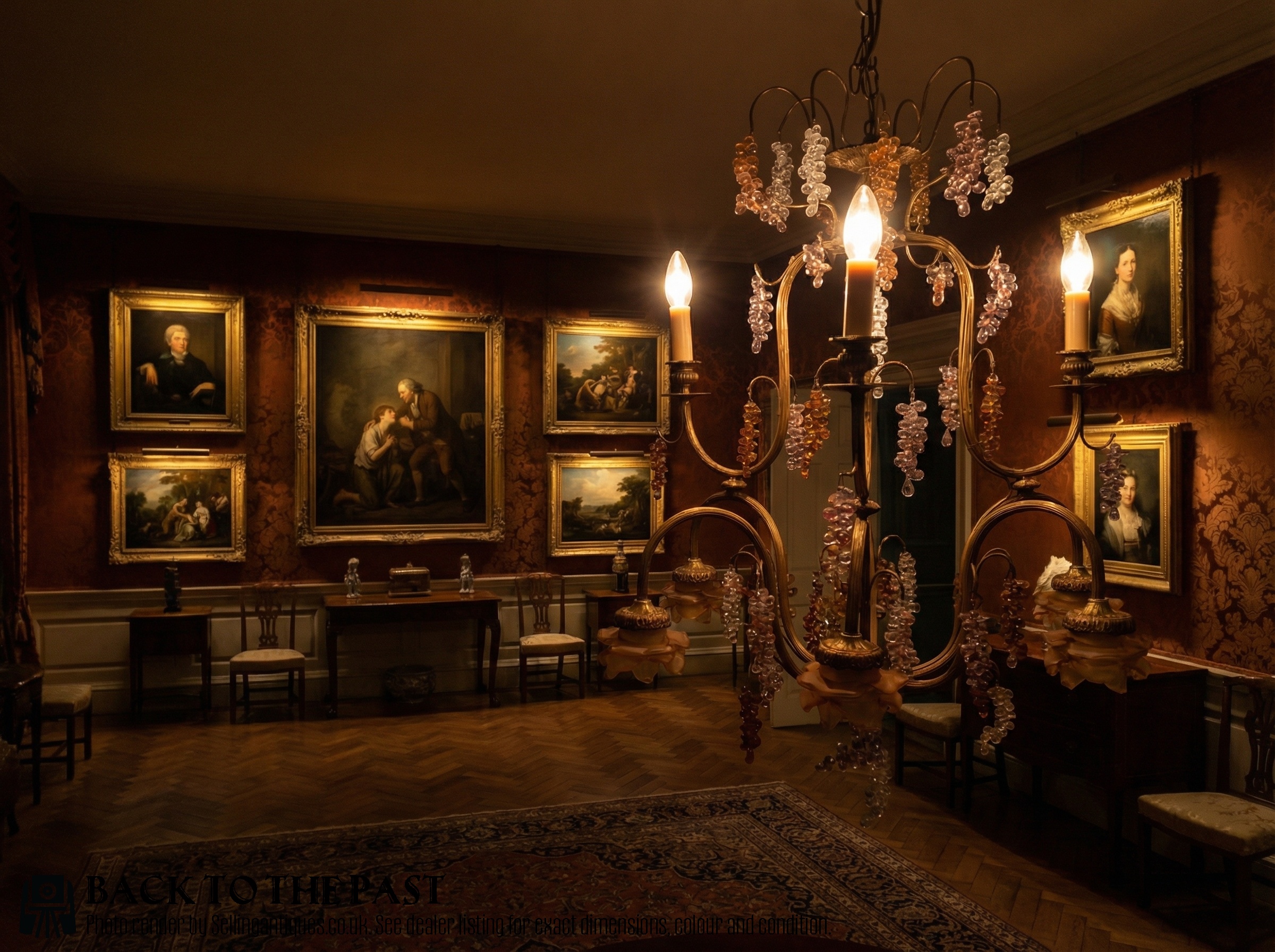
An amber glass pendant light unites utilitarian ceiling illumination with decorative glasswork spanning the Victorian, Edwardian, and Art Deco periods. Buyers investigating this search phrase encounter hanging lanterns, basket chandeliers, and single-shade fixtures suspended from domestic hallways and reception rooms.
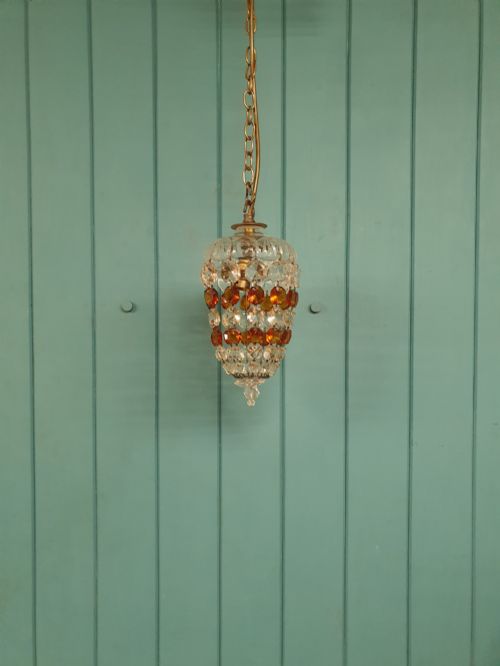
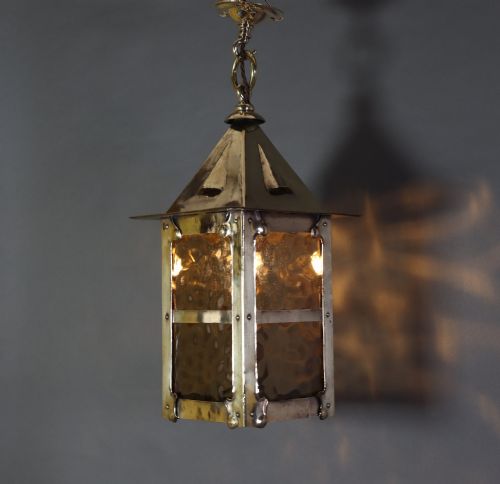
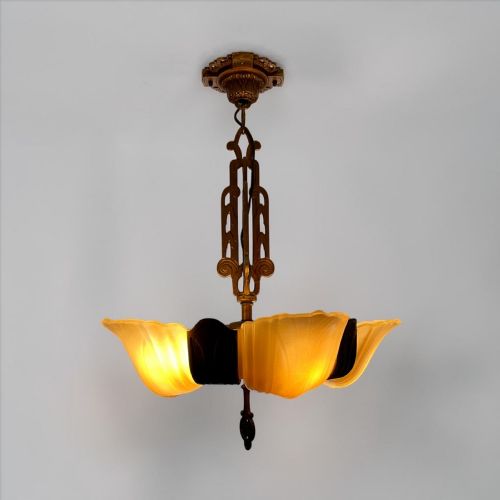
The selection on this page demonstrates varied forms, from French chateau chandeliers hung with crystal teardrops to structured Art Deco slip shade lights and Arts and Crafts brass lanterns. Pieces originate from diverse European and domestic workshops operating between the late nineteenth century and the nineteen-thirties.
Materials and construction
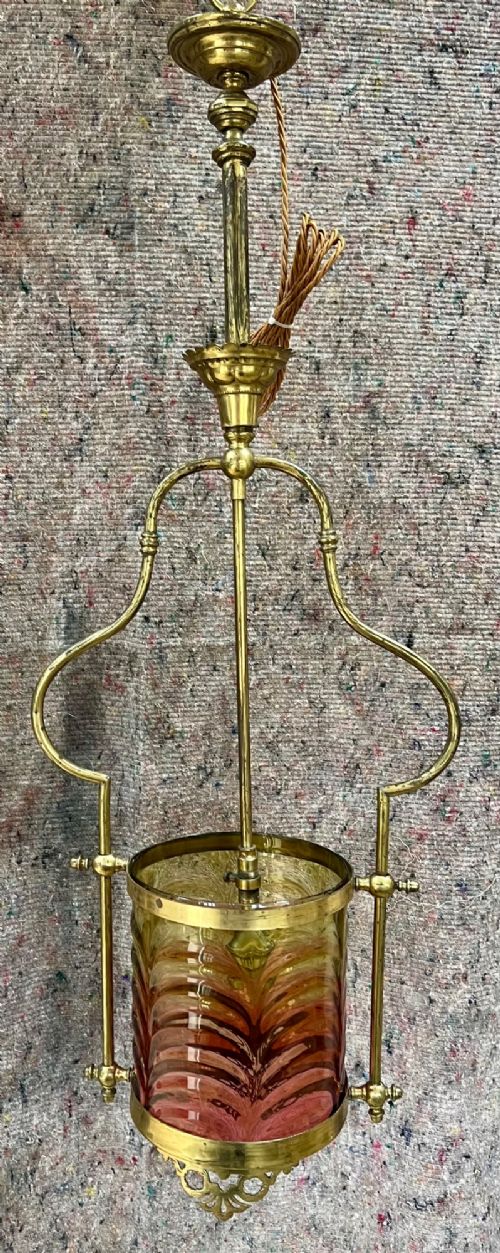
Maker construction combines blown or moulded glass components with metal frameworks forged from brass, gilt metal, wrought iron, and copper. Lead and frosted glass techniques provide structural integrity and diffuse the internal illumination.
Decorative elements incorporate crystal drops, coloured fruit motifs, and etched glass patterns secured into metal mounts. Frameworks utilise traditional soldering, riveting, and casting methods appropriate to each respective period.
Amber Glass Pendant Light Retail Price Guide 2026
Typical asking prices for amber glass pendant light among the pieces listed under this phrase on Sellingantiques today, from the lower quarter to the upper quarter. They describe what is for sale here now, not the wider market.
Listings span the Victorian era through the Art Deco period, incorporating brass, wrought iron, and smoked glass.
Quality and execution
Superior examples display precise metalwork casting, substantial glass thickness, and intricate detailing such as hand-etched patterns or multi-tiered crystal drops. Lesser items rely on simpler pressed glass and lighter sheet metal frames.
The sophistication of the mounting hardware and the integrity of integrated suspension elements distinguish standard domestic fittings from monumental architectural commissions.
Verrerie Des Vosge
The Amber Glass Pendant Light Glossary
- Pendant light
- A hanging light fixture suspended from the ceiling by a chain, cord, or metal rod. These fixtures provide direct downward illumination in domestic interiors.
- Slip shade
- A type of moulded glass shade used in Art Deco ceiling lights that slots directly into a metal frame. The design became popular during the nineteen-thirties.
- Hall lantern
- An enclosed ceiling light designed specifically for hallways and entrance passages. They frequently combine brass frames with leaded or glazed glass panels.
- Tolewear
- Painted or lacquered sheet metal used in decorative light fittings and decorative objects. French examples often feature gilt detailing.
- Crystal drops
- Cut glass pendants suspended from chandelier frames to refract light. They appear frequently in Edwardian and continental pieces.
Amber Glass Pendant Light: Frequently Asked Questions
How do I hang a heavy brass lantern?
Heavy brass and glass lanterns require secure ceiling joist fixings and appropriate weight-bearing chains or rods to support the metal framework safely.
Professional electrical installation is recommended to ensure the wiring handles the weight and voltage of the fixture.
What rooms suit an Art Deco ceiling light?
Art Deco ceiling lights suit dining rooms, hallways, and living spaces featuring period architectural details or mid-century modern interior schemes.
The geometric lines and moulded glass shades provide a distinct focal point overhead.
How do I clean antique glass shades?
Remove the glass shade from the metal frame where possible and wash it gently in lukewarm water with mild soap. Dry the surface thoroughly with a soft cloth to avoid water marks.
Avoid harsh chemical cleaners that might damage etched surfaces or antique gilt finishes.
Are these lights wired for modern use?
Most antique light fittings require rewiring by a qualified electrician to meet current domestic electrical safety standards.
Original lampholders are often replaced or adapted to accept standard modern bulbs while retaining the exterior appearance.