


Georgian Style Chandelier
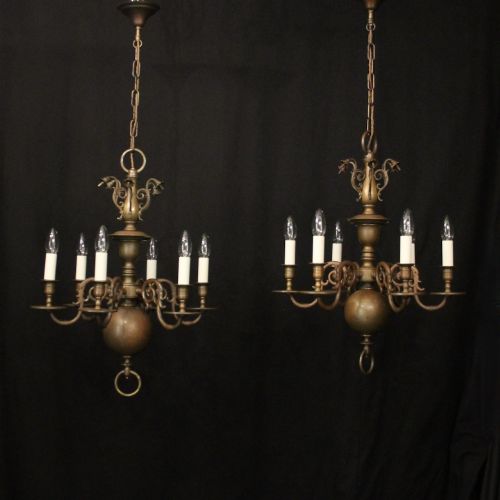
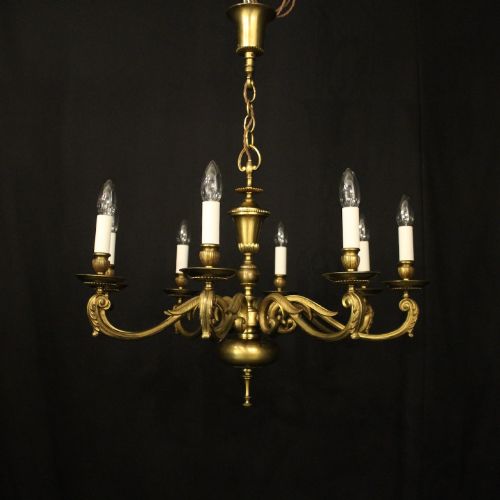
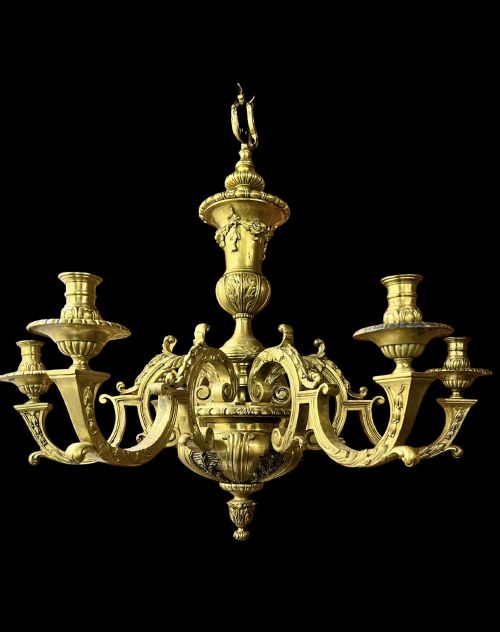
These georgian style chandeliers bring weight and clear refraction to a room, offering the proportion and candle-arm spread collectors want.
Georgian Style Chandelier
A georgian style chandelier relies on classical symmetry and tiered branch arrangements to anchor a high-ceilinged room. Most examples found here date from the nineteenth and early twentieth centuries, adopting earlier aesthetics rather than originating in the actual Georgian era.
The material palette spans cast brass, gilded bronze and heavy cut glass, forming multi-light fixtures designed to illuminate large reception spaces. Buyers frequently encounter branch chandeliers alongside tent and bag configurations employing drops of varying cut.
How they were made
Foundries cast brass and bronze components before hand-finishing the metalwork through chasing, gilding, or silver plating to achieve a lustrous surface. Multi-branch frames require precise alignment to support the weight of numerous sconces and central stems.
Glass elements undergo manual blowing and deep wheel-cutting to maximise light refraction, secured to the metal armature using wire loops and pins. Lead crystal drops are shaped individually, resulting in minor irregularities that distinguish period glass from later pressed alternatives.
Some nineteenth-century makers used hidden brass ratchets to adjust branch angles, proving that historical electricians loved a gadget as much as we do.
What varies in quality
Quality rests in the crispness of the metal casting and the depth of the hand-cut facets on the crystal drops. Heavier gauge brass and bronze provide structural integrity that lighter stamped metal frames lack over decades of suspension.
The integrity of the hanging scheme, including matching glass drops and unified patination across the metal parts, separates standard decorative fixtures from superior examples. Original surface treatments and complete crystal suites elevate the overall balance of the piece.
The Georgian Style Chandelier Glossary
- Tent and bag chandelier
- A lighting fixture featuring a conical upper section of strings of glass beads dropping down to a bag-like lower basket. This form became popular in the eighteenth century and persisted in later revival pieces.
- Cut glass
- Glass decorated by grinding facets or patterns onto the surface using rotating wheels. This technique enhances the sparkle of chandeliers by scattering light in multiple directions.
- Gilded bronze
- Bronze metal coated with a thin layer of gold or gold-coloured alloy. It provides a rich finish that resists tarnishing while maintaining sharp decorative detail.
- Branch chandelier
- A multi-armed lighting fixture radiating from a central stem. These arms carry individual candle-holders or lamp sockets arranged in single or multiple tiers.
Georgian Style Chandelier: Frequently Asked Questions
How do I hang a heavy antique chandelier safely?
Suspension requires fixing directly into ceiling joists using a rated hook and steel chain capable of holding the combined weight of metal and glass. Professional installation ensures the electrical wiring meets current standards while protecting the antique frame from strain.
Weight distribution must balance evenly across the mounting points, especially with larger multi-light examples containing extensive crystal drops.
Can I clean the crystal drops without taking them down?
Dusting with a soft brush removes routine surface particles, but thorough cleaning requires washing the drops individually in warm water with mild soap. Removing the glass elements prevents moisture from damaging old metal pins and the underlying ceiling surface.
Careful handling ensures no fragile hand-cut components chip against each other during the maintenance process.
How do I distinguish a true period piece from a revival?
Examining the casting marks, metal patination, and the hand-cut characteristics of the glass helps determine the manufacturing era. Revival pieces often utilise twentieth-century wiring methods and standardised components alongside older stylistic motifs.
Consulting the specific material combinations and construction techniques provides a clearer picture of the age of the fixture.
What ceiling height do these chandeliers require?
These multi-branch and tent fixtures demand substantial vertical clearance to hang properly without obstructing movement beneath them. Rooms with lower ceilings suit flush-mounted alternatives better than suspended drop chandeliers.
Proportion remains key, allowing adequate space between the bottom of the pendant and the floor or furniture below.