
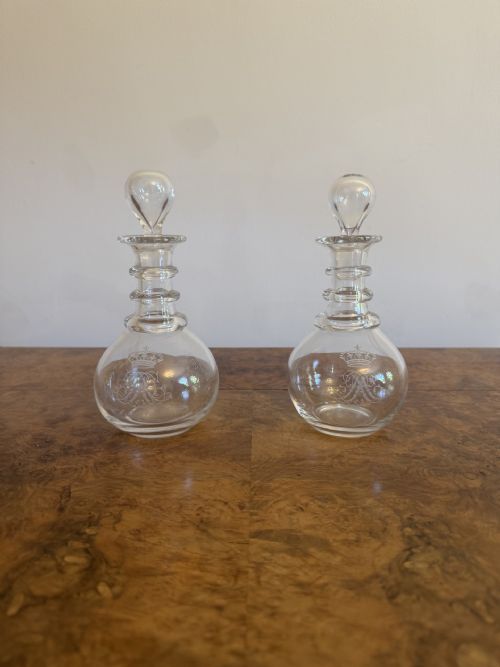
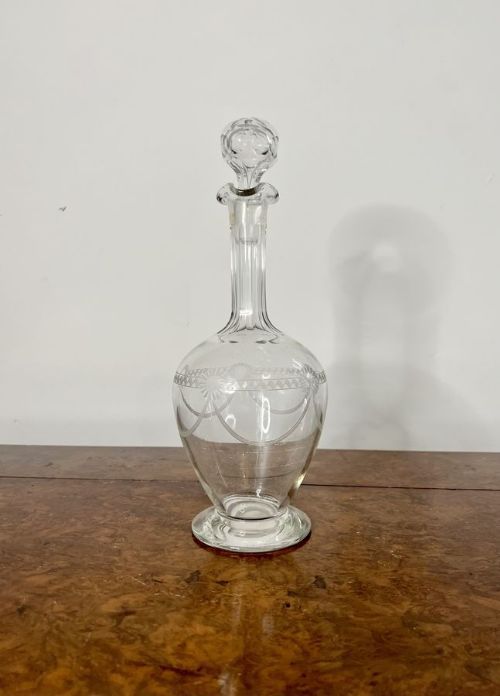


Cut Crystal Wine Bottle
A cut crystal wine bottle brings heavy refraction and polished weight to the dining table, offering a period vessel for serving wine.
Cut Crystal Wine Bottle
A cut crystal wine bottle search leads buyers directly to nineteenth-century and early twentieth-century decanters, carafes, and ewers. The inventory spans Georgian, Regency, Victorian, and Edwardian eras, reflecting changing domestic tastes in hosting and table service.
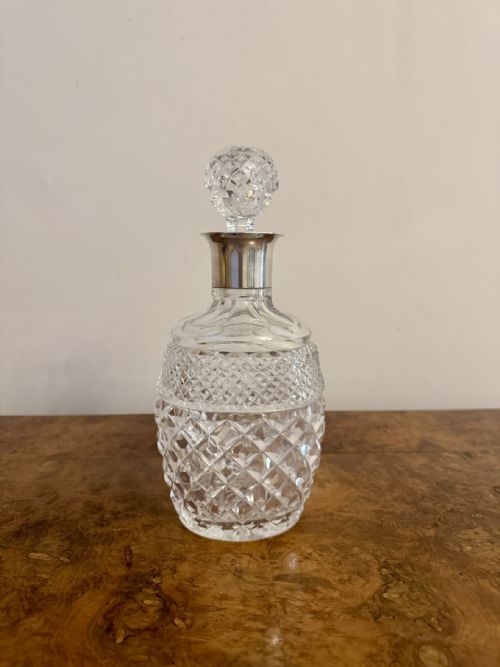
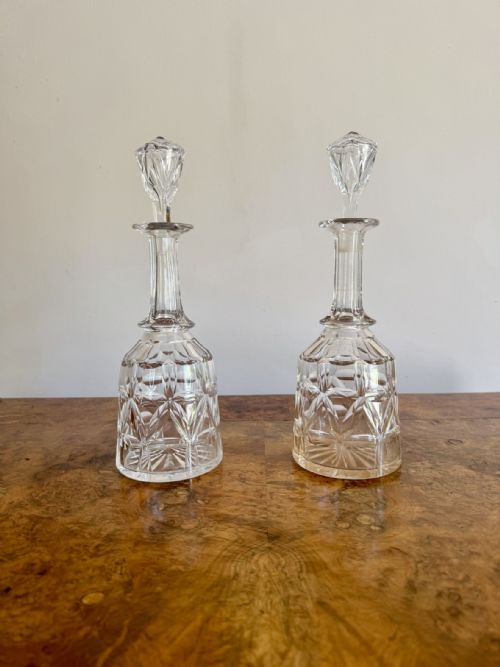
Most examples found here date from the Victorian and Edwardian periods, appearing frequently as individual vessels or matched pairs. These pieces combine utilitarian wine storage with decorative glass-cutting techniques designed to catch candle or gas light.
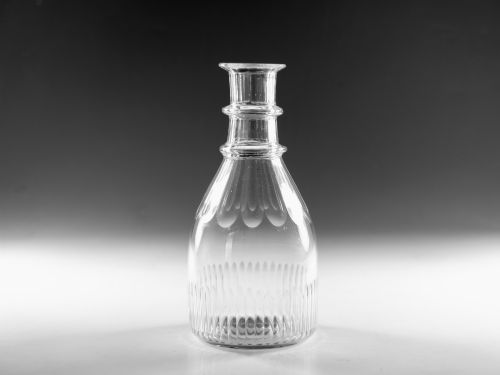
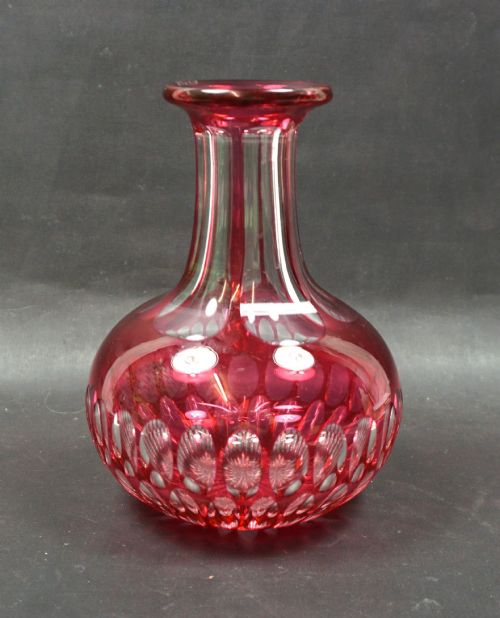
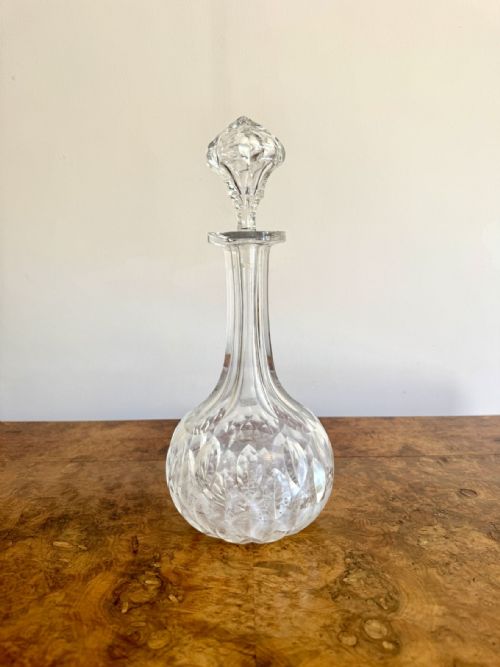
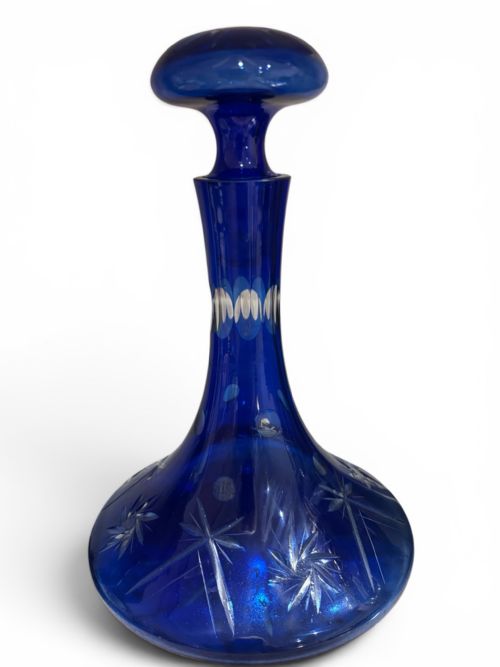
Formations range from traditional shaft and globe silhouettes to bell shapes and coloured overlay designs. Alongside standard clear glass, specimens in cranberry, ruby, and cobalt crystal demonstrate the broader palette utilised during the nineteenth century.
Materials and cutting methods
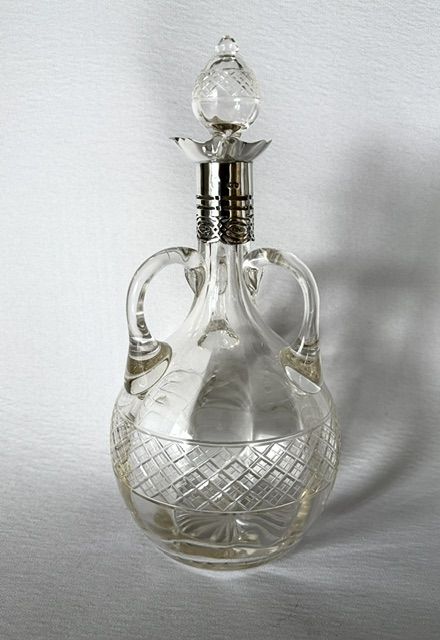
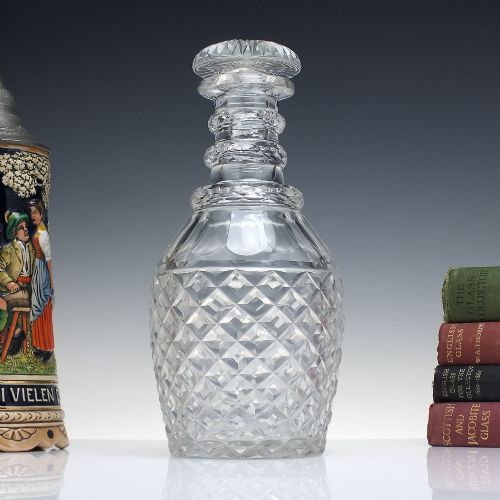
Makers utilised lead crystal, cut glass, and clear glass as primary materials, sometimes combining them with sterling silver collars, mounts, or gilt bronze. The heavy metal content in lead crystal allowed artisans to grind deep geometric or floral patterns into the surface without compromising the structural integrity of the vessel.
Coloured glass items often incorporated an overlay technique, fusing a thin layer of ruby, cranberry, or cobalt glass over a clear crystal core before cutting through the outer stratum. This method produced high-contrast optical effects where facets revealed the transparent metal underneath.
Object forms in the current selection include standard decanters, bell-shaped vessels, shaft and globe designs, ewers, and champagne coolers.
Distinctions in craftsmanship
Superior vessels display crisp, uniform facet cutting with sharp ridges and high optical clarity in the glass body. Lesser examples feature softer, rounded edges in the patterns and minor bubbles or inclusions trapped within the material during initial melting.
The integration of metal mounts, such as silver collars or gilt bronze handles, marks a clear tier in production values. Tightly fitted hardware and substantial weight denote a higher grade of manufacture intended for affluent dining rooms.
The Cut Crystal Wine Bottle Glossary
- Lead crystal
- Glass containing a significant proportion of lead oxide, which increases the weight, refractive index, and ringing tone of the vessel. This material allows for deeper and sharper facet cutting than standard soda-lime glass.
- Overlay
- A manufacturing method where a layer of coloured glass is applied over a clear crystal base. Artisans then cut through the coloured stratum to expose the transparent layer beneath, creating geometric patterns.
- Shaft and globe
- A traditional decanter silhouette featuring an elongated neck rising above a rounded globular body. This form provided stability on dining tables during the eighteenth and nineteenth centuries.
- Ewer
- A large jug with a wide spout and a curved handle, utilised for serving liquids at the table. These forms appear alongside standard decanters in nineteenth-century dining services.
- Hock decanter
- A tall, slender vessel traditionally designed for serving hock or white wine. These pieces frequently feature coloured glass bodies and extended necks.
Cut Crystal Wine Bottle: Frequently Asked Questions
What is a cut crystal wine bottle called?
In historical and antique contexts, these vessels are predominantly catalogued as decanters, carafes, or ewers rather than bottles. The terminology often reflects the specific era of manufacture and the presence of stoppers or pouring spouts.
Buyers exploring this category encounter various forms designed for holding and aerating wine at the dining table, ranging from Georgian carafes to Edwardian jugs.
How do I date a Victorian decanter?
Dating relies on observing the silhouette, the depth and style of the glass cutting, and any accompanying metal mounts. Victorian examples often display heavier facet cutting and may incorporate silver collars bearing hallmarks.
Earlier Georgian and Regency pieces tend to exhibit distinct pontil marks on the base and simpler, heavier proportions, whereas Edwardian items frequently show refined floral motifs and lighter framing.
Can I use antique decanters for wine?
These vessels were originally manufactured to hold and serve wine, making them suitable for contemporary use provided the interior is clean. Care must be taken with sudden temperature changes to avoid thermal shock to historic glass.
Hand washing is essential to preserve the polished exterior finish and any associated silver or gilt bronze mounts found on nineteenth-century specimens.
What does overlay mean in glass?
Overlay describes a technique where a coloured layer of glass is fused over a clear crystal body. Cutting away portions of the outer colour reveals the transparent crystal beneath.
This method created striking visual contrast in nineteenth-century pieces, particularly in cranberry, ruby, and cobalt colourways seen across the inventory.