


Crystal Liquor Bottle
A crystal liquor bottle holds spirits in heavy cut glass and silver, bringing weight and period presence to a sideboard.
Crystal Liquor Bottle
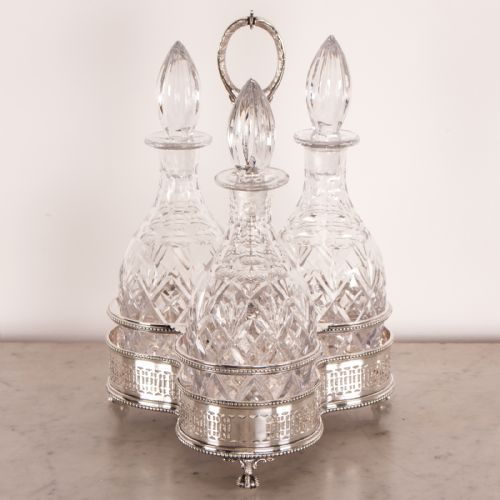
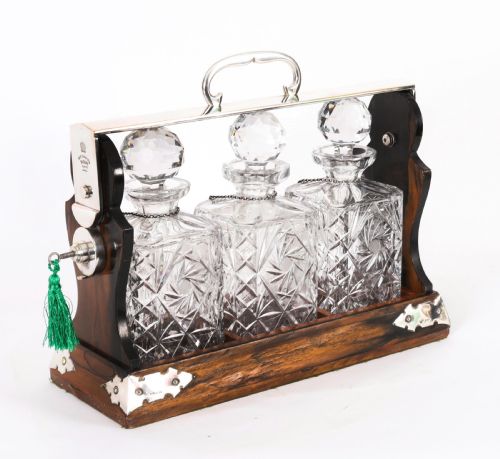
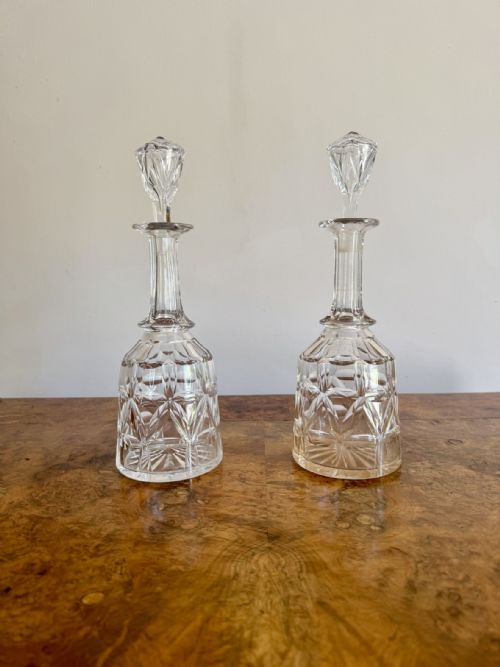
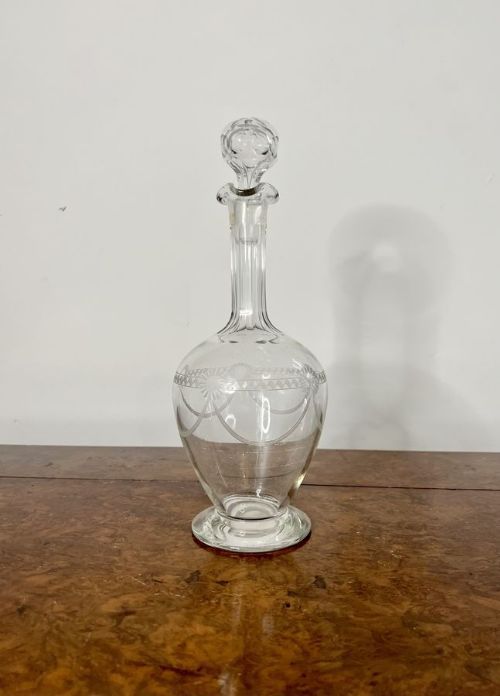
When you search for a crystal liquor bottle, you encounter vessels designed to hold and serve spirits from the nineteenth and twentieth centuries. These pieces appear as single bottles, paired sets, or fitted security frames known as tantaluses.
The versions most common on this page date from the Victorian and Edwardian eras, spanning from eighteen-eighty to nineteen-ten. They include bell-shaped forms, heavy spirit bottles, and multi-bottle sets housed in oak or coromandel wood stands.
Makers such as Walker & Hall, Betjemann, and James Powell produced these items in England, incorporating silver collars, stoppers, and locking mechanisms. Styles range from Regency cut lead crystal to later Art Deco designs.
Materials and construction
Makers shaped heavy lead crystal and glass through cutting, blowing, and optical moulding to catch the light. Heavy facets and engraved lettering identify pieces intended for specific spirits like brandy or whisky.
Mounts and collars utilise sterling silver, silver plate, and occasionally gilt bronze or brass. Wood frames use oak or coromandel to house decanter sets securely within locking tantalus mechanisms.
Listings on this site span the Victorian, Edwardian, and Art Deco periods, utilising cut glass, lead crystal, sterling silver, and oak.
Distinctions in quality
The weight and depth of the glass cutting determine the substance of the vessel. Heavier lead crystal holds sharper facets that refract light more clearly than thinner pressed glass alternatives.
Fittings and hardware separate standard items from superior examples. Hallmarked sterling silver collars, intact matching stoppers, and functioning locking mechanisms by known makers elevate a piece.
Walker & Hall·Betjemann·James Powell·Elkington·Freeman & Son Ltd·Philip Ashberry·Hukin and Heath·Mappin & Webb
The Crystal Liquor Bottle Glossary
- Tantalus
- A locking wooden frame that holds decanters securely while displaying the contents without allowing access without a key.
- Collar
- A metal band fitted around the neck of a bottle, often made of sterling silver and bearing hallmarks for date and maker.
- Optically blown
- A glass-making technique that creates subtle internal fluting or patterns within the body of the vessel.
- Stopper
- The ground glass or crystal plug that seals the neck of the decanter to preserve the spirit inside.
Crystal Liquor Bottle: Frequently Asked Questions
How do I identify a tantalus?
A tantalus consists of a wooden frame, often oak or coromandel, fitted with a metal locking bar that secures the stoppers of the decanters in place.
This security device prevented servants or guests from accessing the liquor without a key while keeping the bottles on display.
Are stoppers usually original?
Many pieces retain their original matching ground crystal stoppers, which were numbered to fit a specific bottle neck.
Replacements do occur, so checking that the ground glass seating matches the interior neck helps confirm authenticity.
What spirits were these made for?
Bottles frequently held whisky, brandy, or rum, sometimes indicated by engraved silver labels or cut glass inscriptions on the body.
Sets often included multiple decanters housed together in a stand or box to serve different drinks simultaneously.
How do I date an antique bottle?
Hallmarks on silver collars provide precise assay office letters and dates for the metal mounts attached to the glass.
Style indicators such as Edwardian cut patterns, Victorian oak frames, or Art Deco geometric lines further narrow the period of manufacture.