




Cut Crystal Trinket Box
A cut crystal trinket box holds dressing table pins and rings, bringing faceted brilliance and heavy glass weight to a bedside or vanity.
Cut Crystal Trinket Box
A cut crystal trinket box is a dressing table accessory designed to hold small valuables, rings, and pins. The form appears across the Georgian, Victorian, Edwardian, and Art Deco periods, alongside mid-century examples.
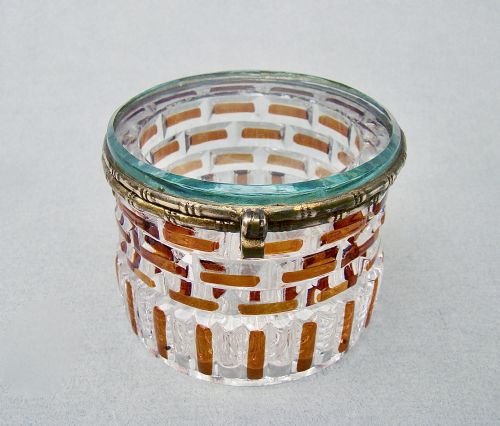
Most pieces seen here combine heavy cut glass or crystal bodies with metal mounts, hinged lids, and precious metal or tortoiseshell details. They function as both decorative objects and practical receptacles for everyday use.
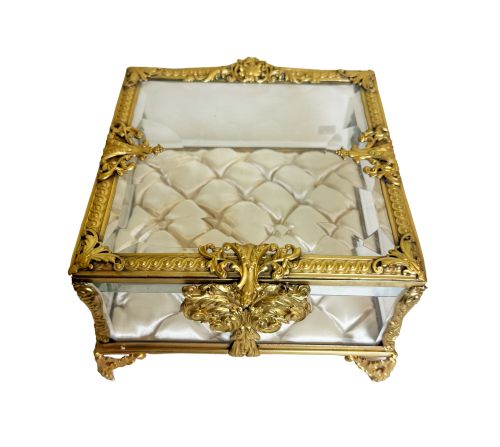
Origins range from English workshops to French makers like Baccarat, as well as German silversmiths. Forms vary from simple circular jars and rectangular caskets to heart-shaped boxes.
How they were made
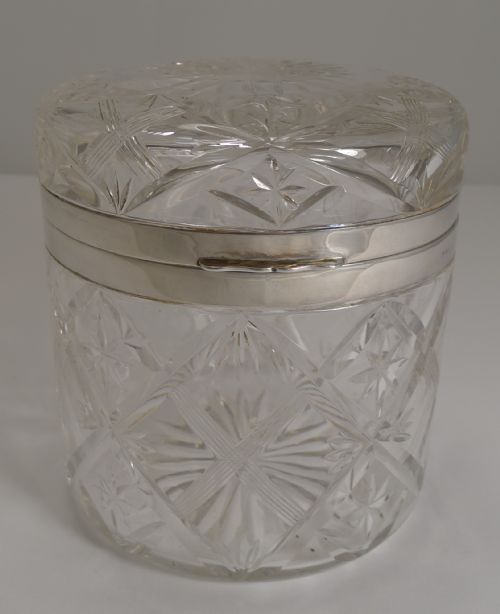
Makers cut geometric or floral facets into heavy crystal and glass blanks using abrasive wheels, creating deep refraction and weight. Metal frames in sterling silver, gilt bronze, or ormolu were then fitted to the rims and hinged lids.
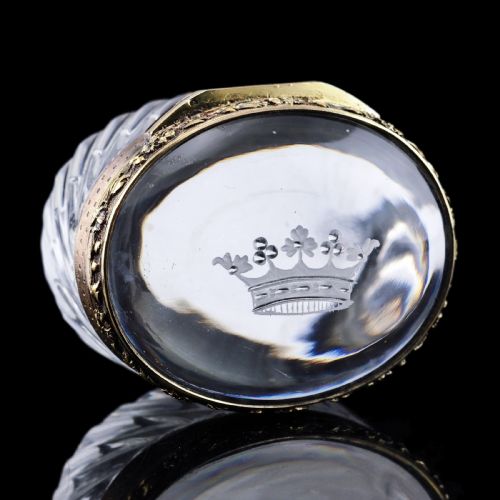
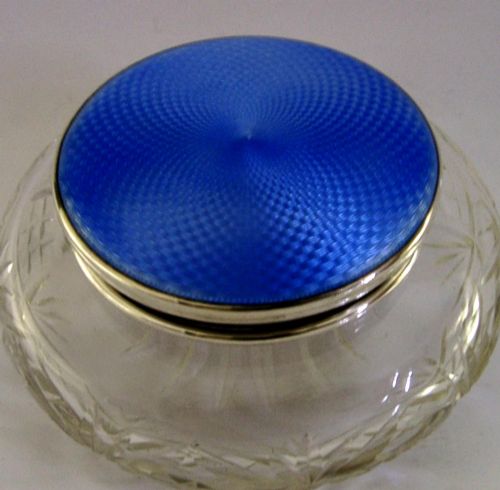
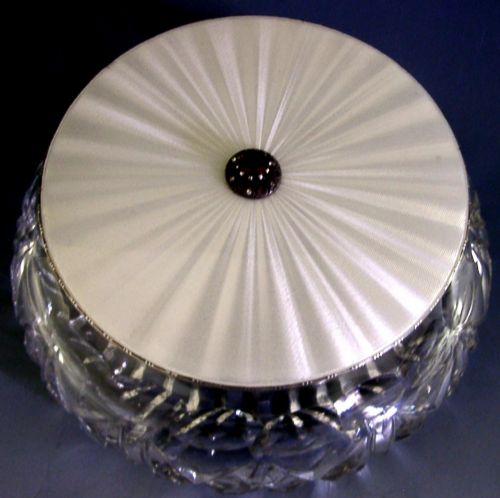
Some lids incorporate blue enamel, tortoiseshell, or silver-gilt coronets, secured to the glass body with precise mountings. French and English pieces demonstrate advanced glass-blowing and metal-casting techniques combined by specialist artisans.
Listings span the Georgian, Victorian, Edwardian, and Art Deco periods, featuring materials such as cut crystal, sterling silver, gilt bronze, and tortoiseshell.
What varies in quality
Quality rests in the crispness of the glass cutting, the depth of the facets, and the weight of the crystal body. Heavier glass with sharp, clean refraction sits at the upper end of the scale.
The metal mountings also dictate the tier of a piece, with thick sterling silver, fire-gilt ormolu, and detailed enamel work elevating the object above simpler silver-plated or unmounted examples.
Baccarat·Posen of Frankfurt and Berlin·Jonathan Douglas·Hoffman
The Cut Crystal Trinket Box Glossary
- Crystal
- A type of glass containing lead oxide, which increases brilliance, weight, and clarity. It allows for deeper and sharper facet cutting than standard soda-lime glass.
- Ormolu
- A gilded bronze technique used extensively in French decorative arts. It provides a rich gold-coloured metal mount for crystal caskets and boxes.
- Sterling silver
- An alloy of silver containing 92.5 percent pure silver and 7.5 percent other metals, commonly used for the lids and rims of dressing table jars.
- Enamel
- A glassy substance fused to metal through firing, often applied in blue to the sterling silver lids of Art Deco pots.
- Casket
- A larger, often more ornate box used for jewellery or precious trinkets, frequently mounted with gilt bronze frames or hinged metal mounts.
Cut Crystal Trinket Box: Frequently Asked Questions
What are cut crystal trinket boxes used for?
These boxes were traditionally placed on dressing tables to store rings, brooches, pins, and small personal valuables.
Today, they serve the same practical function while adding reflective sparkle and period character to modern dressing rooms or side tables.
How do I date a cut crystal box?
Dating relies on hallmarks on the silver mounts, the style of the glass cutting, and the overall aesthetic movement of the piece. Edwardian and Victorian examples often feature heavy floral or geometric crystal cuts with sterling silver tops.
Art Deco items from the 1930s lean towards streamlined geometric forms, sometimes incorporating coloured enamel or tortoiseshell alongside crisp silver and glass.
Are French and English boxes different?
French boxes from makers like Baccarat frequently utilise gilt bronze, ormolu, or heavy bronze frames paired with amber or clear crystal. They often have an architectural or ornate neoclassical presence.
English pieces more commonly feature sterling silver lids bearing Birmingham or London hallmarks, paired with traditional cut glass or crystal bodies.
How should I clean a cut crystal box?
Crystal bodies can be washed gently in lukewarm water with mild soap, using a soft brush to clear dust from deep facets. Care must be taken to keep moisture away from glued joints, tortoiseshell, or fragile enamel inserts.
Silver mounts require a dedicated polishing cloth, avoiding any contact between silver polish and the surrounding glass or delicate interior linings.