




Cut Crystal Stemware
Cut crystal stemware brings weight and clarity to the table through deep wheel-cut facets and ringing lead glass.
Cut Crystal Stemware
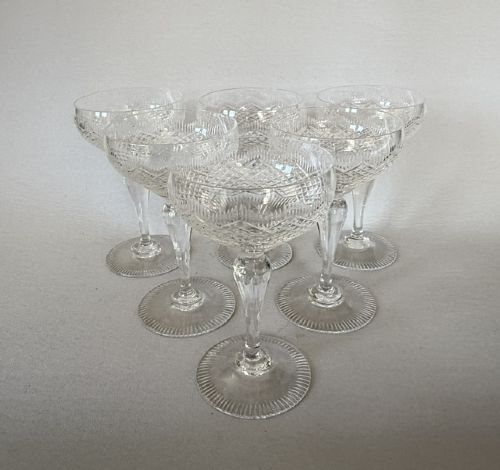
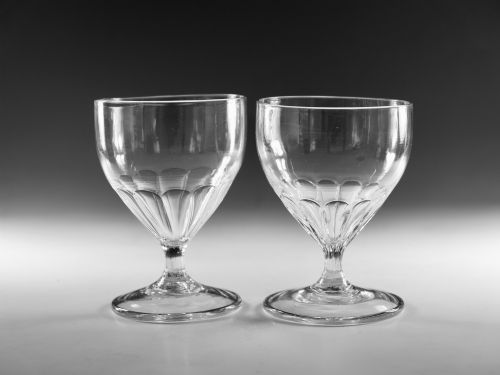
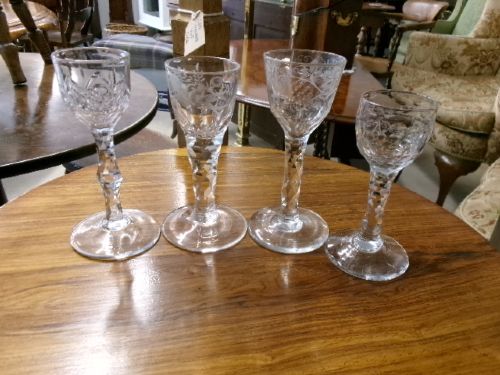
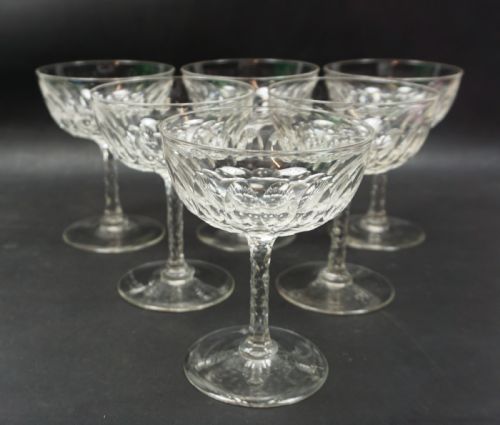
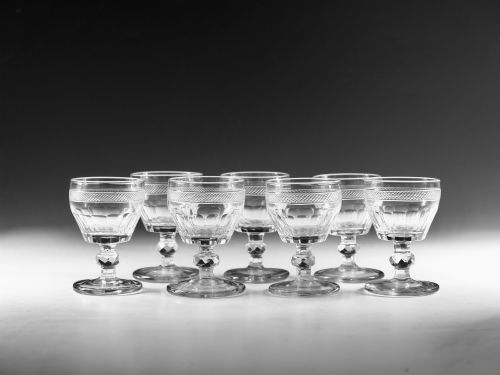
Cut crystal stemware encompasses drinking vessels formed from lead glass or crystal, shaped with stems and decorated using abrasive wheels to cut facets, flutes, and geometric patterns into the surface. When buyers search for cut crystal stemware, they encounter everything from eighteenth-century Georgian ale flutes and rummers to nineteenth-century Victorian wine glasses and twentieth-century Art Deco champagne coupes.
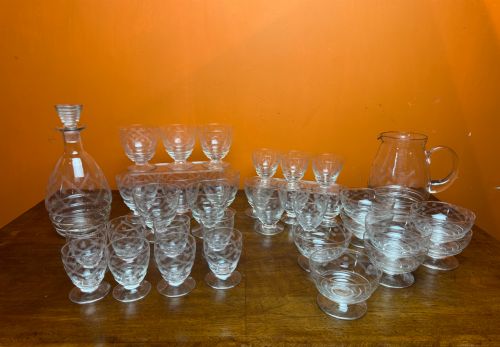
The selection ranges from individual commemorative goblets to large suites of matching drinking glasses intended for wine, champagne, liqueur, and port. Pieces span English, French, and Bohemian origins, displaying styles that move from Georgian facet-cutting and Regency hobnail designs through to Edwardian suites and modernist Vienna Secession forms.
Materials and Techniques
Maker workshops utilised lead glass and crystal matrices that allowed deep, sharp cutting without shattering the vessel wall. Artisans shaped bowls and stems by blowing molten metal into moulds or onto free-blown pontils before transferring the cooled pieces to the cutting shop.
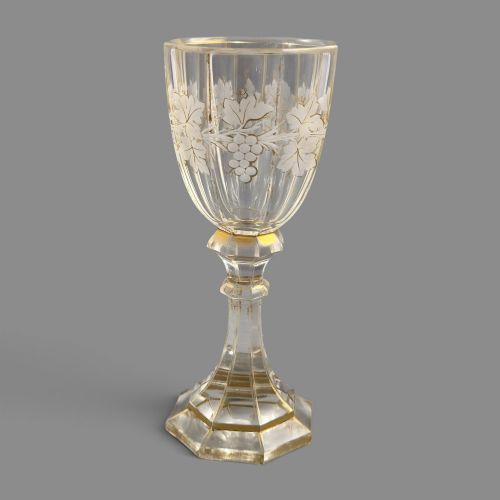
Decoration relied on iron and stone wheels fed with abrasive grit to grind away glass, followed by polishing wheels of wood, cork, or felt with putty powder to restore transparency to the cut facets. Engraved highlights, intaglio motifs, gilding, and cased layers of coloured glass over clear crystal were often added in specialised decorating studios.
Forms span wine glasses, champagne coupes, rummers, ale flutes, decanters, and complete drinking services.
Assessing Quality
Quality rests in the crispness of the wheel-cut edges, the symmetry of the facets, and the brilliance and weight of the crystal itself. Superior pieces exhibit sharp, precise geometric cuts that catch the light evenly without blurring or rounding at the ridges.
The proportion between bowl, stem, and foot dictates the visual balance, while the resonance of the metal when struck speaks to the lead content and density. Consistency across an assembled suite of glasses marks the output of skilled houses over commercial production.
Moser·Baccarat·Webb Corbett·Saint-Louis·Stevens & Williams
The Cut Crystal Stemware Glossary
- Lead Crystal
- Glass containing a high proportion of lead oxide, which increases the weight, refractive index, and ringing tone of the vessel. This material allows deeper and sharper cutting than standard soda-lime glass.
- Facet Cut
- A surface pattern composed of flat, polished planes ground into the exterior of the glass. These geometric faces multiply internal reflections to increase sparkle.
- Cased Glass
- A method where a layer of coloured glass is fused over a clear crystal core before cutting. The cutting wheel exposes the clear layer underneath to create high-contrast patterns.
- Pontil Mark
- A rough scar left on the base of a hand-blown vessel where the iron rod was detached after forming. Its presence indicates manual manufacture before modern grinding smoothed the underside.
- Rummer
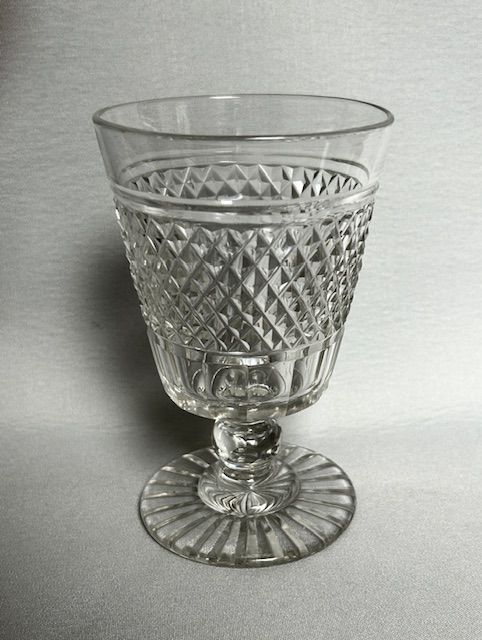
- A capacious, short-stemmed drinking glass popular in the Georgian and Regency periods for ale, cider, or wine. They typically feature heavy bucket bowls and thick, stable feet.
Cut Crystal Stemware: Frequently Asked Questions
How do I date antique cut crystal?
Dating relies on stylistic shifts in cutting patterns, bowl shapes, and the presence or absence of pontil marks on the base. Eighteenth-century pieces often feature simpler facet stems and thick metal, while nineteenth-century examples display heavier hobnail cutting and larger matching suites.
Techniques such as intaglio engraving, acid-etching, and coloured cased overlays point towards specific decades from the Victorian era onward. Comparing form and foot construction against known period examples helps narrow the decade of manufacture.
What is the difference between crystal and glass?
True crystal contains metallic oxides, traditionally lead oxide, which increases density, light dispersion, and weight compared to standard soda-lime glass. This high lead content gives the material its characteristic refractive brilliance and clear musical ring when tapped.
Legislation and trade standards regulate what can be sold as crystal based on density and refractive index. Historical pieces often demonstrate high lead weight naturally through their substantial feel in the hand.
How do I care for antique crystal?
Cleaning requires warm water, mild liquid detergent, and a soft cloth to avoid scratching the polished surfaces. Hand washing prevents the harsh chemicals and high heat of dishwashers from clouding or etching the crystal.
Stands and drying mats should be padded to protect the fragile rims and delicate stems from impact. Storing glasses upright rather than resting on their rims prevents stress fractures along the lip.