
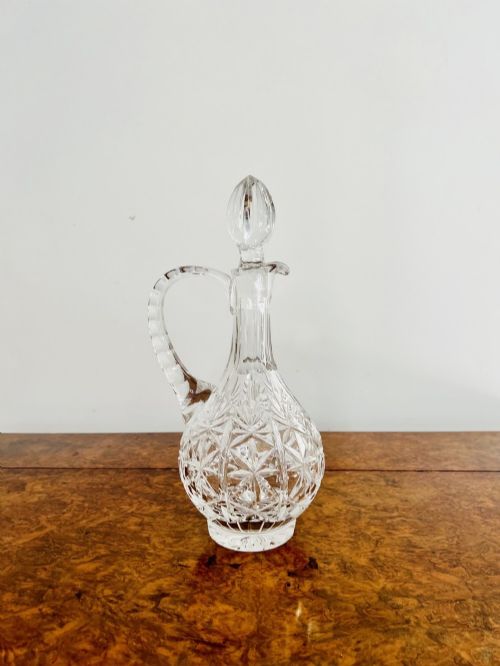
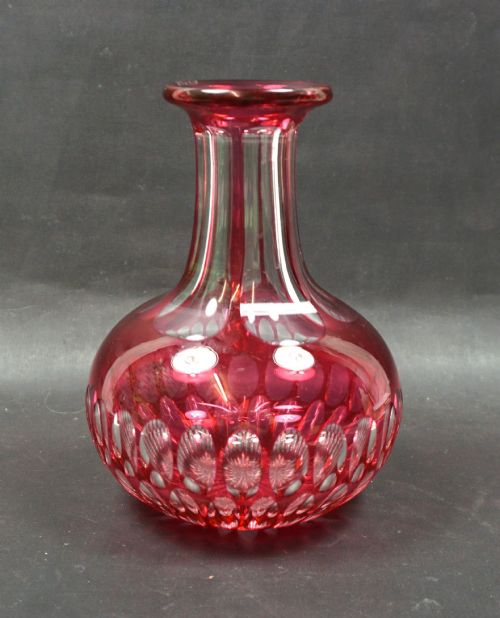
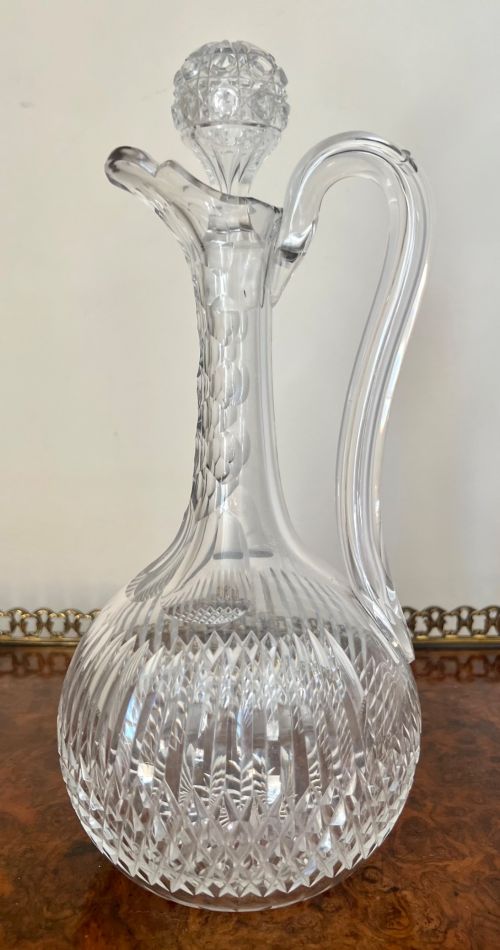
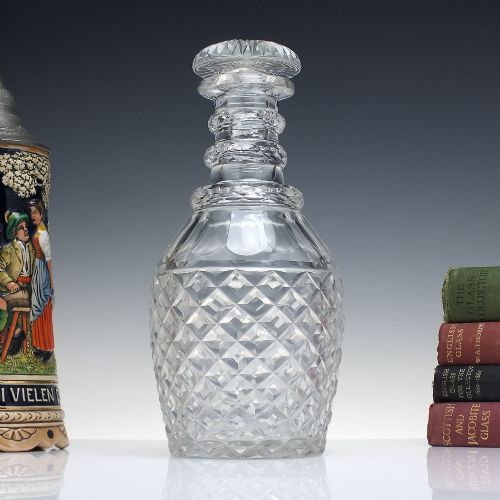
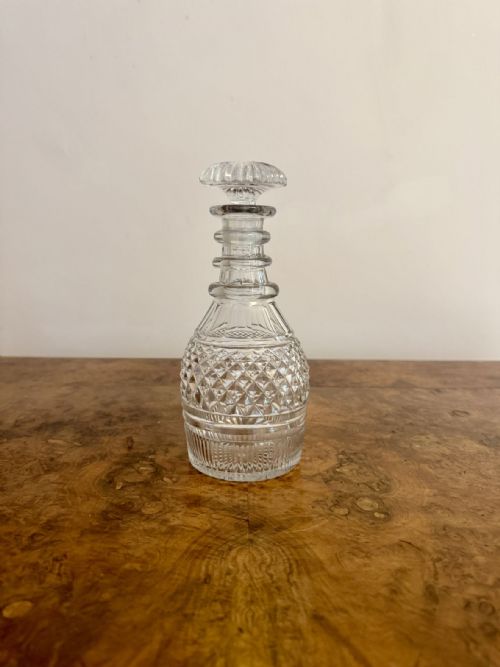
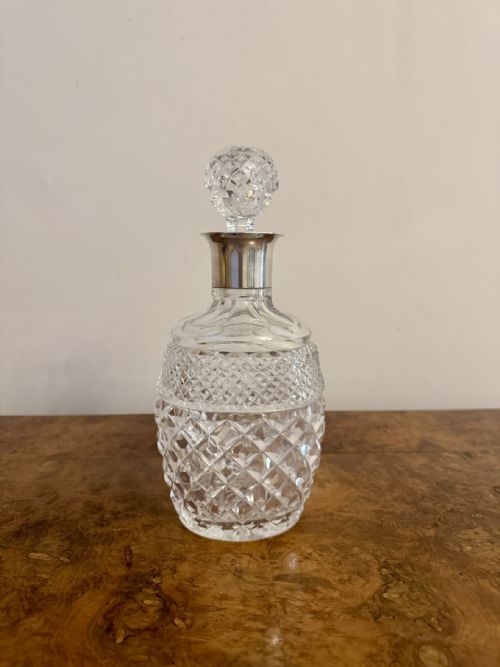
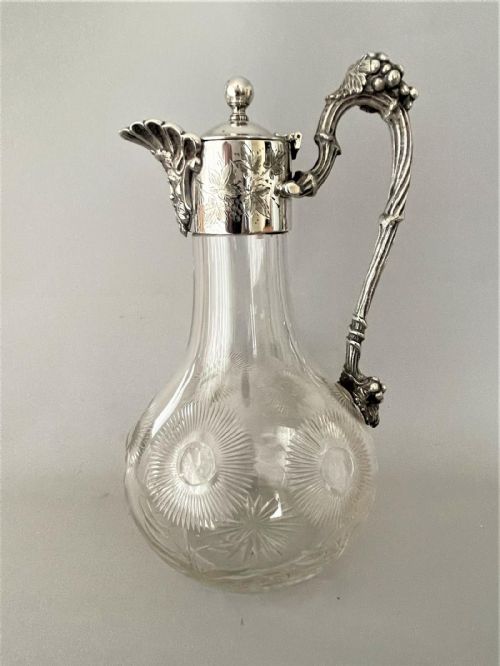
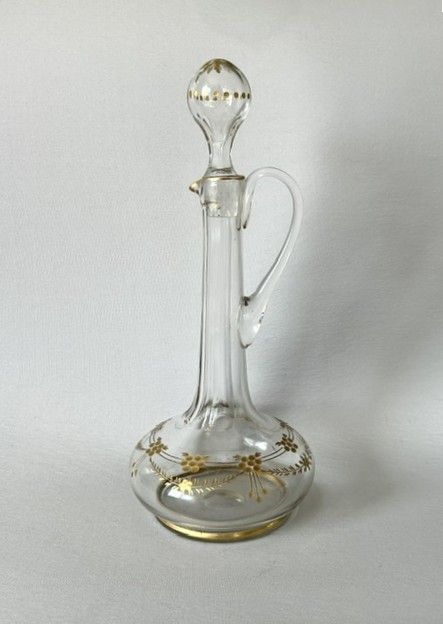
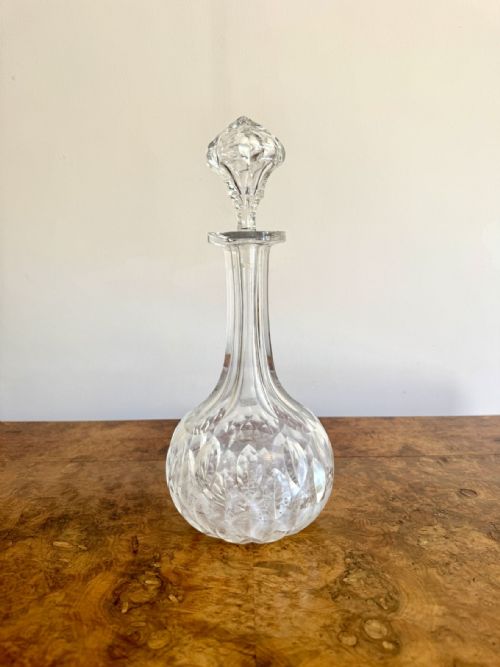
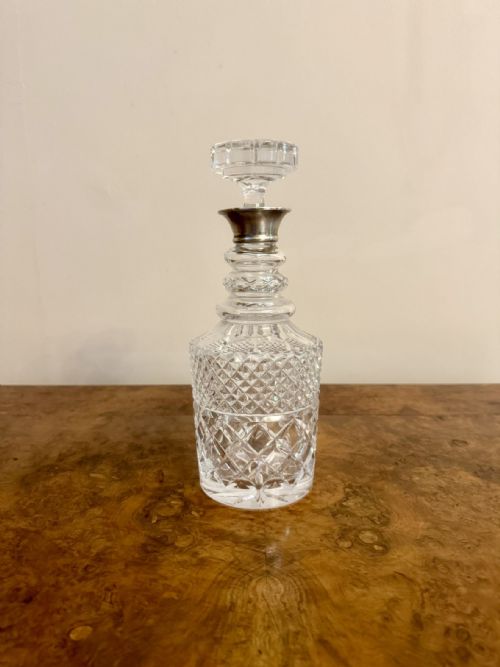
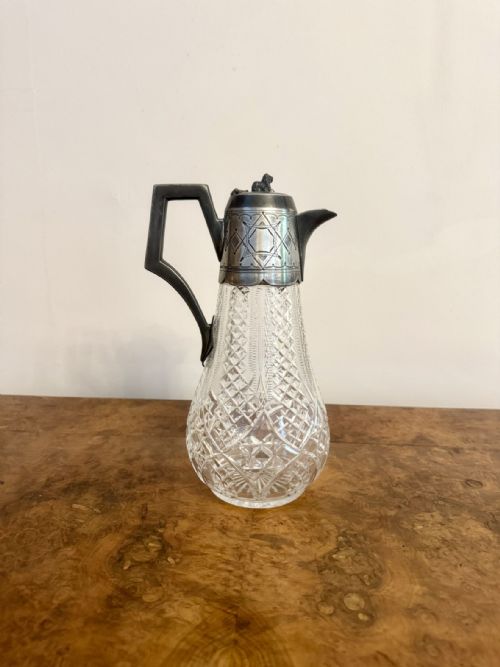
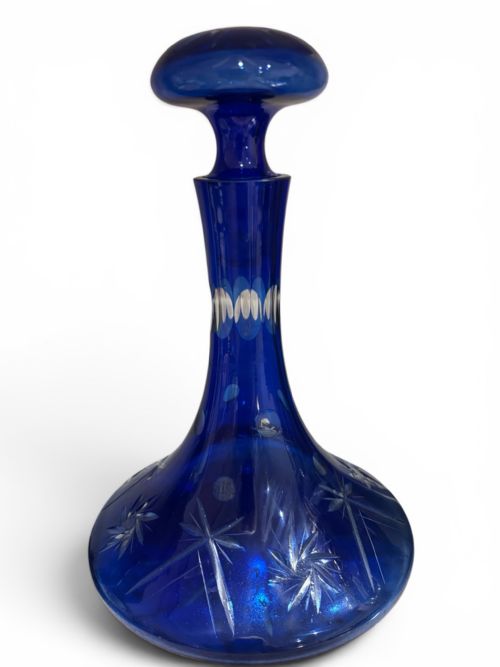
Cut Crystal Carafe
A cut crystal carafe holds table wine or water with an impressive weight and brilliant refractive sparkle.
What these pieces are
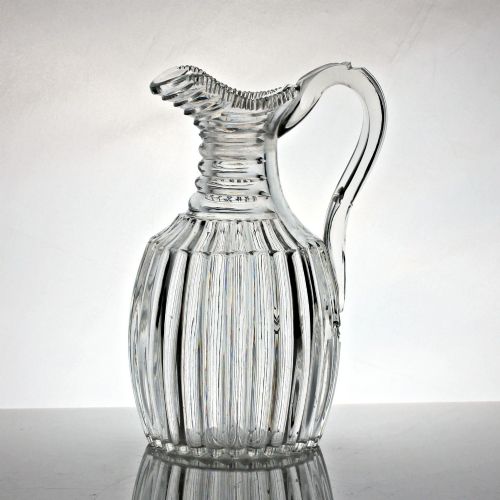
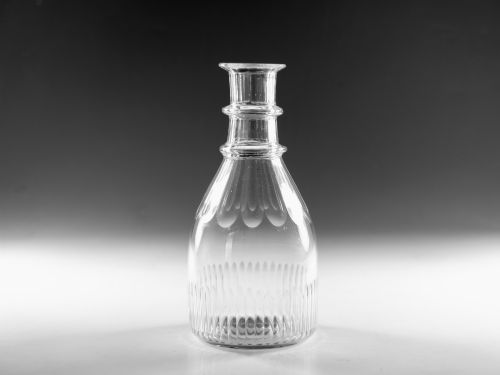
A cut crystal carafe serves as a vessel for serving wine or water at the table, combining functional utility with decorative brilliance. The items gathered under this heading span from the Georgian period through the Edwardian and George V eras up to the mid-century modern design of nineteen sixty.
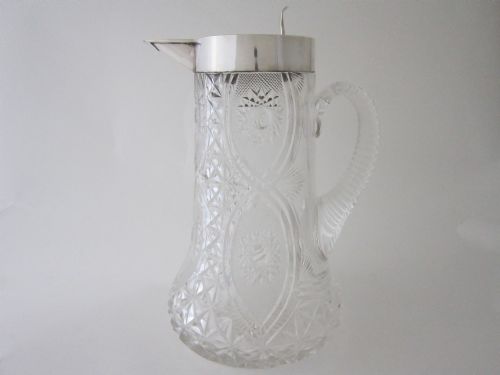
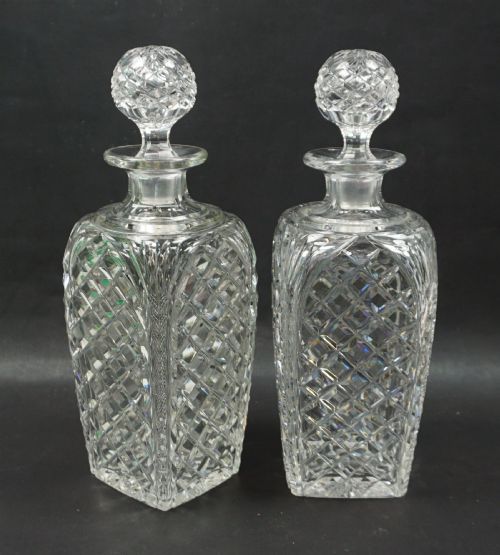
You are most likely to encounter decanters and jugs alongside traditional carafes, fashioned from lead crystal and cut glass. These pieces frequently incorporate sterling silver mounts or collars, bridging the gap between utilitarian drinkware and formal dining accessories.
How they were made
The bodies of these vessels are formed from heavy glass and lead crystal, shaped by blowing or moulding before the cold-working process begins. Skilled artisans then apply wheel-cutting techniques to carve geometric patterns, flutes, and facets deep into the exterior surface.
Metal components such as silver collars are securely fitted to the glass necks, adding a contrasting gleam and structural reinforcement. The union of cut glass and sterling silver relies on precise metalworking and secure adhesives to withstand daily handling.
Every carafe holds the quiet ghost of a Victorian dinner party, waiting patiently to pour another glass.
What varies in quality
The distinction between standard vessels and superior examples lies in the depth and clarity of the cutting. Deeper, crisper facets catch the light more effectively, while heavier lead crystal offers a resonant ring and greater heft in the hand.
The integration of precious materials like sterling silver elevates a piece beyond simple glasswork. Better examples demonstrate meticulous alignment between the silver collar and the glass rim, showing the maker's commitment to balanced proportions.
Royal Doulton
The Cut Crystal Carafe Glossary
- Lead crystal
- Glass containing a significant percentage of lead oxide, which increases weight, clarity, and the dispersion of light.
- Sterling silver
- An alloy of silver containing ninety-two point five percent silver and seven point five percent other metals, utilised here for collars and mounts.
- Facet
- A flat surface cut into the glass to reflect light and create geometric patterns.
- Decanter
- A vessel used to hold and serve liquids, often featuring a fitted stopper, closely related to the carafe form.
Frequently Asked Questions
What is a cut crystal carafe used for?
These vessels are traditionally used for holding and serving table wine, spirits, or water during formal meals and gatherings. The wide base allows wine to breathe, while the narrow neck provides a secure grip for pouring.
Beyond functional dining use, they serve as decorative display items on sideboards and drinks trolleys, catching ambient light through their intricate cut facets.
How do I date a glass carafe?
Dating relies on observing stylistic markers, manufacturing techniques, and any accompanying metal fittings. Georgian pieces often display distinct pontil marks on the base and simpler, heavier hand-cut motifs.
Later Edwardian and George V examples frequently feature marked sterling silver collars that provide precise hallmarked dates. Mid-century items reflect streamlined modern aesthetics typical of the nineteen sixties.
How do I clean an antique carafe?
Cleaning requires gentle hand washing with warm water and mild detergent, avoiding sudden temperature changes that can crack aged glass. Bottle brushes with soft bristles help reach interior residue without scratching the delicate surfaces.
Sterling silver collars should be polished with a specialised cloth, taking care not to let harsh chemical polishes come into contact with the glass or crystal body.
Are these pieces safe for daily use?
Most antique and vintage vessels remain entirely functional for serving beverages, provided they are handled with the care appropriate for heavy crystal and delicate silver. Hand washing is essential to preserve the integrity of both the glass and any metal mounts.
Modern dishwashers should be strictly avoided, as harsh detergents and high heat will permanently cloud the crystal and damage the silver components.