



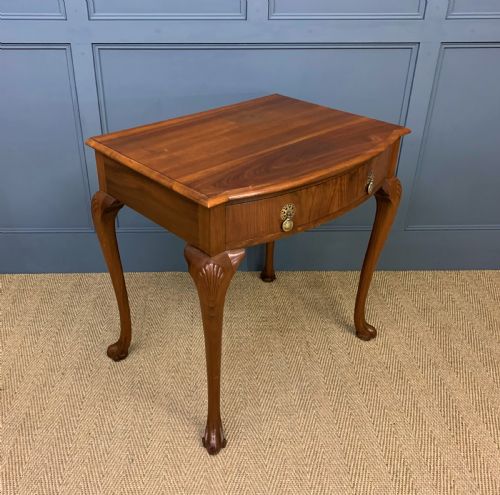
Curved Walnut Hall Table
A curved walnut hall table brings warmth and distinct grain to a narrow space, offering a functional surface with exceptional presence.
Curved Walnut Hall Table
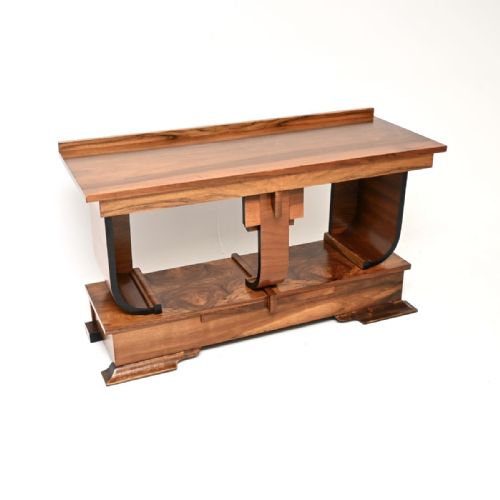
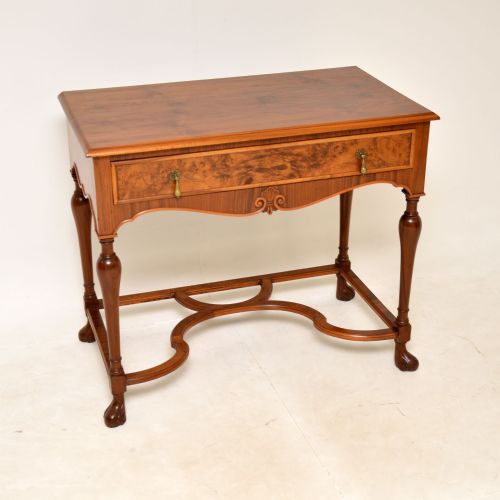
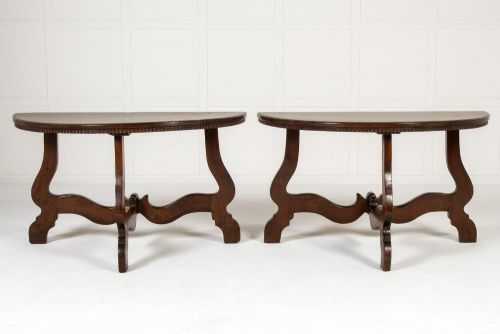
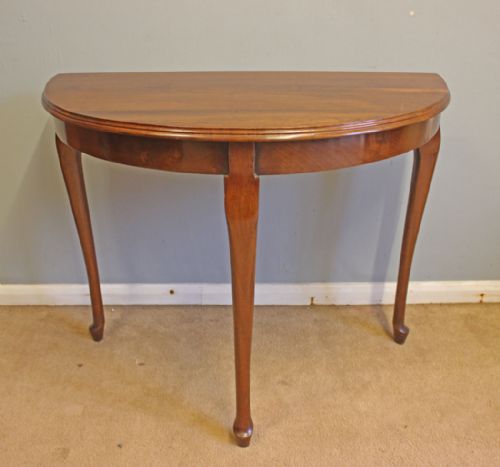
When you search for a curved walnut hall table, you encounter console and side tables designed to fit against a wall in an entrance or corridor. These pieces utilise various figures of walnut timber and frequently adopt demi-lune, serpentine, or bow-fronted shapes.
The selections available range from 18th century Italian examples to 19th century revival pieces and 20th century Art Deco designs. Console tables dominate the selection, offering shallow depths suited to hallways alongside occasional side and lamp tables.
Makers such as Hille and Maple and Co appear within the records alongside uncredited pieces spanning several centuries. Styles stretch from Queen Anne and Rococo revivals to French Empire and clean-lined 1930s modernism.
How they were made
Cabinet makers utilised solid walnut and decorative veneers including burr and figured walnut over secondary timbers. Surfaces were polished to highlight the natural figuring of the wood.
Brass fittings appear as mounts or hardware on specific period examples, whilst structures rely on traditional joinery methods suited to serpentine and demi-lune forms. Ebonised wood occasionally provides contrast to the warm brown tones of the walnut.
Some nineteenth-century makers evidently enjoyed hiding secrets inside their timber, though most content themselves with holding a brass lamp.
What varies in quality
The distinction between standard examples and top quality pieces rests upon the selection of veneer and the crispness of the carving or shaping. Figured and burr walnut surfaces display complex grain patterns that require expert matching across the curved top.
Design attribution to established firms like Hille or Maple and Co elevates a piece above anonymous workshop production. Furthermore, the handling of difficult forms such as serpentine fronts and demi-lune radiuses demonstrates the maker's technical skill.
Hille·Maple and Co
The Curved Walnut Hall Table Glossary
- Burr walnut
- A wood veneer taken from the wart-like growths on walnut trees, prized for its swirling, highly ornamental grain pattern. It provides a rich texture on table tops.
- Demi-lune
- A half-moon shape used for tables designed to sit flat against a wall. This format saves floor space in narrow hallways.
- Serpentine
- A gently undulating line featuring a convex centre flanked by concave curves. It adds visual movement to the front edge of a console table.
- Console table
- A table supported against a wall by console brackets or legs. These items are specifically proportioned for narrow rooms like halls and corridors.
- Ebonised wood
- Timber treated to resemble ebony through staining or painting black. It often accents walnut furniture to create contrast.
Curved Walnut Hall Table: Frequently Asked Questions
Where should I place a curved walnut hall table?
These tables suit narrow entrance halls and corridors because their shallow footprints and curved edges prevent obstruction.
They also function effectively in reception rooms as side or console surfaces beneath a mirror.
How do I identify an Art Deco console table?
Art Deco pieces from the 1920s and 1930s typically feature clean geometric lines combined with highly figured walnut veneers.
They often omit heavy historical carving in favour of smooth, sweeping curves and minimalist frames.
What is the difference between a console and a side table?
Console tables are specifically designed to stand flat against a wall, frequently featuring shaped tops such as demi-lune or serpentine curves.
Side tables can often stand freestanding or possess four uniform sides, though the terms overlap in older listings.
How do I care for walnut veneer?
Keep walnut furniture away from direct sunlight and heat sources to prevent the wood and underlying glue from drying out.
Dust with a soft, dry cloth and avoid silicone-based polishes that can build up on the surface over time.