

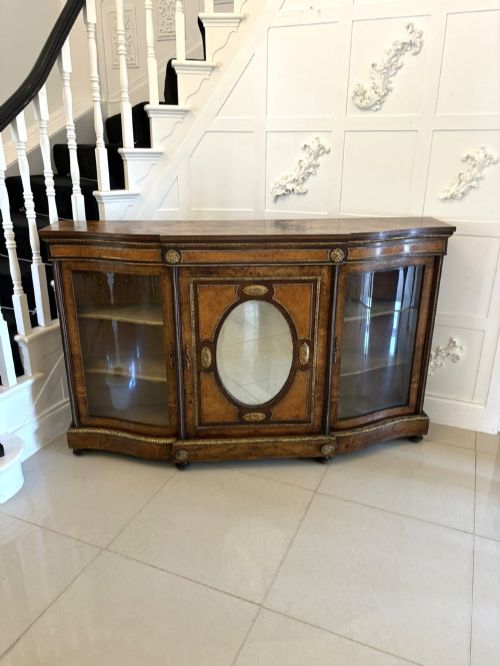
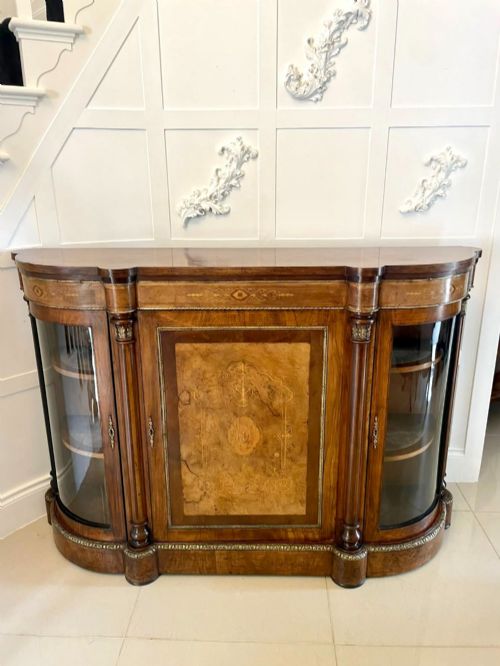
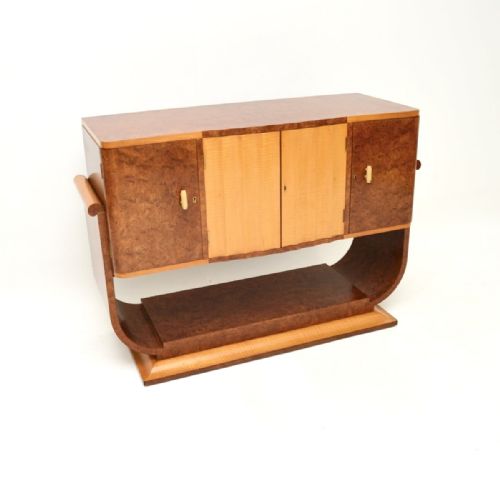
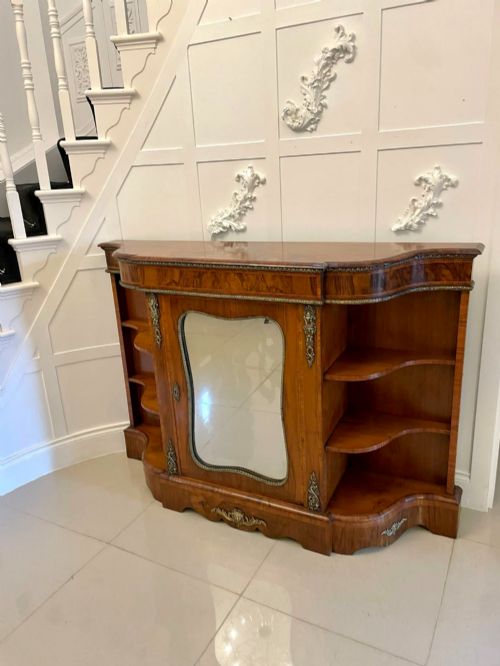

Curved Walnut Credenza
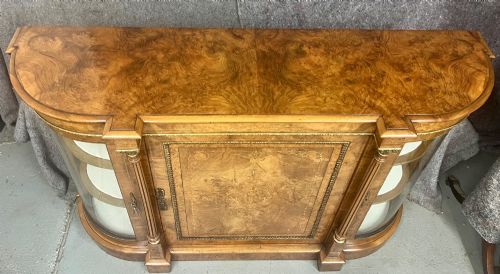
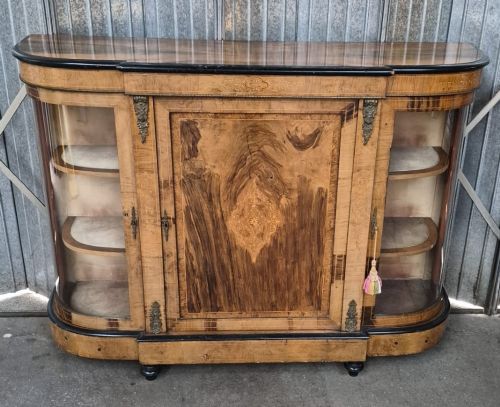
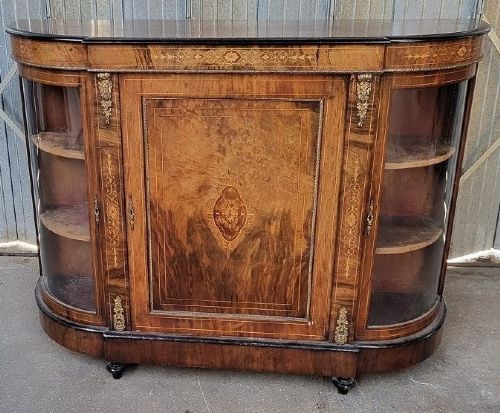
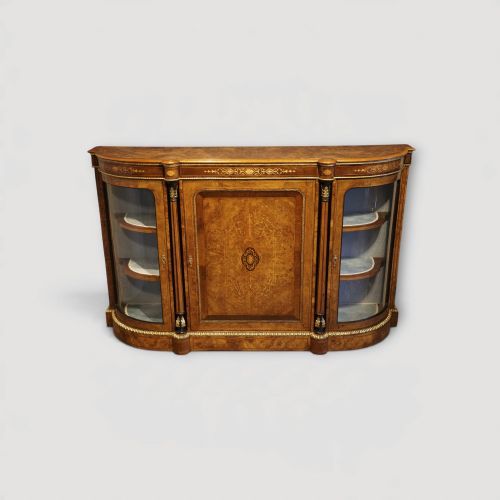
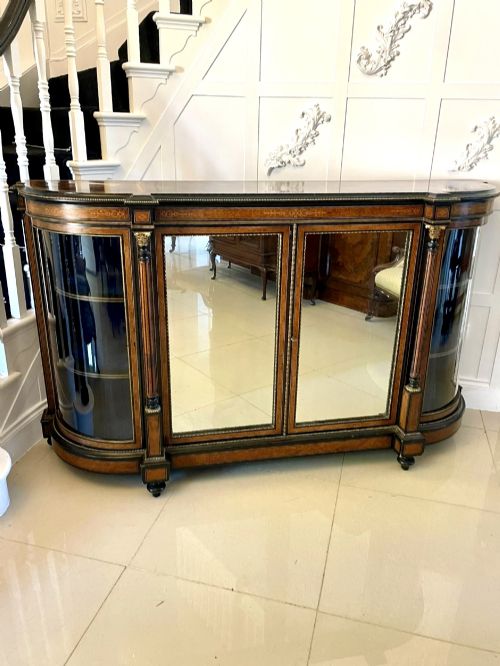
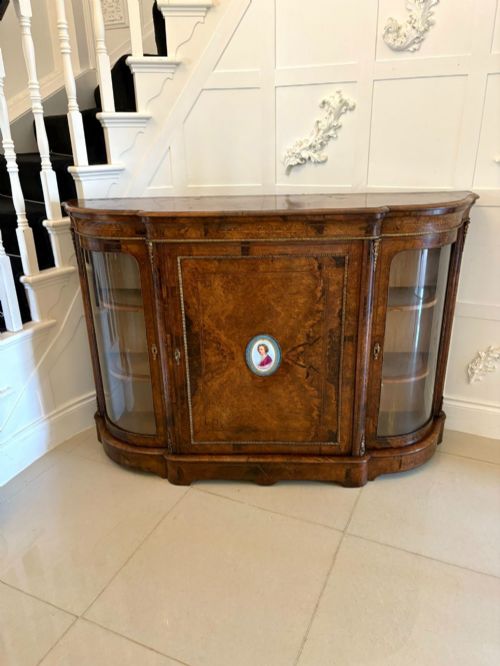
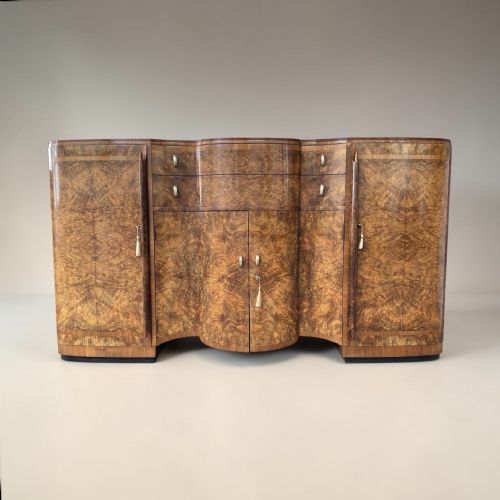
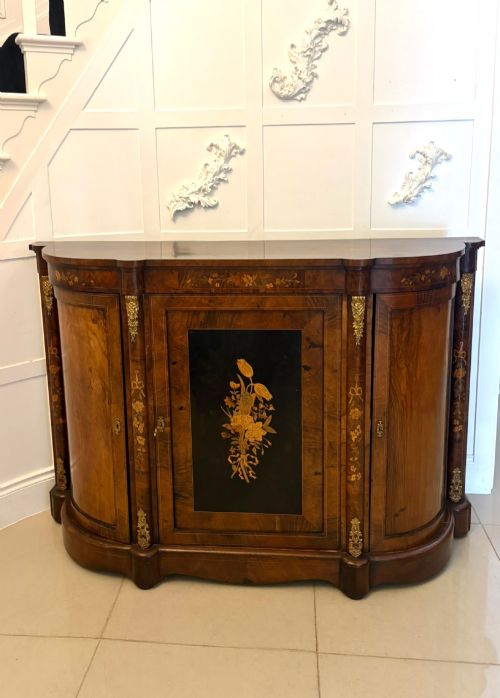
These curved walnut credenza pieces combine rich burr veneers and ornate mounts, offering a sophisticated focal point for a formal interior.
Curved Walnut Credenza
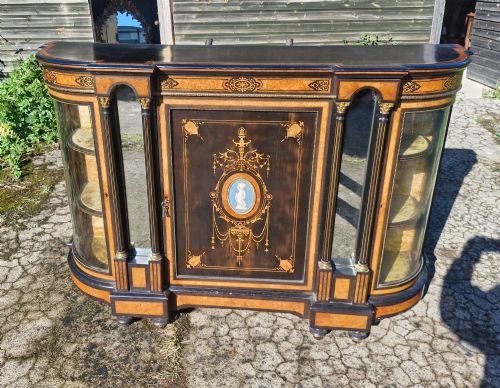
A curved walnut credenza typically presents as a low, freestanding side cabinet or sideboard designed for display and storage. The examples on this page span the Victorian and Art Deco eras, originating predominantly from British and French workshops during the nineteenth and early twentieth centuries.
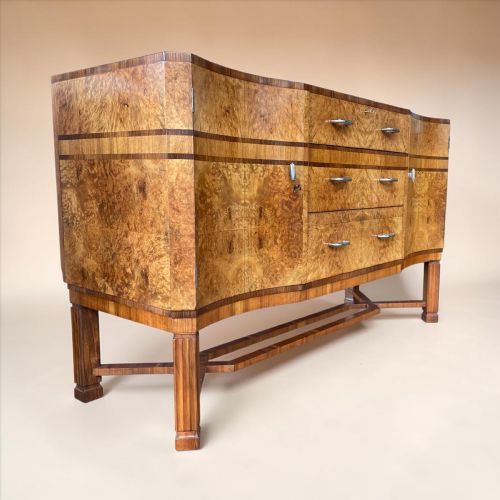
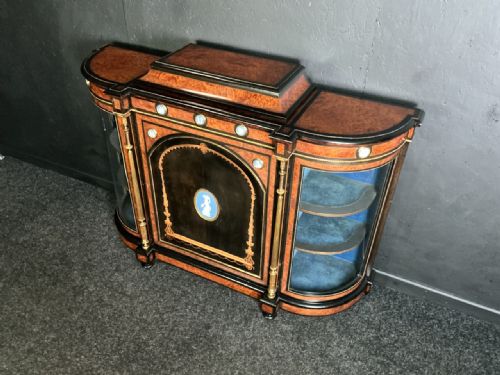
Buyers encounter substantial Victorian pieces featuring glazed doors and central cabinets, alongside streamlined Art Deco designs from the 1920s and 1930s. Forms range from serpentine sideboards to console tables and marble-topped buffets, utilising shaped timbers to soften rigid room layouts.
Materials and Technique
Cabinetmakers utilised burr walnut and plain walnut veneers over solid carcases, often highlighting the grain through book-matching and symmetrical panel layouts. Inlays of boxwood, satinwood, and sycamore provide contrasting geometric or floral details across the primary surfaces.
Metalwork and ceramics complete the construction, with ormolu mounts, brass banding, and porcelain plaques integrated into the facades. Marble tops appear on several continental and revival examples, while glass panels protect the interior shelving of display cabinets.
Curved Walnut Credenza Retail Price Guide 2026
Typical asking prices for curved walnut credenza among the pieces listed under this phrase on Sellingantiques today, from the lower quarter to the upper quarter. They describe what is for sale here now, not the wider market.
Several Victorian credenzas hide delicate floral marquetry so detailed that individual butterfly wings appear inlaid in contrasting boxwood.
Distinctions in Execution
The standard of a curved walnut credenza rests on the selection of the veneer and the crispness of the marquetry. Superior pieces exhibit deeply figured burr walnut with meticulously aligned grain patterns, whereas simpler versions rely on plain timber surfaces with minimal inlay.
Makers' marks and hardware further differentiate the stock, with signed pieces by notable firms commanding attention for their refined ormolu mounts and precise joinery. The complexity of the curved glass and the depth of the floral marquetry separate standard production items from exhibition-grade commissions.
Maurice Adams·Hille·Maison Gagneau·Gillow·Harry and Lou Epstein·Hamptons of Pall Mall London·Bowman Brothers
The Curved Walnut Credenza Glossary
- Credenza
- A low cabinet or sideboard designed for domestic storage and display, frequently fitted with glass doors and decorative mounts. These pieces anchor dining rooms and reception spaces.
- Burr Walnut
- Timber taken from the growth excrescences of walnut trees, yielding intricate, swirling grain patterns. Cabinetmakers prize this veneer for high-status furniture.
- Ormolu
- Gilded bronze mounts applied to the corners, feet, and friezes of cabinets. This decorative metalwork adds sculptural relief to dark wood surfaces.
- Marquetry
- Inlaid patterns of contrasting wood veneers assembled to form pictorial or geometric designs. Artisans cut these elements precisely to fit flush into the primary timber.
- Serpentine
- A curved contour featuring a convex centre flanked by concave sweeps. This shaping requires expert joinery to maintain structural integrity along the front of the cabinet.
Curved Walnut Credenza: Frequently Asked Questions
What is a curved walnut credenza used for?
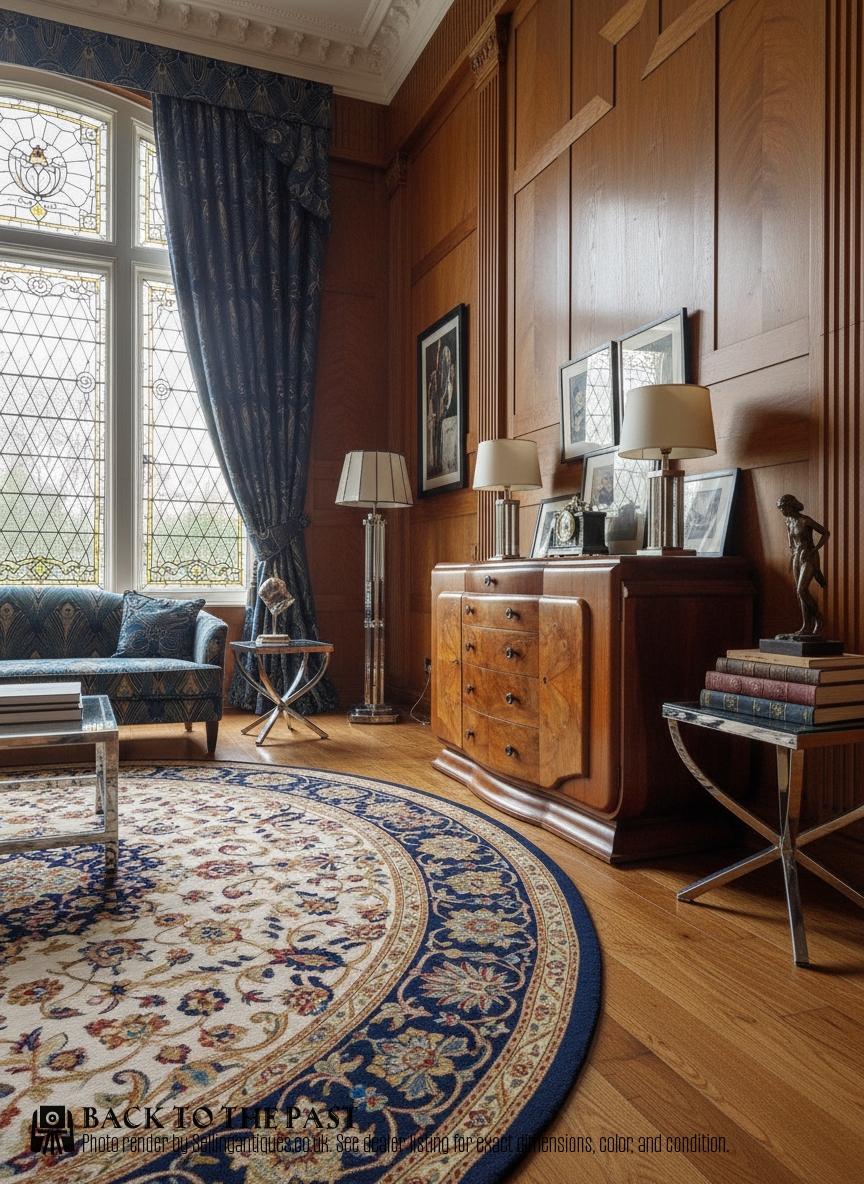
These cabinets serve as decorative storage units in dining rooms, hallways, and drawing rooms. Interior shelving accommodates glassware and ceramics while the top surface displays lamps and ornaments.
In period settings, they function as focal points that balance formal room proportions. The enclosed compartments keep items dust-free and out of sight.
How do I date a curved walnut credenza?
Dating relies on stylistic markers such as Victorian marquetry, ormolu mounts, and classical revival motifs contrasted against the clean, geometric lines of 1930s Art Deco pieces. Construction methods and secondary timbers inside the cabinet also indicate the decade of manufacture.
Examining the type of veneer work and hinges helps differentiate mid-nineteenth-century examples from early twentieth-century revivals. Maker stamps or signatures provide definitive chronological anchors.
Where should I place a curved walnut credenza?
Position these cabinets against a blank wall in a spacious reception room or hallway where the curved silhouette can be appreciated from multiple angles. Avoid placing them in direct sunlight to protect the walnut veneer from fading.
Ensure adequate clearance around doors and drawers so they open fully without obstruction. Pairing the cabinet with neutral walls allows the intricate wood grain to stand out.
How do Victorian and Art Deco credenzas differ?
Victorian credenzas typically feature elaborate floral marquetry, Ormolu mounts, glazed side cabinets, and serpentine or bow-front shapes influenced by French revival styles. They emphasise rich ornamentation and complex timber figuring.
Art Deco examples lean towards streamlined forms, pairing burr walnut with contrasting woods like sycamore and omitting heavy metal mounts. Their aesthetic prioritises geometric simplicity and smooth, uninterrupted planes.