

Curved Study Table
A curved study table brings elegance to a room, offering practical writing space combined with flowing serpentine lines.
Curved Study Table
When searching for a curved study table, buyers encounter a variety of forms including kidney-shaped desks, Carlton House writing desks, and cylinder desks. These pieces span periods from the eighteenth century through the Victorian, Edwardian, and Art Deco eras, reflecting shifting tastes in workspace design.
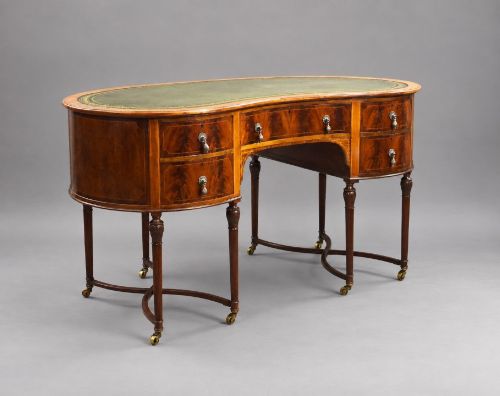
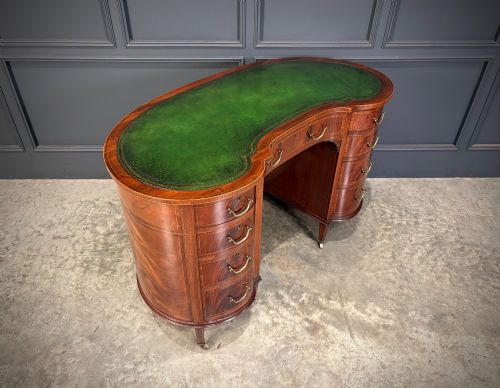
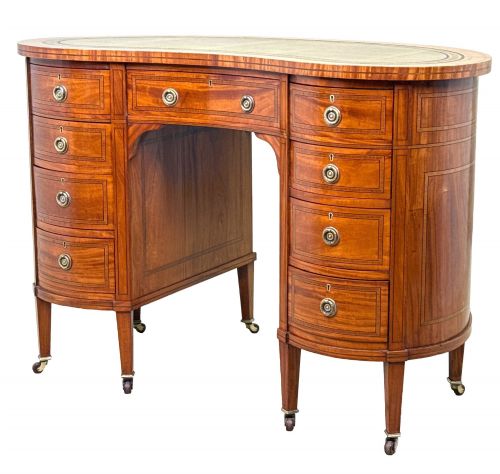
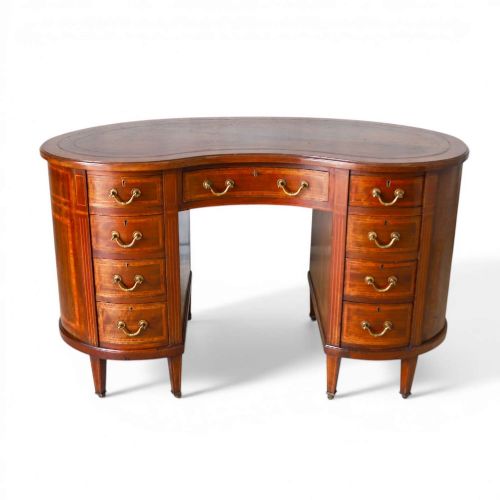
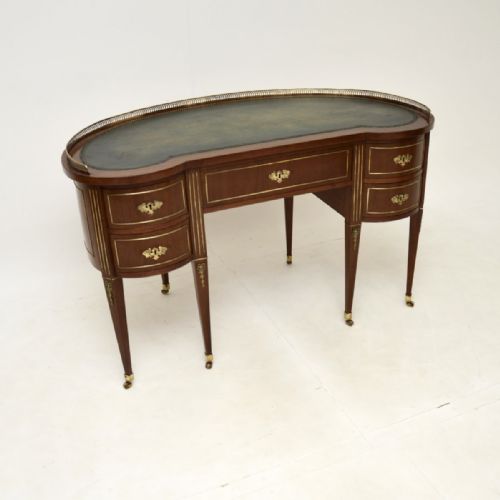
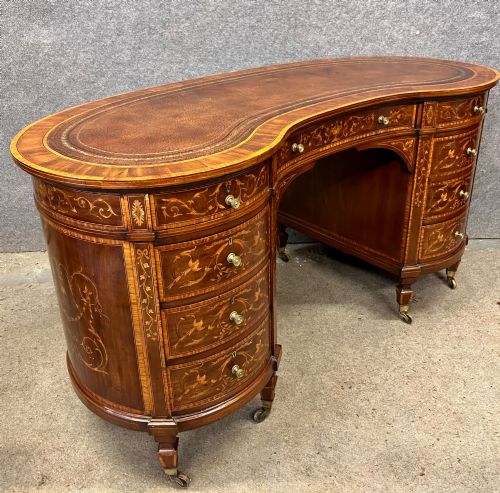
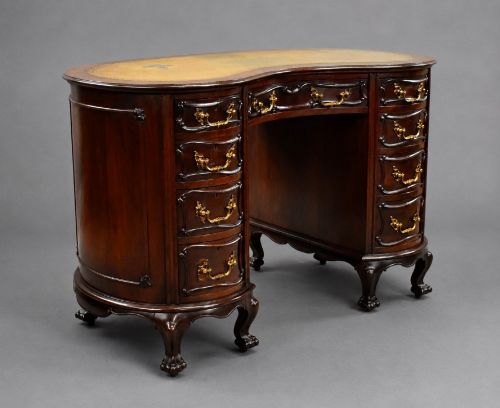
The most common version met on this page is the Edwardian or Victorian kidney-shaped desk, often rendered in mahogany or satinwood with a leather top. Such tables combine a distinctive indented front curve designed to sit comfortably against the writer with ample surface area.
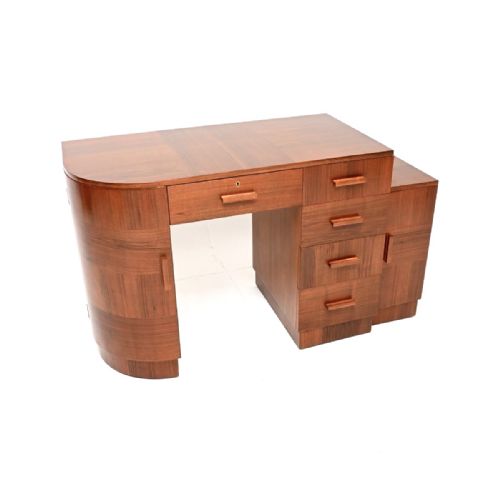
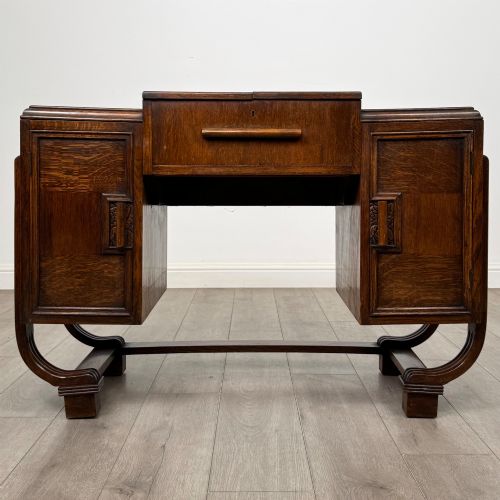
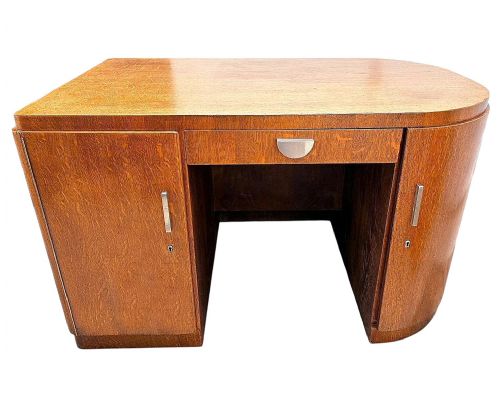
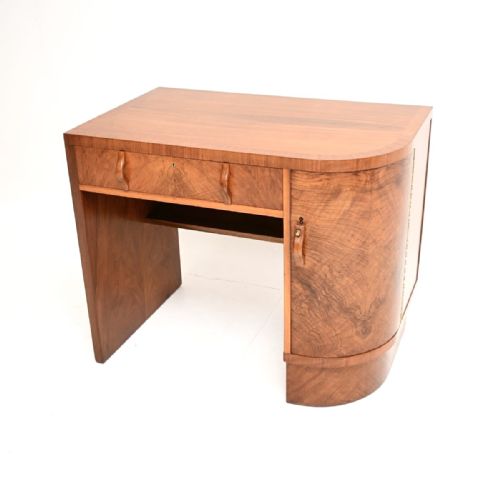
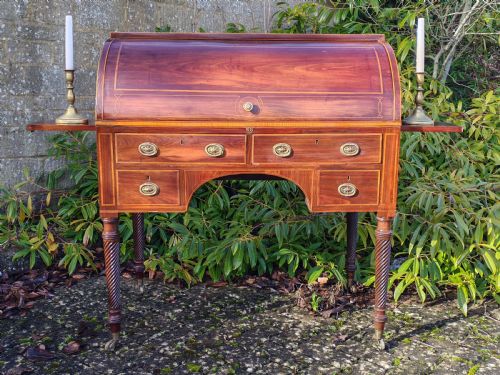
Alongside traditional kidney desks, listings include Art Deco walnut and oak designs from nineteen thirty alongside Georgian cylinder models. This mix demonstrates how cabinetmakers adapted curved writing surfaces across multiple centuries to suit diverse architectural interiors.
What varies in quality
Quality in these desks rests on the selection of figured timber veneers, the crispness of any inlaid decoration, and the integrity of the structural curves. Superior examples demonstrate seamless joint work along complex radii and utilise dense, richly grained hardwoods.
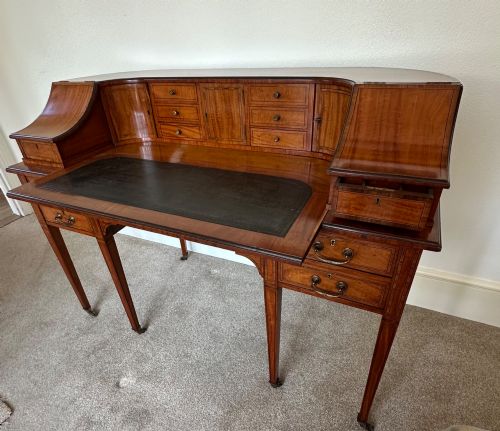
The sophistication of the internal fittings, such as small stationery drawers within a Carlton House superstructure or the smooth mechanical action of a cylinder roll-top, distinguishes finer workshops from standard production pieces.
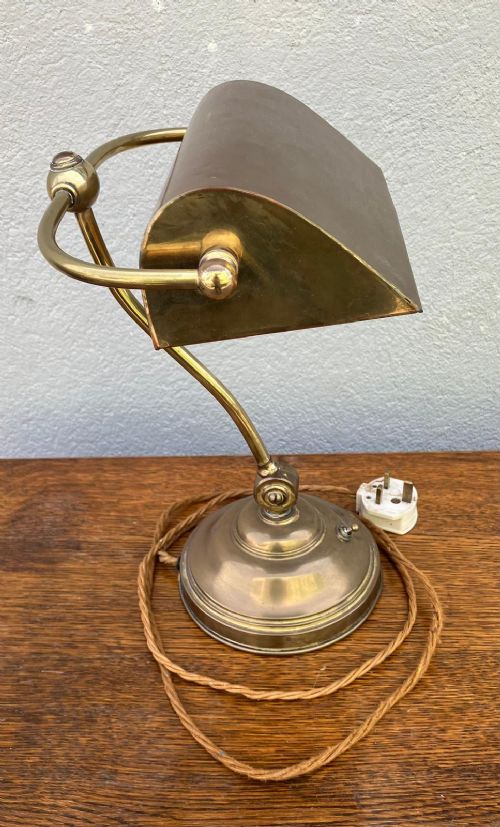
Desk lamps appearing alongside the furniture provide brass swan neck and Bakelite streamline illumination for late-night study sessions.
Maurice Adams·Collinson and Lock·Gillows
The Curved Study Table Glossary
- Kidney-shaped desk
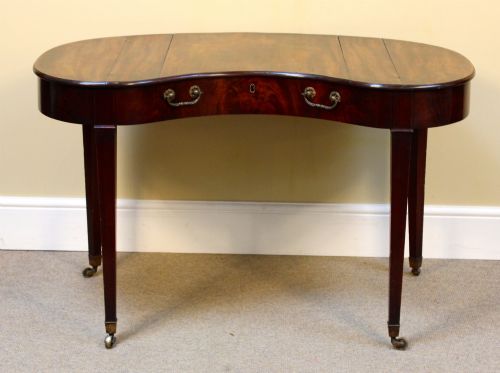
- A writing table featuring a concave curve on the working side to accommodate the user. This form became particularly popular during the Victorian and Edwardian periods.
- Carlton House desk
- A form of writing table featuring a curved superstructure of small drawers and compartments enclosing the rear of the writing surface. These originated in the late eighteenth century.
- Cylinder desk
- A writing table enclosed by a rolling quarter-circle cylinder of wood that conceals the writing surface and pigeonholes when closed. Examples appear across Georgian and later eras.
- Stringing
- Thin lines of contrasting wood inlay used to outline the edges and drawers of antique furniture. This decorative technique highlights the contours of serpentine and kidney desks.
Curved Study Table: Frequently Asked Questions
What is a kidney desk?
A kidney desk is a writing table shaped with a curved indentation at the front, designed so the user sits comfortably within the curve. Cabinetmakers produced these extensively in mahogany and satinwood during the Victorian and Edwardian eras.
Such desks often feature leather-inset writing surfaces and multiple drawers arranged beneath the top. They function well as freestanding pieces because their finished backs allow placement in the middle of a room.
How do I identify an Edwardian desk?
Edwardian desks often display lighter timbers such as satinwood, alongside inlaid mahogany with delicate stringing and brass hardware. These pieces frequently adopt revival styles including Sheraton motifs.
Unlike heavier Victorian predecessors, Edwardian writing tables tend to prioritize slender proportions and bright polished finishes. Many examples from this era also incorporate kidney shapes or simplified Carlton House superstructures.
What is a Carlton House desk?
A Carlton House desk is a specialised writing table featuring a curved, tiered bank of small drawers and letter compartments built around the back and sides of the top. The design dates back to the late eighteenth century.
These desks provide extensive compartmentalized storage while maintaining a compact footprint. They are typically finished on all sides in fine mahogany or satinwood.
How do I care for a leather top?
Leather desk tops benefit from periodic treatment with appropriate leather balms or waxes to prevent drying and cracking. Avoid exposing antique leather surfaces to direct sunlight or excessive moisture.
Cleaning should involve only a soft, dry cloth to protect the gold tooling and the surrounding wood veneer. Preserving the original leather surface maintains the historical character of the writing table.