


Curved Glazed Cabinet
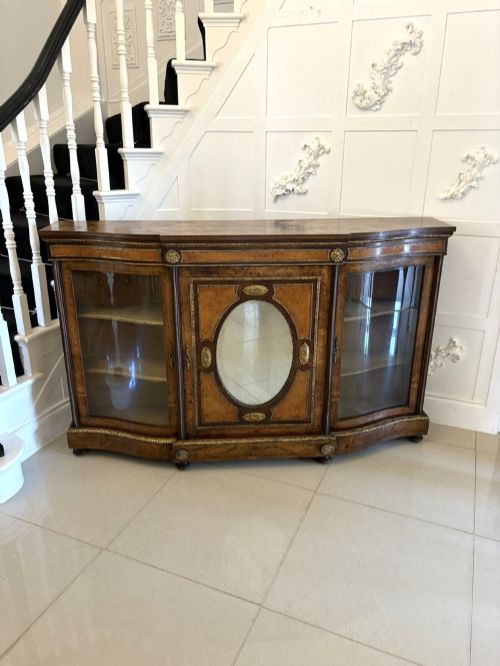
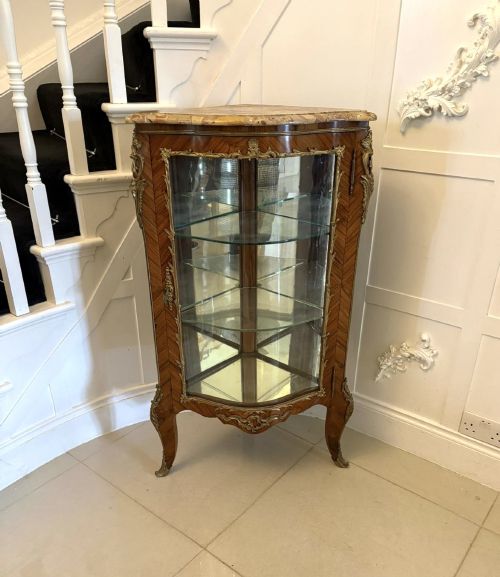
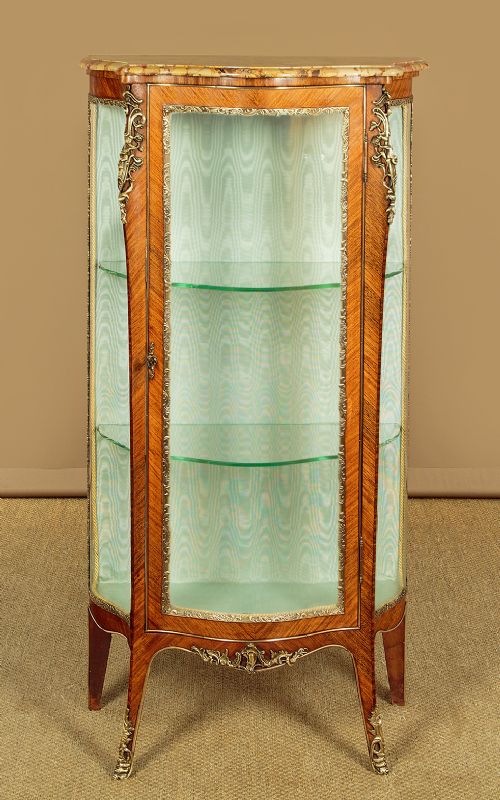
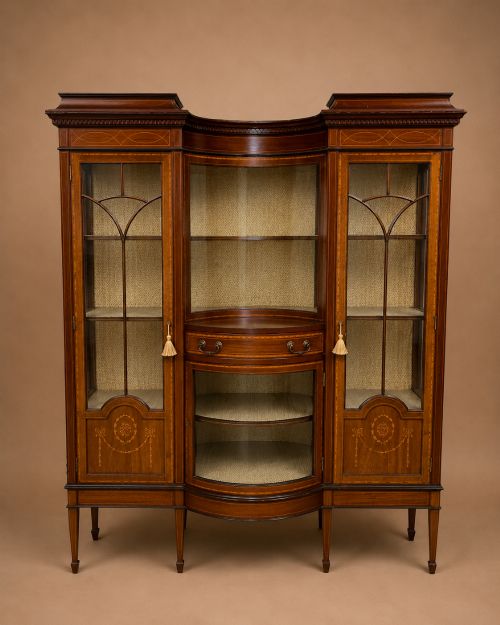
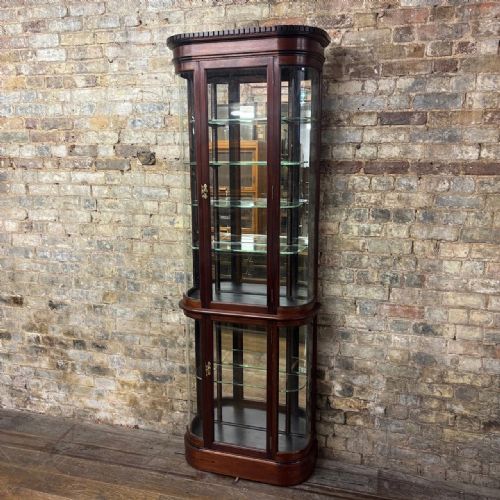
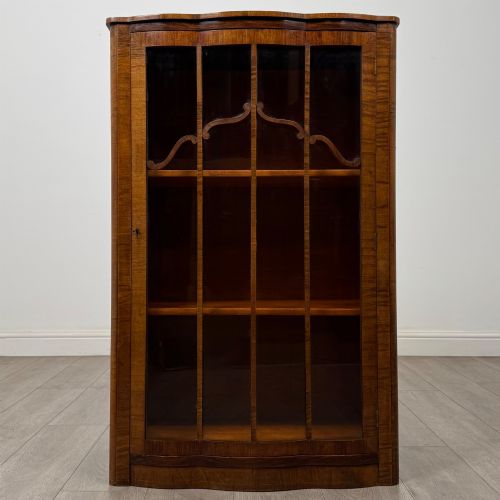
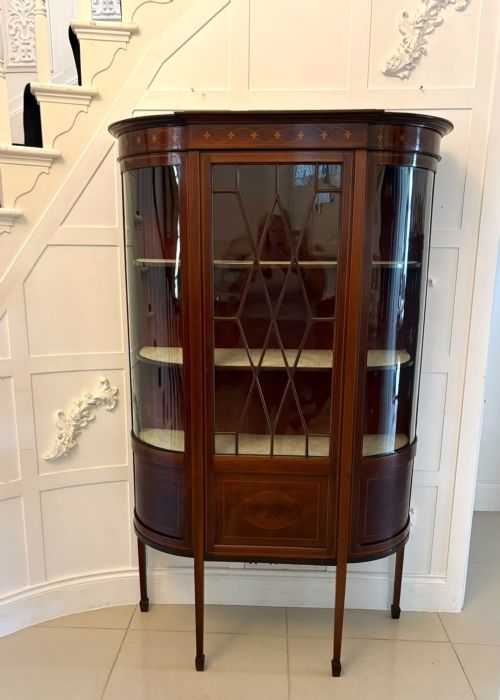
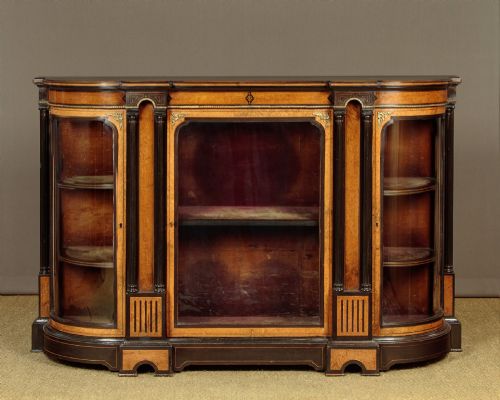
These curved glazed cabinet examples bring together sweeping glass fronts and rich timber frames to show off precious objects.
Curved Glazed Cabinet
A curved glazed cabinet brings together a rounded glass front with timber housing designed to display objects within a room. Buyers searching this phrase encounter forms ranging from floor-standing corner units to long credenzas and tall vitrines.
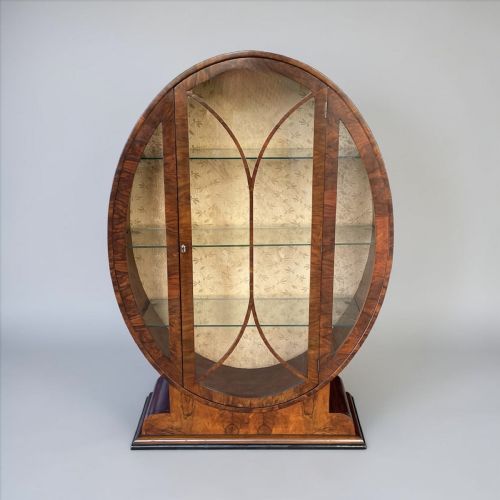
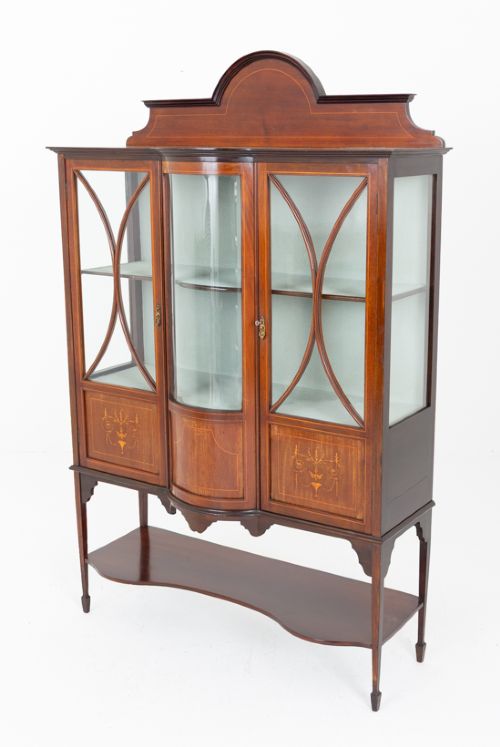
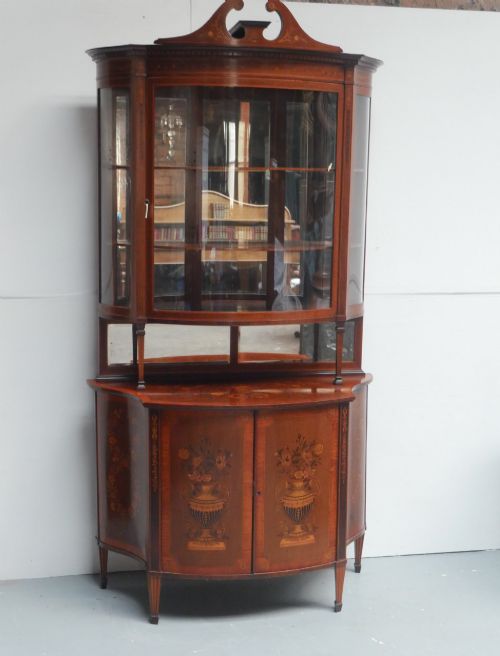
The pieces span multiple periods including the Victorian era, the Edwardian period, and the nineteen thirties. Common variations include bow-ended display cases, serpentine credenzas, and oval cabinets.
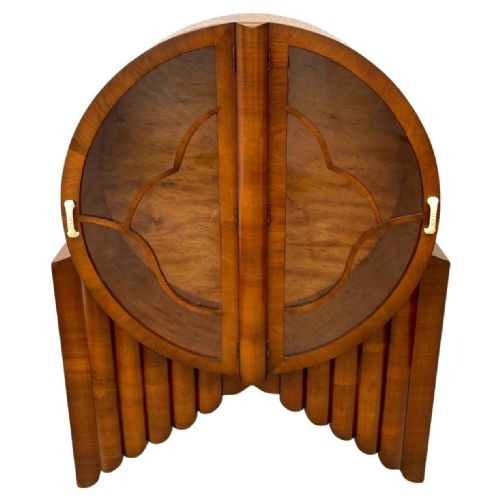
Makers utilised various silhouettes such as demi-lune, concave, and rocket shapes to frame the glass. Origin points bridge English workshops and French cabinet-makers.
How they were made
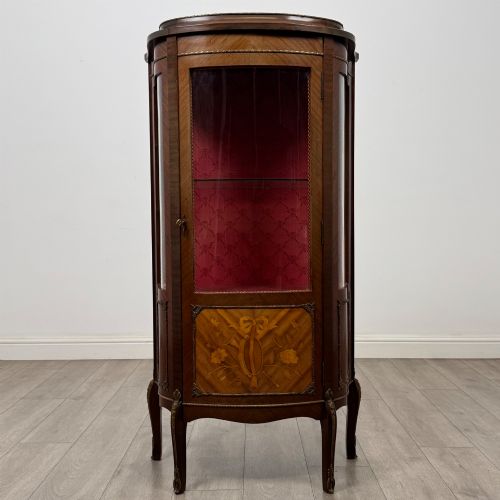
Craftsmen built the underlying carcases from dense timbers such as mahogany, walnut, and kingwood, frequently applying burr walnut or satinwood veneers across the surfaces. Marquetry inlay, ebonising, and painted details decorated the exterior panels.
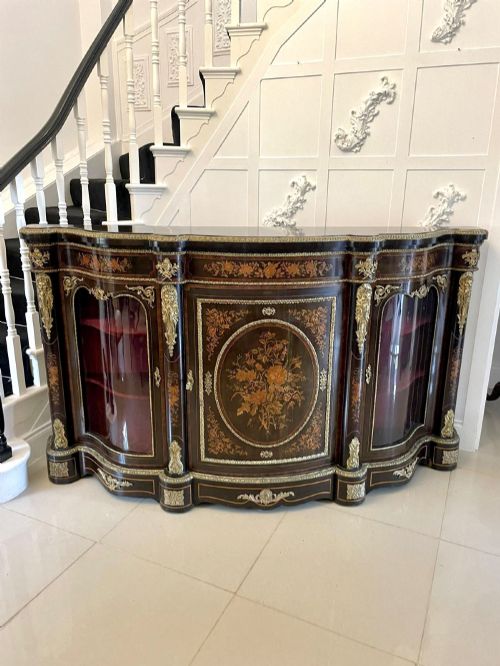
Mounts cast in ormolu and brass framed the glass doors and accented the corners, while marble tops finished certain French display pieces. Fabric linings often covered the interior shelves and backing behind the glazed panels.
Listings span the Victorian era, the Edwardian period, and nineteen thirty Art Deco.
What varies in quality
The standard of timber selection and the precision of veneer matching set examples apart, particularly where burr walnut or marquetry is utilised. Elaborate floral marquetry and fine brass or ormolu mounts indicate higher workshop input.
The complexity of the glass shaping defines the tier of the piece, as curving glass panels smoothly without distortion requires advanced glass-making skill. Integrated details like serpentine shaping and hand-painted Vernis Martin panels separate standard production from exceptional pieces.
Edwards and Roberts·James Hicks·François Linke·Paul Sormani
The Curved Glazed Cabinet Glossary
- Ormolu
- Gilded bronze mounts applied to furniture. This technique was widely utilised on nineteenth-century French and Victorian pieces.
- Credenza
- A low sideboard cabinet often featuring glass-fronted side doors. They frequently incorporate inlaid marquetry and ormolu mounts.
- Vitrine
- A glass-fronted display cabinet used for porcelain and ornaments. These cabinets often stand on slender legs.
- Marquetry
- Inlaid wood patterns forming decorative pictures or geometric designs. Craftsmen applied contrasting veneers to walnut and mahogany surfaces.
- Serpentine
- A curved shape that flows inward and outward in a wave-like line. This contour appears frequently on the fronts of cabinets and credenzas.
Curved Glazed Cabinet: Frequently Asked Questions
Where should I place a curved glazed cabinet?
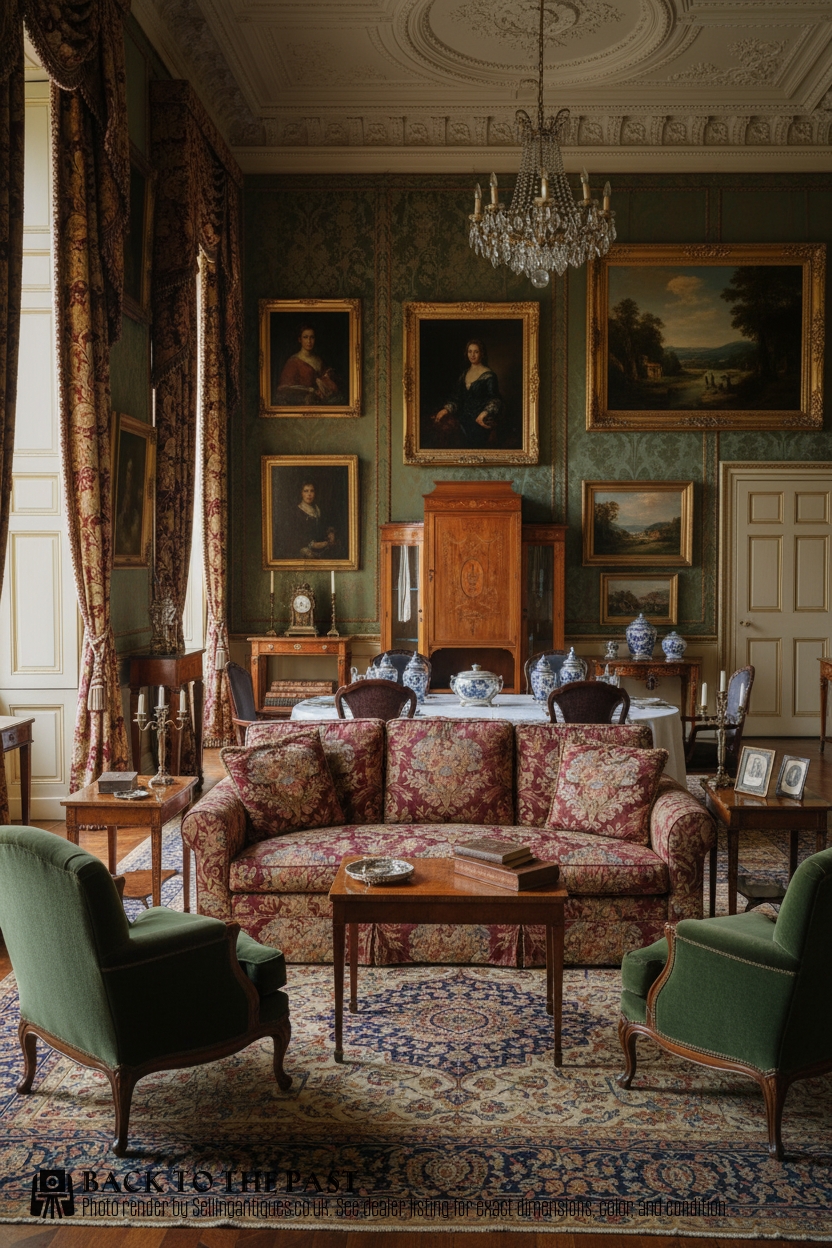
These cabinets suit drawing rooms, dining spaces, or hallways where natural light illuminates the glass front.
Corner units fit neatly into unused angles, while flat-backed credenzas anchor long walls.
How do I clean the wood and glass?
Dust the timber regularly with a soft, dry cloth to protect the veneer and polish surfaces gently.
Clean the curved glass panels with a mild glass cleaner applied to a cloth rather than sprayed directly.
What periods are available?
The selection includes Victorian, Edwardian, and Art Deco eras alongside nineteenth-century French styles.
Each period brings distinct timber choices, from heavy walnut to lighter satinwood.
How do I identify Art Deco cabinets?
Art Deco pieces from the nineteen thirties favor smooth walnut veneers and bold geometric silhouettes like rocket and clove shapes.
They generally omit the heavy ormolu mounts found on earlier Victorian and French revival pieces.