


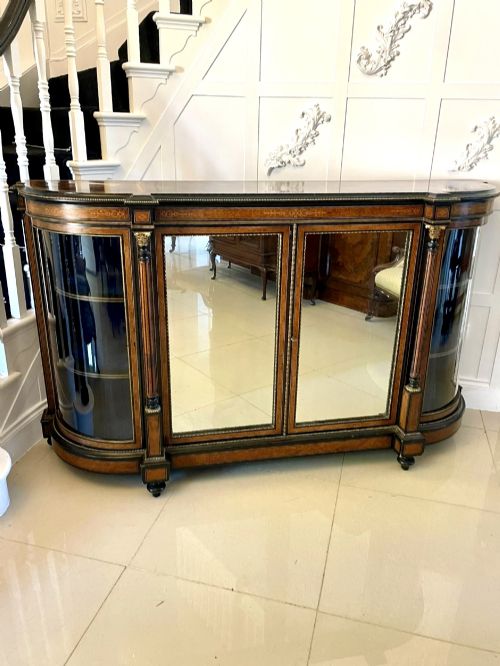
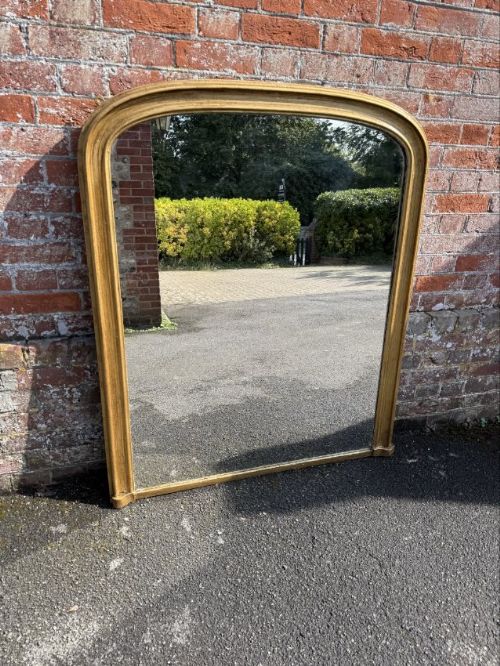
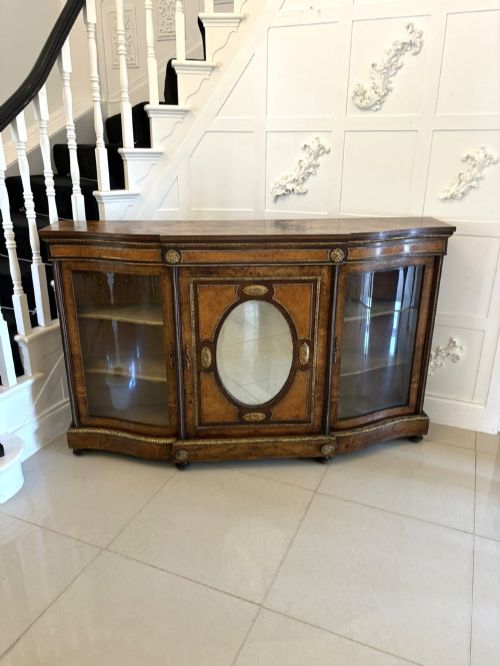
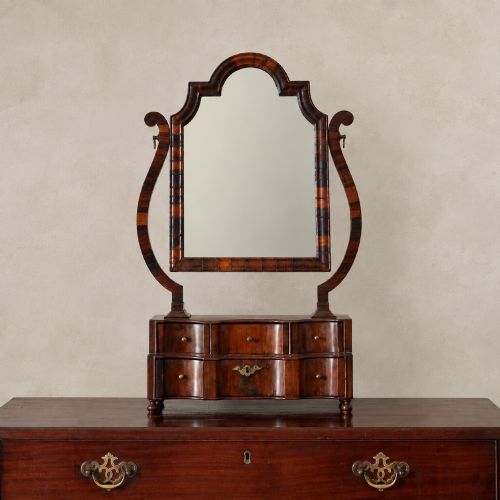


Curved Glass Mirror
A curved glass mirror brings an optical distortion or a deep convex reflection into a room, capturing light and space with distinct historic character.
Curved Glass Mirror
When you search for a curved glass mirror, you encounter pieces spanning from the eighteenth century to the twentieth century, taking the form of overmantel frames, wall mirrors, and optical fairground pieces. The selection includes convex convexities, arched top gilt designs, and spherical distortion glasses.
You are most likely to meet nineteenth century overmantel mirrors and twentieth century fairground or convex glasses on this page. These objects serve both practical reflection and decorative optical effect within historic interiors.
Materials and Construction
Frames utilise woods such as mahogany, oak, burr walnut, and maple, often embellished with ormolu mounts, gesso, or parcel-gilt. These timber structures provide the rigid housing necessary to support heavy curved or convex glass plates.
Glass is manipulated to achieve convex, concave, or distorted surfaces, reflecting light across a room in unconventional ways. Cabinetmakers and mirror-makers combined traditional joinery with specialised glass-forming techniques.
Curved Glass Mirror Retail Price Guide 2026
Typical asking prices for curved glass mirror among the pieces listed under this phrase on Sellingantiques today, from the lower quarter to the upper quarter. They describe what is for sale here now, not the wider market.
The listings combine nineteenth century gilt overmantel mirrors with twentieth century fairground and convex glass pieces.
Distinctions in Quality
Quality rests in the depth and clarity of the glass plate and the precision of the timber framing. Finer examples display hand-carved gesso, intricate marquetry inlay, and fire-gilt ormolu mounts rather than cast substitutes.
The integrity of the original silvering on the glass and the stability of the wooden carcass separate standard production items from exceptional decorative pieces.
The Curved Glass Mirror Glossary
- Convex mirror
- A curved glass mirror that bulges outward, providing a wide-angle panoramic reflection of the room. It is often set within a round gilt frame.
- Fairground mirror
- An optical distortion mirror designed to bend reflections for amusement. These pieces date from the nineteenth and twentieth centuries.
- Overmantel mirror
- A large wall mirror designed to hang directly above a fireplace mantel. They frequently feature arched tops and elaborate wooden frames.
- Ormolu
- Gilded bronze mounts applied to furniture and mirror frames. This decorative technique adds metallic richness to the wood.
Curved Glass Mirror: Frequently Asked Questions
Where should I hang a curved glass mirror?
These mirrors suit living rooms, halls, or above mantelpieces where they can gather light and create a sense of depth.
Because convex and optical glasses alter perspective, placing them opposite a window or light source maximises their visual impact.
How do I clean antique mirror glass?
Use a soft, dry microfibre cloth to gently remove dust from the glass and the surrounding wooden or gilt frame.
Avoid commercial liquid cleaners that can seep behind the glass plate and damage the historical silvering or foxing on the reverse.
What is the difference between convex and fairground mirrors?
Convex mirrors feature a uniform outward curve that reflects a wide, circular view of an interior space.
Fairground mirrors utilise intentional distortion to bend and warp reflections, serving as theatrical or amusement pieces.
How do I date an antique curved glass mirror?
Examine the construction of the wooden frame, the backing boards, and the type of glass used in the piece.
Styles such as Victorian gesso work, Aesthetic Movement burr yew, and Art Deco geometry provide clear stylistic markers for their period.